Filters

17 filtered results

Clear all filters
Favorites
With answer key
Interactive

17 filtered results

Difficulty Level

Grade


Boost your child's math skills with our "Enhance Comprehension Addition Worksheets," designed specifically for ages 3-8. These engaging and visually appealing worksheets provide a fun, interactive way for young learners to master addition concepts. By incorporating pictures and practical exercises, our resources help kids understand numbers and enhance their comprehension abilities. Perfect for parents and educators, these worksheets support foundational math skills in a playful format, making learning enjoyable. Whether you’re at home or in the classroom, our addition worksheets offer a great way to build confidence and improve problem-solving skills in early learners. Explore our collection today!
Check out this FREE Trial Lesson on Addition for age 3-8!

T

Favorites
With answer key
Interactive
  • 3-8
  • Enhance comprehension
  • Addition
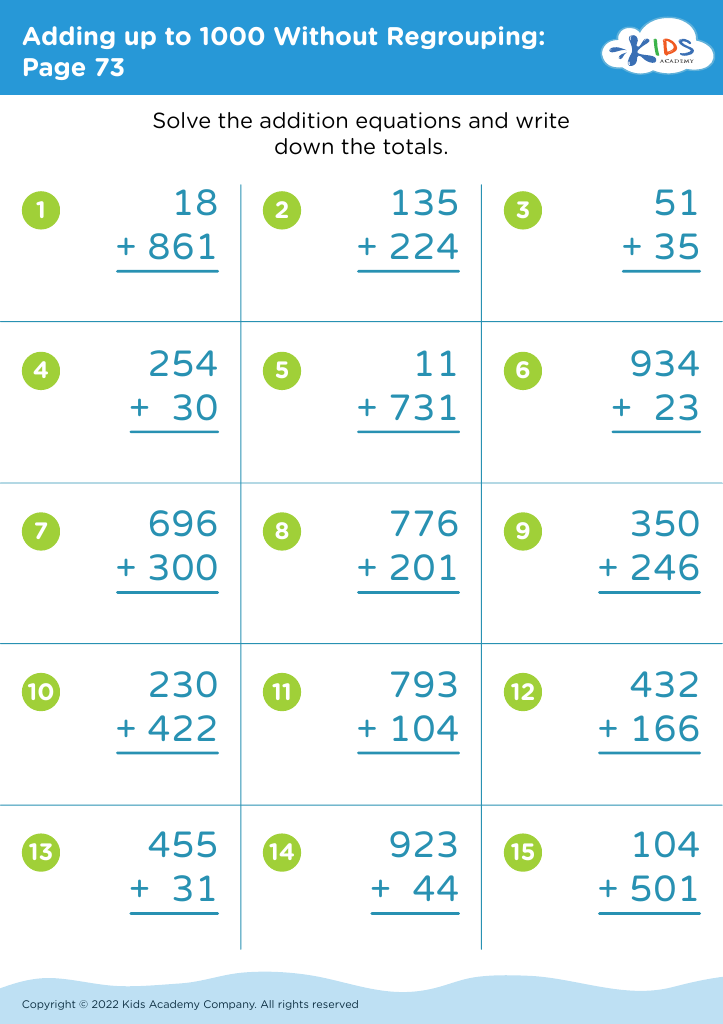
Adding up to 1000 Without Regrouping: Page 73
Worksheet
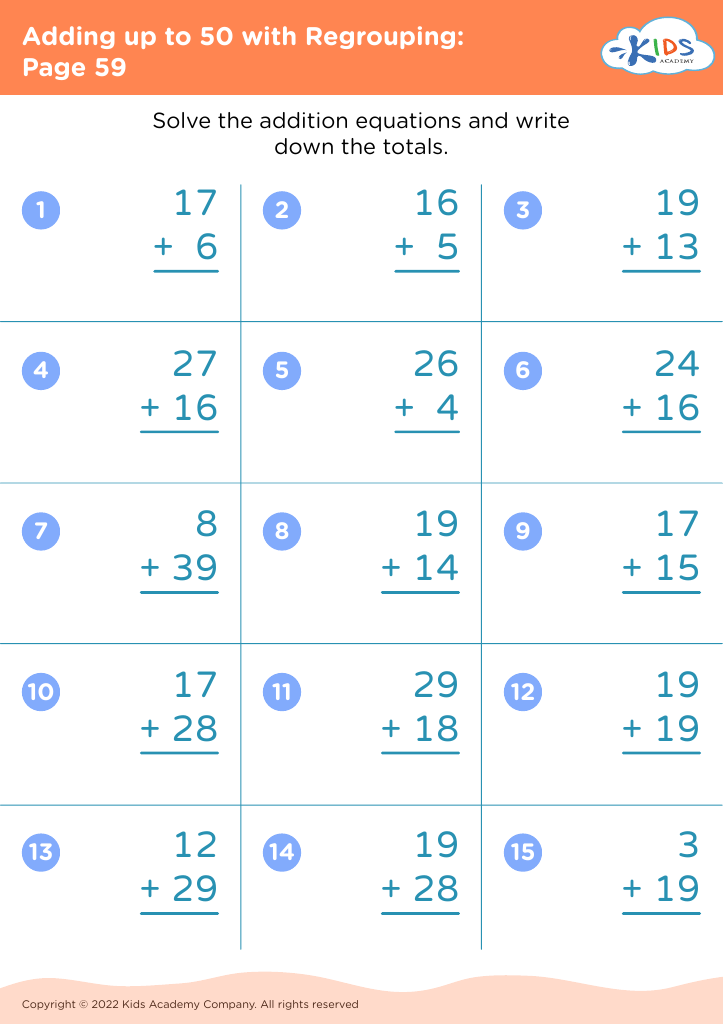
Adding up to 50 with Regrouping: Page 59
Worksheet
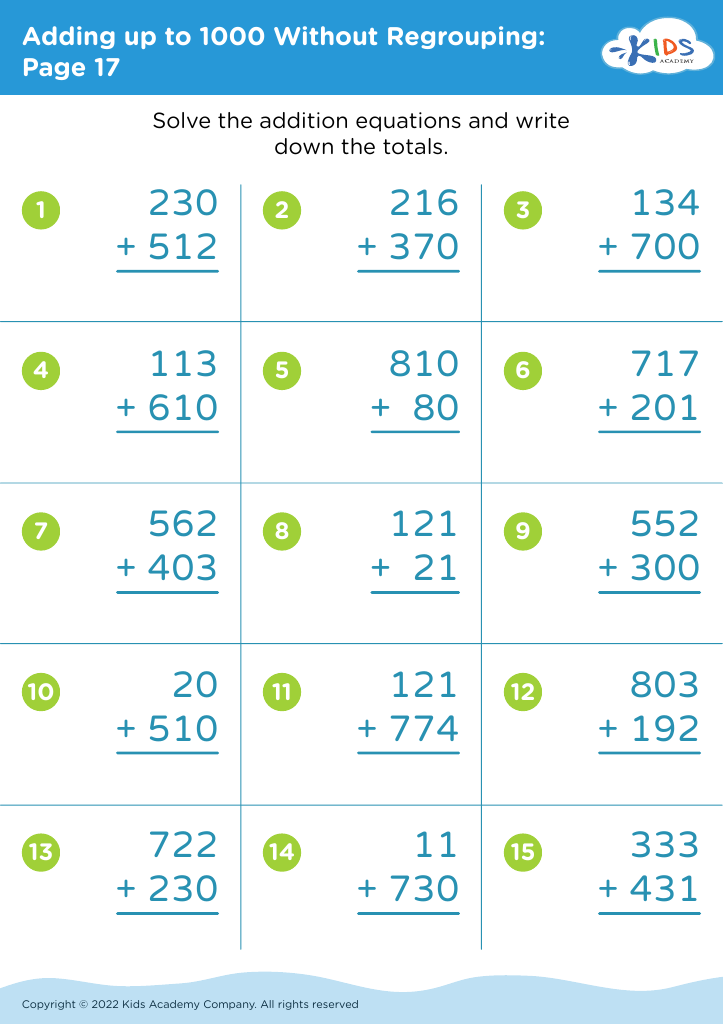
Adding up to 1000 Without Regrouping: Page 17
Worksheet
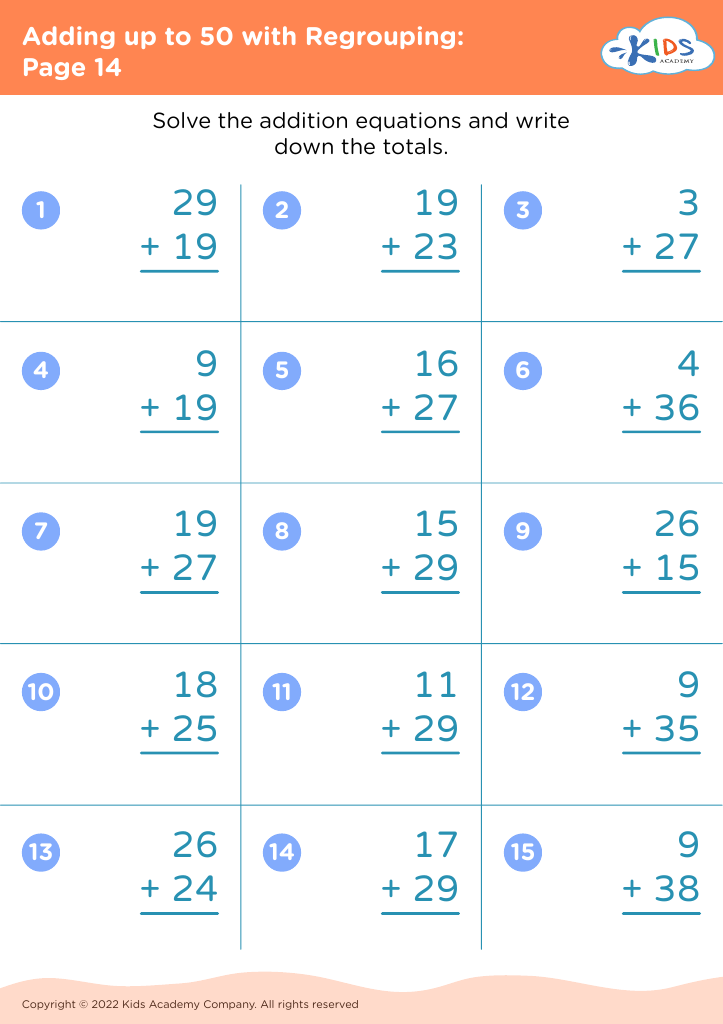
Adding up to 50 with Regrouping: Page 14
Worksheet
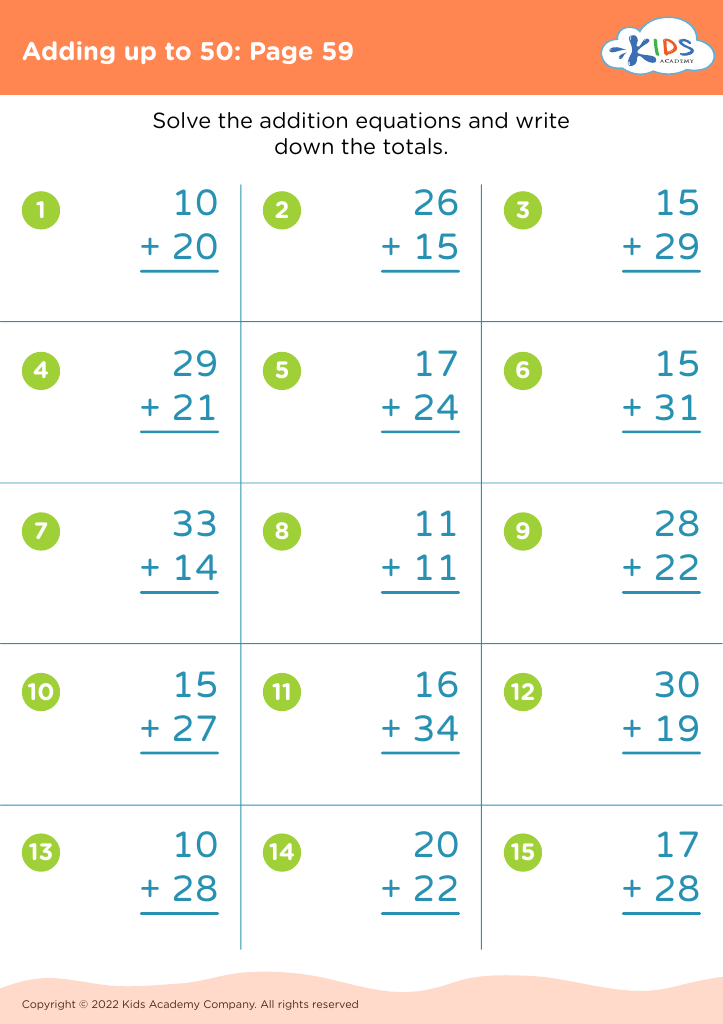
Adding up to 50: Page 59

Adding up to 50: Page 59

Adding up to 50: Page 59
Worksheet
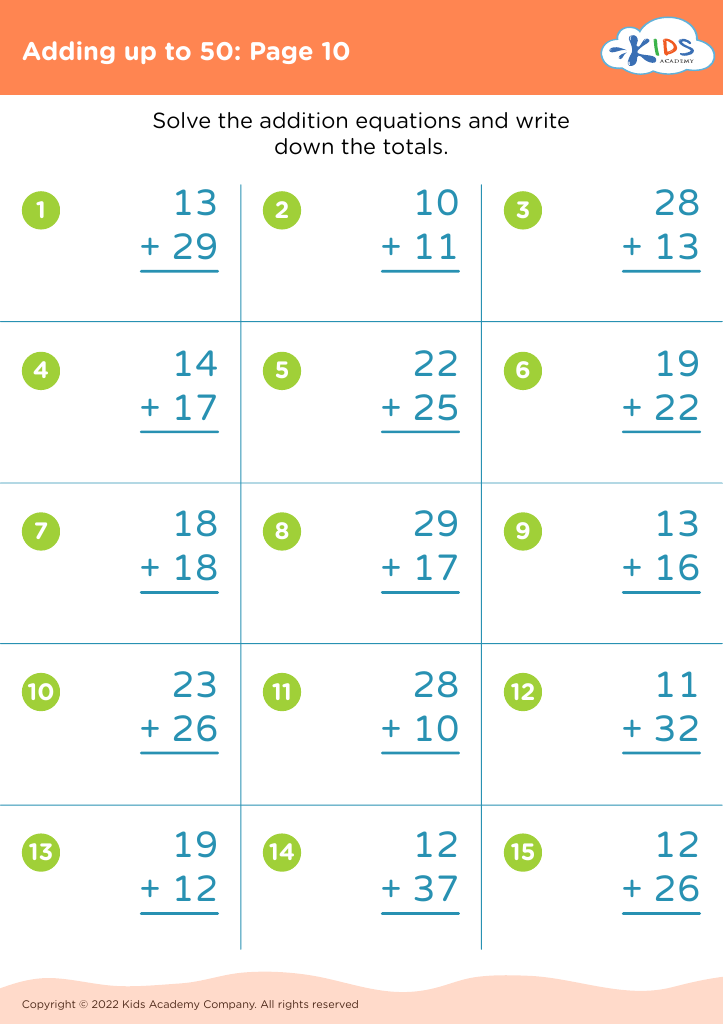
Adding up to 50: Page 10

Adding up to 50: Page 10

Adding up to 50: Page 10
Worksheet
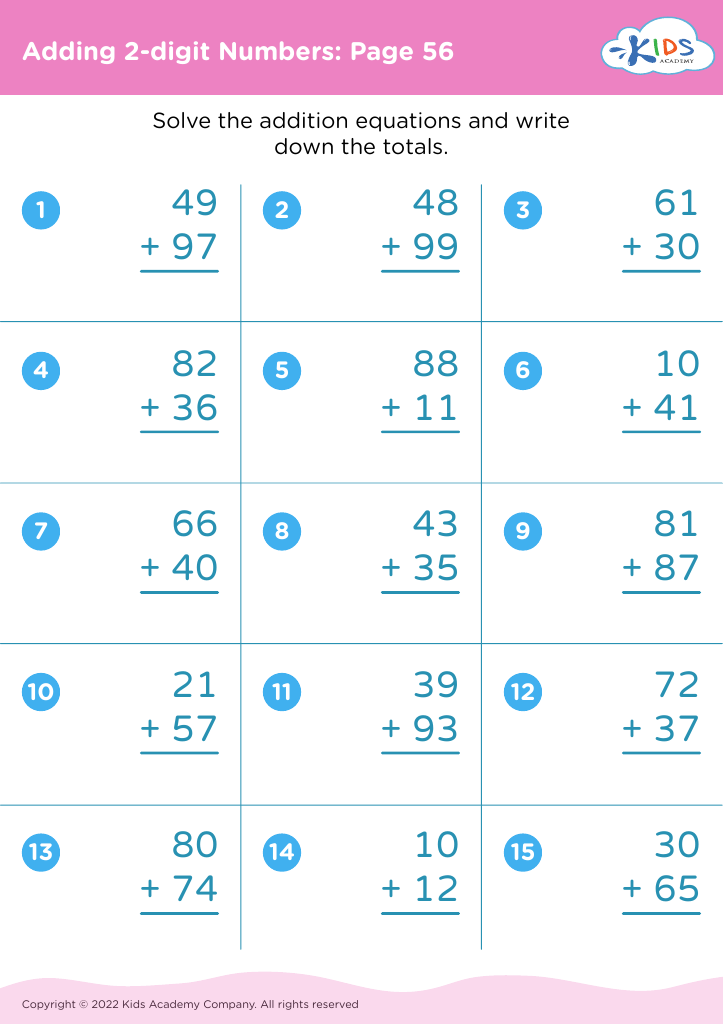
Adding 2-digit Numbers: Page 56

Adding 2-digit Numbers: Page 56

Adding 2-digit Numbers: Page 56
Worksheet
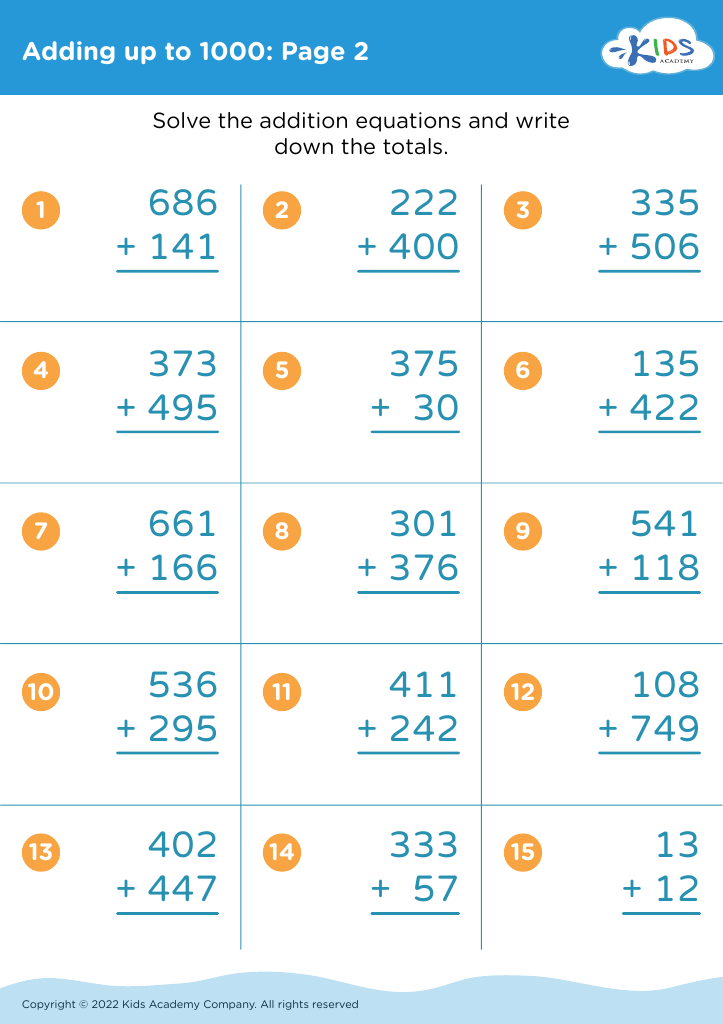
Adding up to 1000: Page 2

Adding up to 1000: Page 2

Adding up to 1000: Page 2
Worksheet
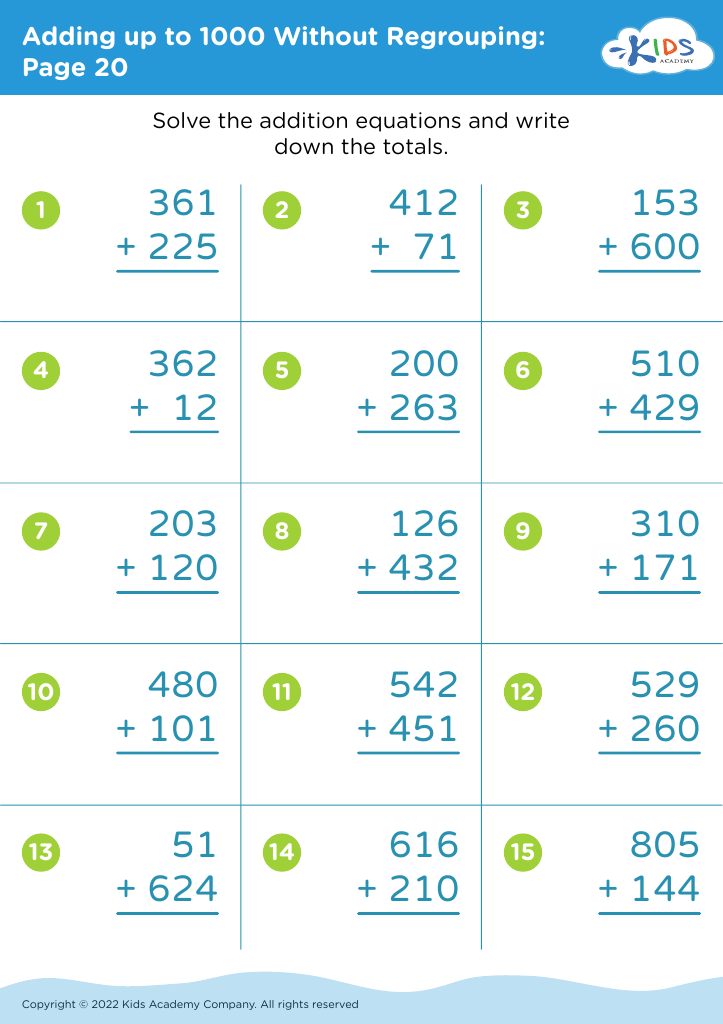
Adding up to 1000 Without Regrouping: Page 20
Worksheet
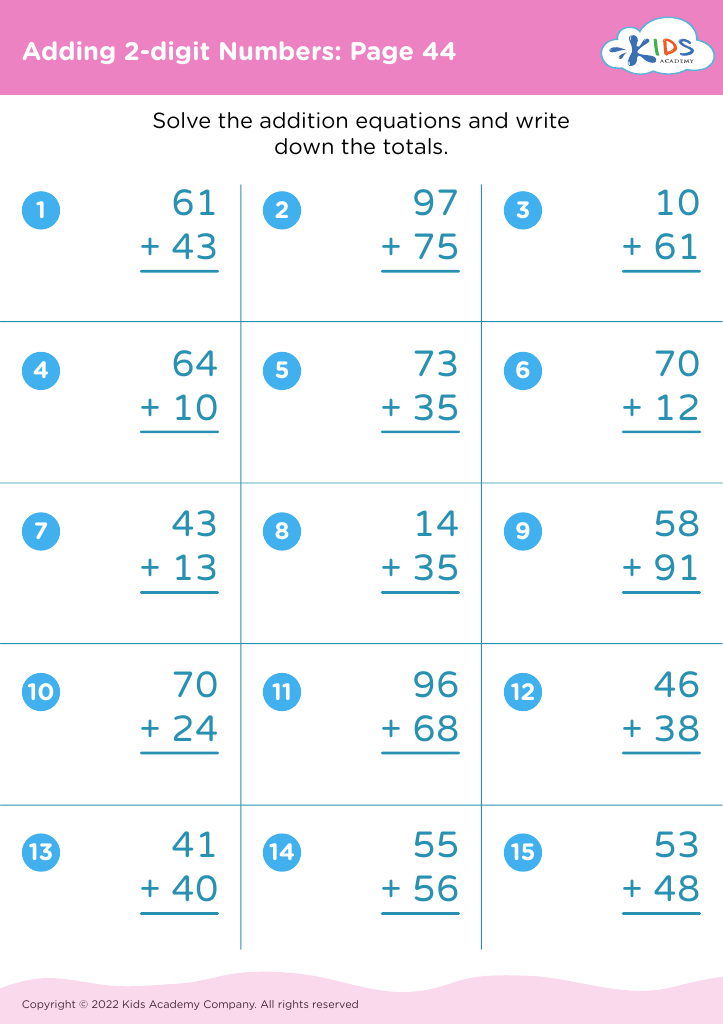
Adding 2-digit Numbers: Page 44

Adding 2-digit Numbers: Page 44

Adding 2-digit Numbers: Page 44
Worksheet
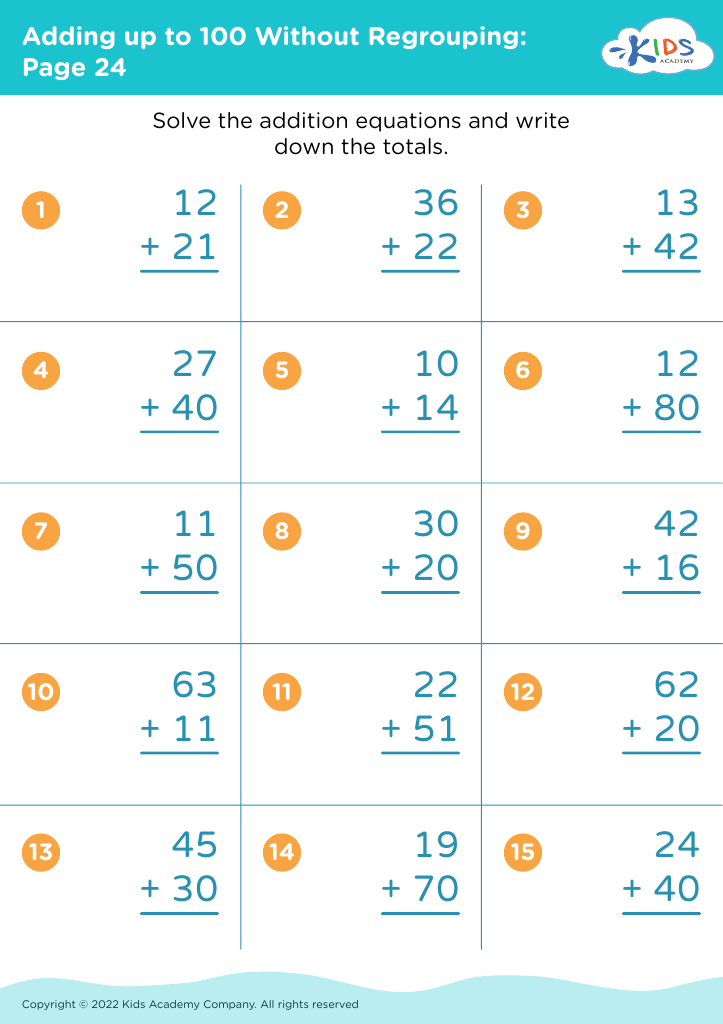
Adding up to 100 Without Regrouping: Page 24
Worksheet
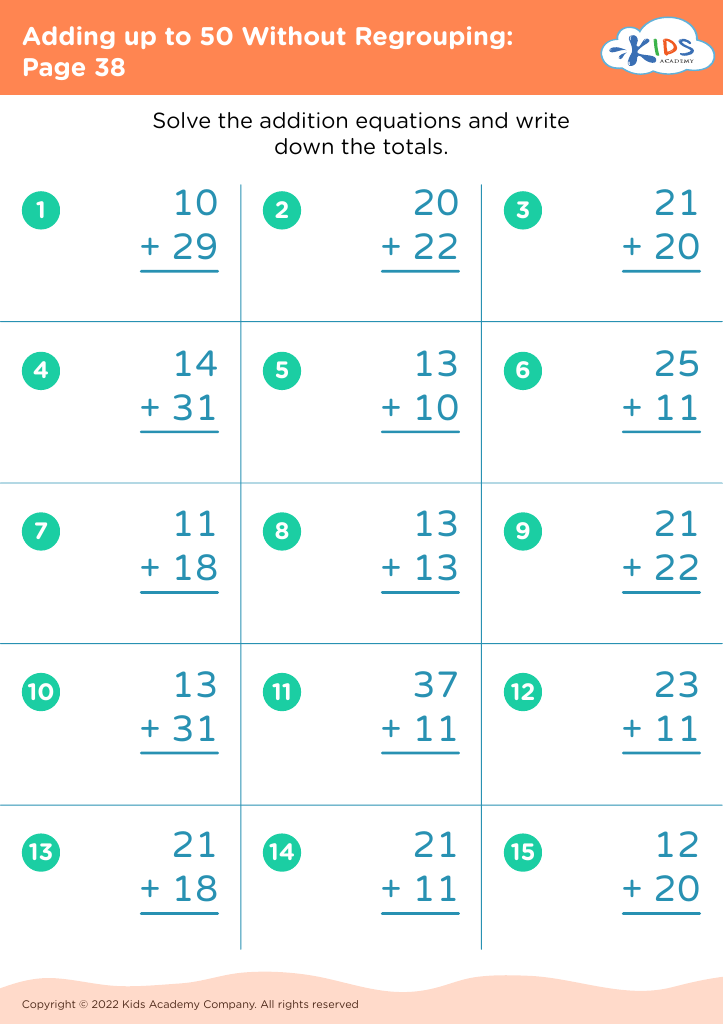
Adding up to 50 Without Regrouping: Page 38
Worksheet
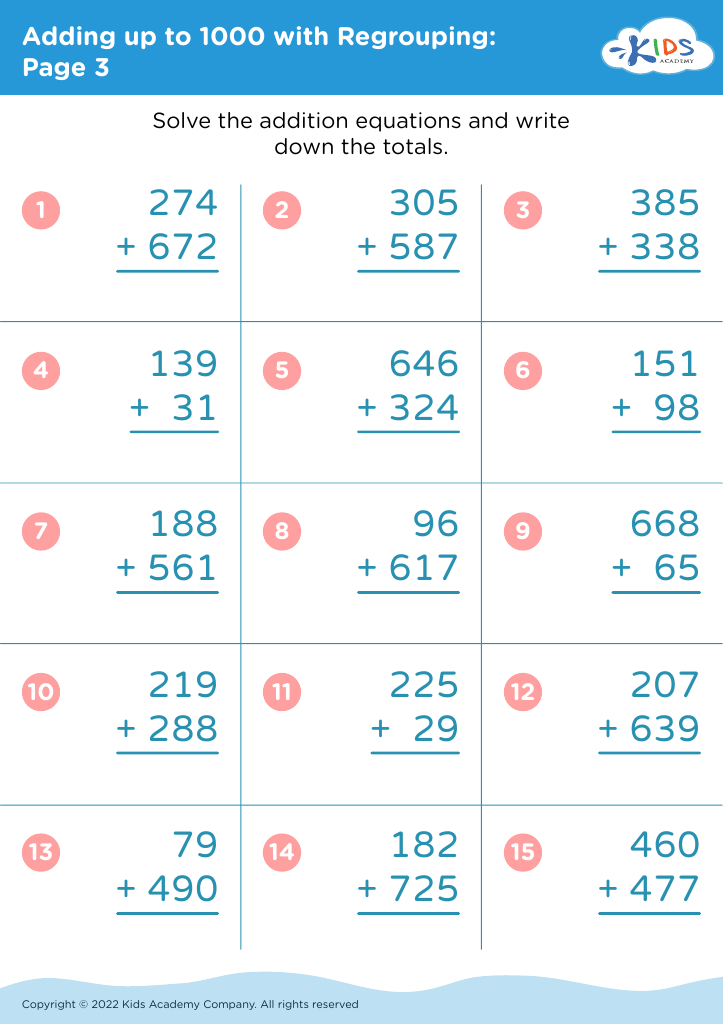
Adding up to 1000 with Regrouping: Page 3
Worksheet
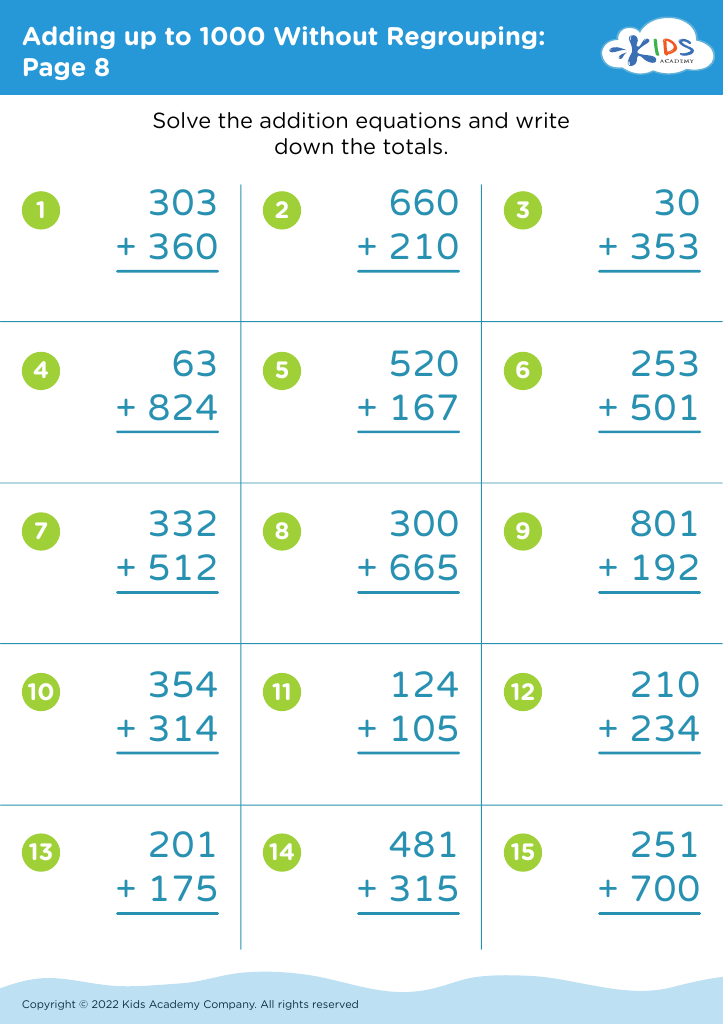
Adding up to 1000 Without Regrouping: Page 8
Worksheet
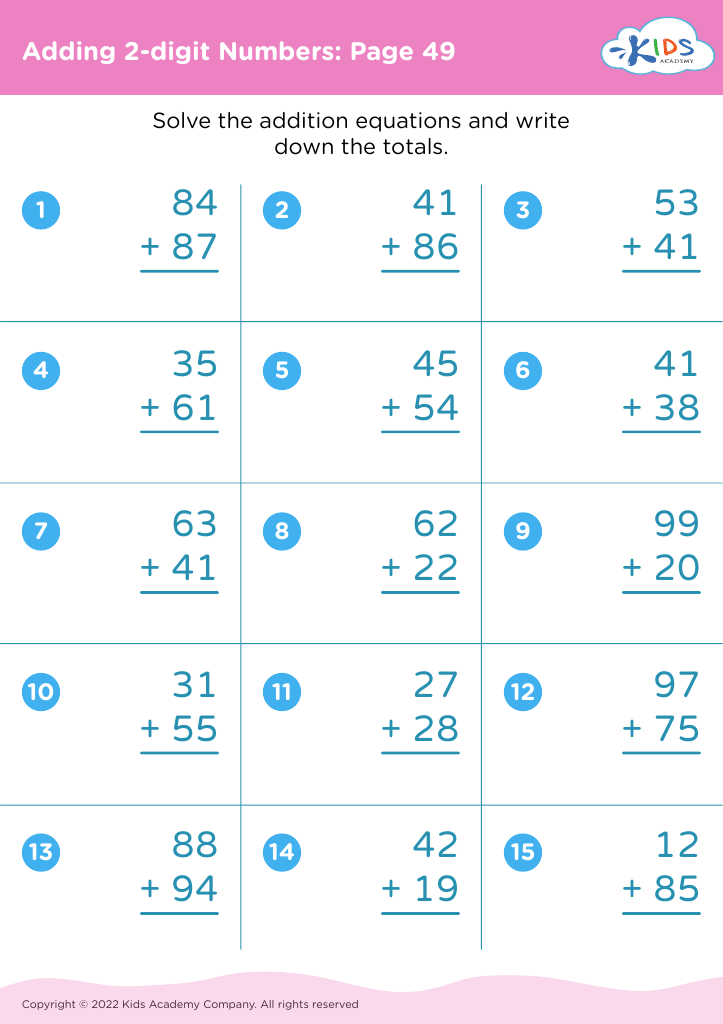
Adding 2-digit Numbers: Page 49

Adding 2-digit Numbers: Page 49

Adding 2-digit Numbers: Page 49
Worksheet
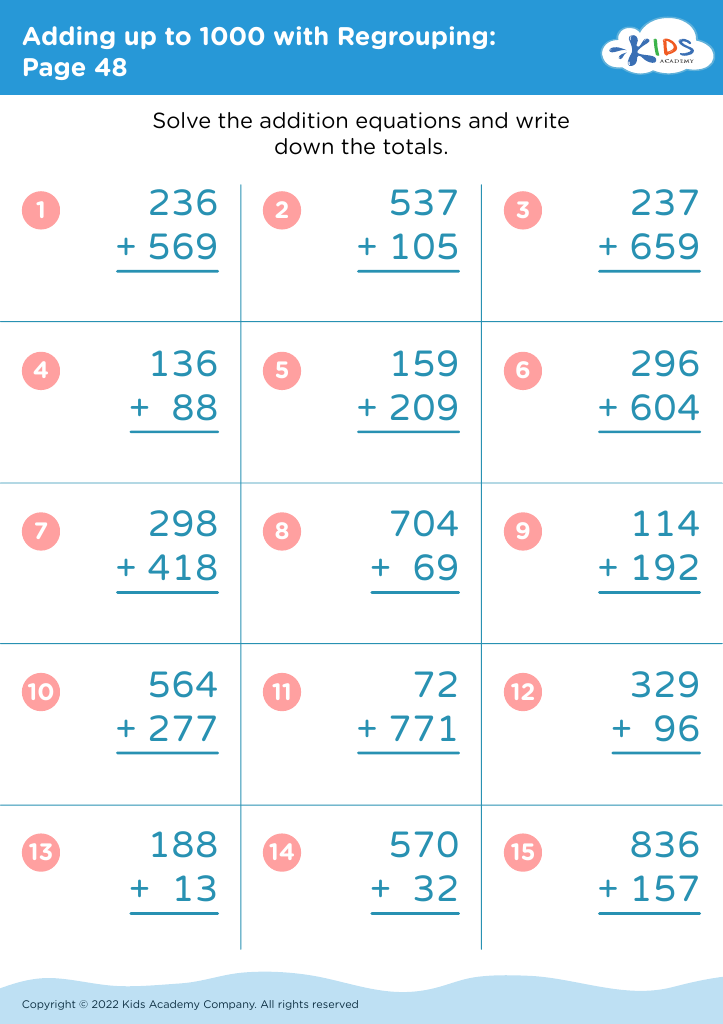
Adding up to 1000 with Regrouping: Page 48
Worksheet
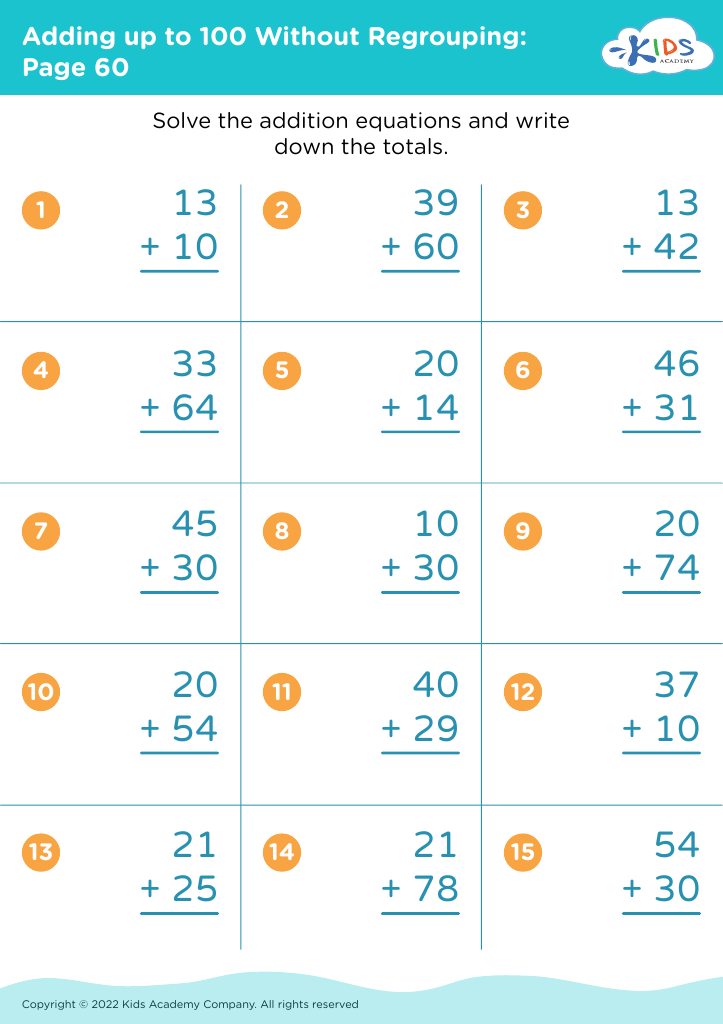
Adding up to 100 Without Regrouping: Page 60
Worksheet


Enhancing comprehension in addition for children aged 3-8 is vital for their overall cognitive development and future academic success. At this formative stage, children are not just learning to perform calculations; they are developing critical thinking skills, problem-solving approaches, and a foundational understanding of mathematical concepts. A strong grasp of addition promotes logical reasoning and instills confidence, crucial for a child's attitude towards learning.

For parents and teachers, focusing on comprehension in addition fosters a deeper relationship with numbers, allowing children to see the relevance of math in real life. This is essential in helping them relate abstract concepts to tangible experiences, making learning enjoyable and meaningful. Integrating playful learning methods—such as games, storytelling, or hands-on activities—can enhance engagement, making mathematical exploration a fun adventure.

Moreover, early mastery of addition builds the groundwork for more complex arithmetic that children will encounter later in their education. When children understand the principles of addition, they are better prepared to tackle subtraction, multiplication, and division with confidence. Engaging parents and educators in supporting this developmental stage ensures children develop a positive attitude towards math, setting the tone for lifelong learning and curiosity. In summary, caring about enhancing comprehension in addition paves the way for future success.