Improve counting skills Addition Worksheets for Ages 3-8
44 filtered results
-
From - To
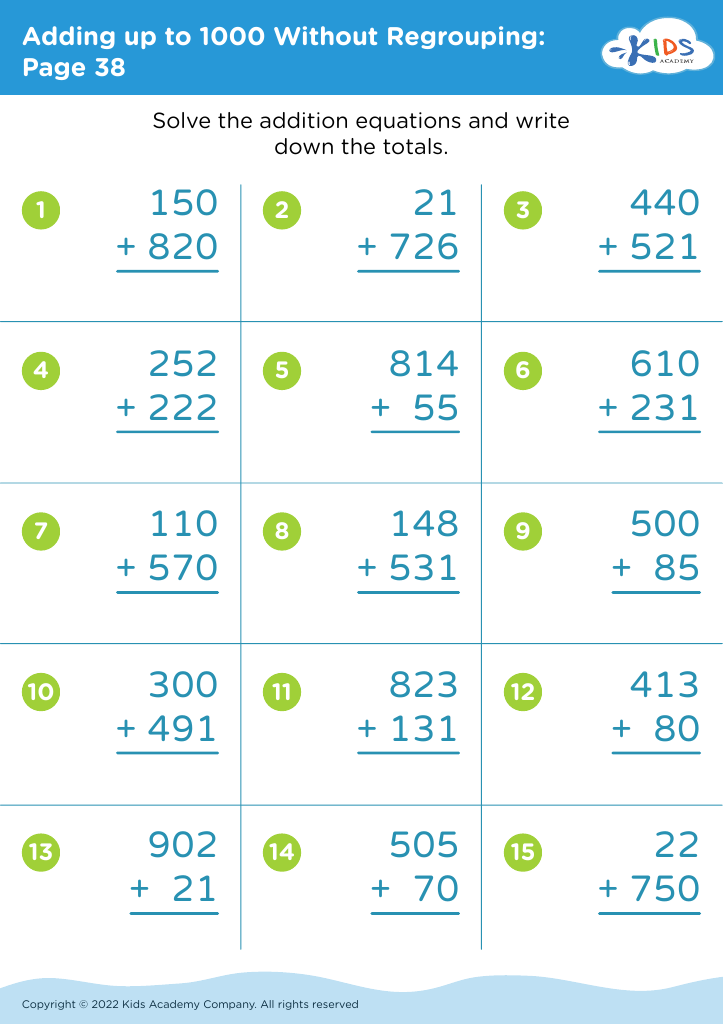
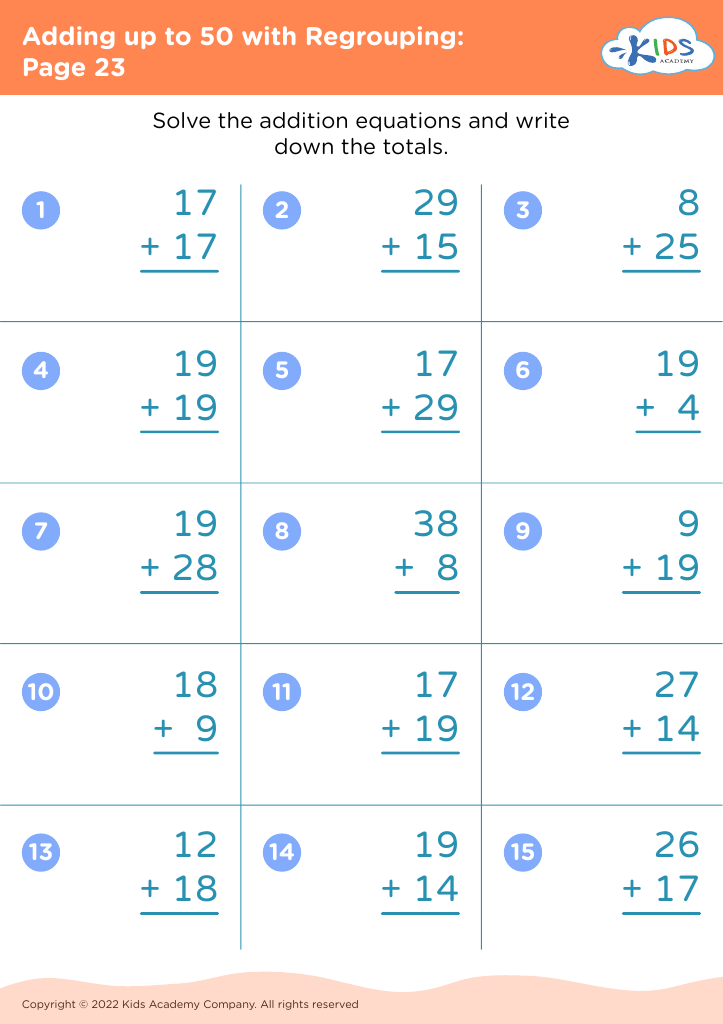
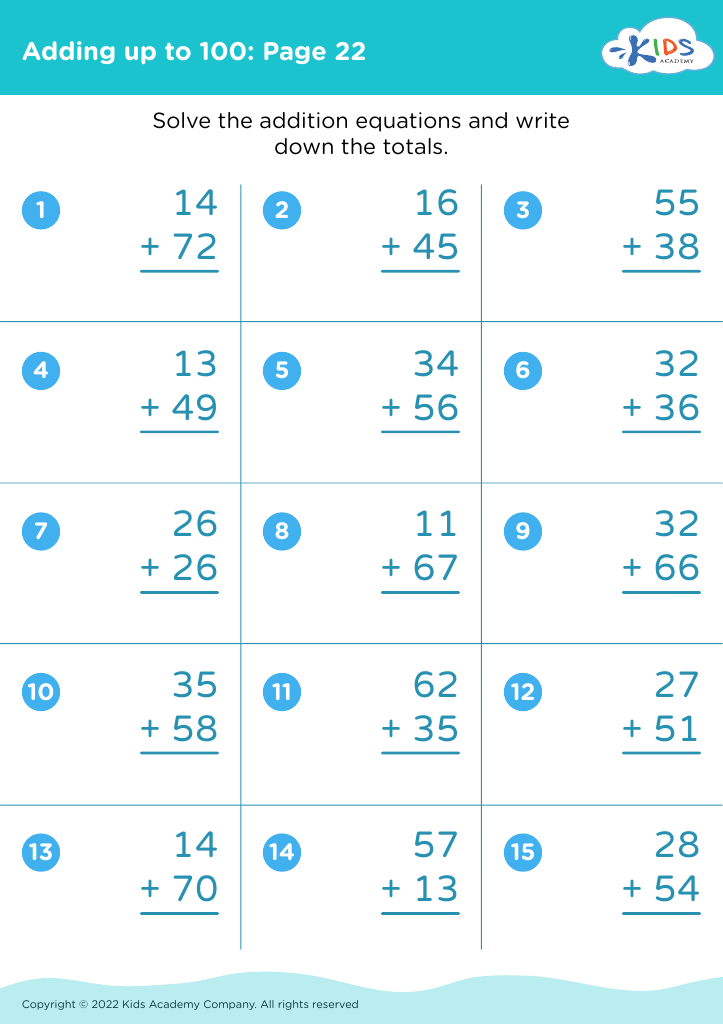
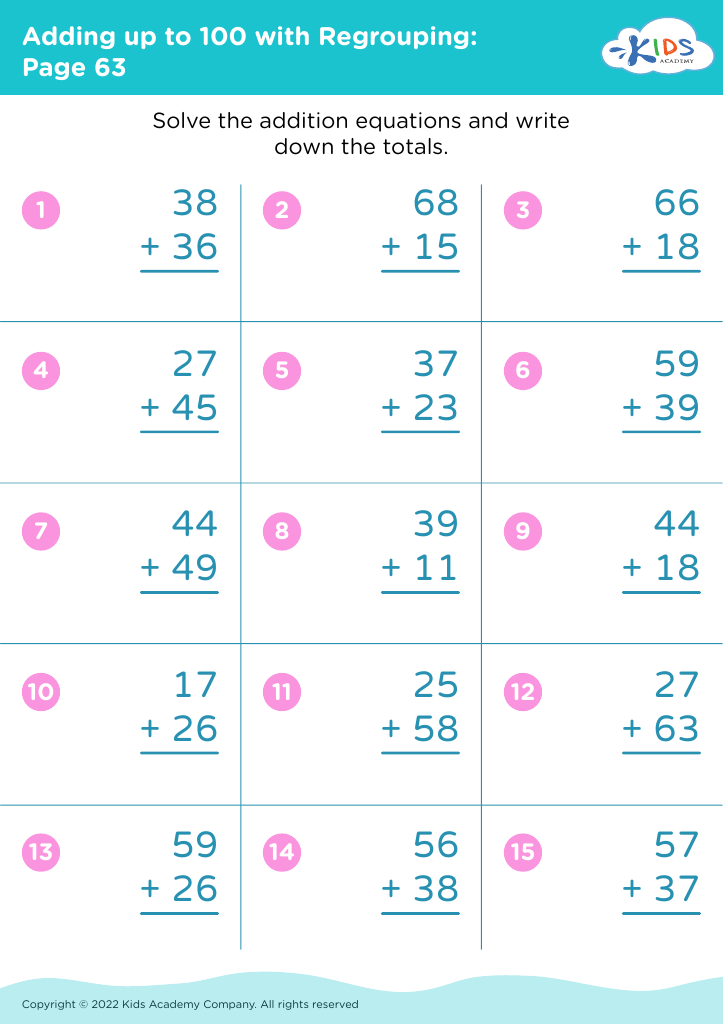
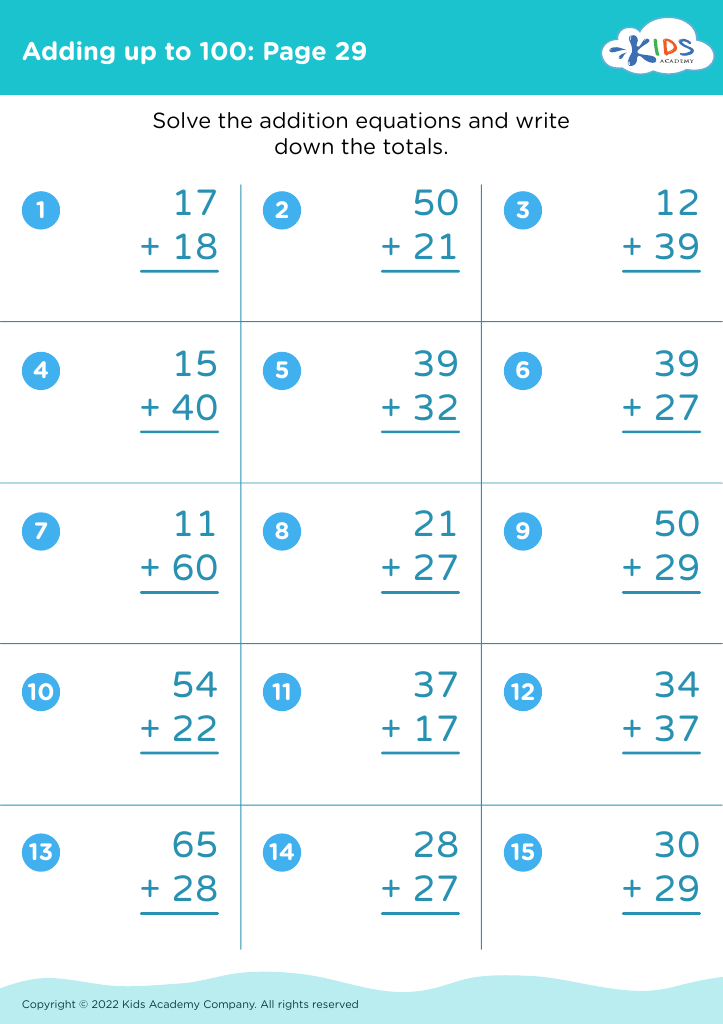
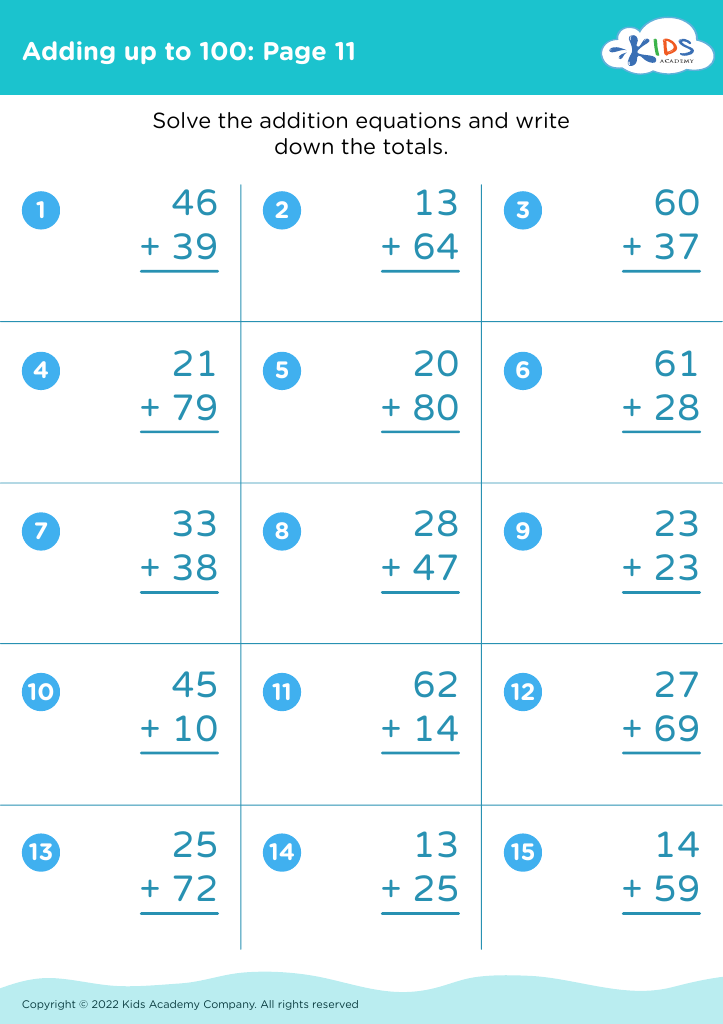
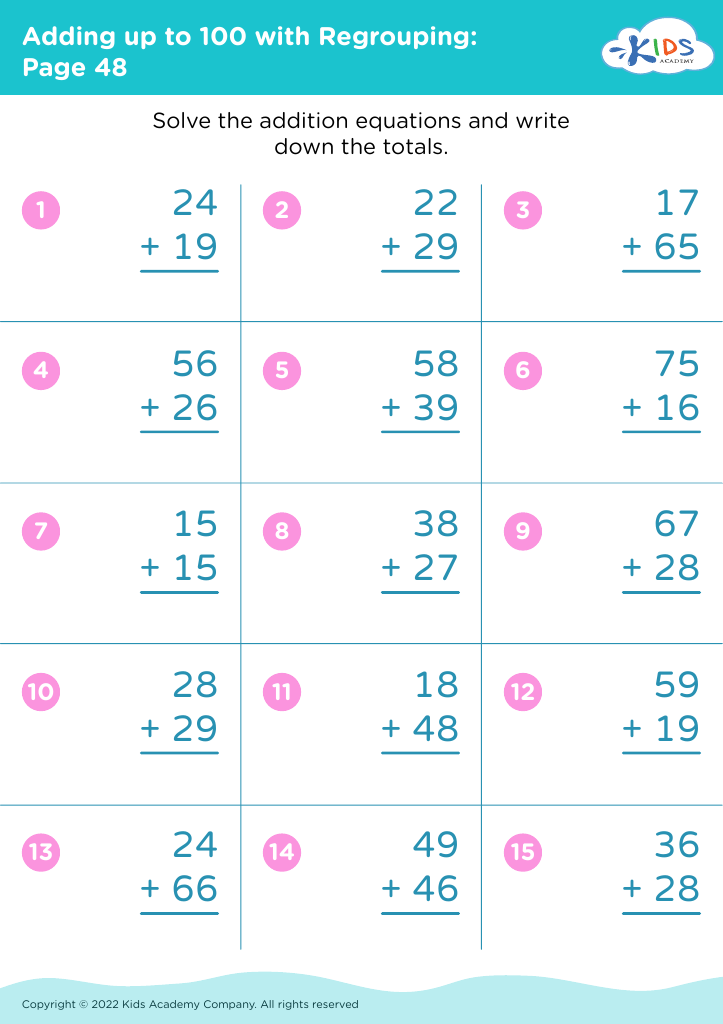
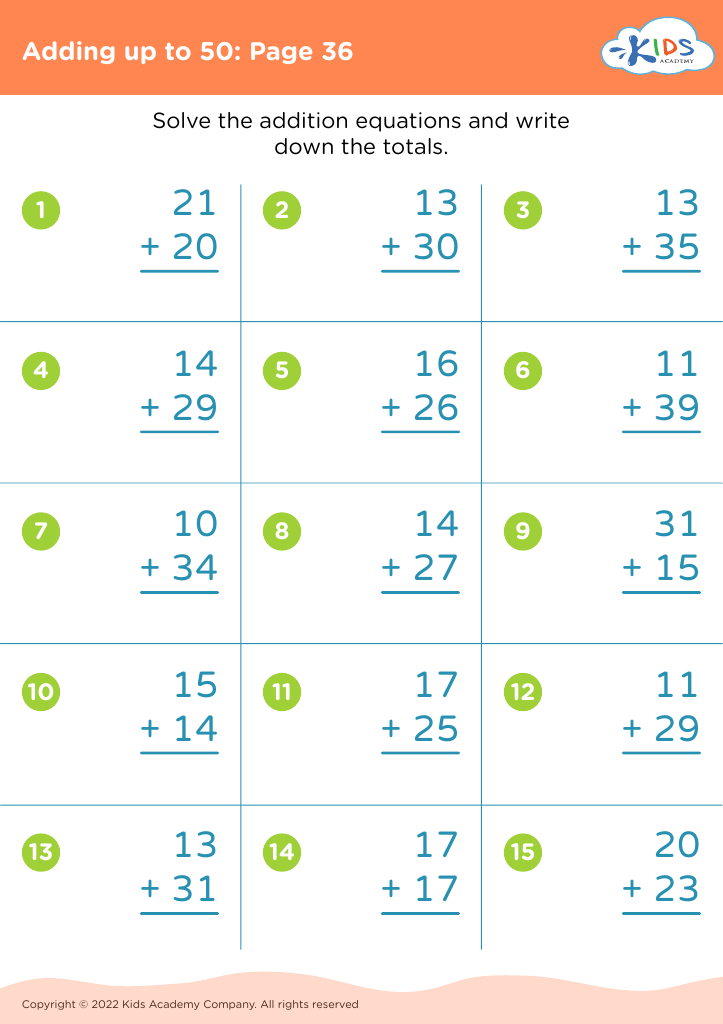
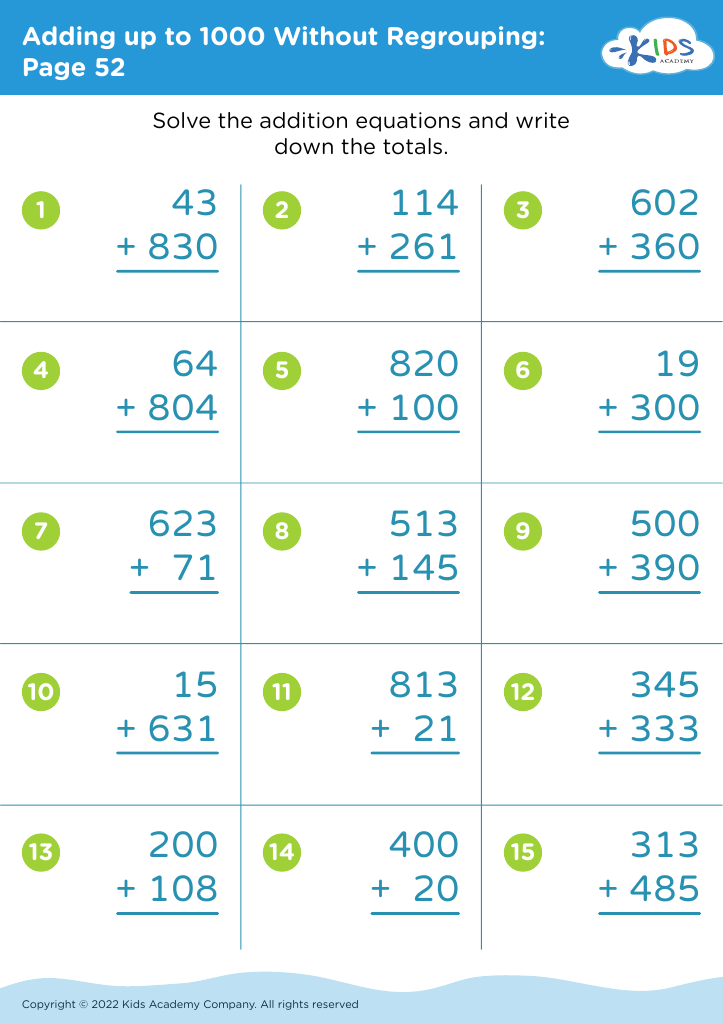
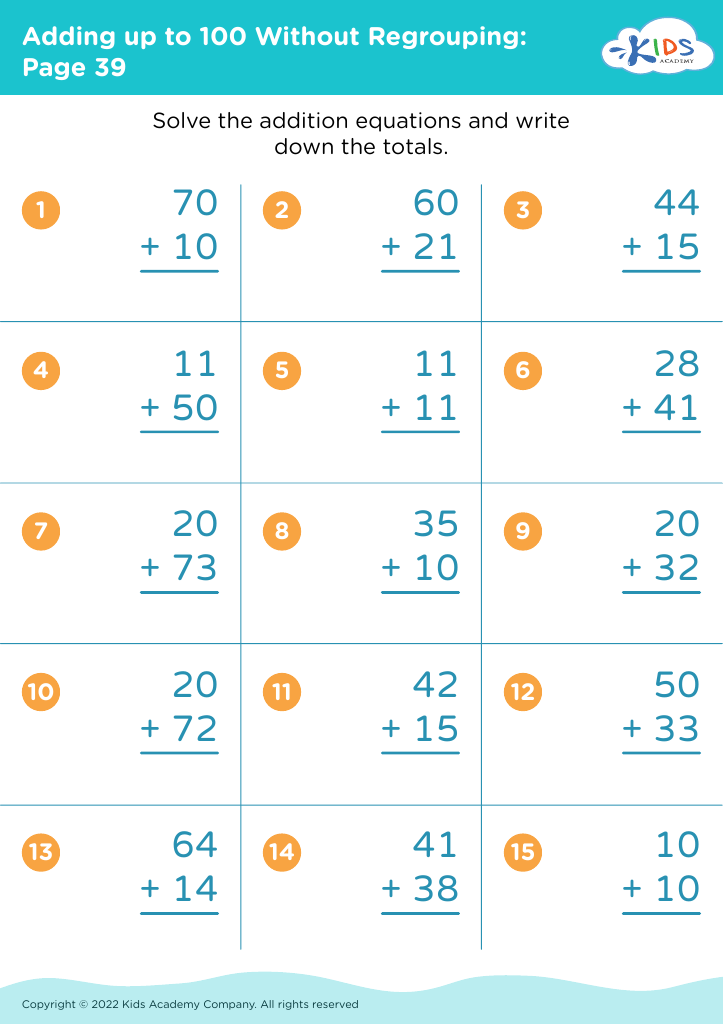
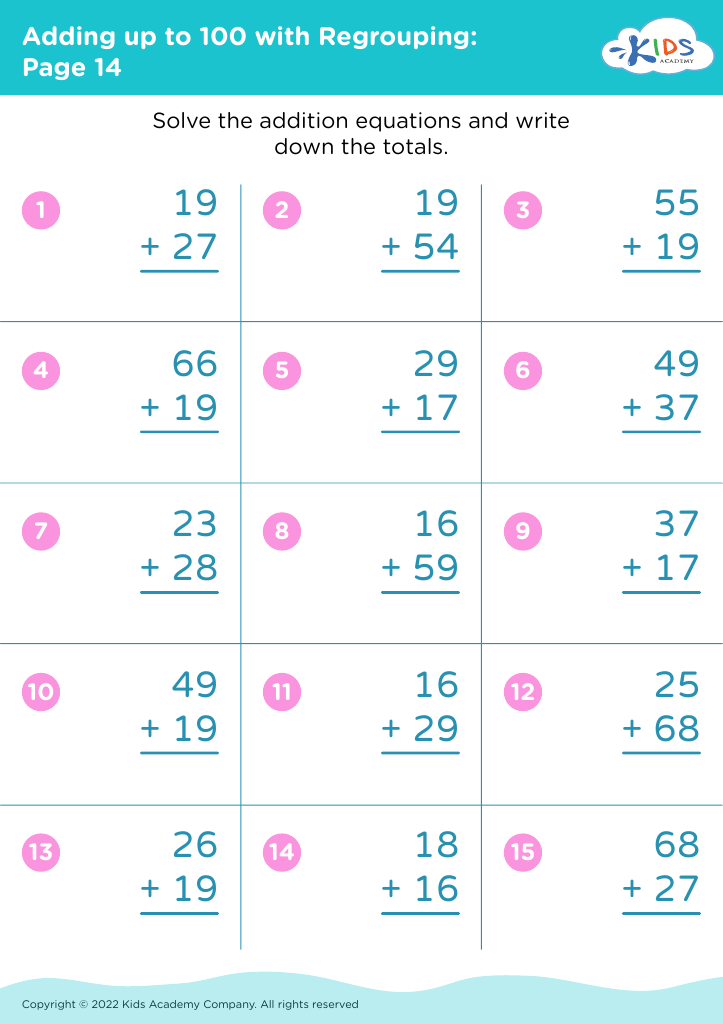
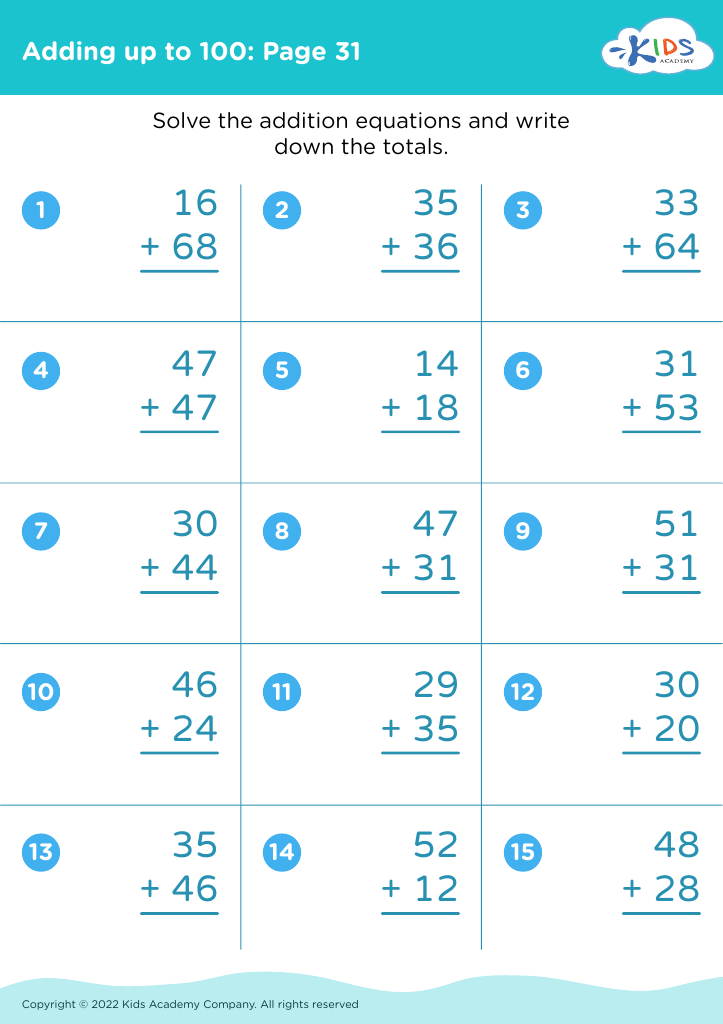
Unlock your child's mathematical potential with our Improve Counting Skills Addition Worksheets for ages 3-8 from Kids Academy. Designed to make learning fun and effective, these worksheets will enhance your child's counting abilities while introducing them to the basics of addition. Each worksheet is crafted to keep young learners engaged, providing colorful and interactive activities. Perfect for at-home practice or classroom use, our addition worksheets build a strong foundation in math through hands-on learning. Give your child a head start and watch their counting and addition skills soar with Kids Academy resources. Join now for stress-free, productive learning moments!
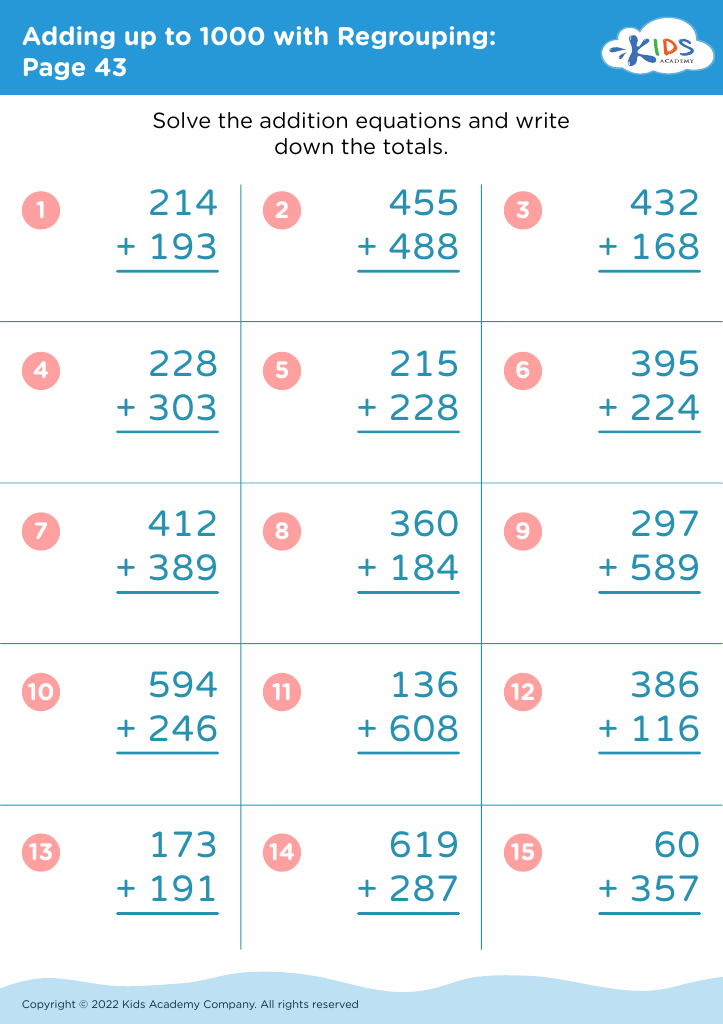
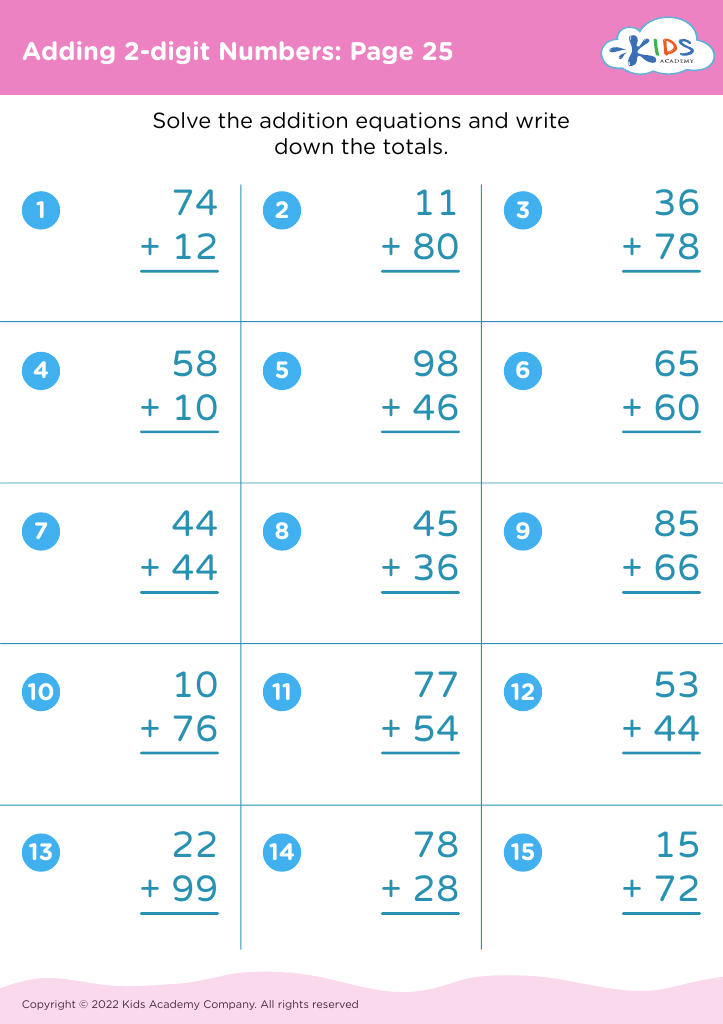
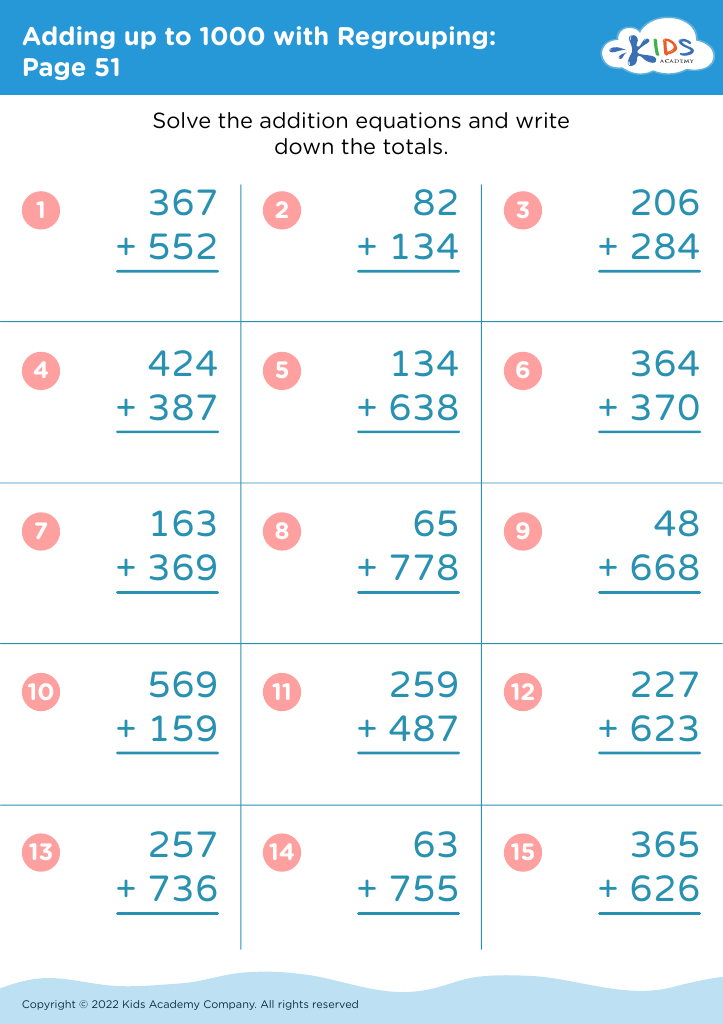
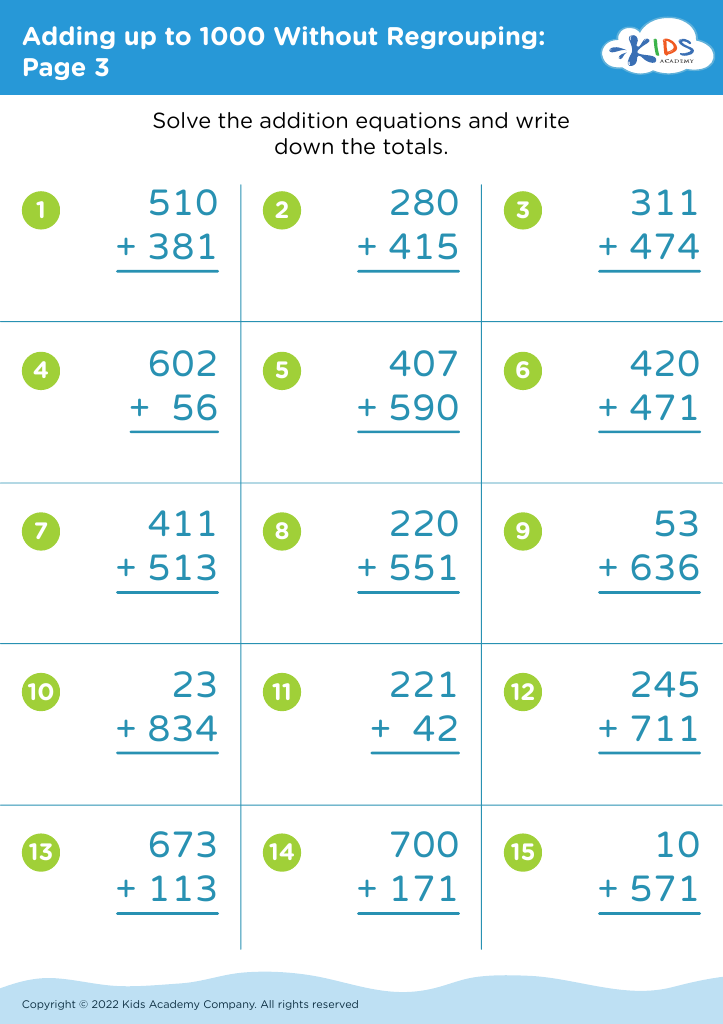
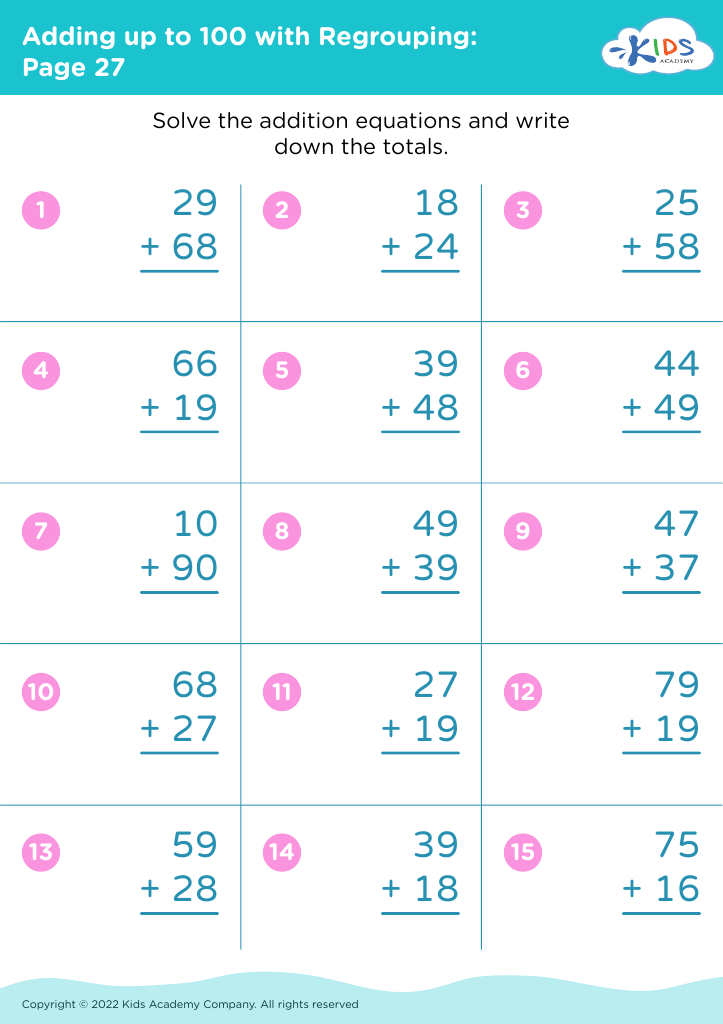
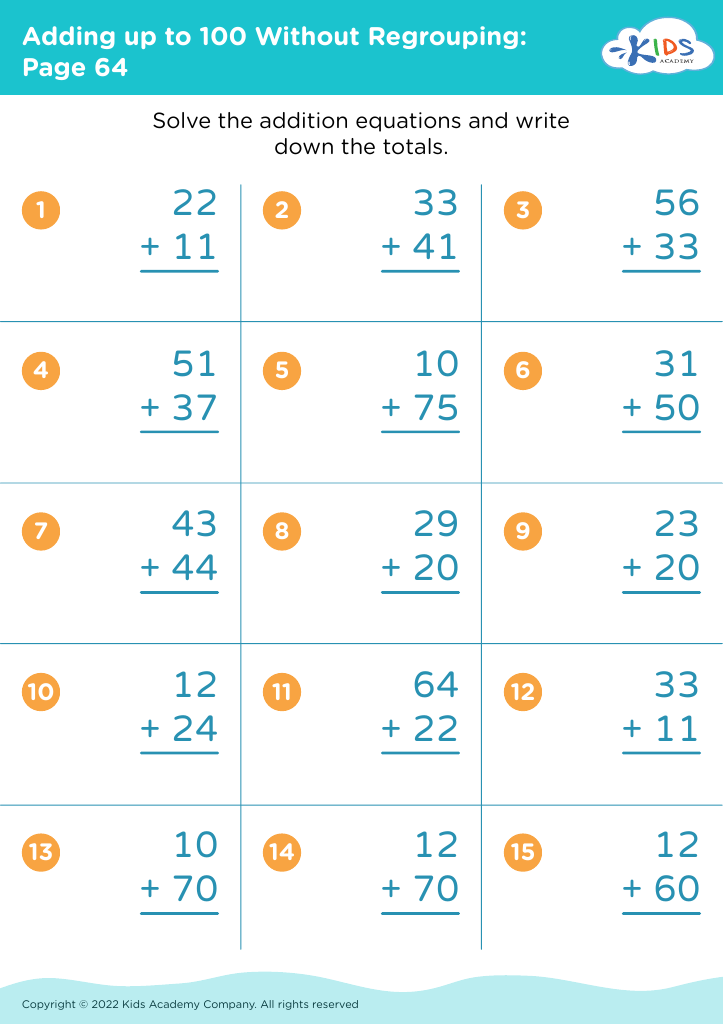
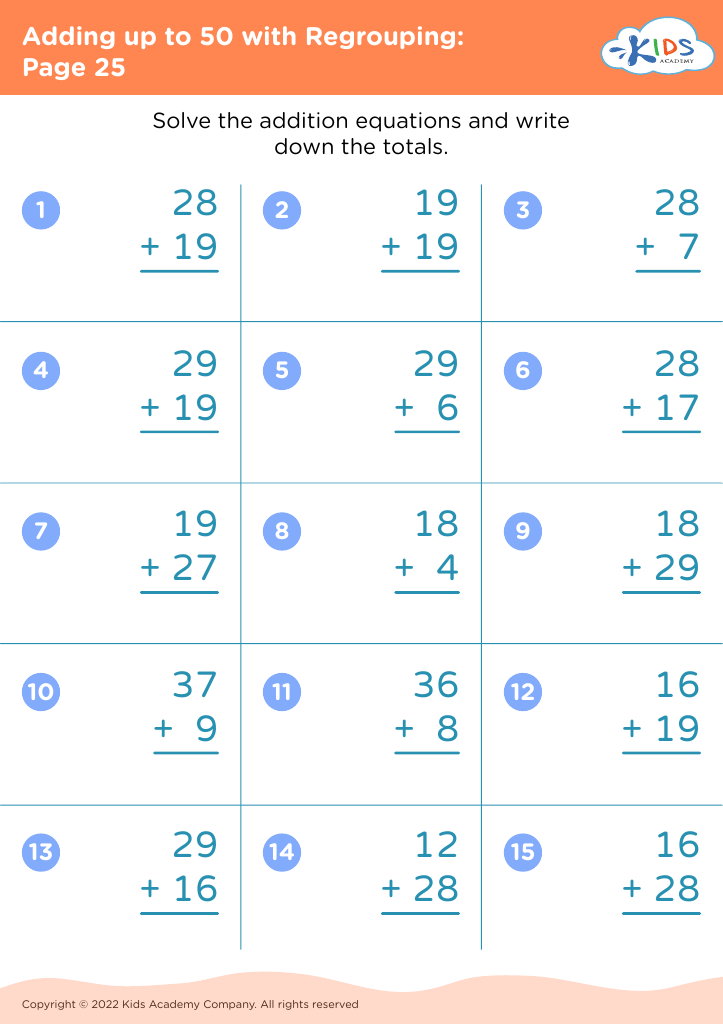
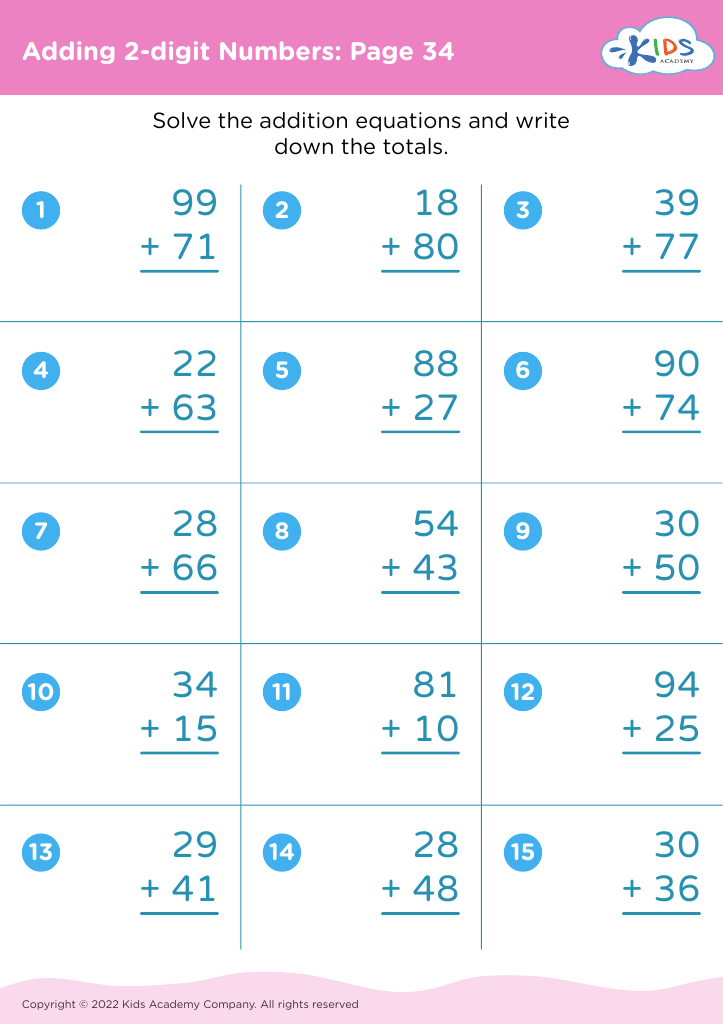
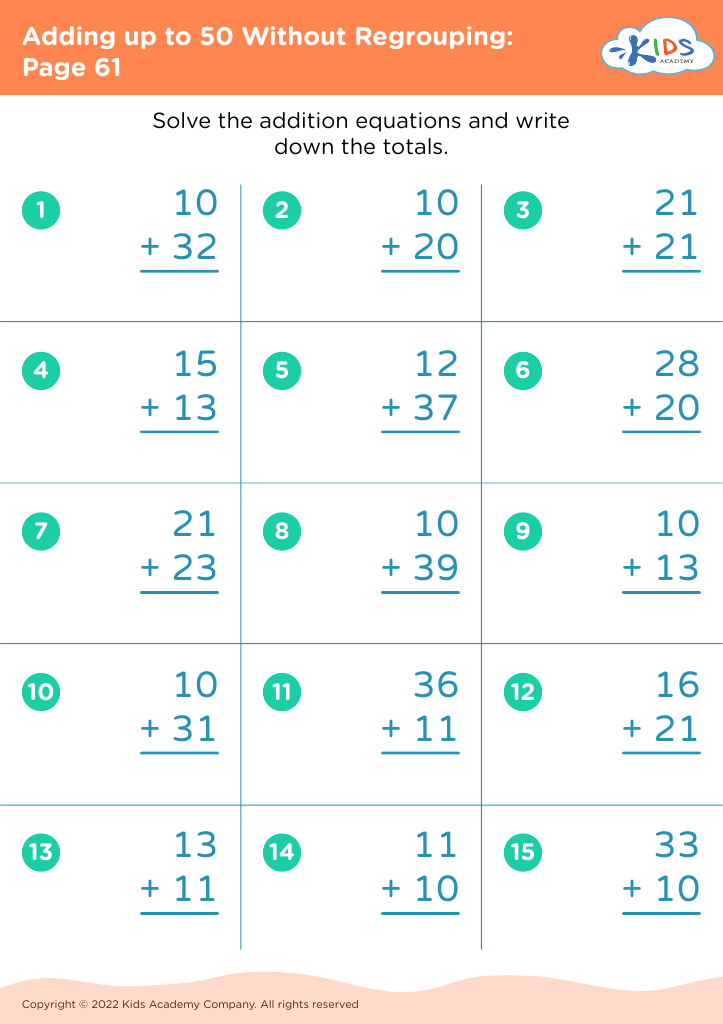
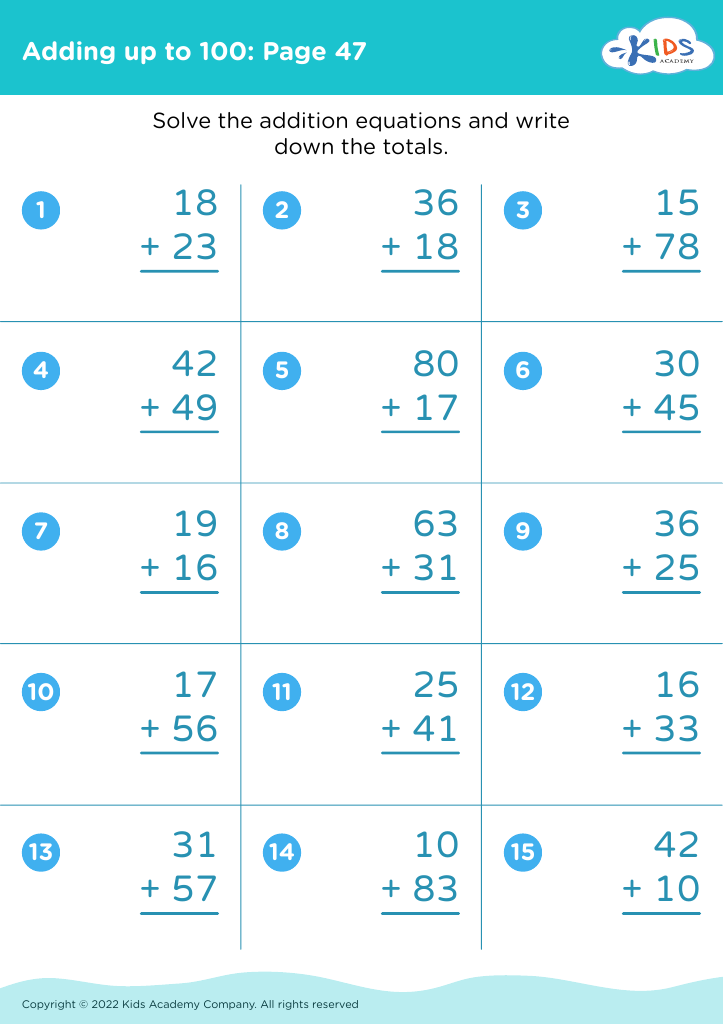
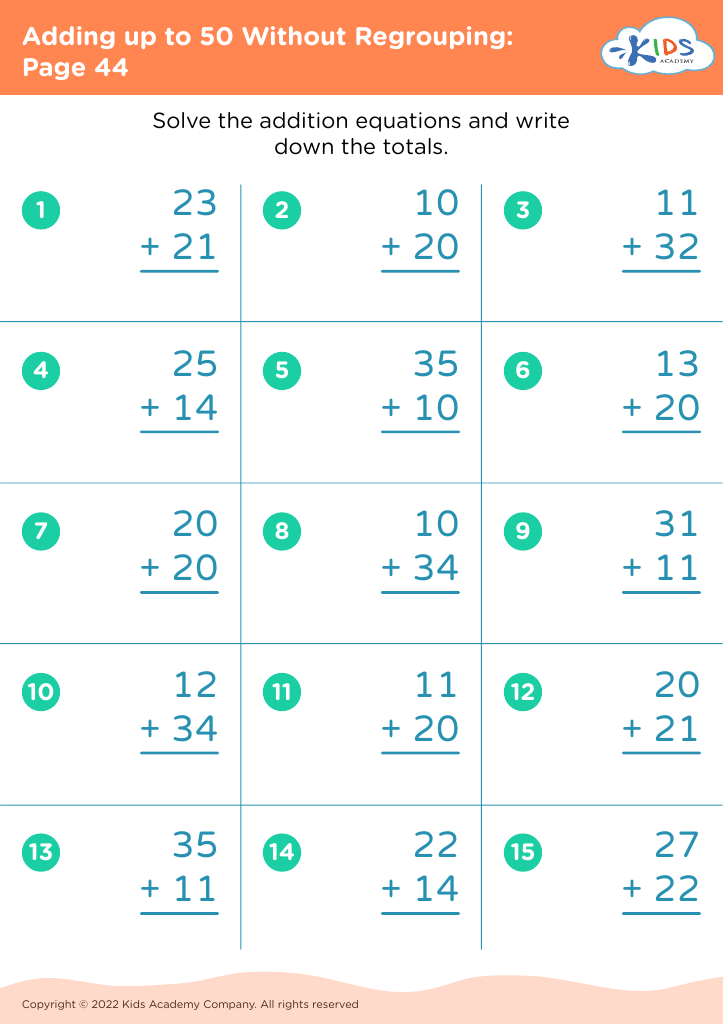
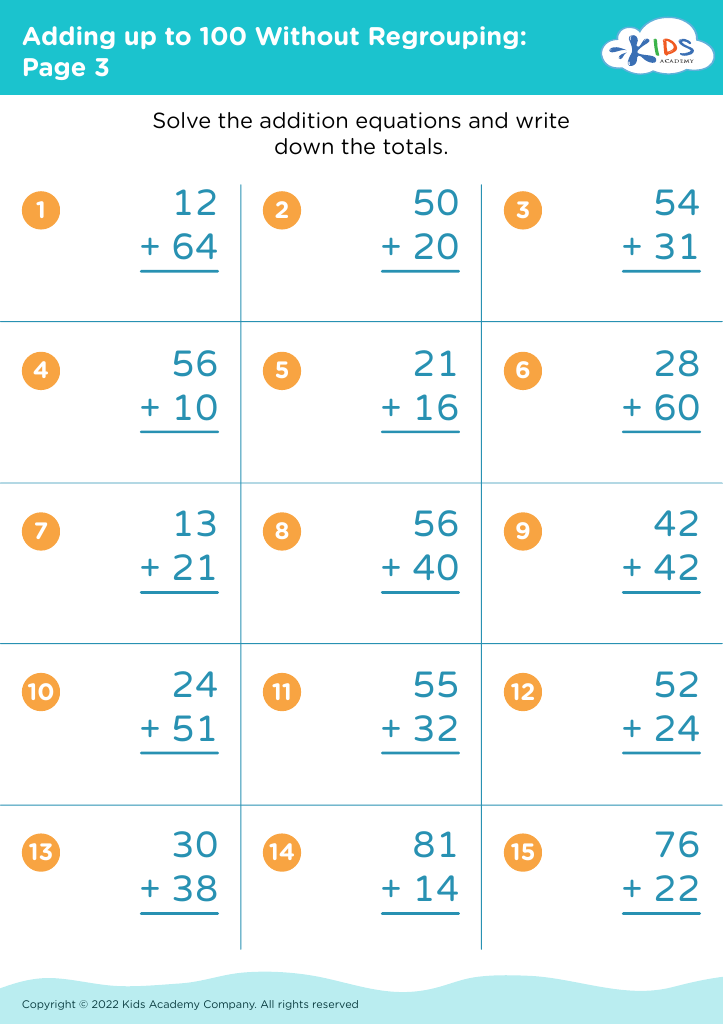



.jpg)




Counting and addition are foundational skills for young children's mathematical development, typically progressing between the ages of 3 and 8. These skills are vital for several reasons.
First, early proficiency in counting and addition lays the groundwork for advanced mathematical concepts. As children master these basics, they're better prepared to tackle subtraction, multiplication, division, and beyond, fostering confidence and promoting a positive attitude toward math.
Second, strengthening counting and addition skills enhances cognitive development. These activities improve memory, attention, and problem-solving abilities, supporting children’s overall intellectual growth. The ability to count and add also translates to real-world situations, such as recognizing the value of money, measuring ingredients in cooking, or organizing items.
Additionally, early math skills are predictive of academic success. Studies have shown that children proficient in early math are likely to excel in other subjects and perform better in school overall. Engaging with numerical tasks also enhances children’s language skills, as they learn the vocabulary and structure of numbers and mathematical expressions.
Therefore, parents and teachers should encourage and support the development of counting and addition skills to strengthen children's learning foundation, intellectual abilities, everyday competence, and future educational achievements. Both home and classroom environments play crucial roles in nurturing these essential skills through playful activities, educational games, and practical applications.








