Fraction comparison Geometry Worksheets for Ages 3-8
4 filtered results
-
From - To
Unlock the world of mathematics with our engaging Fraction Comparison Geometry Worksheets, designed specifically for children ages 3-8. These colorful and interactive worksheets provide a fun way to introduce young learners to the concepts of fractions and how they compare with one another. By incorporating visual elements and practical exercises, children will develop a foundational understanding of fractions in relatable contexts. Our resources are perfect for use in classrooms or at home, catering to various learning styles while fostering critical thinking and problem-solving skills. Discover the joy of learning geometry with our fraction comparison worksheets today!
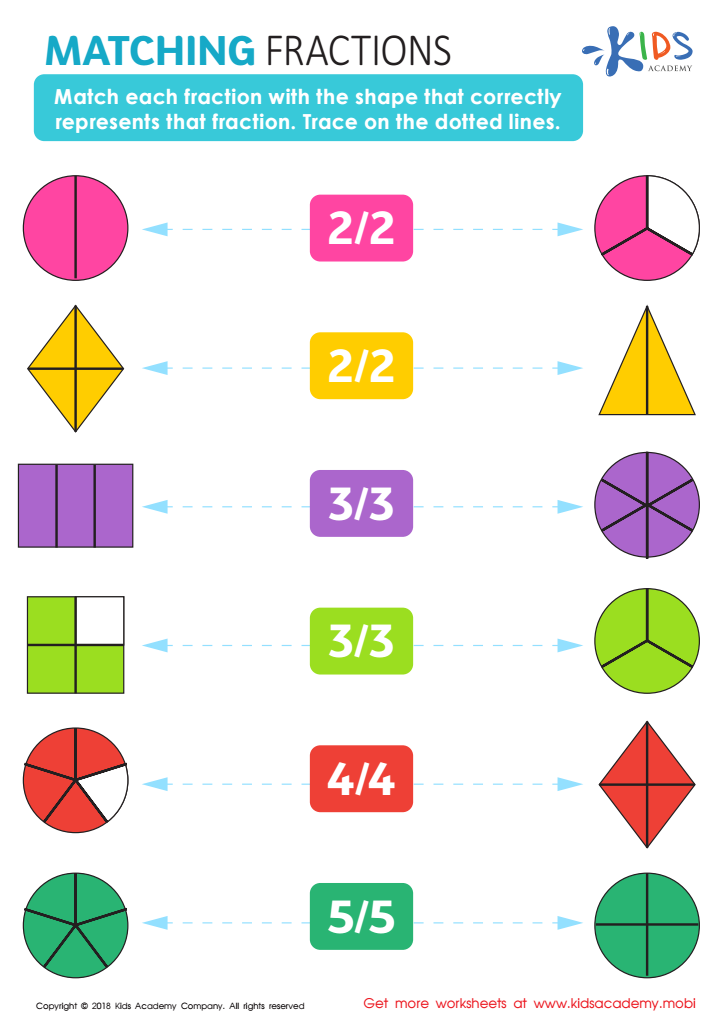
Matching Fractions Worksheet
 Assign to My Students











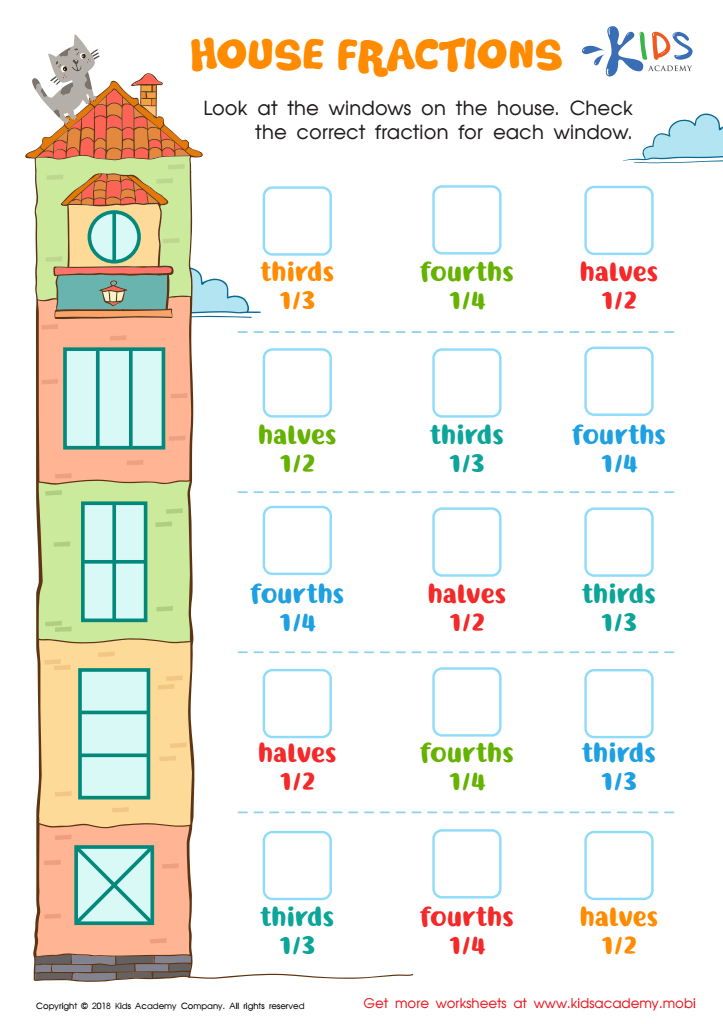
House Fractions Worksheet
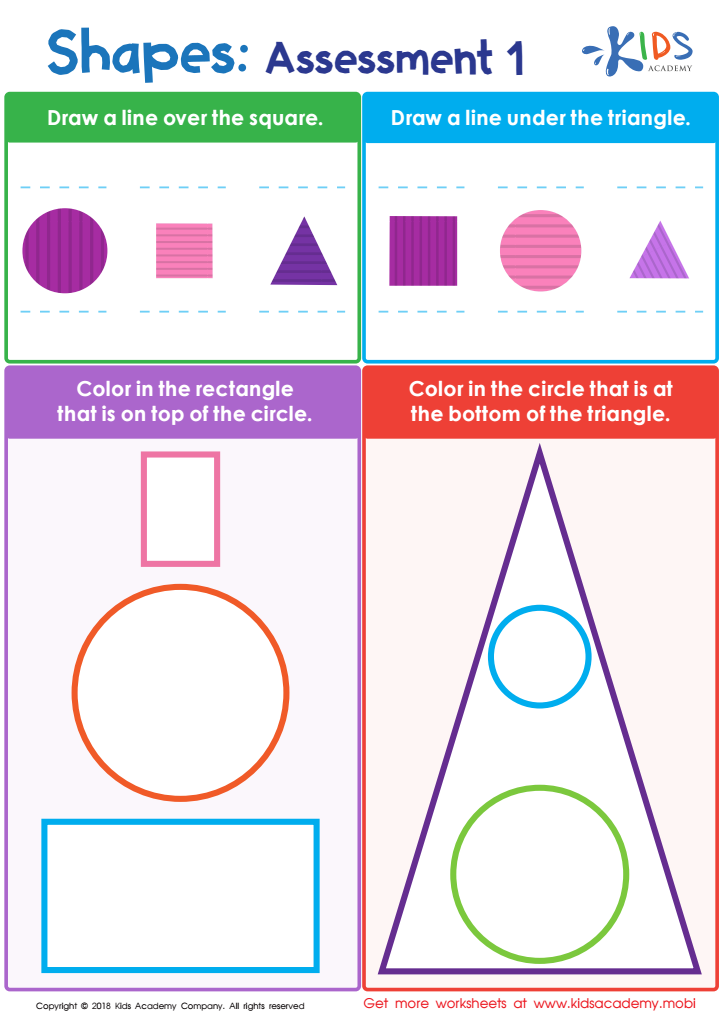
Shapes: Assessment 1 Worksheet
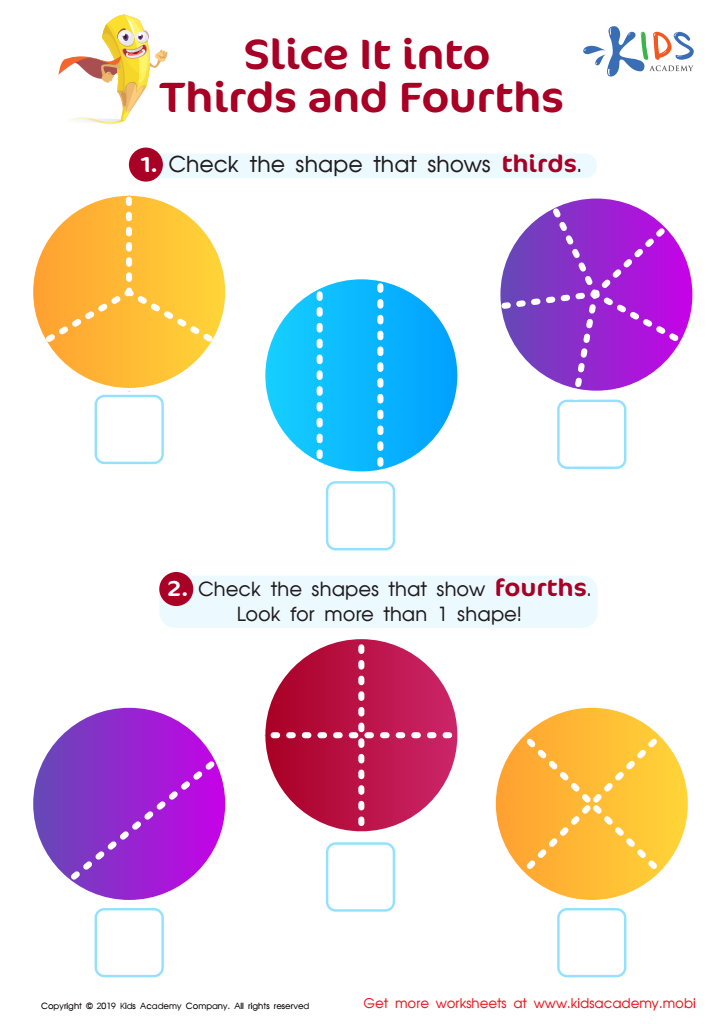
Slice in Thirds Fourths Worksheet








Understanding fraction comparison and basic geometry is crucial for children ages 3-8 as it lays the foundation for their mathematical thinking and problem-solving skills. These concepts help young learners develop critical cognitive skills such as spatial awareness, reasoning, and the ability to make connections between different mathematical ideas.
Fractions introduce children to the concept of part-to-whole relationships, teaching them how to compare sizes and understand proportions. This foundation is essential for everyday life tasks, whether it’s sharing food or understanding measurements in cooking. Recognizing and comparing fractions fosters counting skills and encourages the ability to make judgments about quantities, promoting numeracy.
Moreover, engaging with geometry helps children understand shapes, sizes, and spatial relationships. It enhances their ability to visualize and manipulate objects, which is vital not just in mathematics but also in physics, engineering, and art. As students grow, these foundational skills facilitate their understanding of more complex mathematical concepts.
For parents and teachers, integrating fraction comparison and geometry into learning activities becomes an excellent opportunity to encourage curiosity, collaboration, and hands-on learning. By making math playful and relevant, educators foster a positive attitude toward mathematics, setting a sturdy basis for lifelong learning.








