Hand-eye Coordination Geometry Worksheets for Ages 3-8
7 filtered results
-
From - To
Enhance your child's learning with our Hand-eye Coordination Geometry Worksheets designed specifically for ages 3-8. These engaging and interactive worksheets focus on developing essential hand-eye coordination skills while introducing fundamental geometric concepts. Perfect for young learners, they feature vibrant visuals and entertaining activities that make learning fun. Your child will learn to identify shapes, practice drawing, and complete puzzles that build their confidence and improve fine motor skills. Whether at home or in the classroom, our worksheets provide a valuable resource for nurturing early mathematical understanding and cognitive development. Explore our collection today to inspire a love of learning in your child!
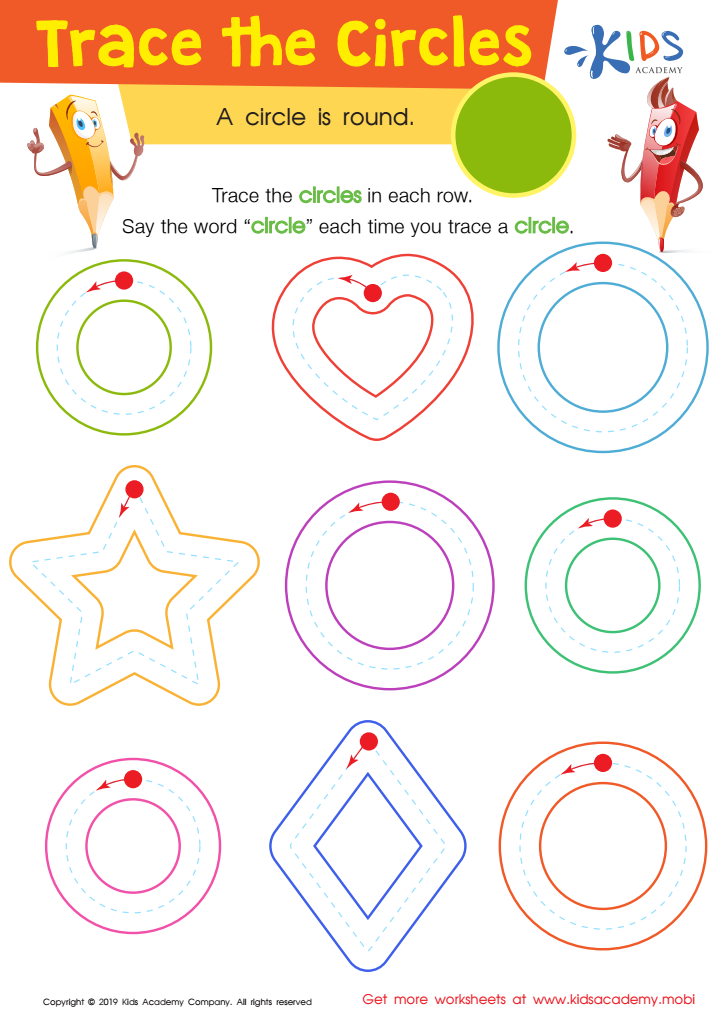
Trace The Circles Worksheet
 Assign to My Students











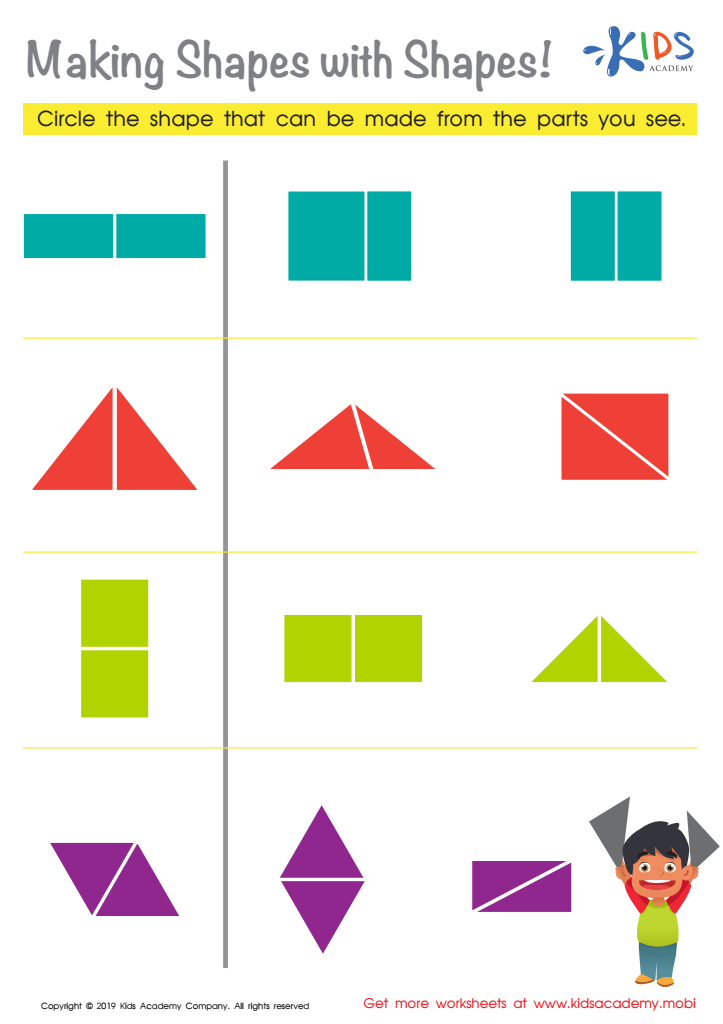
Making Shapes with Shapes Worksheet
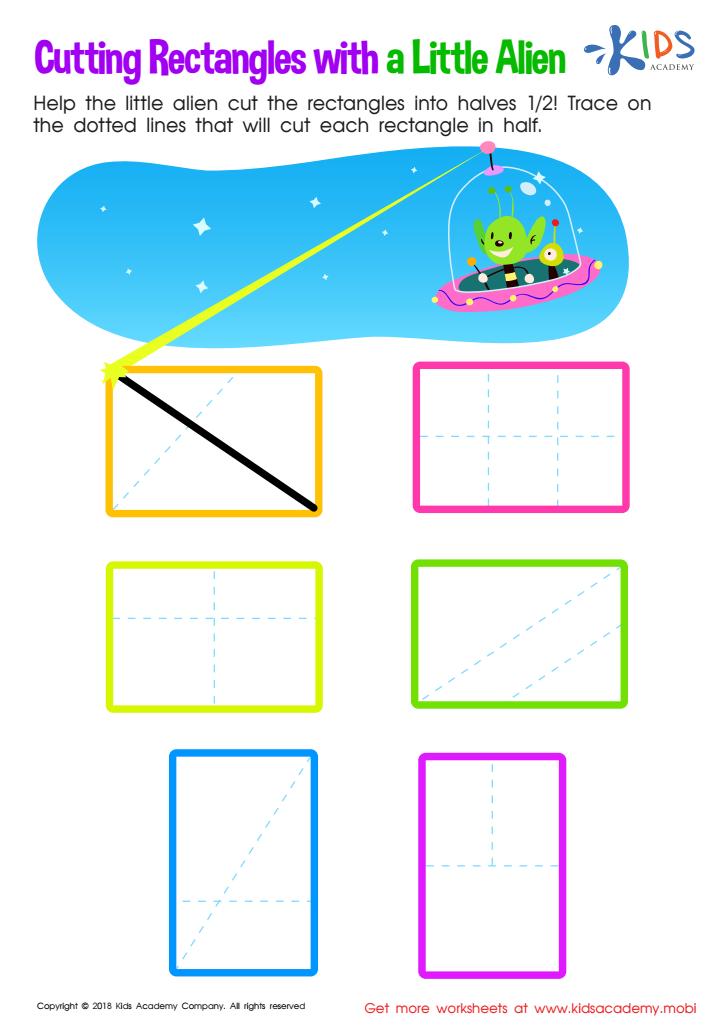
Cutting Rectangles with Alien Worksheet
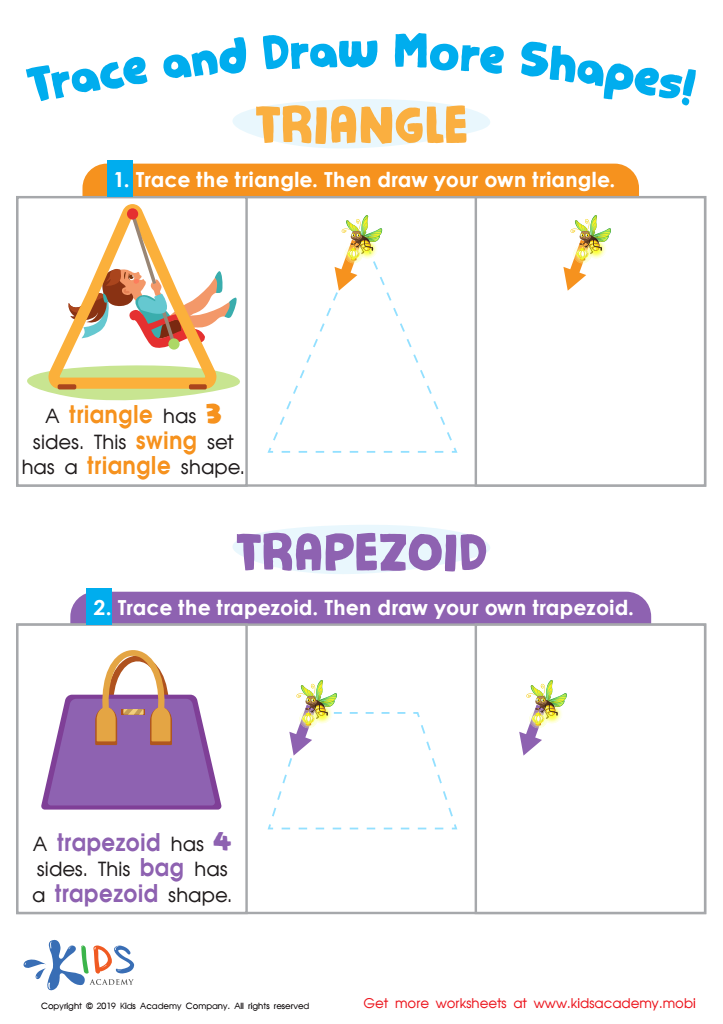
Trace and Draw More Shapes Worksheet
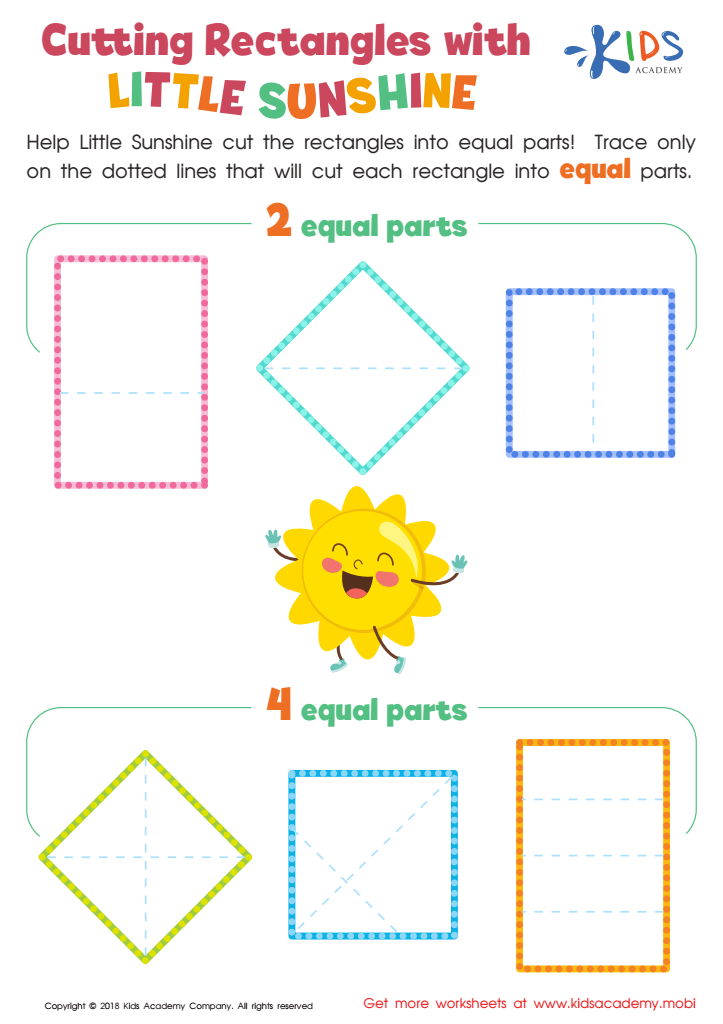
Cutting Rectangles with Little Sunshine Worksheet
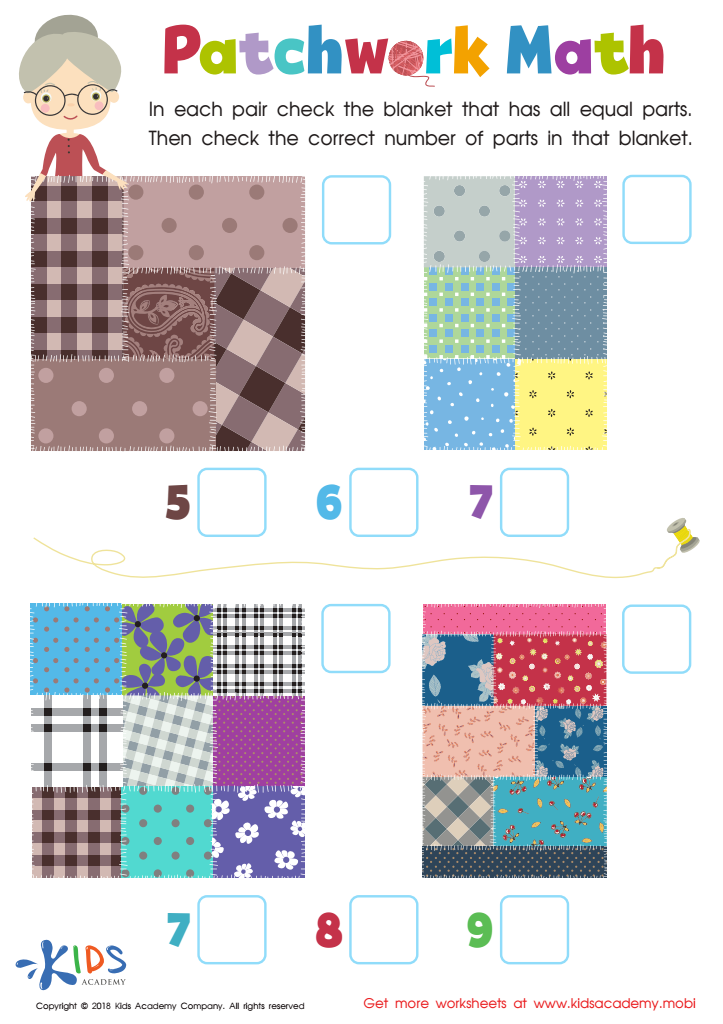
Patchwork Math Worksheet








Hand-eye coordination and geometry are crucial components of early childhood development, particularly for children aged 3-8 years. At this stage, children are developing essential motor skills and cognitive abilities that lay the foundation for future learning and everyday tasks. Hand-eye coordination involves the ability to synchronize visual input with physical movement, a skill vital for activities like writing, drawing, and playing sports.
Incorporating geometry into this skill enhances spatial awareness—understanding shapes, sizes, and relationships between objects. By engaging in activities that require both hand-eye coordination and geometric recognition, such as building blocks, puzzles, or drawing shapes, children develop critical thinking and problem-solving skills. Engaging parents and teachers in this aspect of learning can lead to enriching discussions, creative projects, and playful learning experiences that reinforce these concepts.
Moreover, cultivating these skills during early childhood not only boosts academic readiness but also promotes confidence and independence in children. Activities that combine coordination and geometric concepts are often enjoyable, making learning more effective and engaging. By nurturing these skills, parents and teachers can help children become well-rounded learners, capable of tackling more complex academic and life challenges in the future.








