Understanding fractions Geometry Worksheets for Ages 3-8 - Page 2
36 filtered results
-
From - To
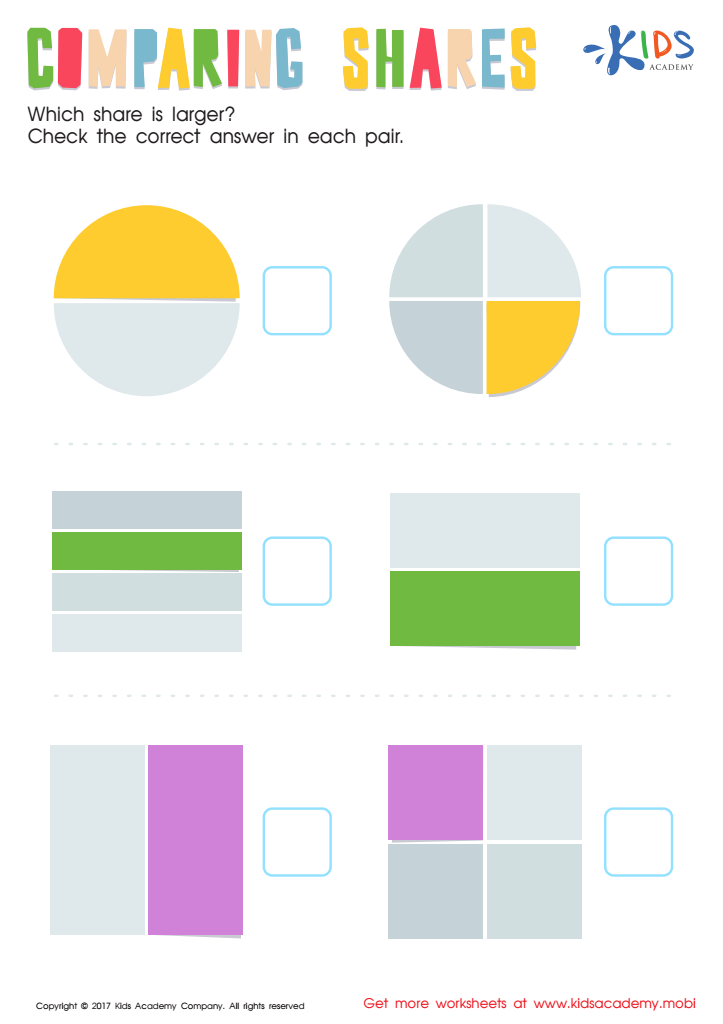
Comparing Shares Worksheet
 Assign to My Students











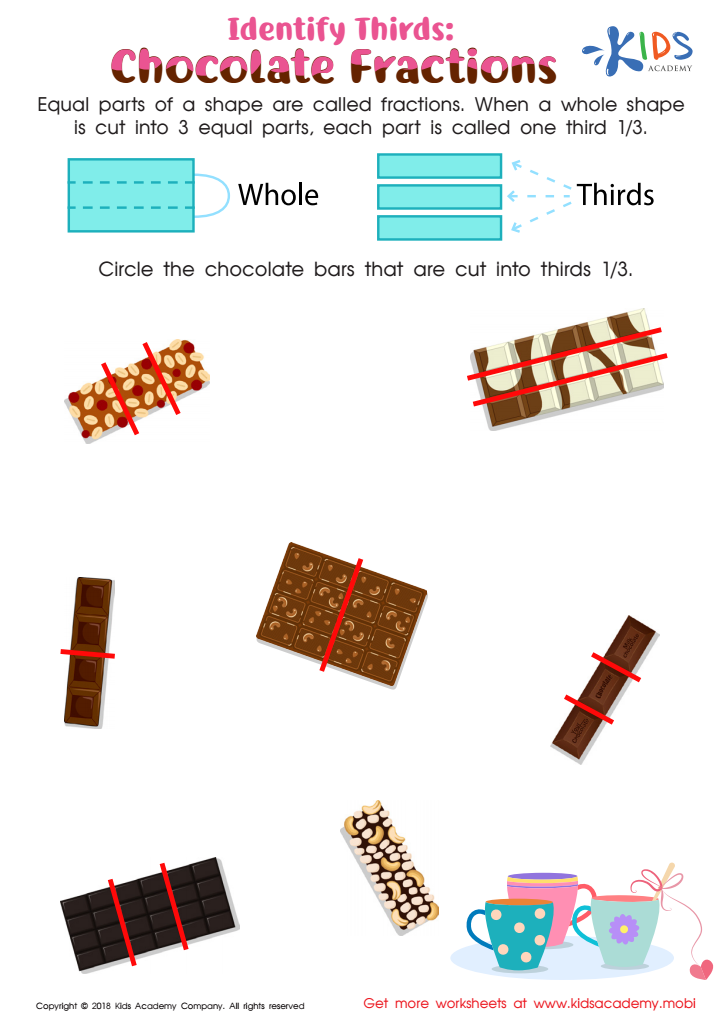
Identify Thirds: Chocolate Fractions Worksheet
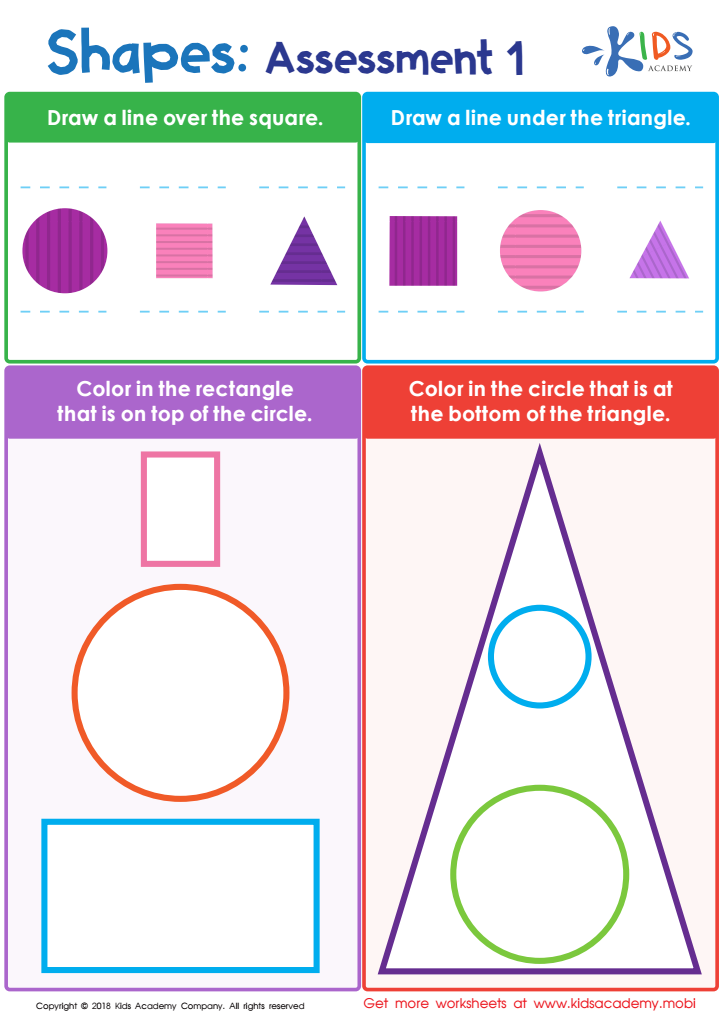
Shapes: Assessment 1 Worksheet
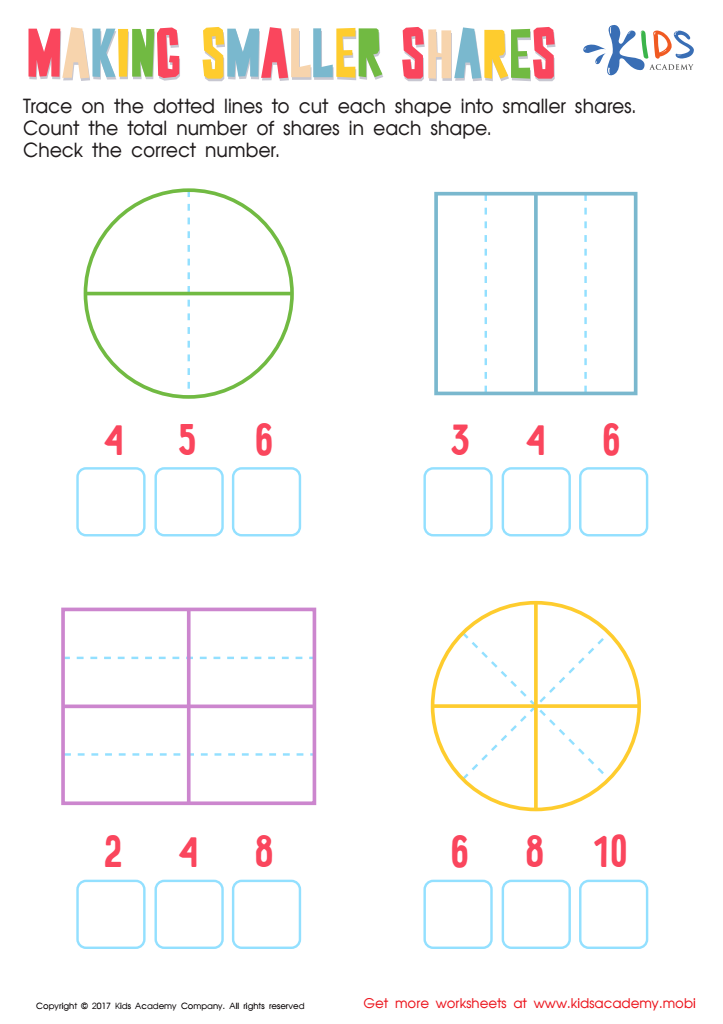
Making Smaller Shares Worksheet
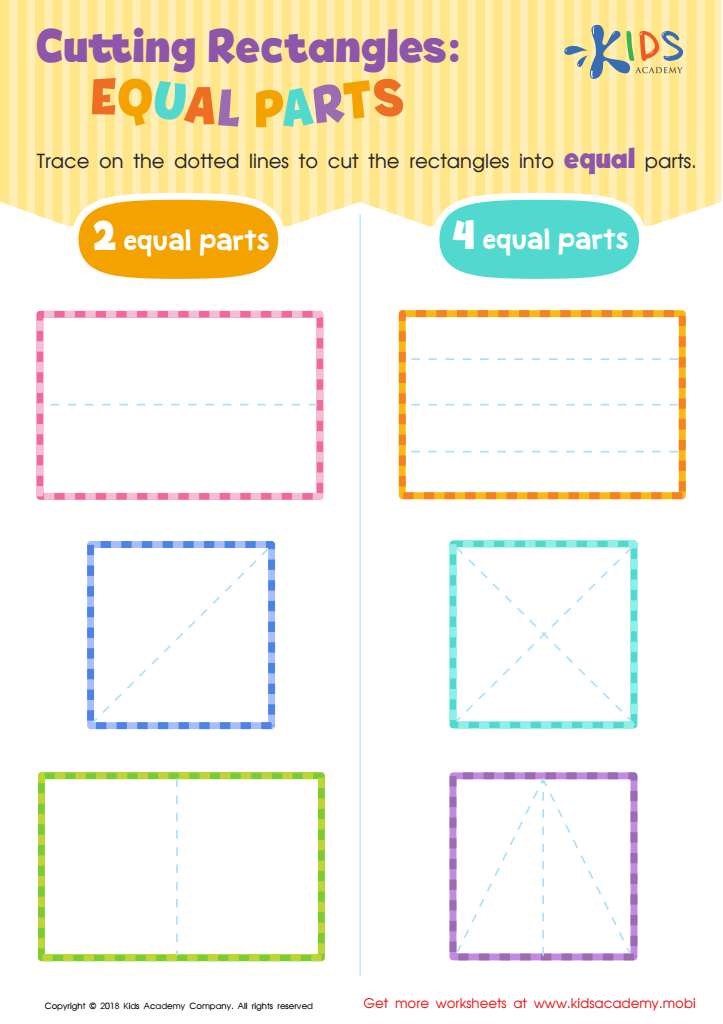
Cutting Rectangles: Equal Parts Worksheet
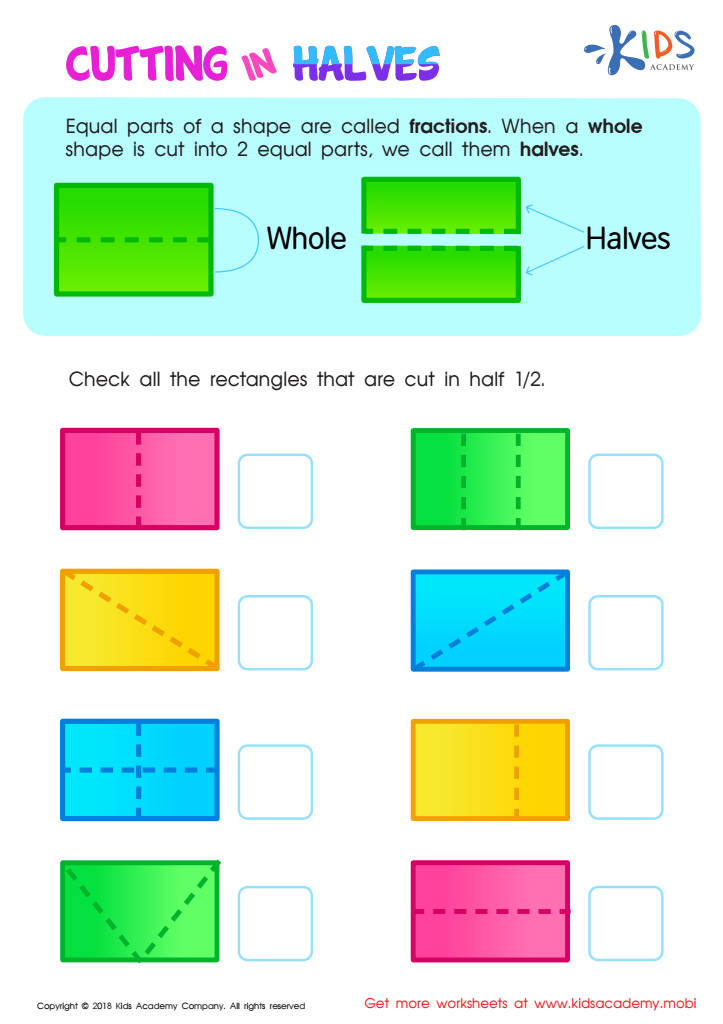
Cutting in Halves Worksheet
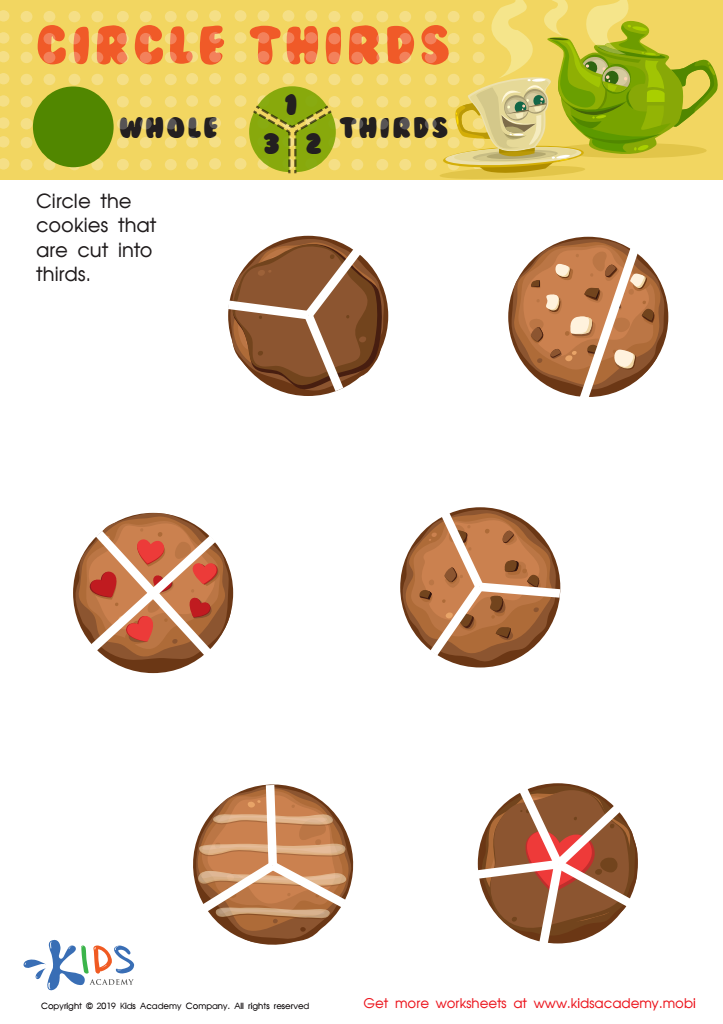
Circle Thirds Worksheet
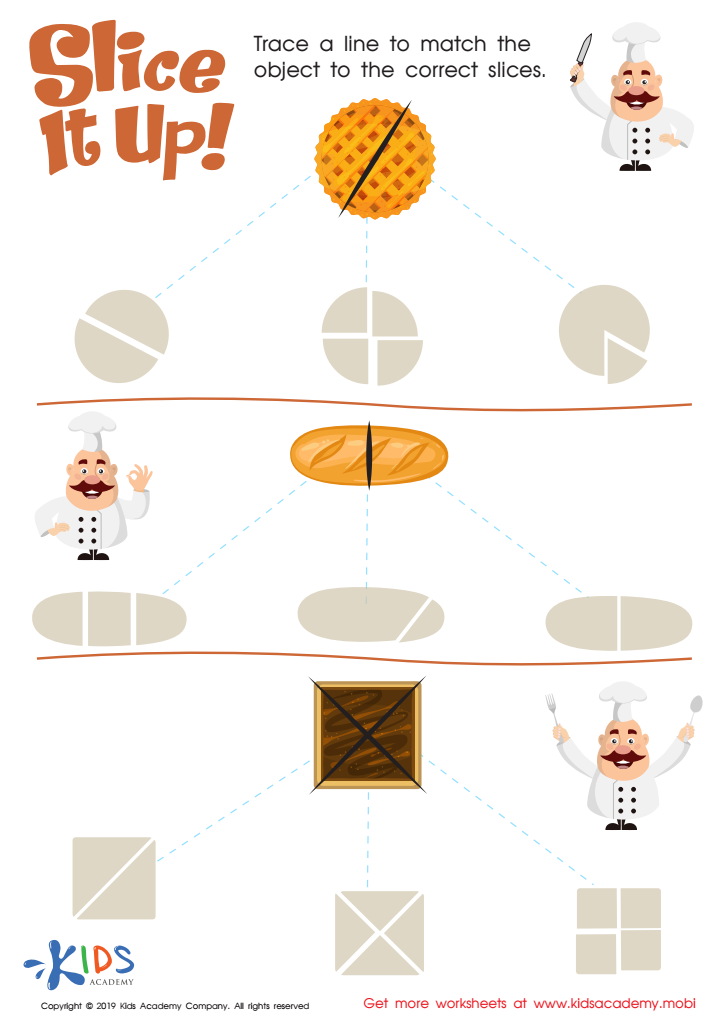
Slice It Up Worksheet
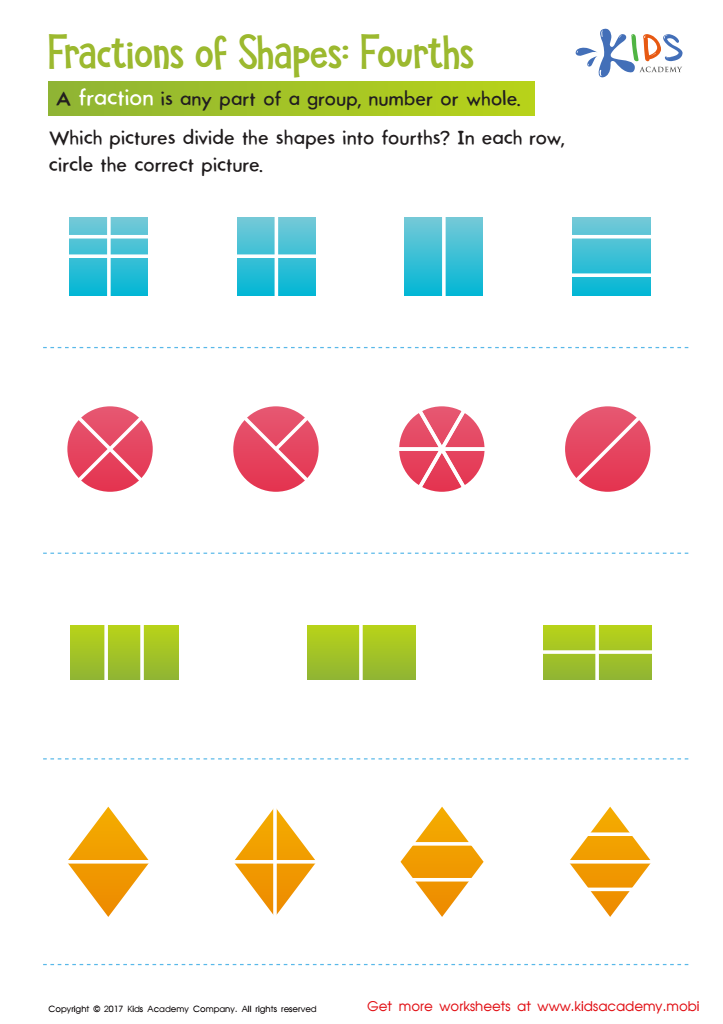
Fractions of Shapes Worksheet
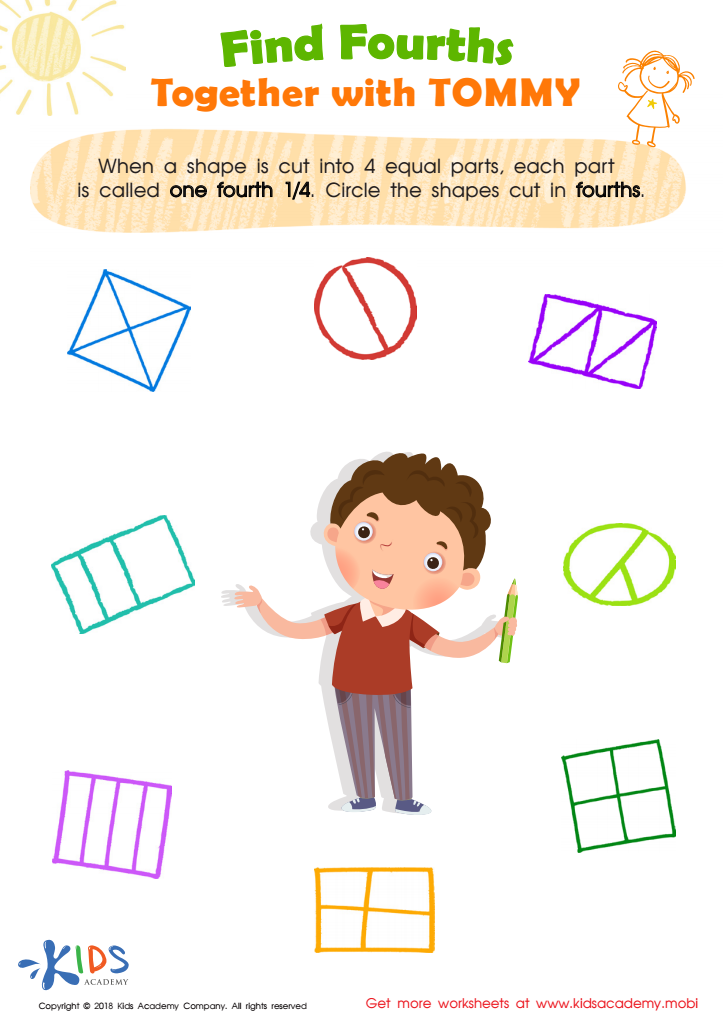
Find Fourths Together with Tommy Worksheet
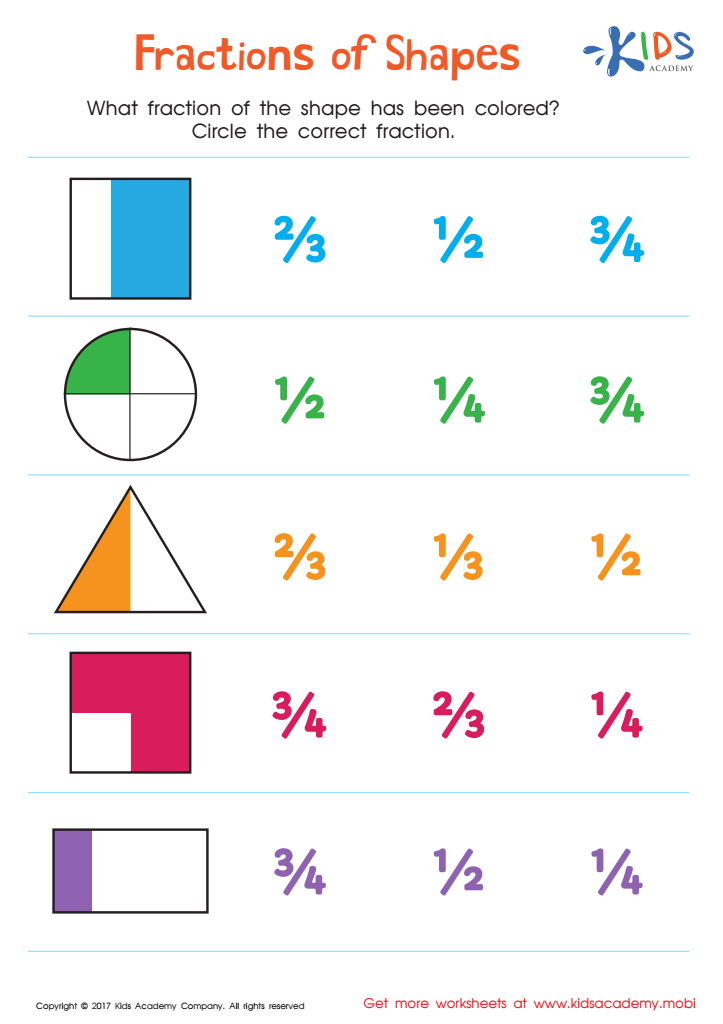
Fractions of Shapes: Math Concept Worksheet
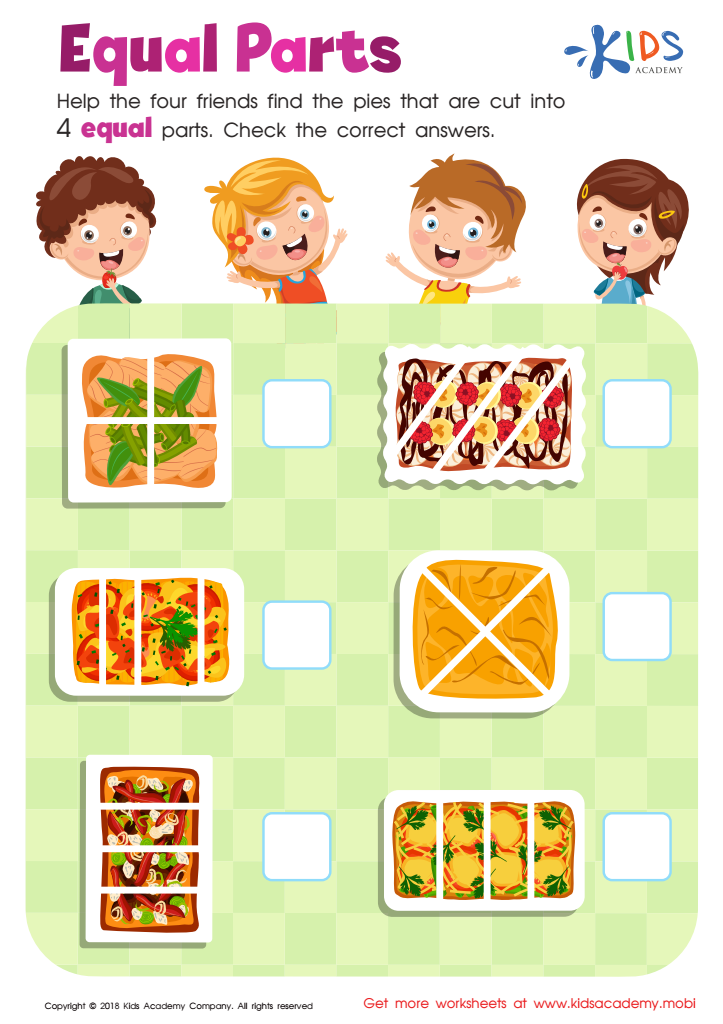
Equal Parts: Food Worksheet








Understanding fractions and geometry at an early age is crucial, as these concepts lay the groundwork for future mathematical proficiency. When children, aged 3-8, engage with fractions, they begin to develop foundational number sense, learning how to partition a whole into equal parts. This understanding is integral to grasping more complex mathematical ideas later on, such as ratios, percentages, and algebra.
Similarly, geometry helps young learners develop spatial reasoning skills. By exploring shapes, sizes, and the relationships between different forms, children enhance their ability to visualize and manipulate objects in space. This spatial awareness is not only essential in mathematics but also in everyday activities and future STEM (Science, Technology, Engineering, and Math) learning.
Moreover, early exposure to fractions and geometry promotes problem-solving skills and critical thinking. These subjects teach children to approach complex problems methodically, breaking them down into simpler parts—a skill that has broad applications beyond mathematics.
Parents and teachers play a pivotal role in fostering a positive and engaging learning environment. By introducing these concepts through play, hands-on activities, and real-life examples, adults can help demystify mathematics, making it accessible and enjoyable. This proactive approach equips children with confidence and a solid foundation to navigate future academic challenges.








