Visual Perception Skills Geometry Worksheets for Ages 3-8
3 filtered results
-
From - To
Boost your child's visual perception skills with engaging Geometry Worksheets designed for ages 3-8! Our fun and educational worksheets help kids develop crucial skills like shape recognition, spatial awareness, and problem-solving. Each printable sheet incorporates delightful activities tailored to each age group, promoting interactive learning through coloring, matching, and tracing. Perfect for preschoolers and early grade students, these worksheets make complex geometric concepts enjoyable and accessible. Visit Kids Academy to download your free worksheets and give your little one's visual perception skills a real boost, setting the foundation for future success in math.
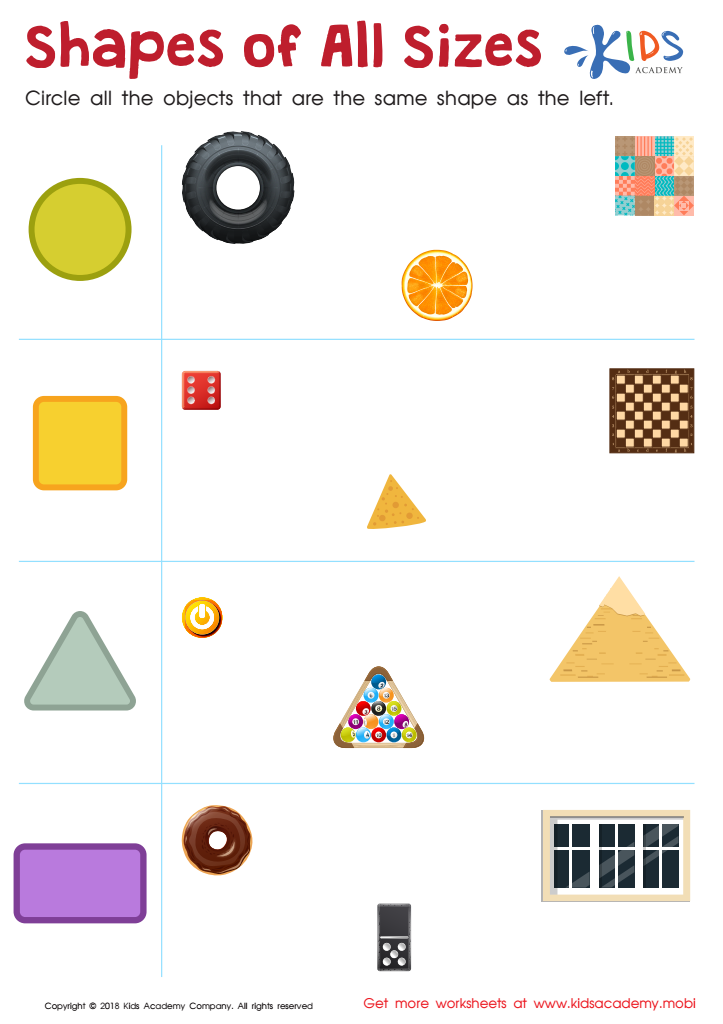
Shapes of All Sizes Worksheet
 Assign to My Students











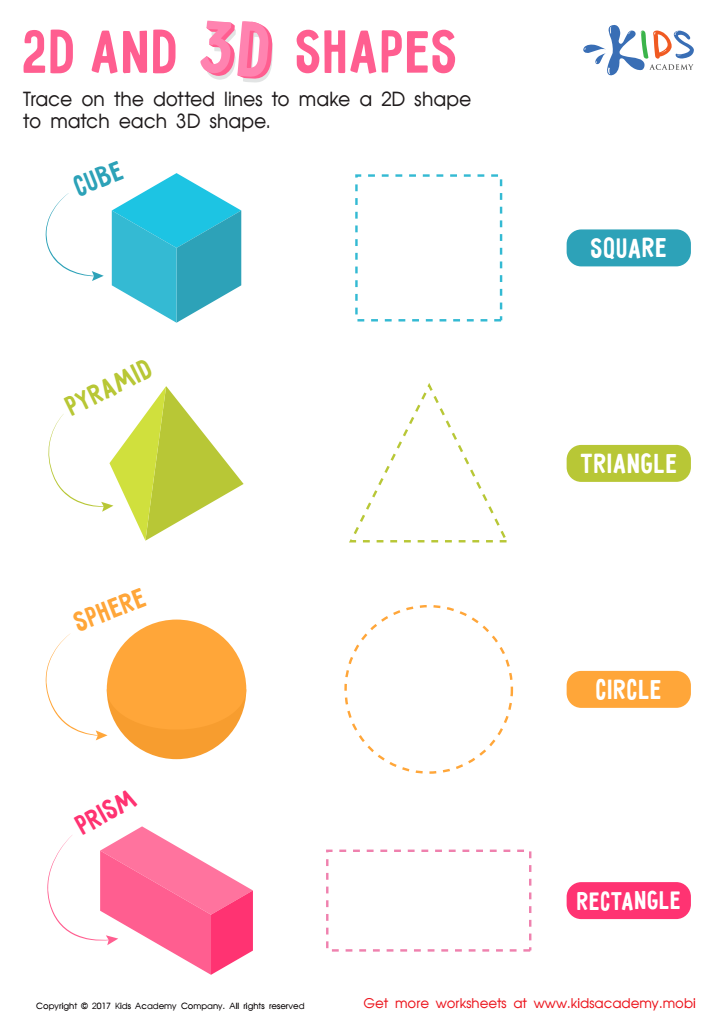
2D and 3D Shapes Worksheet
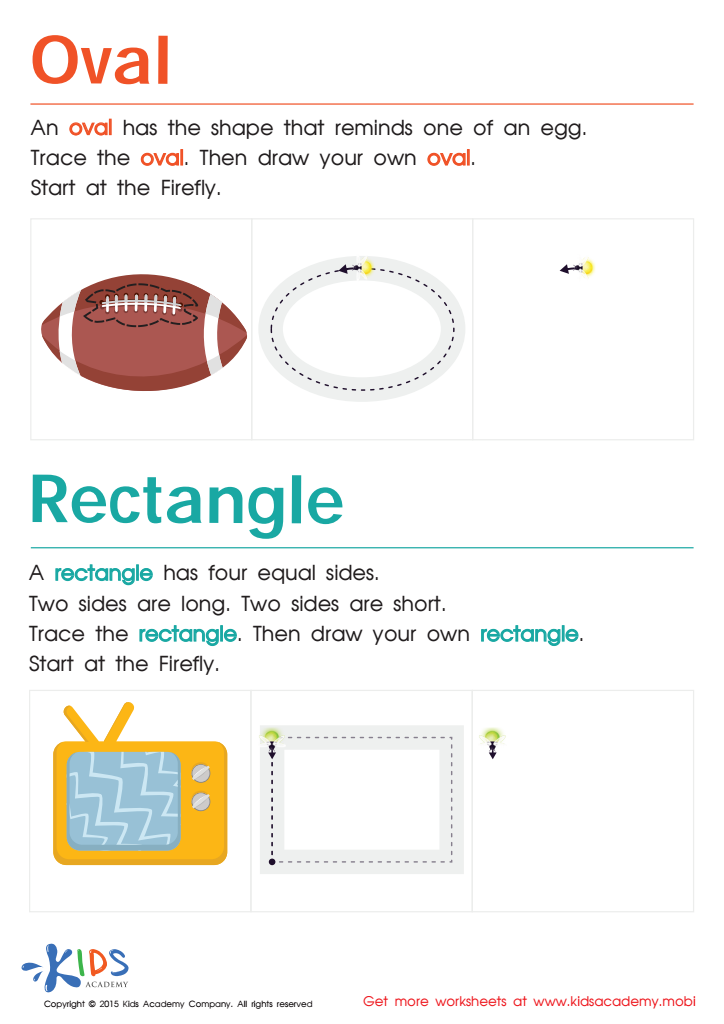
Easy Drawing of Ovals And Rectangles Worksheet








Visual perception skills are critical cognitive abilities that allow children to interpret and understand visual information from the world around them. For ages 3-8, a prime foundational period, developing these skills in the context of geometry offers numerous benefits for both academic and everyday activities.
First and foremost, strong visual perception skills in geometry help children better understand spatial relationships, which are essential for tasks like reading, writing, and arithmetic. Recognizing and manipulating shapes and patterns enhances a child’s ability to discern different letters and numbers, boosting early literacy and numeracy. For example, differentiating between "b" and "d" or understanding that a square and a rectangle both have four sides but different attributes are crucial stepping stones in their learning journey.
Additionally, these skills foster problem-solving abilities and critical thinking. Interactive activities like puzzles, building blocks, and drawing geometric shapes challenge children to envision and execute solutions, enhancing their cognitive flexibility and creativity. This not only prepares them for math and science but also translates into everyday problem-solving skills.
Moreover, honing visual perception in geometry builds a strong foundation for more complex mathematical concepts. By ensuring that children have ample opportunity to develop these skills, parents and teachers can significantly contribute to their overall cognitive development, setting them up for success in school and life.








