Graphs Worksheets for Ages 3-8 - Page 2
27 filtered results
-
From - To
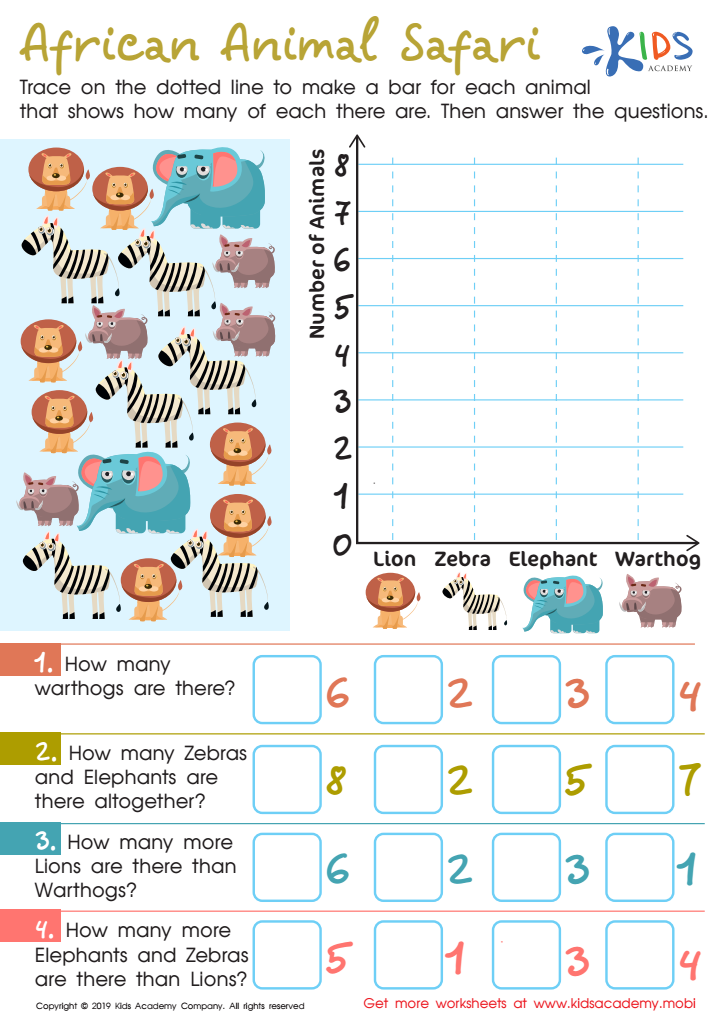
African Animal Safari Worksheet
 Assign to My Students
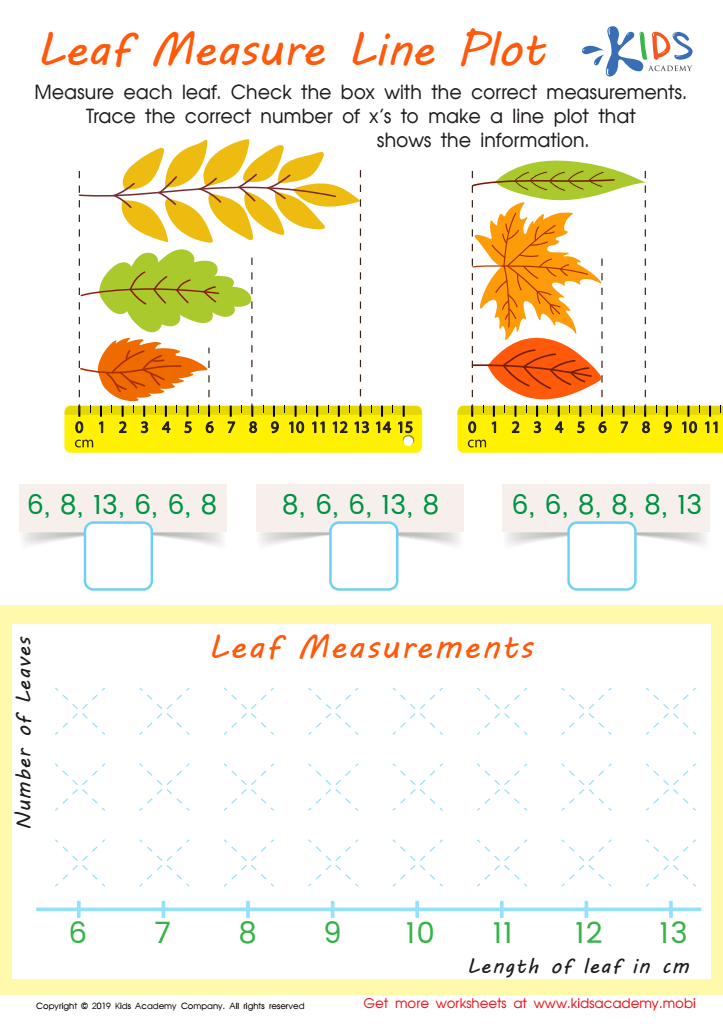
Leaf Measure Line Plot Worksheet
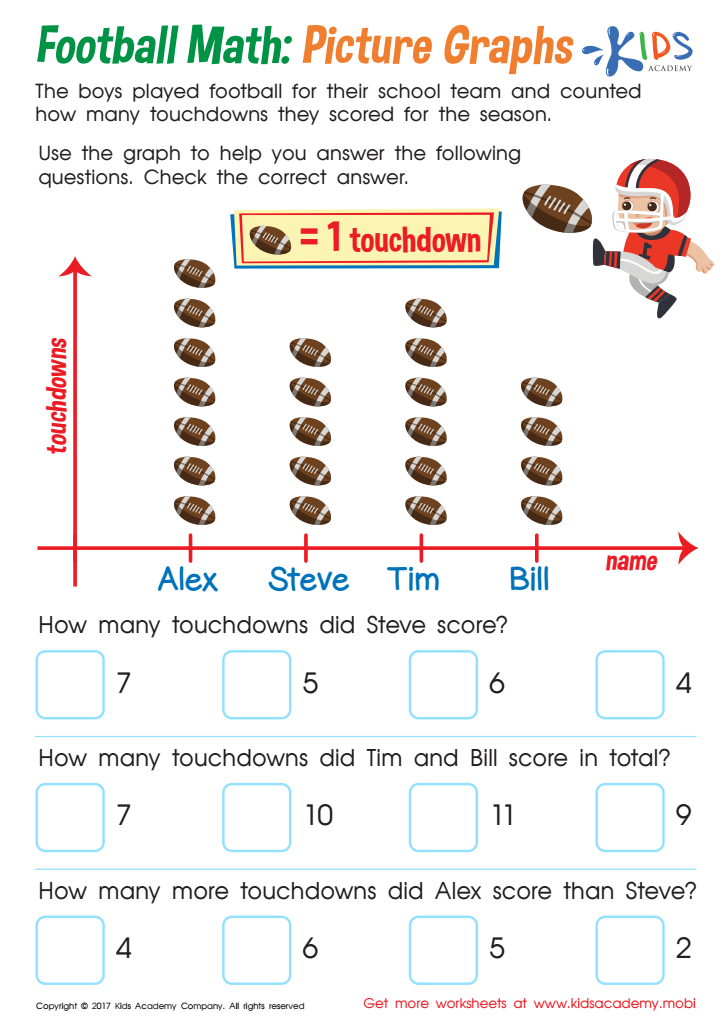
Football Math Worksheet








Understanding graphs is vital for children aged 3-8 as they lay the foundation for critical thinking, data interpretation, and problem-solving skills. At this developmental stage, children are naturally curious and start to recognize patterns, which makes engaging with graphs a fun and educational activity. For parents and teachers, introducing children to graphs enhances their comprehension of information and helps them organize thoughts visually.
Graphs can simplify complex concepts by turning data into understandable visuals, making it easier for young learners to grasp comparisons and trends. For instance, bar graphs can help them understand height differences, while pie charts can illustrate parts of a whole, promoting early numeracy skills. As children describe and discuss graphs, they develop language skills and learn to articulate observations, fostering confidence in their analytical abilities.
Moreover, engaging children in graph-related activities encourages teamwork and communication when done in group settings. It prepares them for more advanced mathematical concepts in later years. Parents and teachers should care about this foundational skill, as it empowers children to make sense of the world around them, instilling lifelong skills that are beneficial in academia and everyday life. 활용하여 그들의 자아감을 강화하십시오.








