
Fraction Addition Numbers Worksheets for Ages 3-8
3 filtered results
Difficulty Level
Grade
Age
-
From - To
Subject
Activity
Standards
Unlock the world of fractions for your little learners with our engaging Fraction Addition Numbers Worksheets, designed specifically for ages 3-8! These worksheets provide a fun, interactive way to introduce and practice fraction addition concepts. Each activity is crafted to build essential math skills through colorful visuals and age-appropriate challenges. Kids will enjoy exploring fractions, enhancing their understanding of how numbers combine while developing critical problem-solving skills. Perfect for home or classroom use, our fraction worksheets inspire confidence and a love for math. Watch your child’s enthusiasm grow as they master addition with fractions through play and creativity! Download now and start learning!
Favorites
With answer key
Interactive
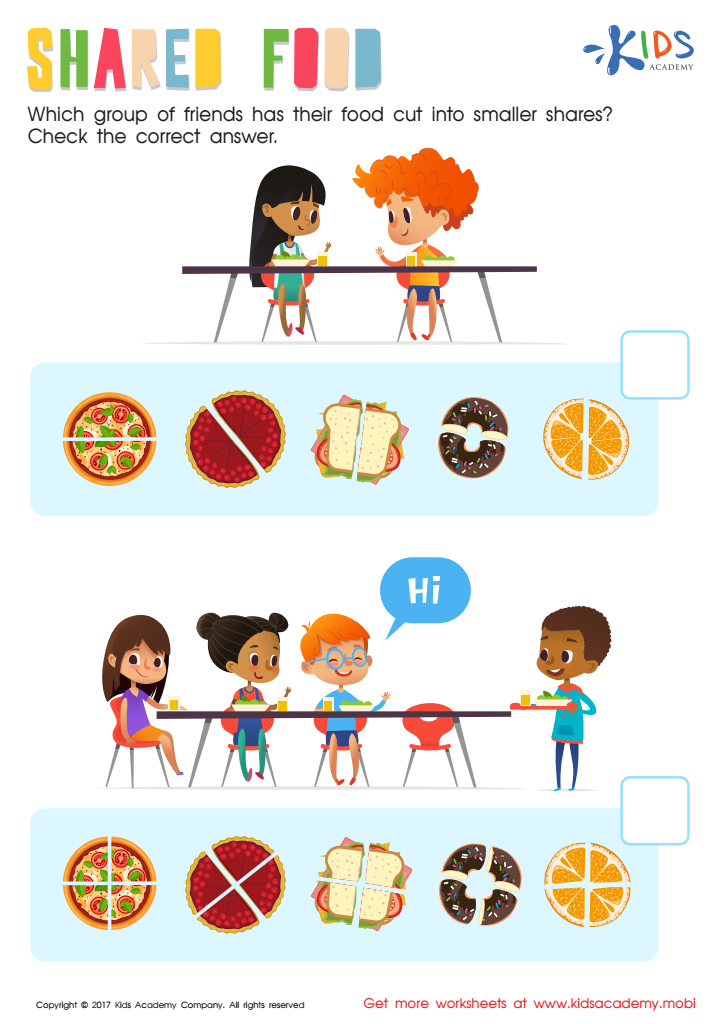
Shared Food Worksheet
In this worksheet, kids learn about sharing and cutting shapes into equal parts. There are two groups of friends: one with two, the other with four. Ask your child which group has their food cut into smaller shares, and help them find the right answer.
 Assign to My Students
Shared Food Worksheet
Worksheet
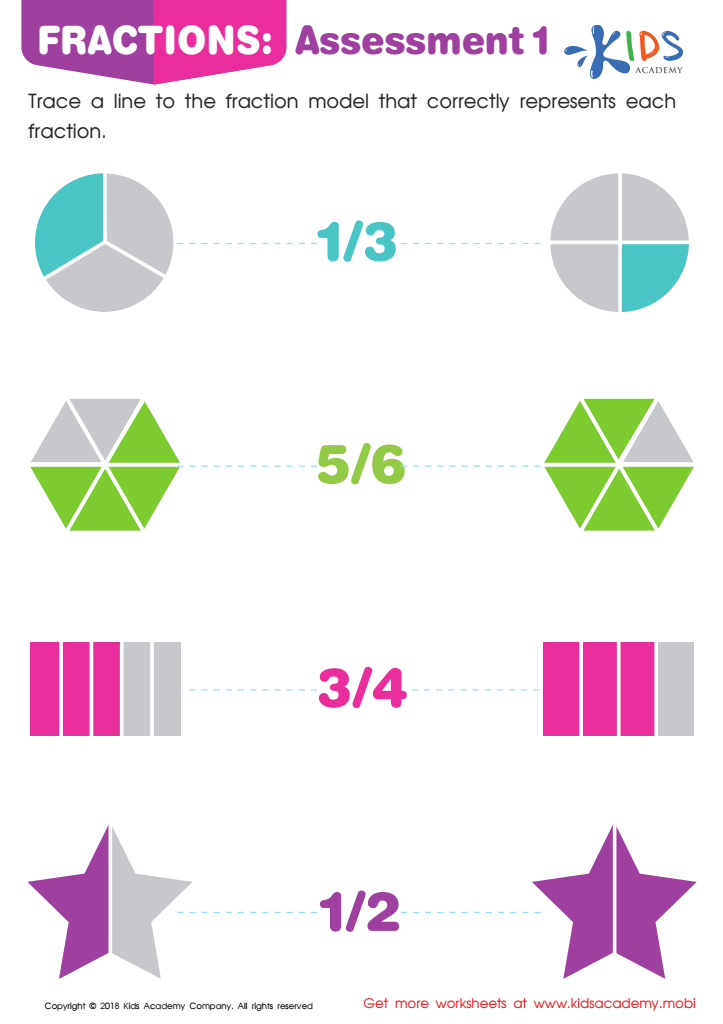
Fractions: Assessment 1 Worksheet
Master fractions easily with this worksheet! It has four sets of fraction models and fraction equations with two models each. Guide your kids to trace a line to the correct fraction model for each equation.
Fractions: Assessment 1 Worksheet
Worksheet
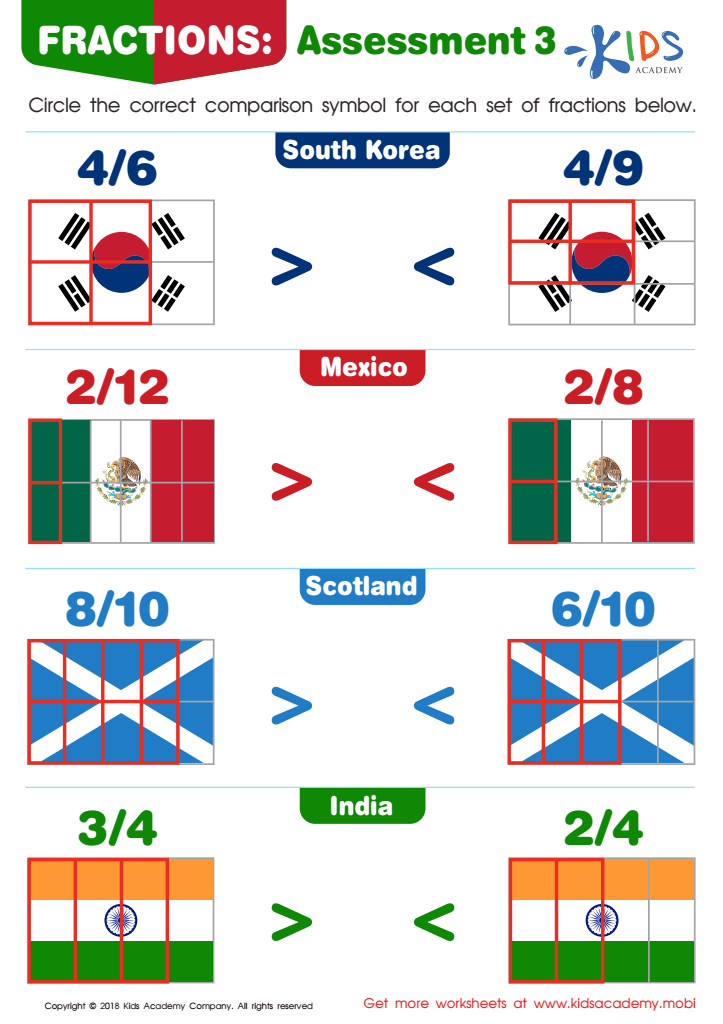
Fractions: Assessment 3 Worksheet
This worksheet helps teach kids about fractions and introduces them to countries and their flags. Have them read the country names and point to the flags. Then help them assess the fractions, and ask them to circle the symbol that shows their values.
Fractions: Assessment 3 Worksheet
Worksheet
Join Kids Academy for Free
Who is primarily going to use this learning content?






Understanding fraction addition is essential for children ages 3-8, as it lays the groundwork for their mathematical development and critical thinking skills. At this age, children are naturally curious and eager to explore concepts through hands-on activities. Engaging with fractions encourages foundational number sense, helping young learners grasp the relationship between parts and wholes.
Parents and teachers should care about fraction addition because it enhances children's problem-solving abilities. When children learn to add fractions, they begin to see mathematical operations as interconnected rather than isolated tasks. This interconnectedness fosters a deeper understanding of numbers and prepares them for more complex mathematical concepts in later grades.
Additionally, mastering fractions can contribute to a child's confidence in math. Early exposure and understanding demystify mathematics, reducing anxiety and promoting a positive attitude towards the subject. Fraction activities can be made fun through everyday situations, such as sharing food or dividing toys, helping children relate math to real life.
Furthermore, updating parents on their child's fraction progress encourages support at home. This collaboration promotes a cohesive learning experience and reinforces key concepts through various contexts, ensuring that children grow into competent, confident mathematicians.








