Problem-Solving Skills Numbers Worksheets for Ages 3-8 - Page 3
52 filtered results
-
From - To
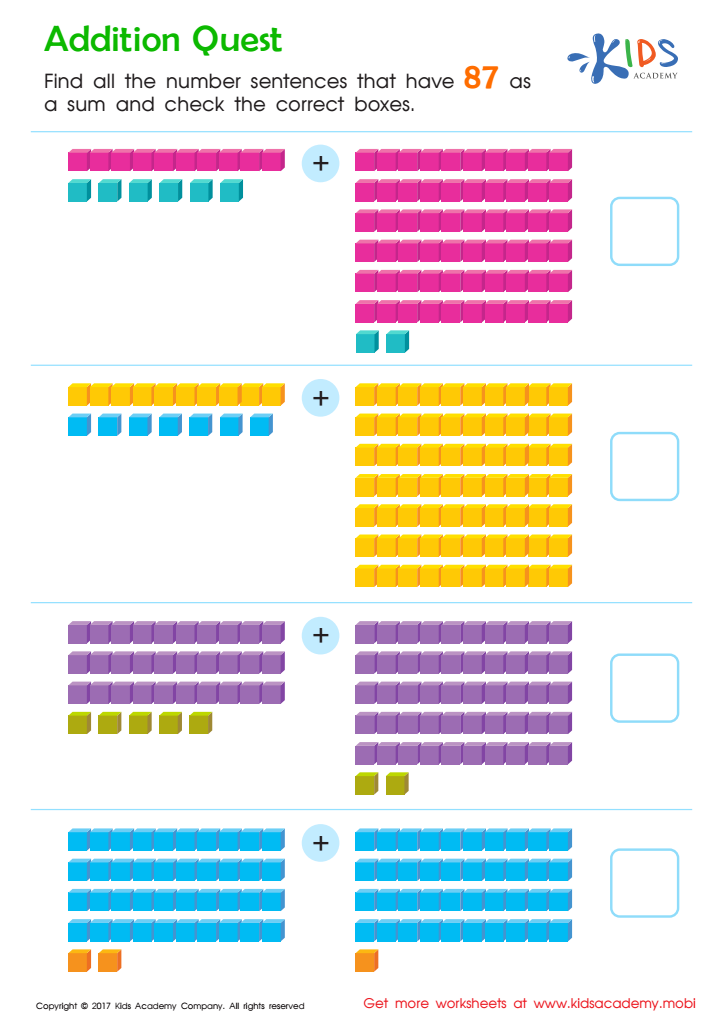
Addition Quest Worksheet: Part 1
 Assign to My Students
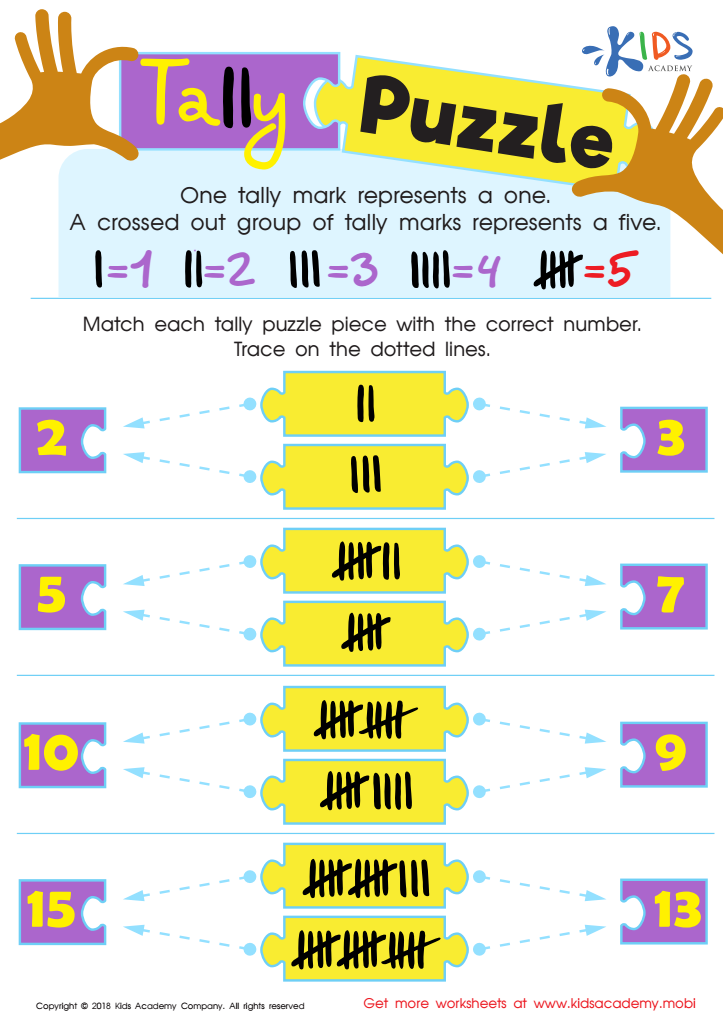
Tally Puzzle Worksheet

Haystack Steps Worksheet
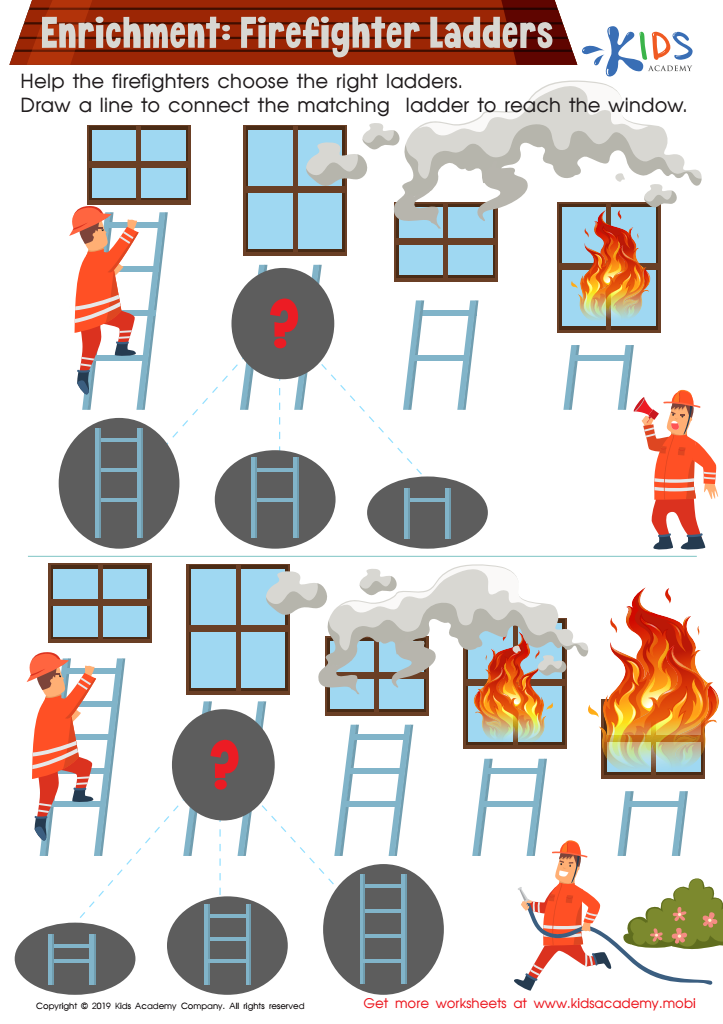
Enrichment: Firefighter Ladders Worksheet








Parents and teachers should care about problem-solving skills in children aged 3-8 as these skills are foundational for lifelong learning and development. At this age, children are naturally curious and eager to explore their environment. Cultivating problem-solving skills, particularly through numbers, equips them with essential cognitive tools to interpret, understand, and manipulate their surroundings.
Engaging in numerical problem-solving enhances critical thinking and fosters creativity, encouraging children to approach challenges with confidence. These skills help them tackle everyday scenarios, enhancing their ability to make decisions, like figuring out how many toys to share with friends or determining how many cookies fit on a plate.
Moreover, early development of problem-solving abilities correlates with future academic success, especially in math and science. Children who learn to think analytically are likely to navigate complex concepts as they progress through school.
Furthermore, this skill development also nurtures resilience. When children encounter difficulties and learn to persist in finding a solution, they build self-esteem and emotional intelligence, preparing them for both academic and personal challenges in life. By encouraging problem-solving skills through numbers, parents and teachers lay the groundwork for intellectual curiosity and lifelong learning.








