Understanding number relationships Numbers Worksheets for Ages 3-8
3 filtered results
-
From - To
Discover engaging printable worksheets designed to help children ages 3-8 understand number relationships! Our expertly crafted activities build foundational math skills while making learning fun. These worksheets focus on crucial concepts like comparing quantities, recognizing patterns, and understanding the connections between numbers. Each activity is tailored to spark curiosity and reinforce learning through play. Perfect for both classroom and home use, they foster confidence in young learners as they master essential math principles. Explore our diverse collection to support your child's mathematical journey, ensuring they develop strong, lasting skills in a supportive and enjoyable way.
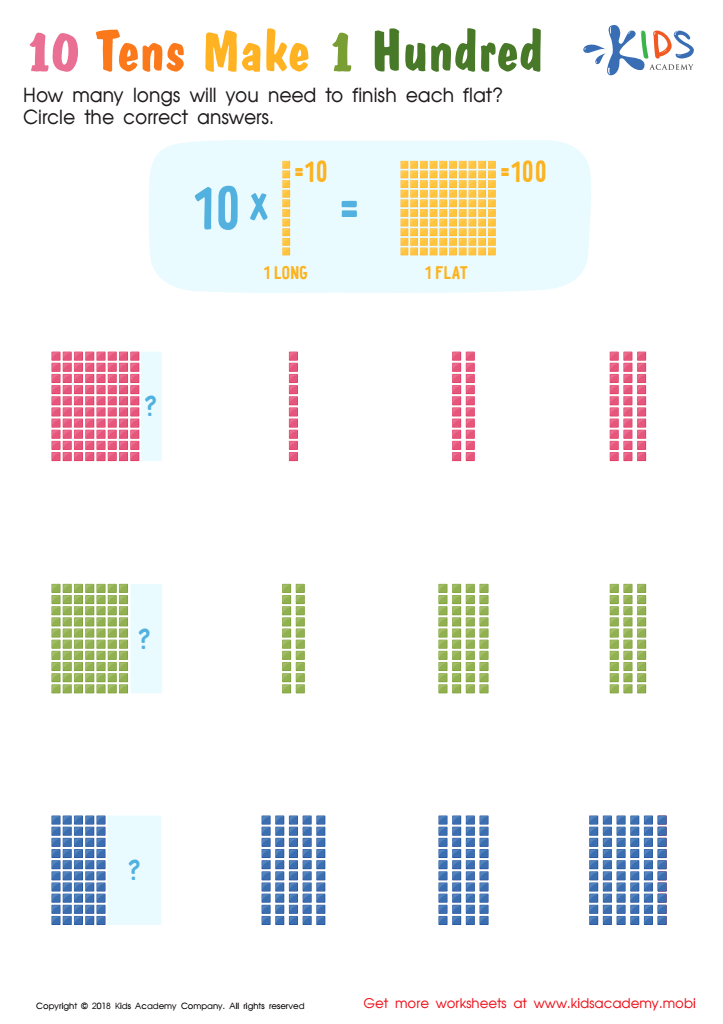
10 Tens Make 1 Hundred Worksheet
 Assign to My Students
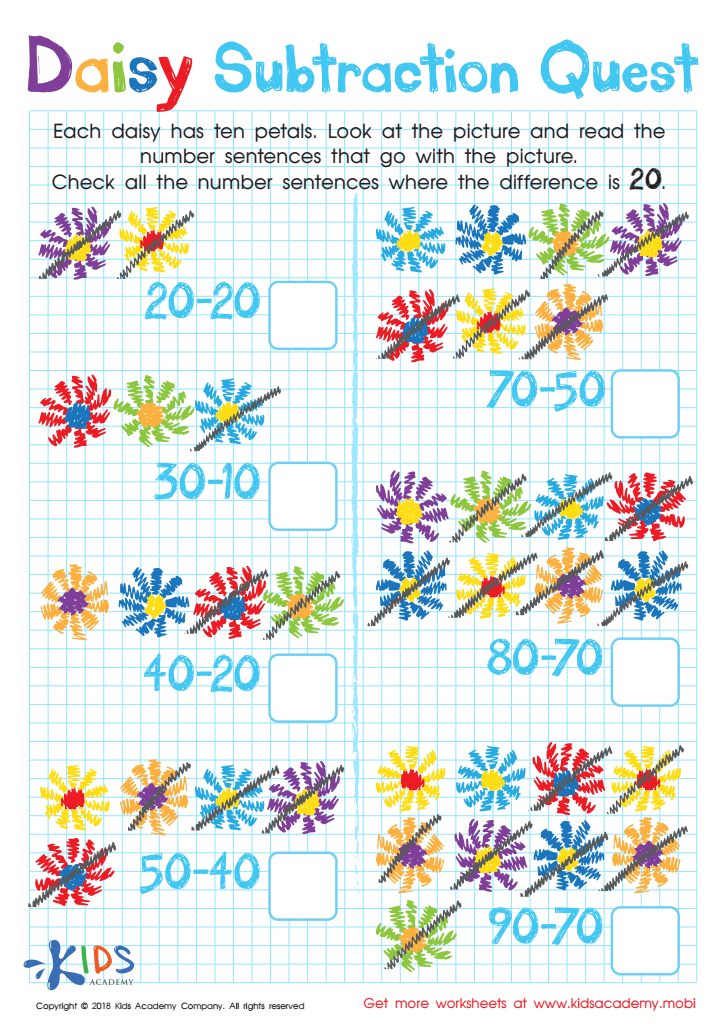
Daisy Subtraction Quest Worksheet
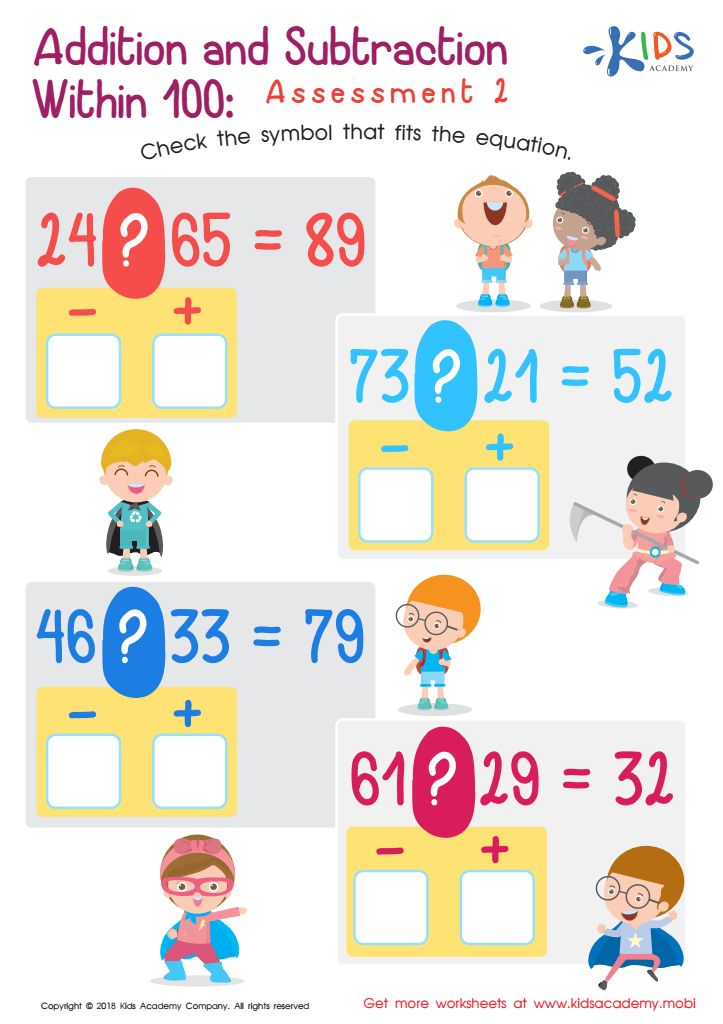
Addition and Subtraction Within 1: Assessment 2 Worksheet



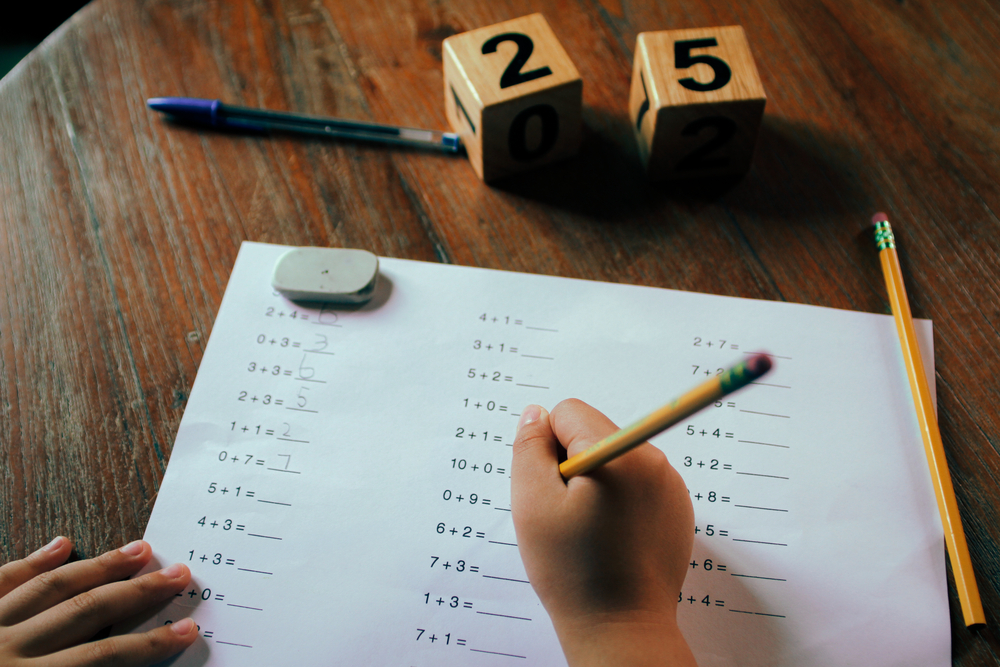




Understanding number relationships is crucial in early childhood education, laying the foundation for future mathematical success. For children ages 3 to 8, developing a clear grasp of numbers and their interrelationships fosters essential cognitive skills. Firstly, it enhances problem-solving abilities, enabling children to navigate everyday situations that require numerical thinking, such as measuring ingredients or sharing equally among friends.
Secondly, strong numerical foundations support overall academic performance. Many school subjects, including science, technology, and even some literacy components, incorporate mathematical principles. A solid understanding of number relationships affords children confidence across a broader curriculum.
Additionally, early exposure to numerical concepts can demystify mathematics, making it less intimidating as students progress in their education. This positive early experiences foster a growth mindset, where children feel capable of overcoming challenges and persisting through difficulties. For instance, recognizing that numbers can be decomposed and recombined helps with addition, subtraction, and understanding the concept of place value.
Furthermore, number relationships aid in the development of logical thinking and creativity. When children understand that two numbers can add up to the same total in different ways (e.g., 3 + 2 = 5 and 4 + 1 = 5), they begin to see numbers as flexible and dynamic.
Ultimately, prioritizing number relationships for young children equips them with critical life skills that will benefit them academically and beyond. Teachers and parents play a vital role in nurturing these foundational concepts through engaging, age-appropriate activities and thoughtful support.








