Understanding subtraction Numbers Worksheets for Ages 3-8
4 filtered results
-
From - To
Discover our dynamic "Understanding Subtraction Numbers Worksheets" tailored for children aged 3-8! These engaging resources are designed to build foundational math skills by introducing subtraction in a fun and interactive manner. With colorful visuals and relatable examples, kids will enjoy exploring essential concepts like taking away, number relationships, and problem-solving. Our worksheets cater to various learning styles, ensuring that every child can grasp subtraction at their own pace. Whether in the classroom or at home, these activities encourage critical thinking and reinforce understanding in an enjoyable way. Perfect for early learners to confidently master subtraction skills! Start exploring today!
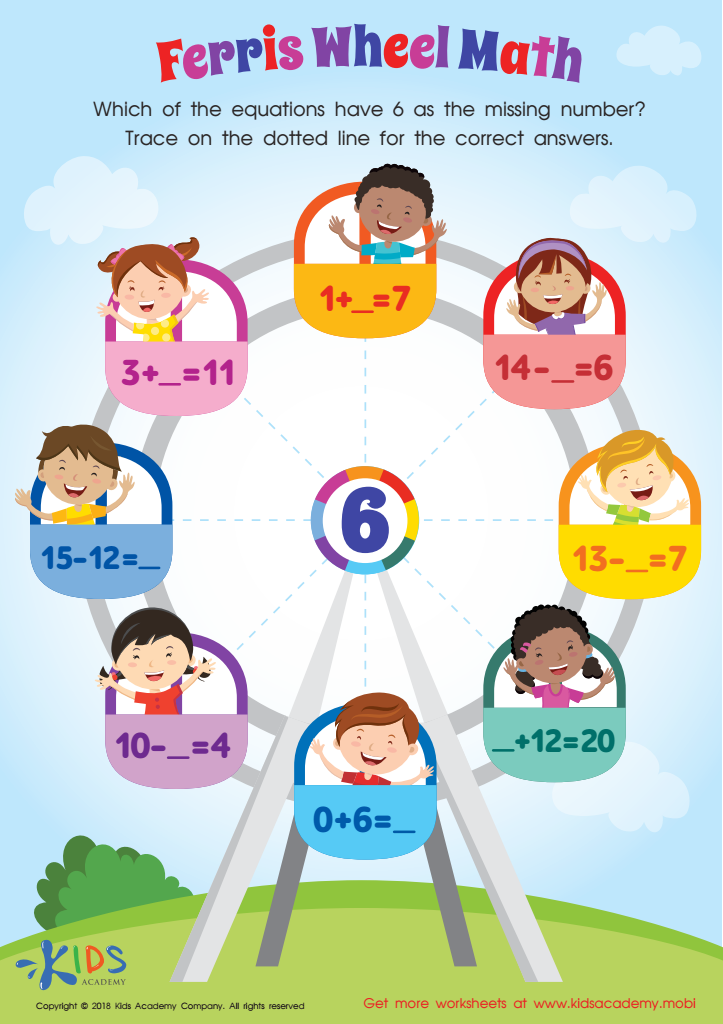
Missing Number: Ferris Wheel Math Worksheet
 Assign to My Students
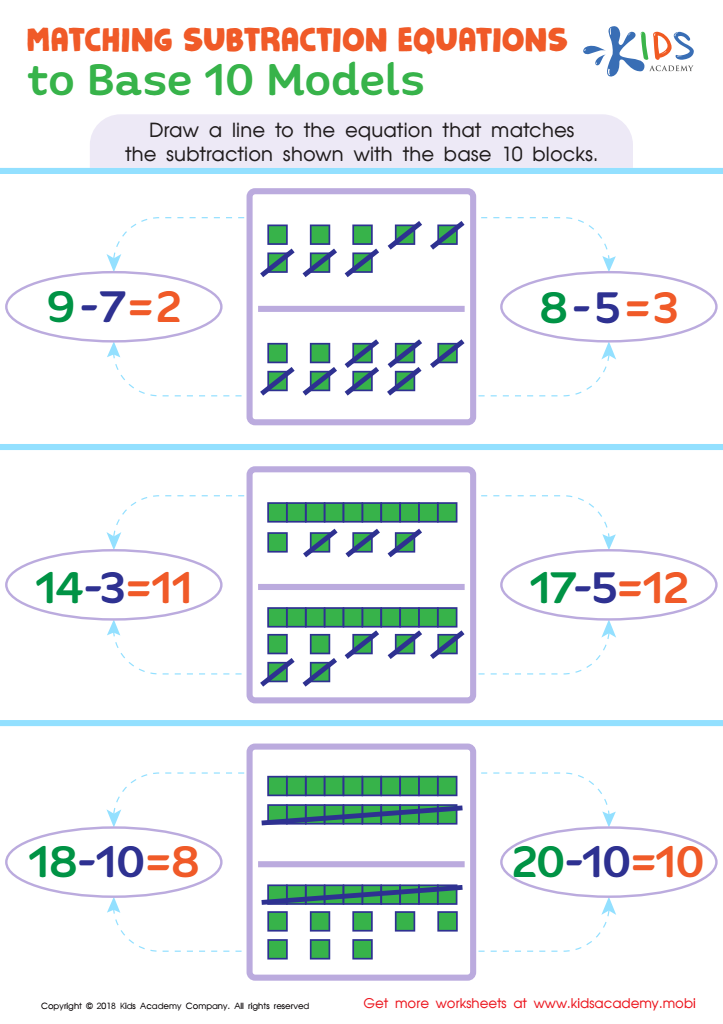
Matching Subtraction Equations To Base 10 Models Worksheet
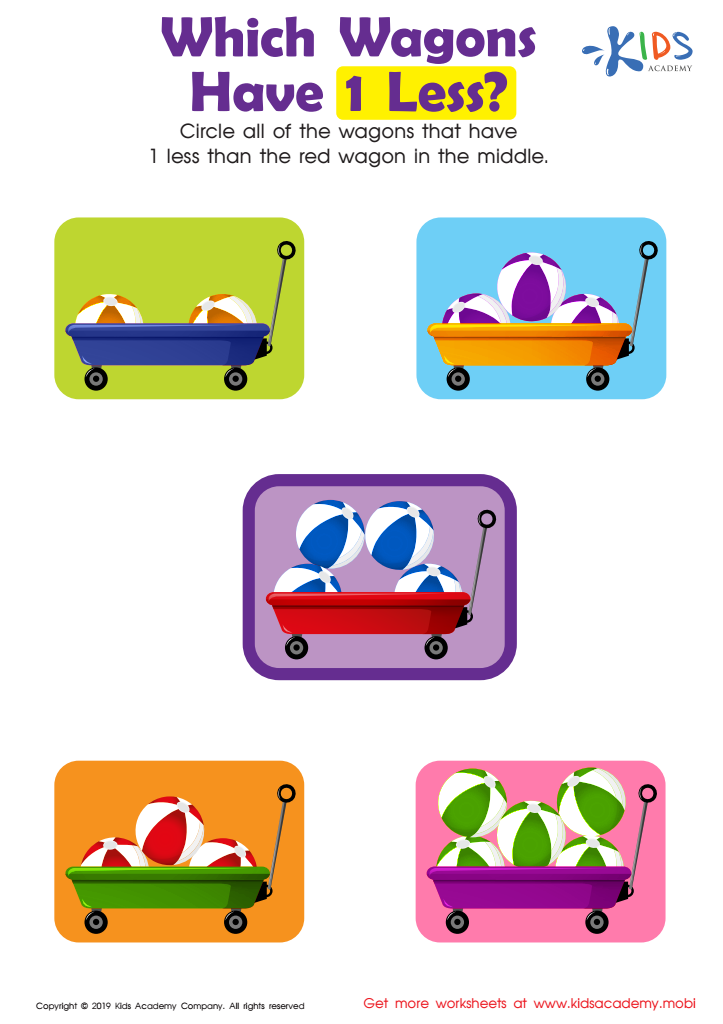
Which Wagons Have 1 Less? Worksheet
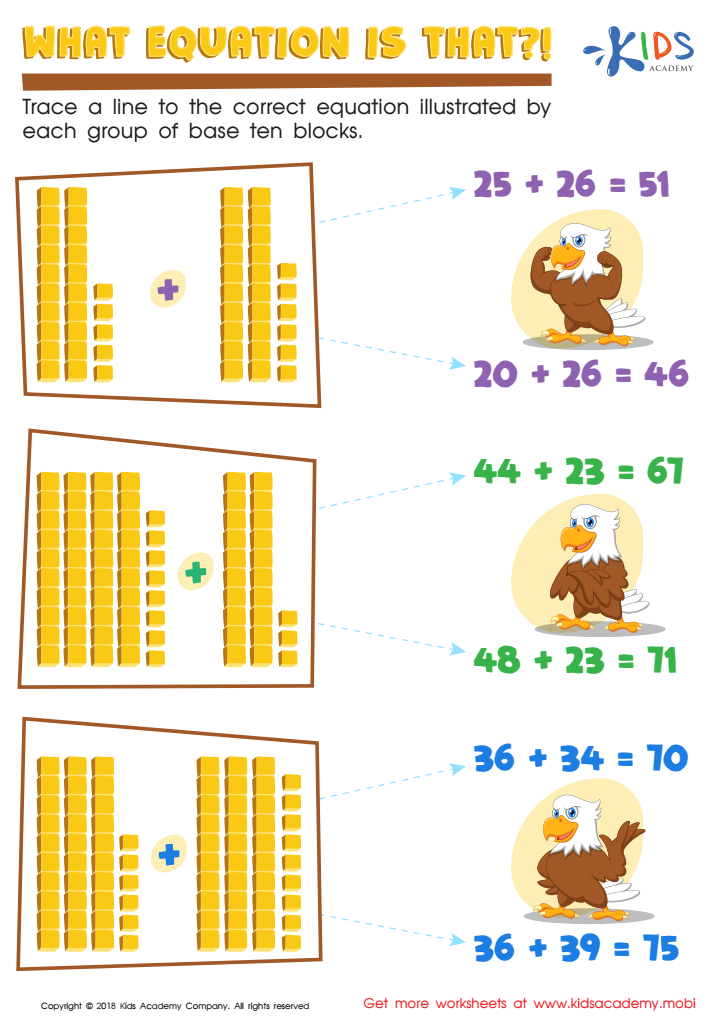
What Equation Is That? Worksheet








Understanding subtraction is essential for children aged 3-8 as it lays the foundation for their mathematical development and critical thinking skills. During these formative years, children are naturally curious and eager to engage with numbers. Teaching them subtraction not only introduces a crucial arithmetic concept but also enhances their problem-solving abilities.
Subtraction helps children grasp the idea of quantities, allowing them to understand real-world situations, such as sharing objects or understanding loss. This foundational skill boosts their confidence in math, making them more willing to tackle more complex concepts later on.
Moreover, early exposure to subtraction fosters cognitive growth and nurtures logical reasoning. As children learn to subtract, they are also developing essential skills like counting, recognizing patterns, and understanding relationships between numbers.
Parent engagement is vital. By being involved, parents can reinforce lessons through everyday activities. Whether counting snacks or sharing toys, these moments can be transformed into valuable learning experiences. Teachers can facilitate this understanding through interactive games and fun exercises that make subtraction enjoyable.
Ultimately, prioritizing subtraction for young learners empowers them with essential skills, providing a solid groundwork for their future academic journeys.








