Comparing objects Math Worksheets for Ages 3-8
8 filtered results
-
From - To
Discover our engaging collection of "Comparing Objects" math worksheets designed for kids ages 3-8! These interactive resources help young learners develop essential comparative skills by exploring sizes, quantities, and attributes of various objects. Each worksheet fosters critical thinking and practice through fun activities like sorting, matching, and identifying differences. Tailored to meet early learning standards, these worksheets promote cognitive growth while making math enjoyable. Perfect for home use or classroom activities, our printable resources encourage active participation and hands-on learning. Start your child's journey toward math mastery today with our beautifully illustrated and easy-to-follow comparing objects worksheets!
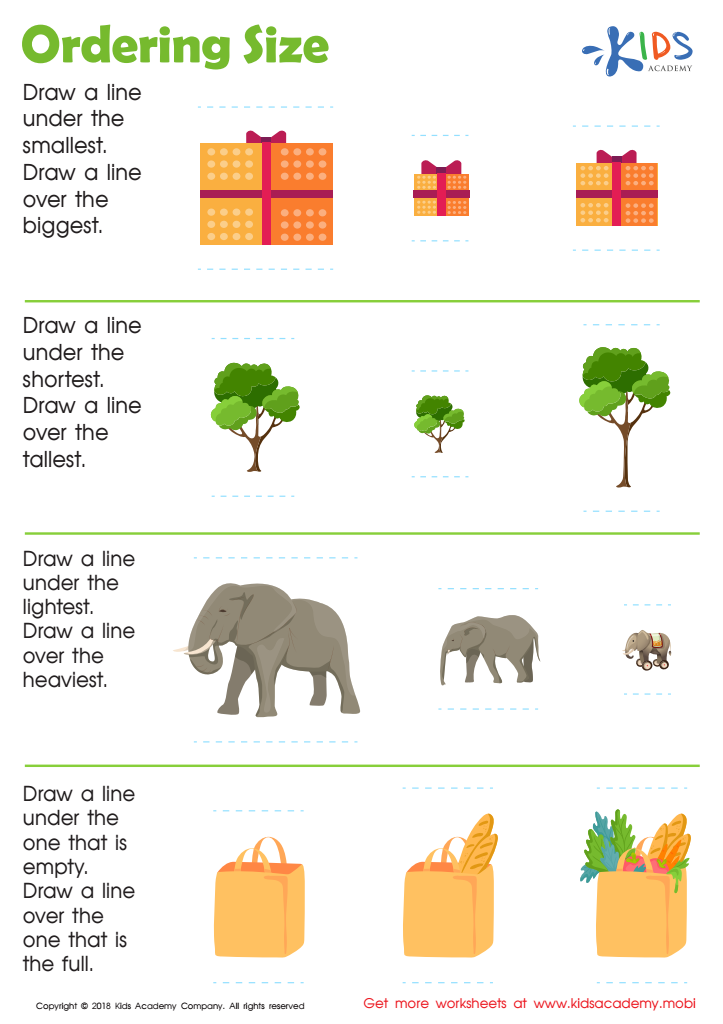
Ordering Size Worksheet
 Assign to My Students
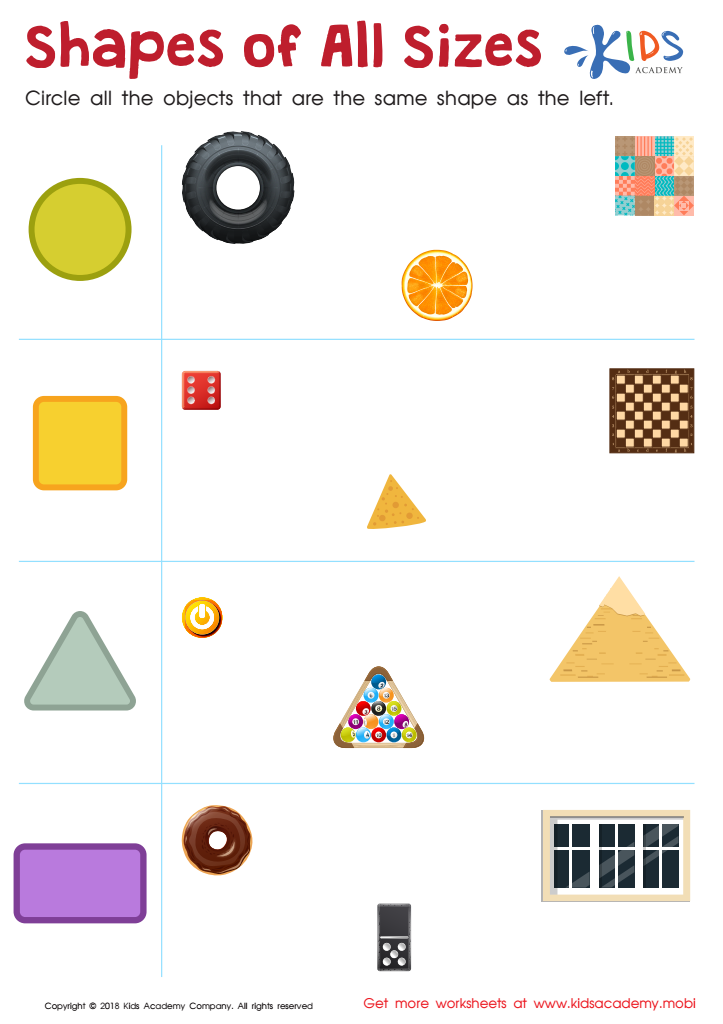
Shapes of All Sizes Worksheet
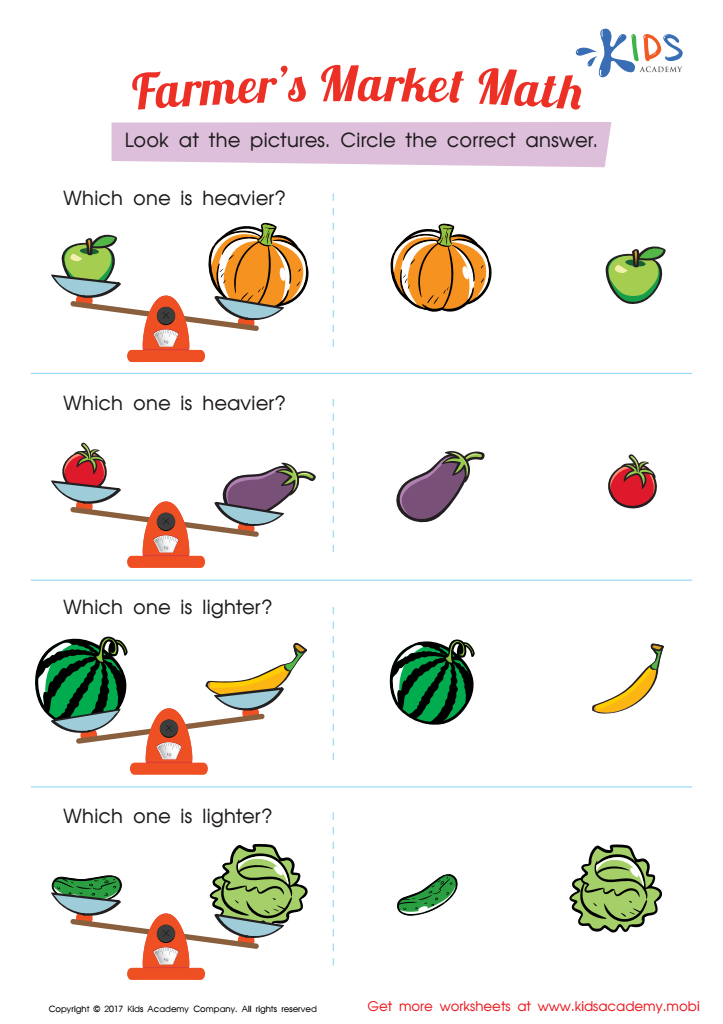
Which One Is Heavier Worksheet
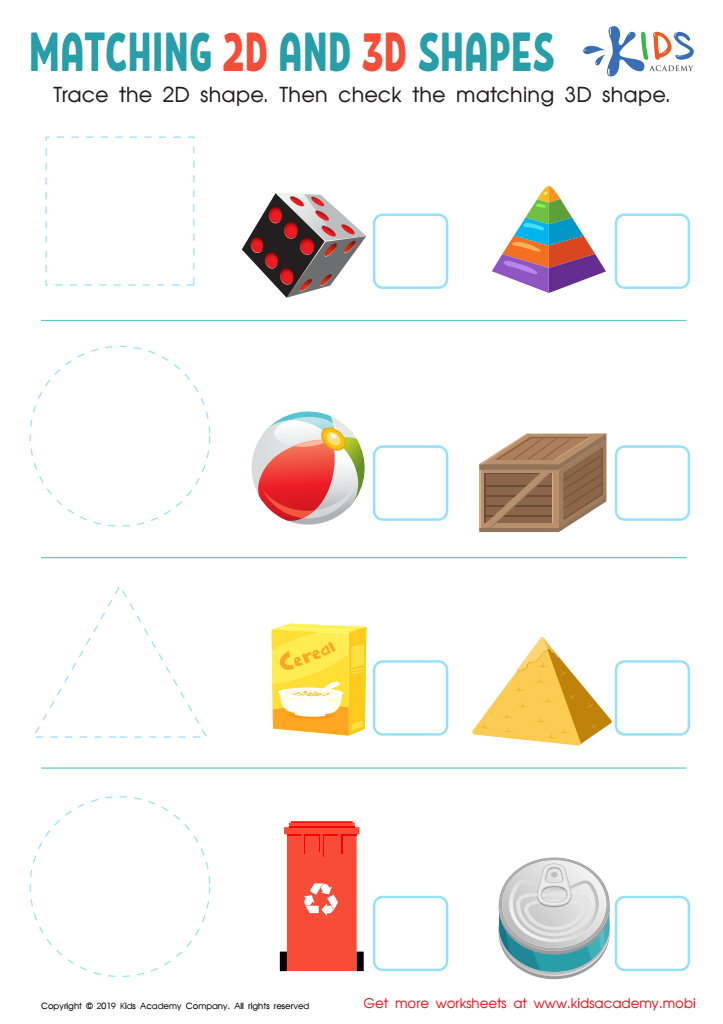
Matching 2D and 3D Shapes Worksheet
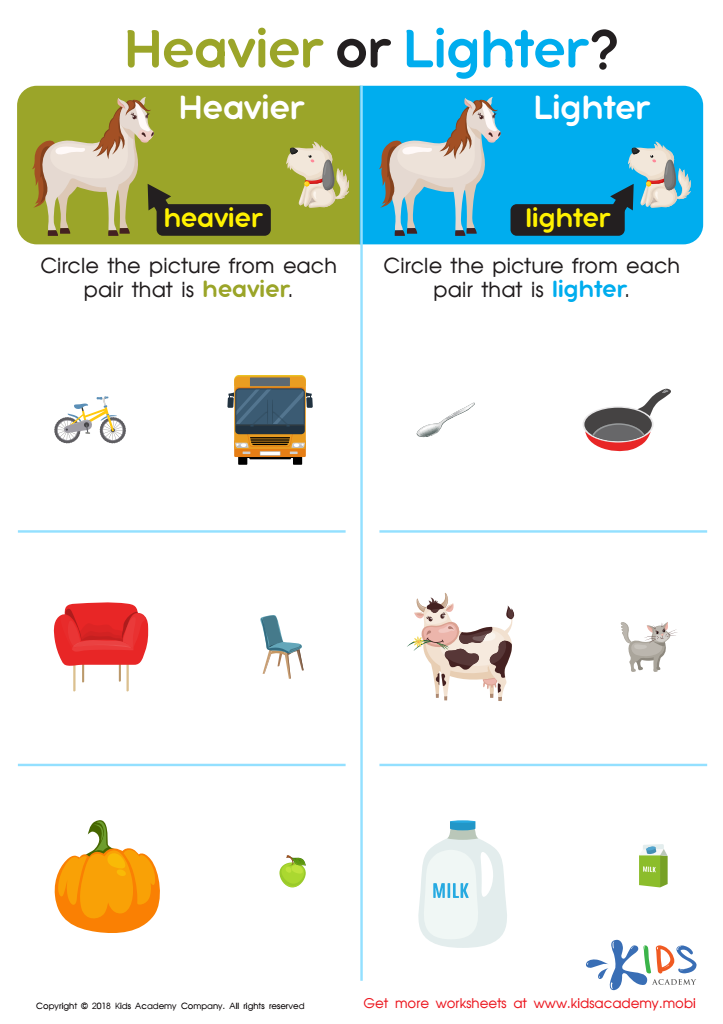
Heavier or Lighter? Worksheet
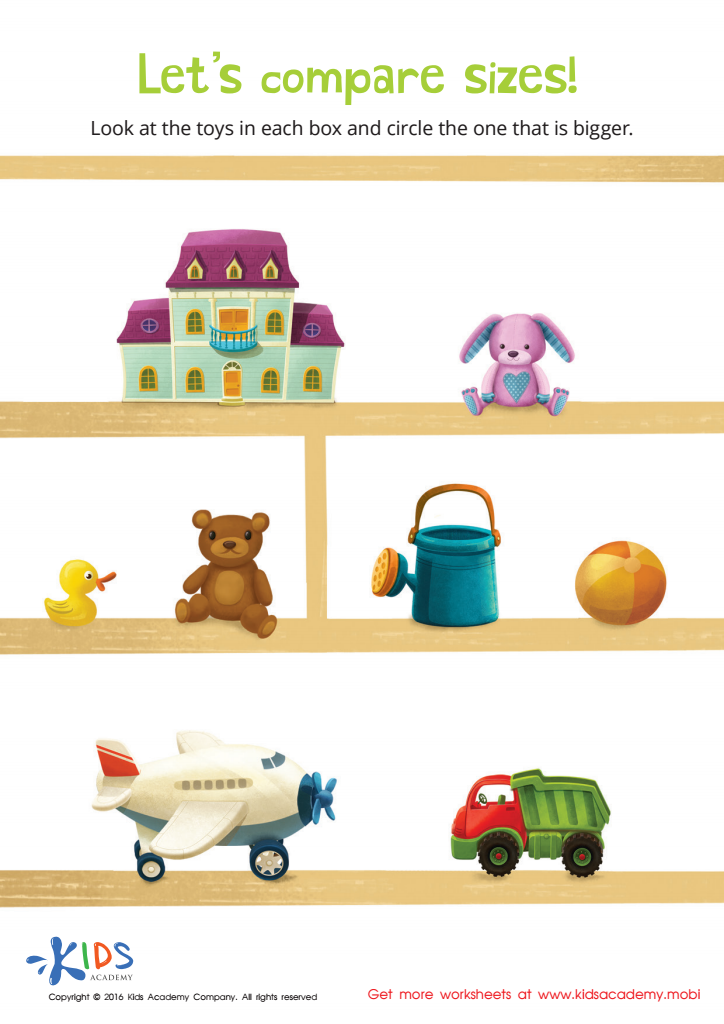
Classifying by Size Sorting Worksheet






Comparing objects is a fundamental mathematical skill that promotes critical thinking and cognitive development in children aged 3-8. When children learn to compare sizes, lengths, weights, and quantities, they establish early foundations in understanding concepts of measurement and classification. This skill fosters a sense of observation and inquiry, encouraging kids to ask questions about their environment and make connections between different objects.
Moreover, comparing objects enhances vocabulary development as children learn terms like "bigger," "smaller," "heavier," and "lighter." This enrichment of language is essential for effective communication and helps children express their thoughts clearly.
Additionally, it connects to everyday experiences. Parents and teachers can easily integrate comparing activities during playtime, helping children make meaningful connections between math and real-life scenarios—such as sorting toys, measuring ingredients for a recipe, or comparing fruits during snack time.
Understanding comparisons sets the stage for more advanced mathematical concepts such as addition, subtraction, and even fractions later in life. By nurturing this skill early on, caregivers not only make math enjoyable but also build children's confidence and enthusiasm for learning that lasts a lifetime. Thus, fostering comparison skills should be a priority for parents and educators alike.








