Unlock your child's potential with our "Enhance Comprehension Math Worksheets" designed for ages 3-8! These engaging, interactive worksheets foster essential math skills while making learning fun. Tailored to build comprehension through visually stimulating problems, they support early numeracy concepts such as counting, number recognition, and basic operations. Ideal for parents and educators, our resources offer a variety of activities that cater to different learning styles, ensuring every child can excel in math. By enhancing comprehension early on, children develop a solid foundation for future academic success. Explore our collection today and give your child a head start in math!
Check out this FREE Trial Lesson on Math for age 3-8!

Match Exactly the Same

Favorites
With answer key
Interactive
  • 3-8
  • Enhance comprehension
  • Math
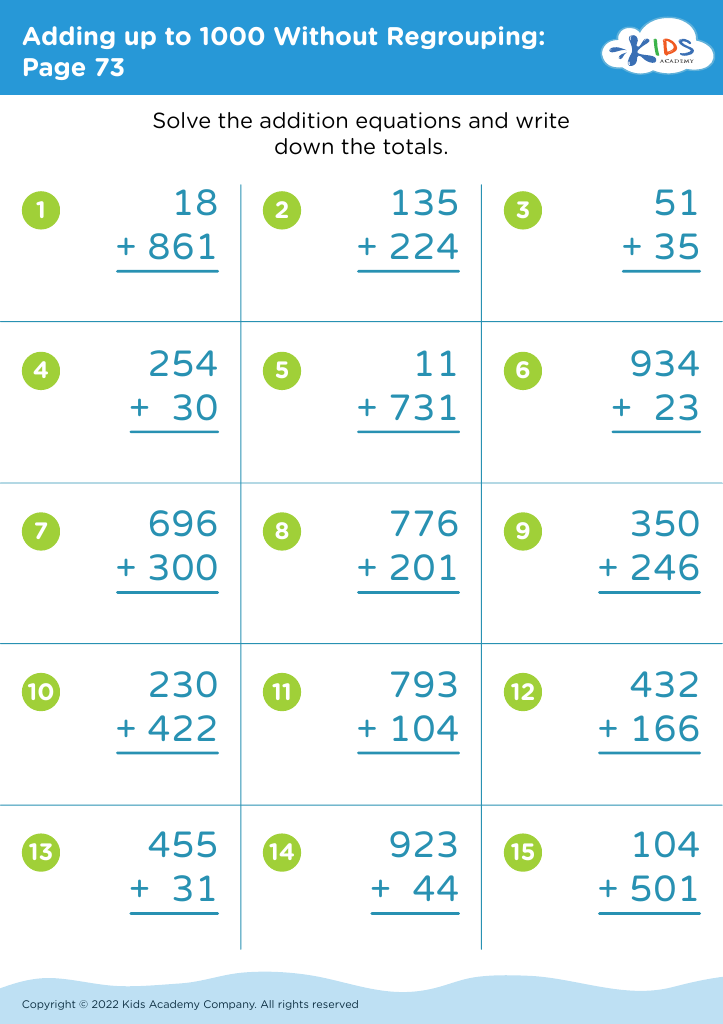
Adding up to 1000 Without Regrouping: Page 73
Worksheet
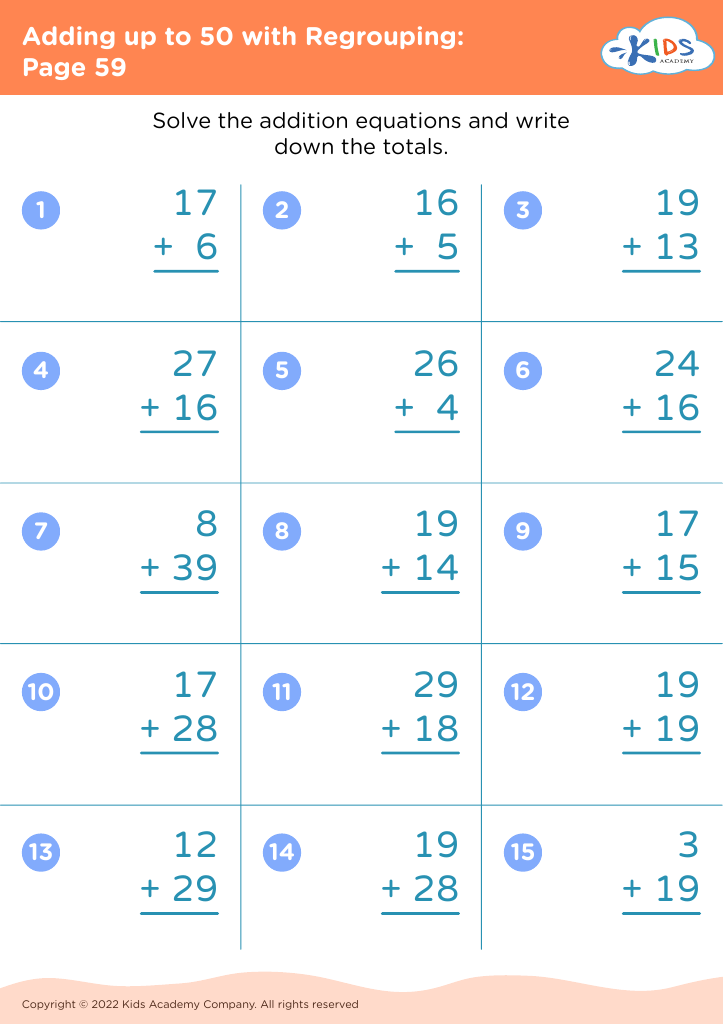
Adding up to 50 with Regrouping: Page 59
Worksheet
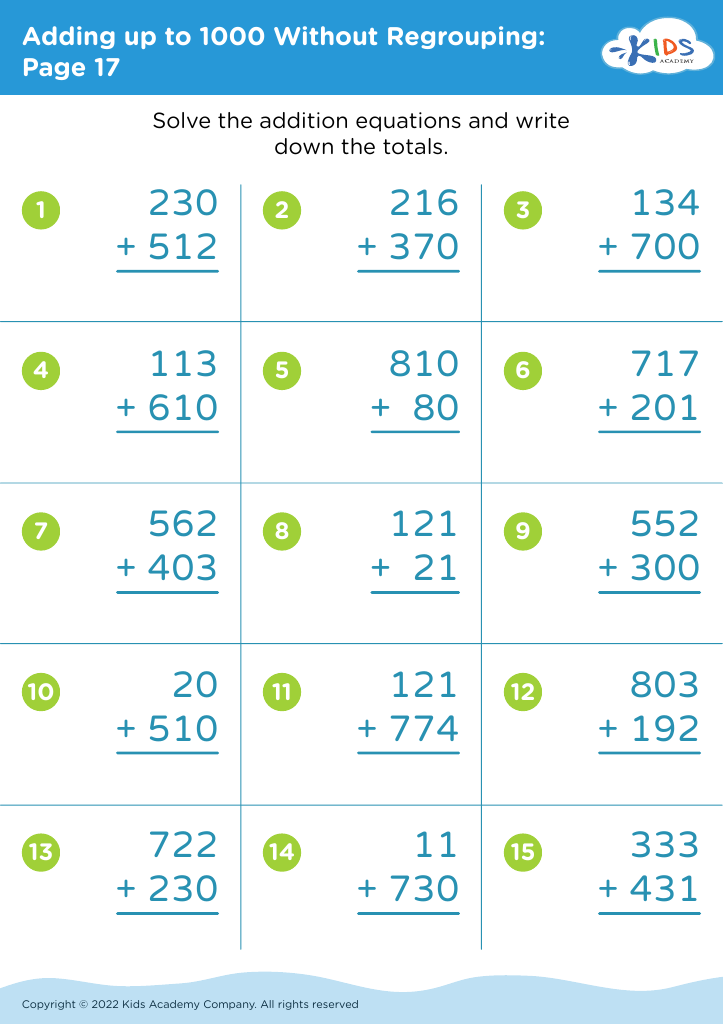
Adding up to 1000 Without Regrouping: Page 17
Worksheet
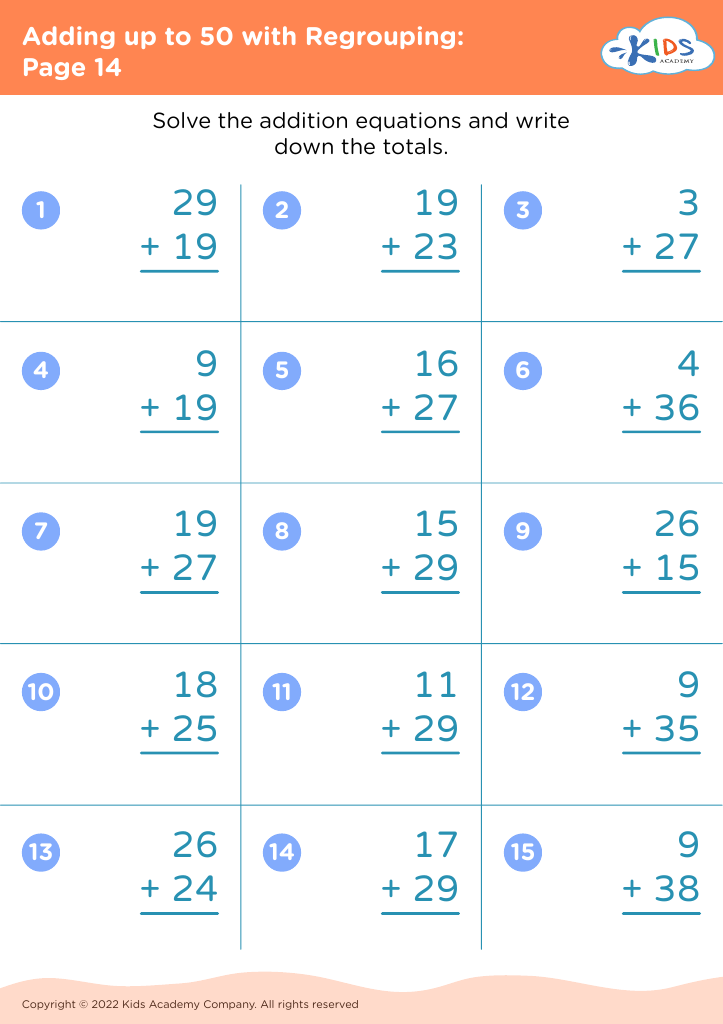
Adding up to 50 with Regrouping: Page 14
Worksheet
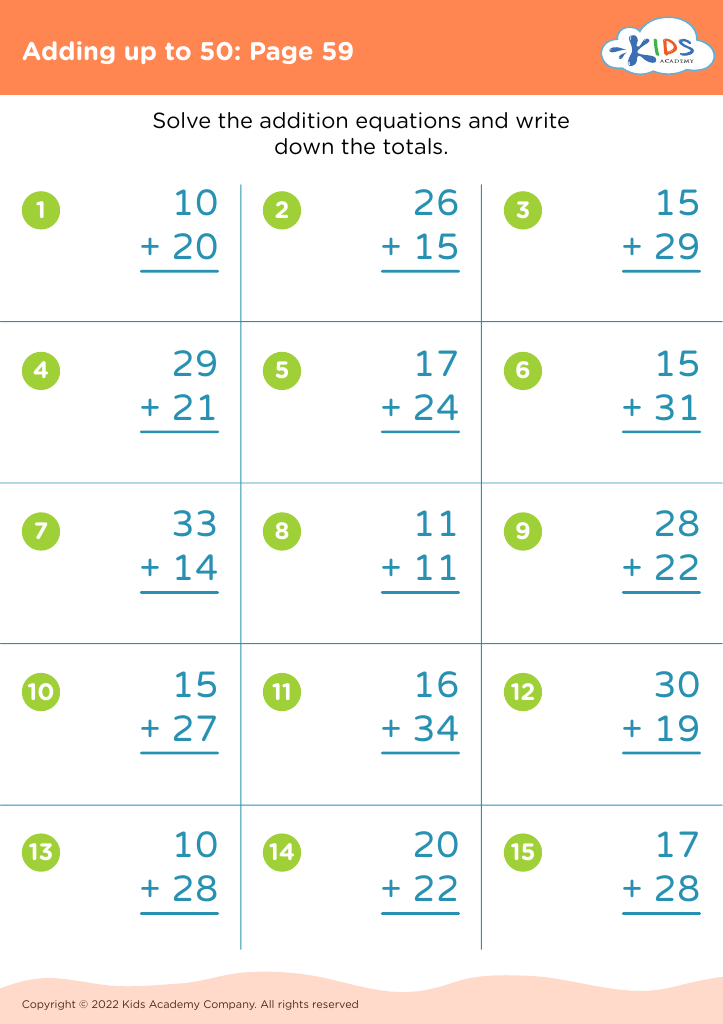
Adding up to 50: Page 59

Adding up to 50: Page 59

Adding up to 50: Page 59
Worksheet
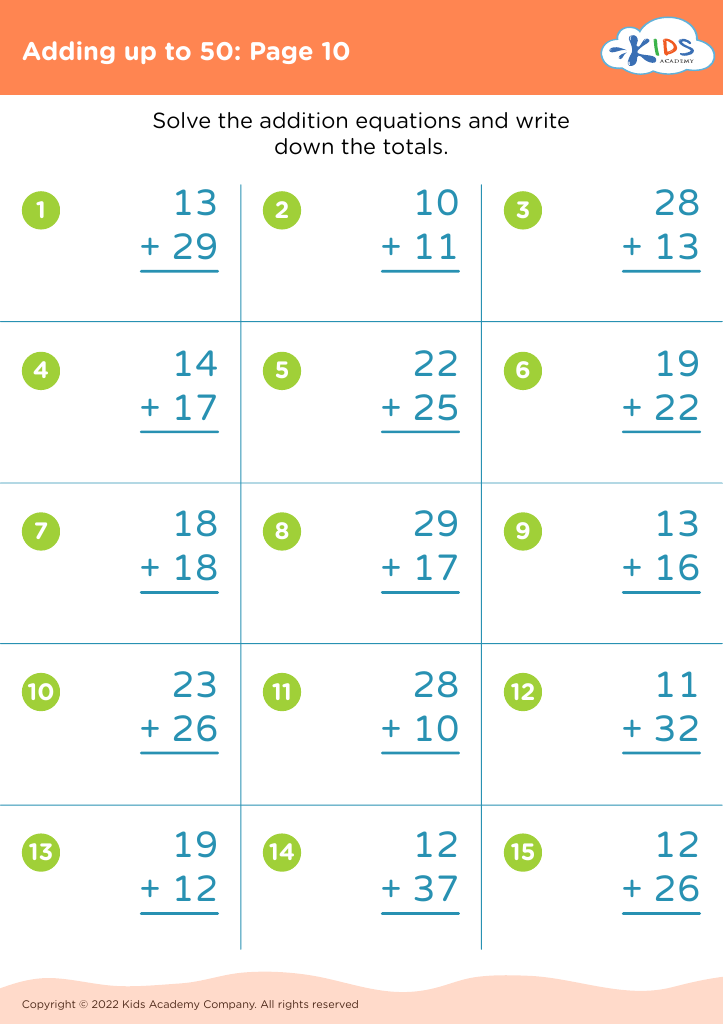
Adding up to 50: Page 10

Adding up to 50: Page 10

Adding up to 50: Page 10
Worksheet
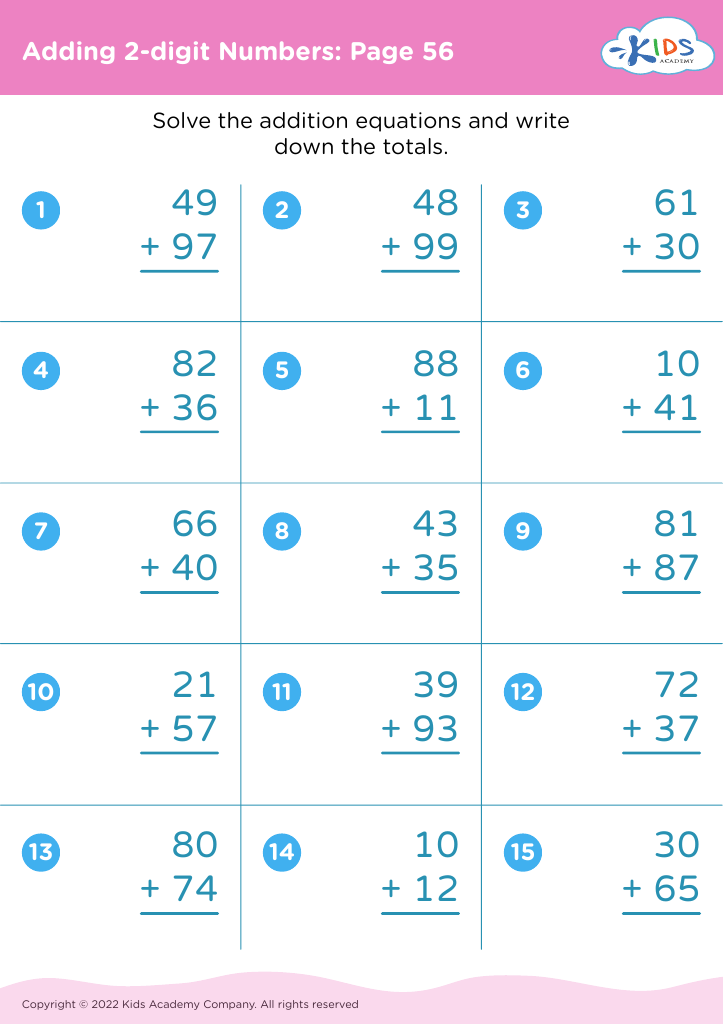
Adding 2-digit Numbers: Page 56

Adding 2-digit Numbers: Page 56

Adding 2-digit Numbers: Page 56
Worksheet
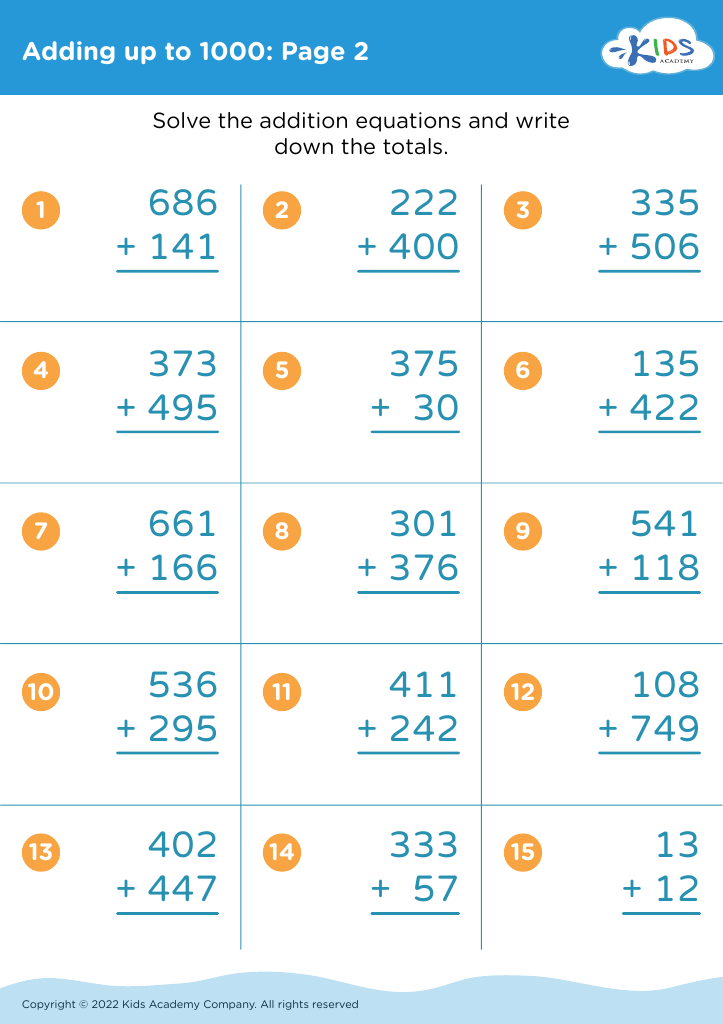
Adding up to 1000: Page 2

Adding up to 1000: Page 2

Adding up to 1000: Page 2
Worksheet
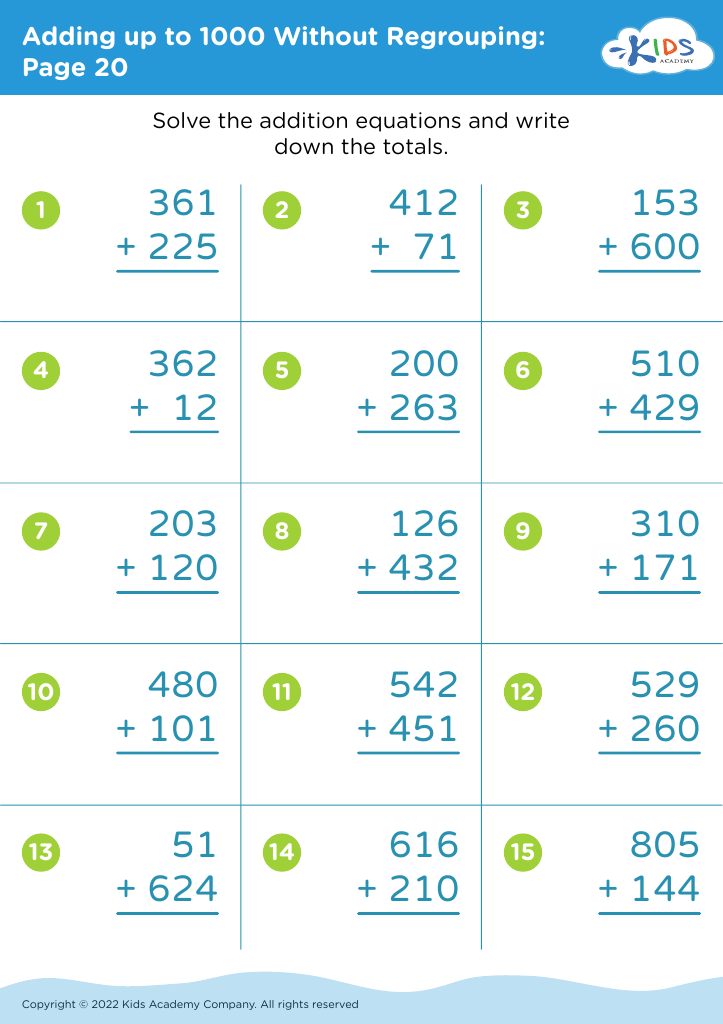
Adding up to 1000 Without Regrouping: Page 20
Worksheet
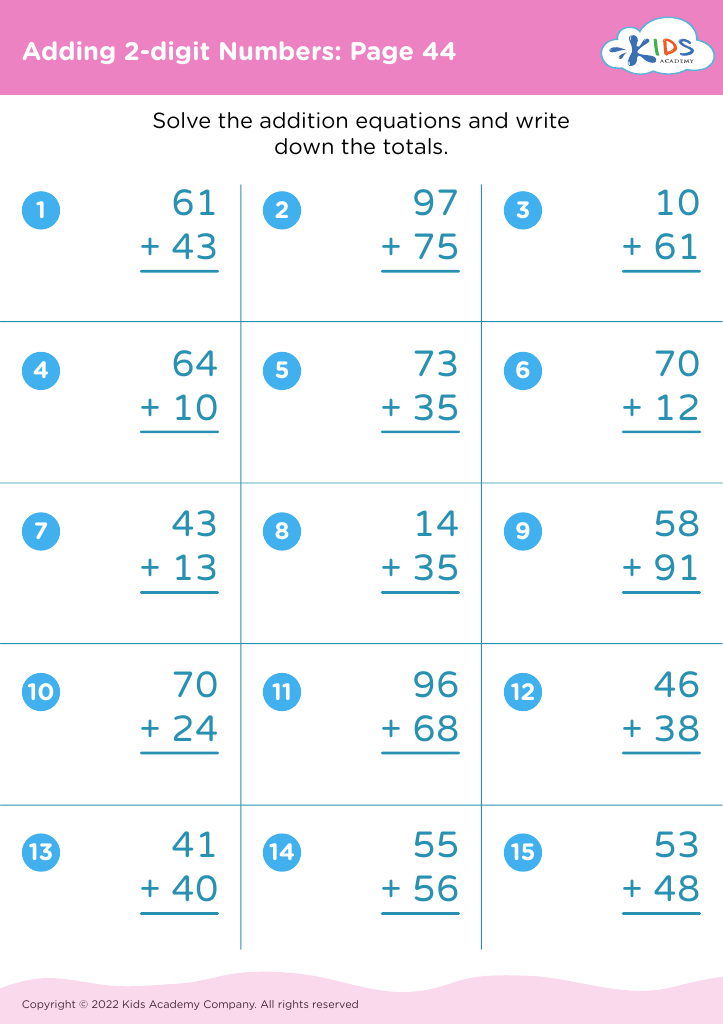
Adding 2-digit Numbers: Page 44

Adding 2-digit Numbers: Page 44

Adding 2-digit Numbers: Page 44
Worksheet
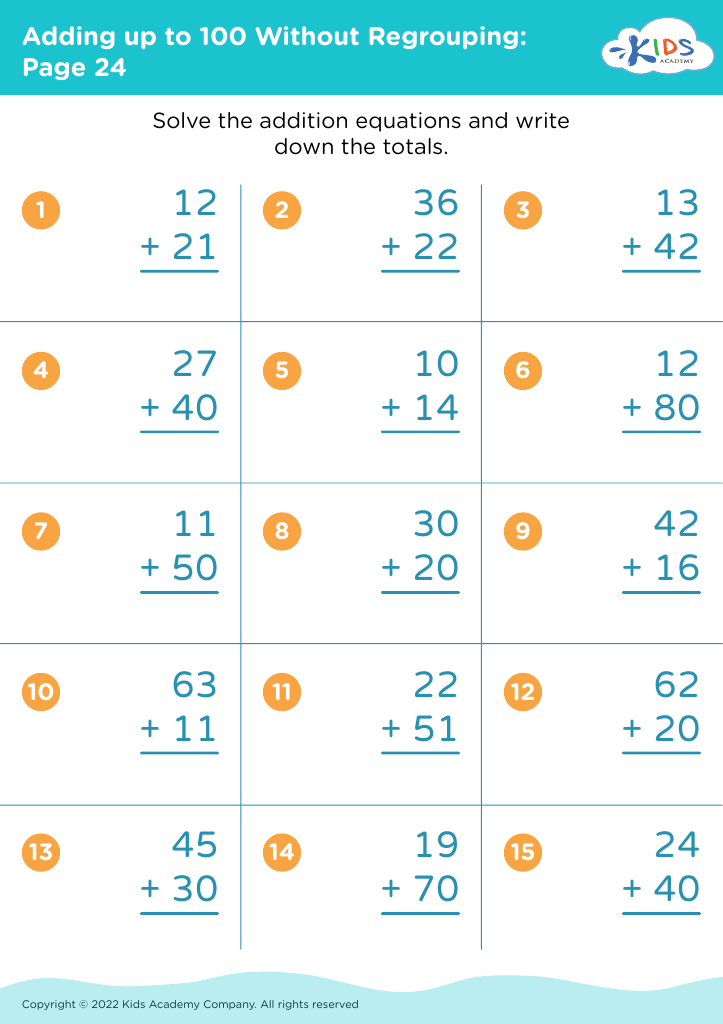
Adding up to 100 Without Regrouping: Page 24
Worksheet
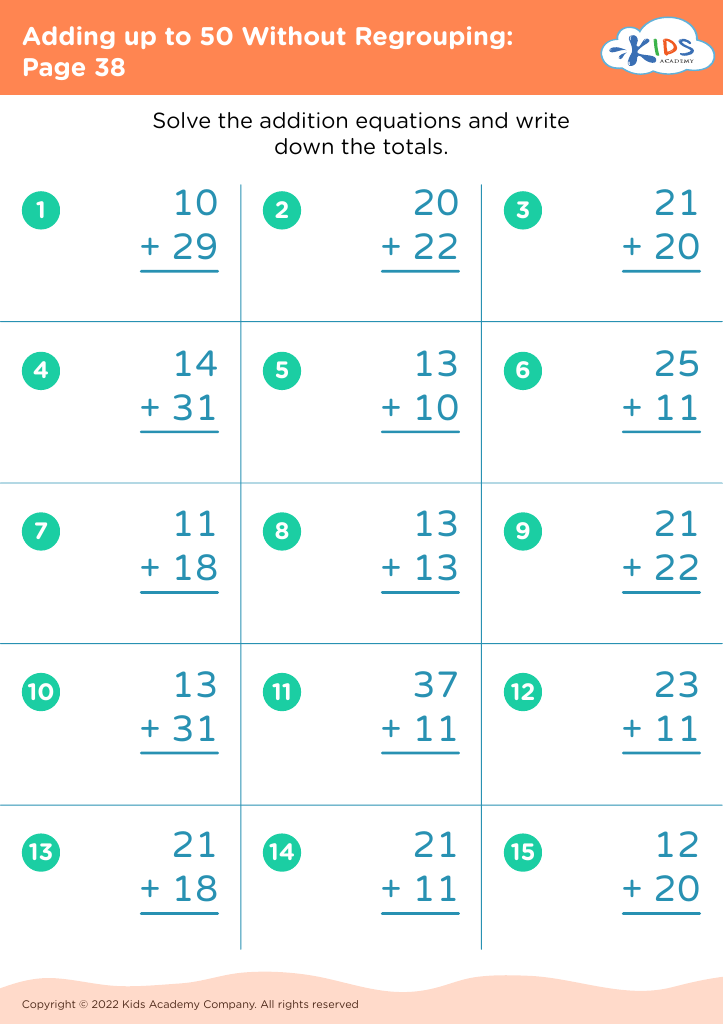
Adding up to 50 Without Regrouping: Page 38
Worksheet
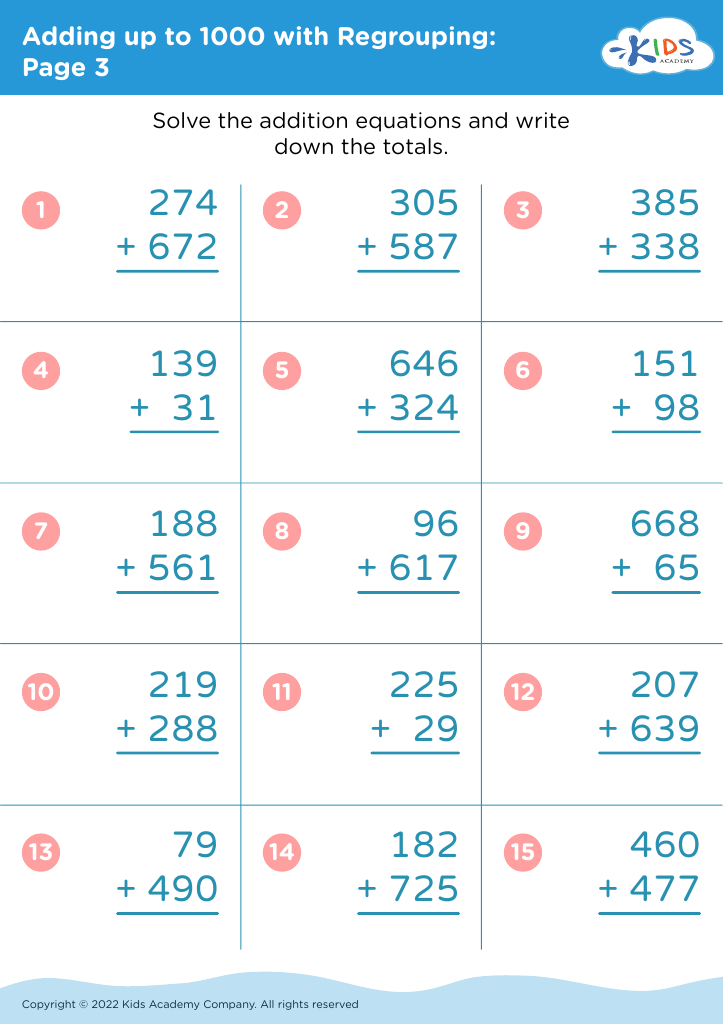
Adding up to 1000 with Regrouping: Page 3
Worksheet
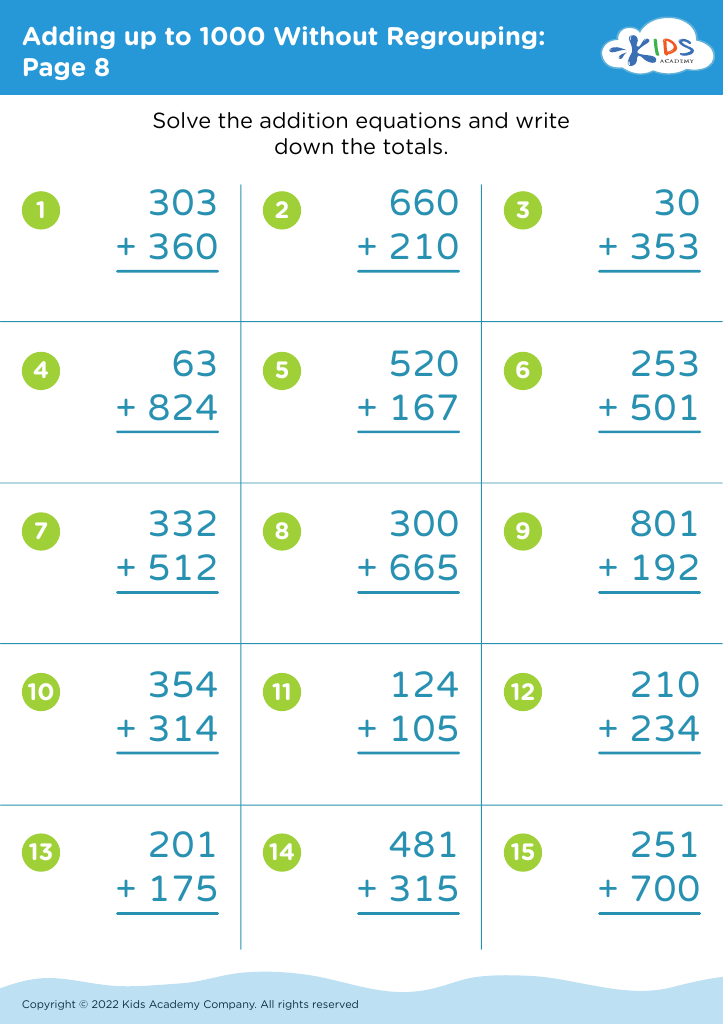
Adding up to 1000 Without Regrouping: Page 8
Worksheet
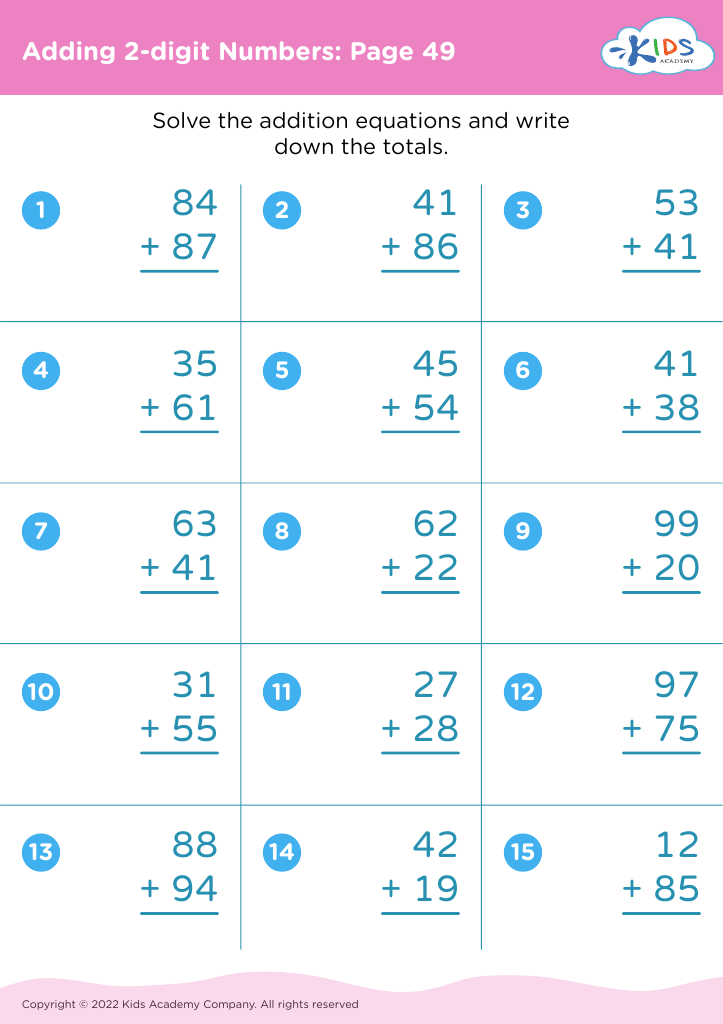
Adding 2-digit Numbers: Page 49

Adding 2-digit Numbers: Page 49

Adding 2-digit Numbers: Page 49
Worksheet
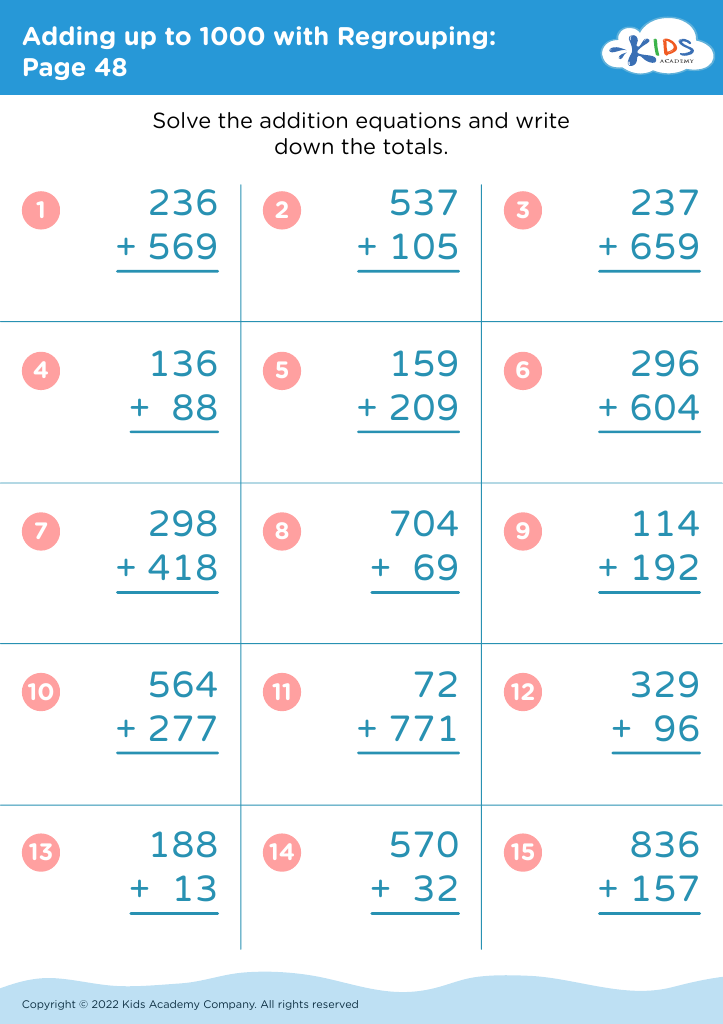
Adding up to 1000 with Regrouping: Page 48
Worksheet
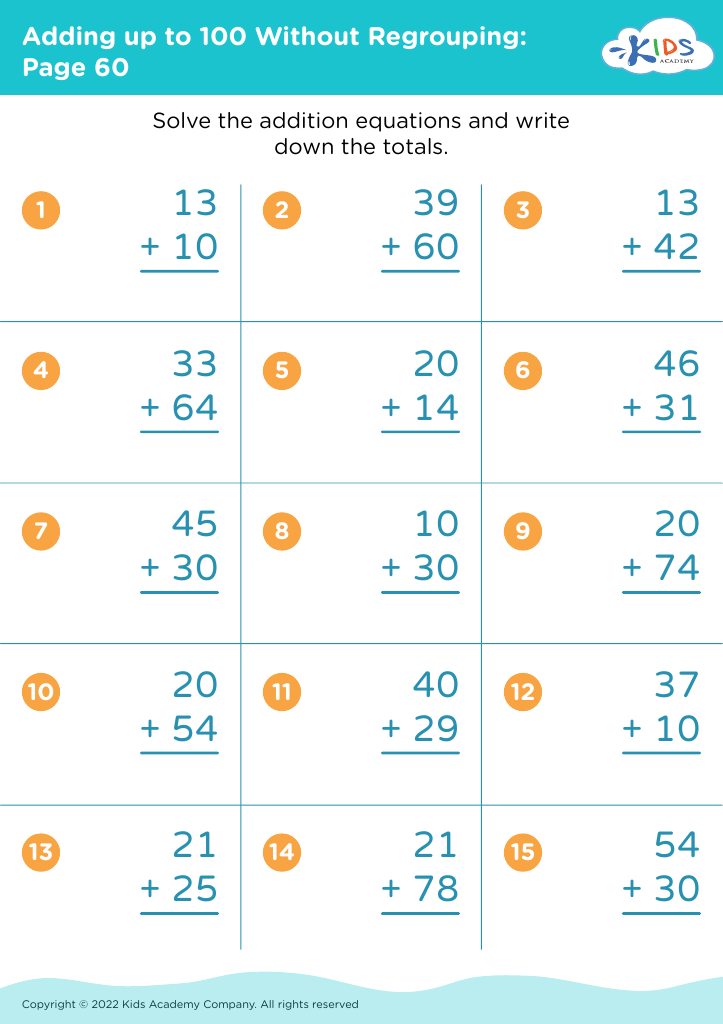
Adding up to 100 Without Regrouping: Page 60
Worksheet


Enhancing comprehension in mathematics for children ages 3-8 is crucial for their overall cognitive development and future academic success. At this formative stage, children's brains are exceptionally receptive to new concepts, making it the perfect time to integrate mathematical thinking with problem-solving skills and critical reasoning. When parents and teachers actively participate in enhancing math comprehension, they help children build a strong foundation that facilitates not only understanding numbers but also the relationships between them.

Strong math comprehension improves a child’s ability to think logically, fostering a mindset that is open to exploring and questioning the world around them. This foundational knowledge promotes confidence as young learners venture into more complex mathematical concepts in later years. Moreover, early grasp of math literacy correlates with success in other subjects, including science and reading.

Collaborative efforts from both parents and teachers in promoting engaging and age-appropriate math activities, such as games, songs, and interactive learning experiences, can make mathematics fun. These strategies not only demystify math concepts but also cultivate a positive attitude toward learning, ultimately equipping children with essential skills essential for their lifelong academic journey. Investing attention in enhancing math comprehension is thus vital for nurturing capable, confident learners.