Introduce young learners to the world of fractions with our engaging Fraction Comparison Math Worksheets, designed for ages 3-8. These worksheets provide creative and colorful exercises that help children grasp essential mathematical concepts. From identifying and comparing fractions to understanding their visual representations, our resources make learning fun and interactive. Ideal for both classroom and home use, these expertly crafted worksheets aid in building a strong mathematical foundation. Help your child achieve mastery in fraction comparison with activities suited for young minds, cultivating skills that will support their academic growth and confidence. Discover the joy of math with Kids Academy today!
Check out this FREE Trial Lesson on Math for age 3-8!

H

Favorites
With answer key
Interactive
  • 3-8
  • Fraction comparison
  • Math
Adding up to 100 with Regrouping: Page 9
Worksheet
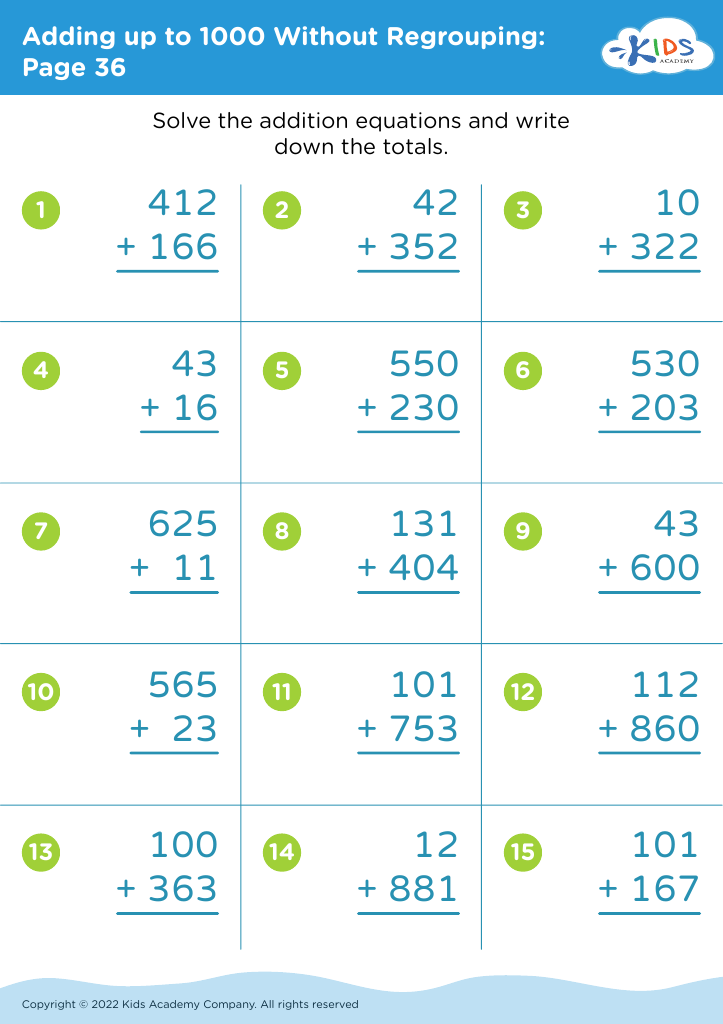
Adding up to 1000 Without Regrouping: Page 36
Worksheet
Matching Fractions Worksheet

Matching Fractions Worksheet

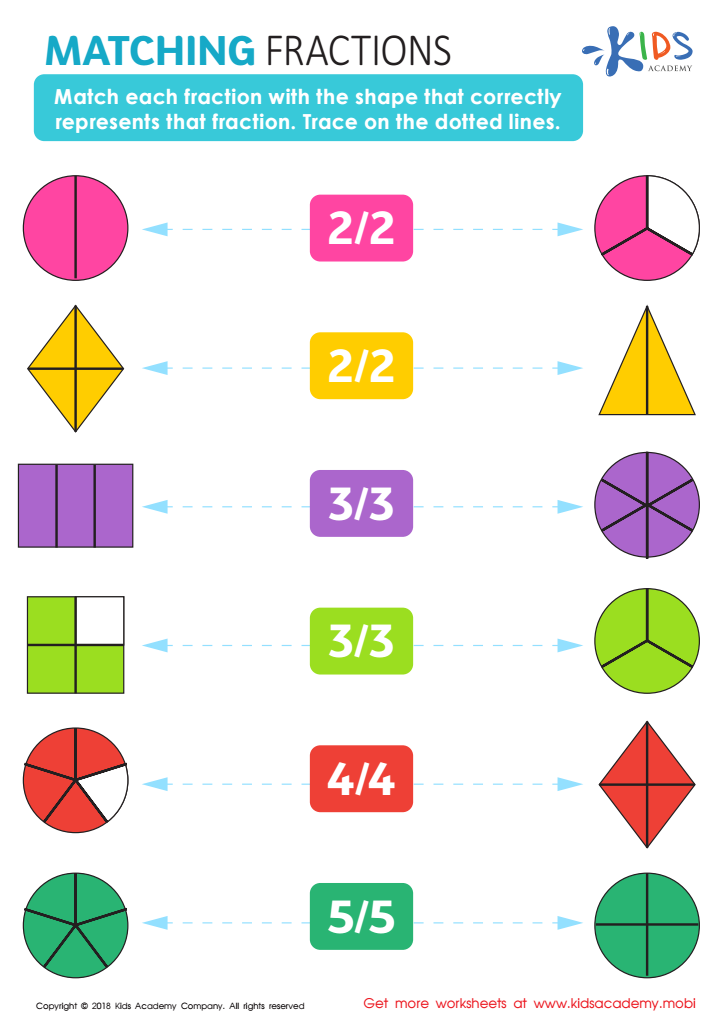
This worksheet uses colorful images to engage students. On the left are six shapes, mirrored on the right, with fractions in the middle. Students must match up the fraction with the right shape. It's a fun way to sharpen fractions skills!
Matching Fractions Worksheet
Worksheet
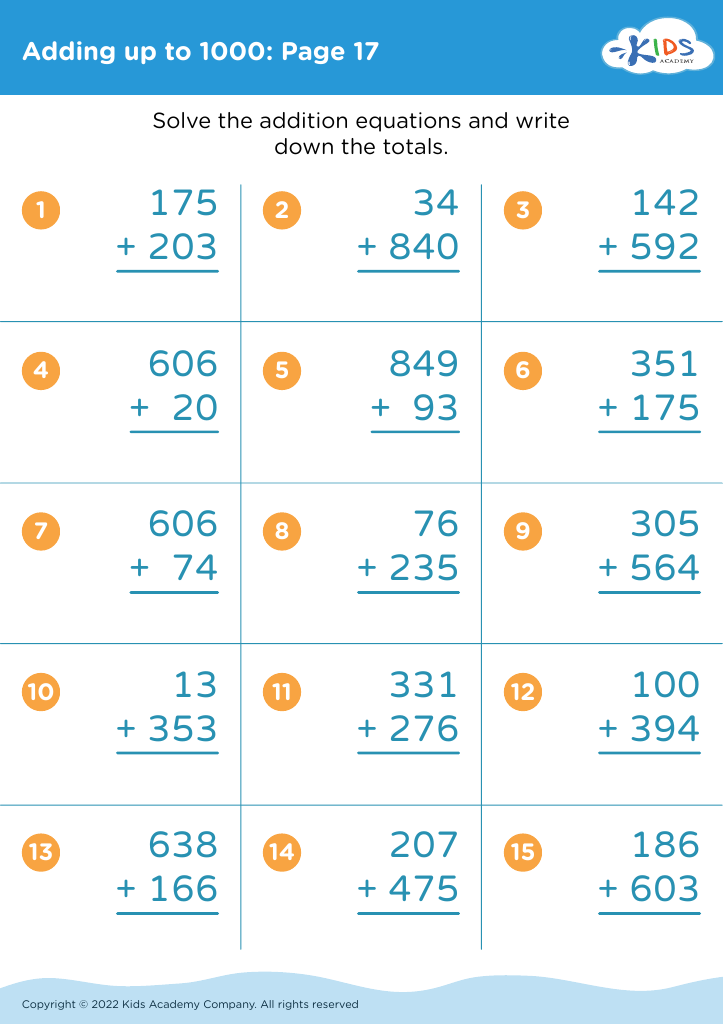
Adding up to 1000: Page 17

Adding up to 1000: Page 17

Adding up to 1000: Page 17
Worksheet
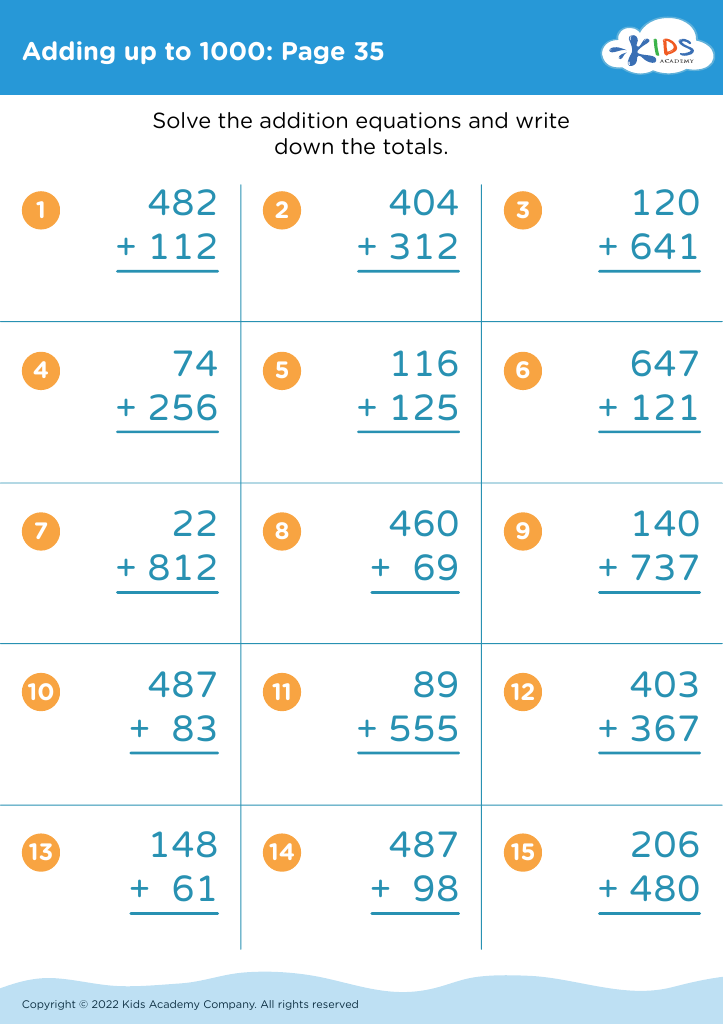
Adding up to 1000: Page 35

Adding up to 1000: Page 35

Adding up to 1000: Page 35
Worksheet
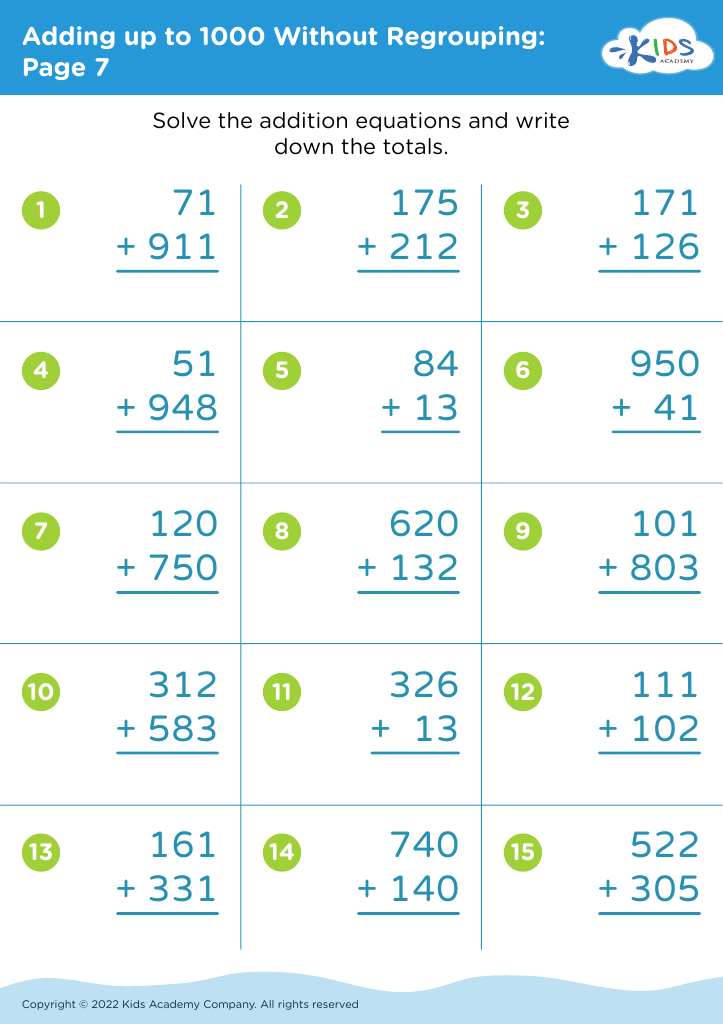
Adding up to 1000 Without Regrouping: Page 7
Worksheet
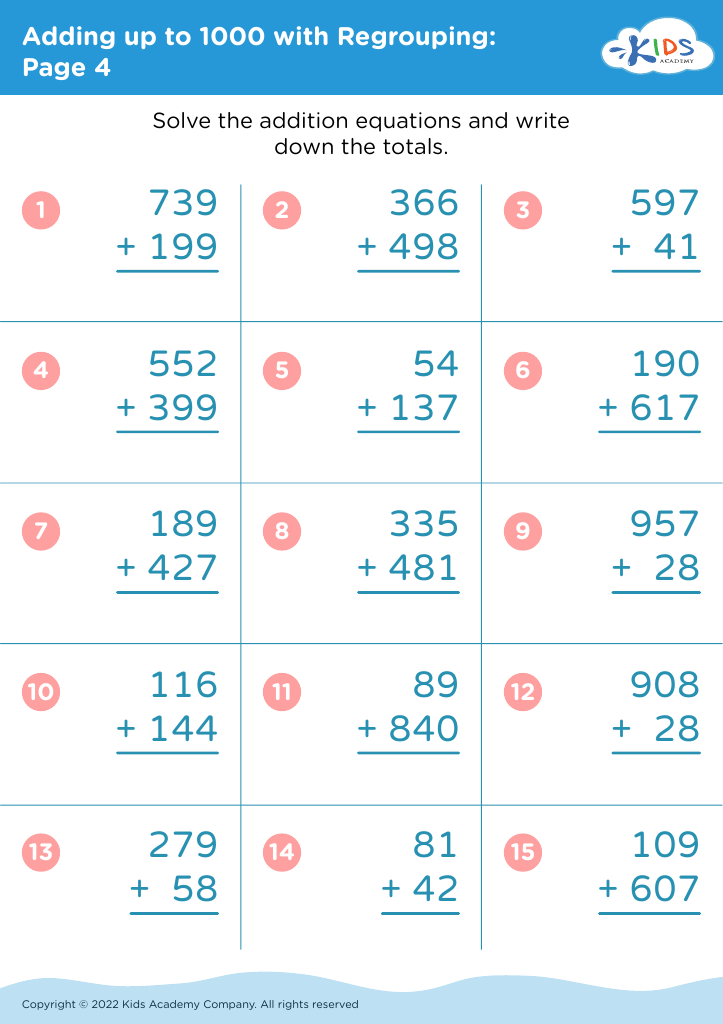
Adding up to 1000 with Regrouping: Page 4
Worksheet
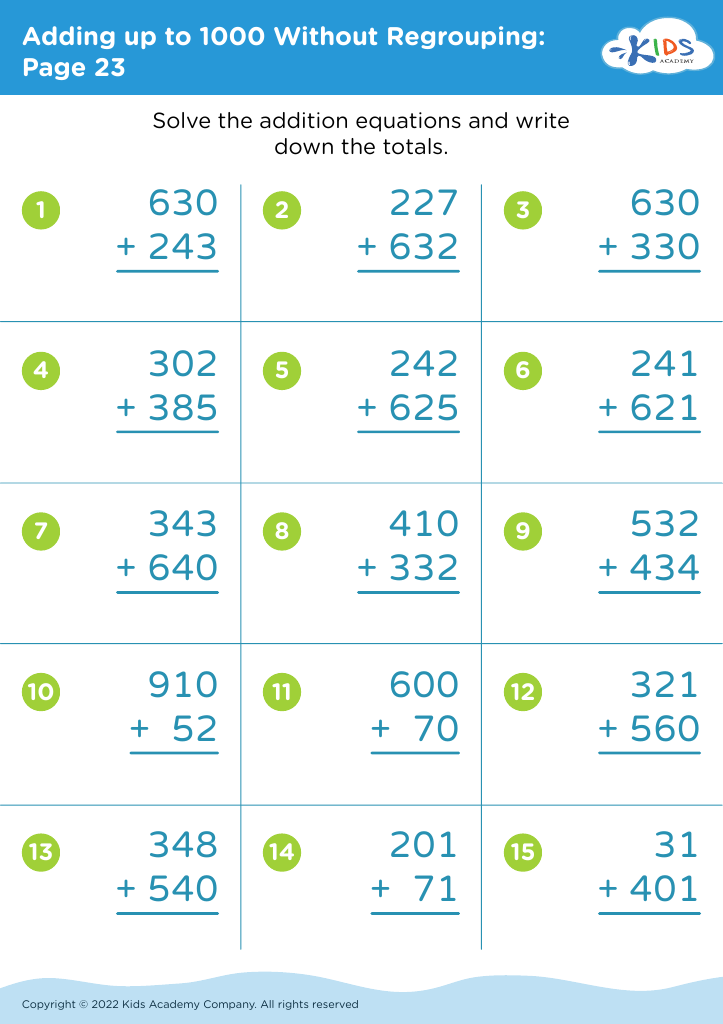
Adding up to 1000 Without Regrouping: Page 23
Worksheet
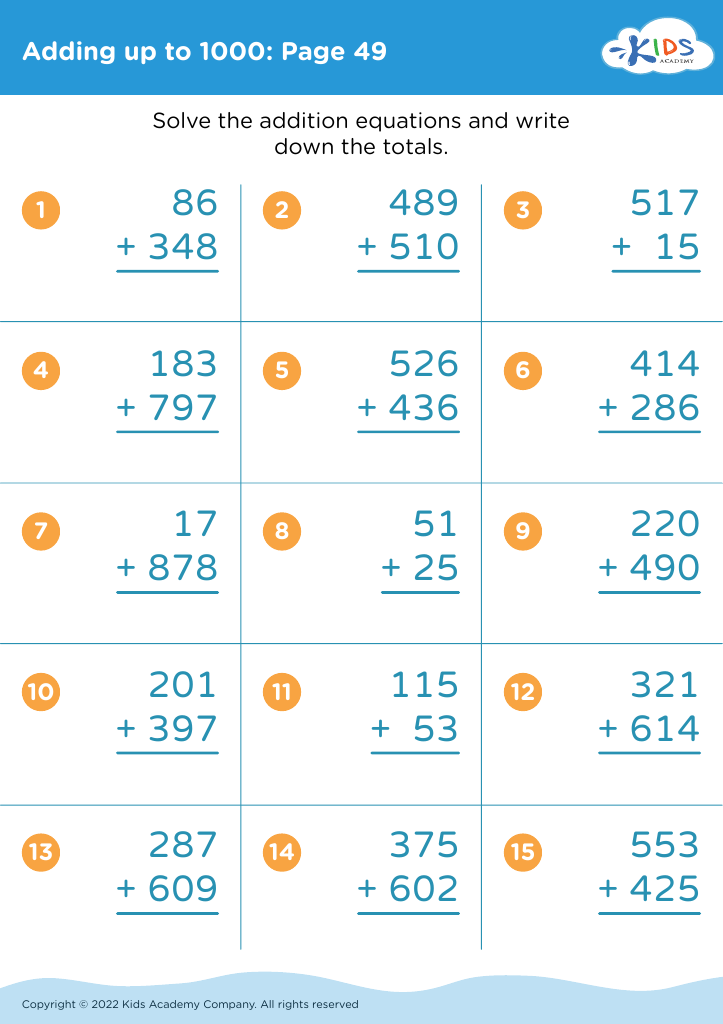
Adding up to 1000: Page 49

Adding up to 1000: Page 49

Adding up to 1000: Page 49
Worksheet
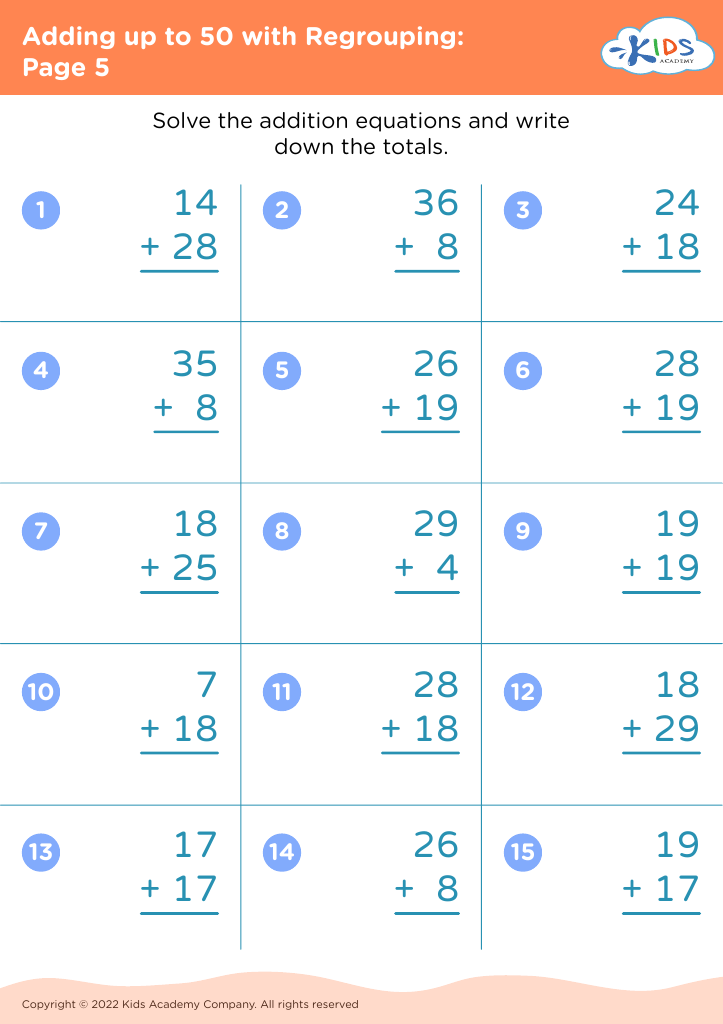
Adding up to 50 with Regrouping: Page 5
Worksheet
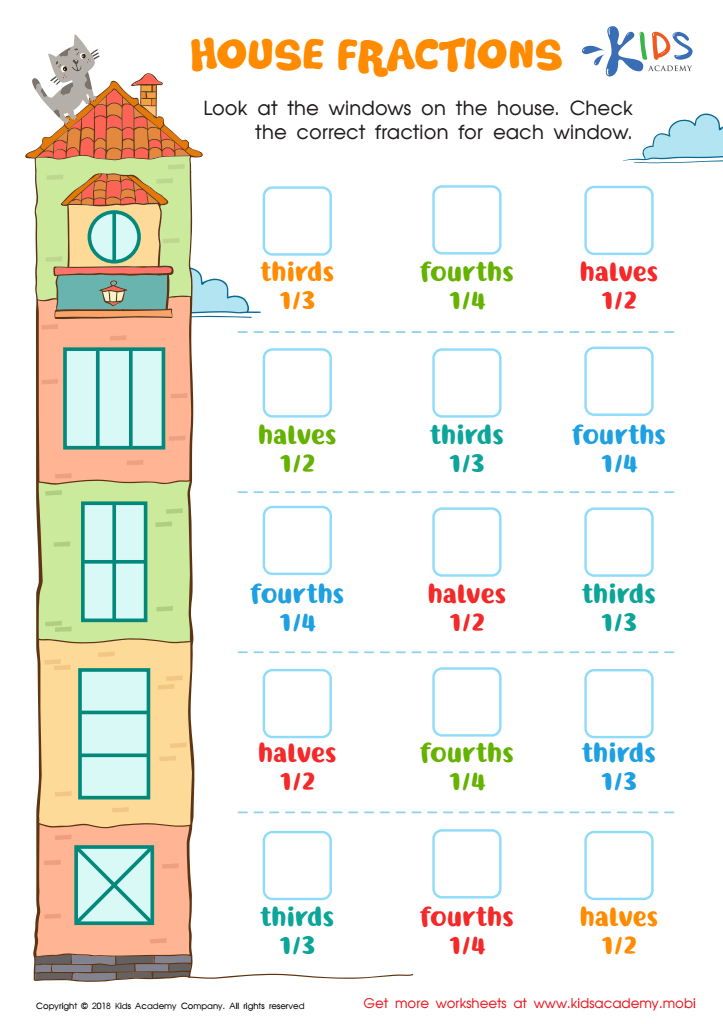
House Fractions Worksheet
House Fractions Worksheet

Test your child's knowledge of fractions with this worksheet! Have them examine the windows of a house and select the correct fraction from the options given. This is a great way to see how much they understand about wholes, fractions, halves, one thirds, and one fourths.
House Fractions Worksheet
Worksheet
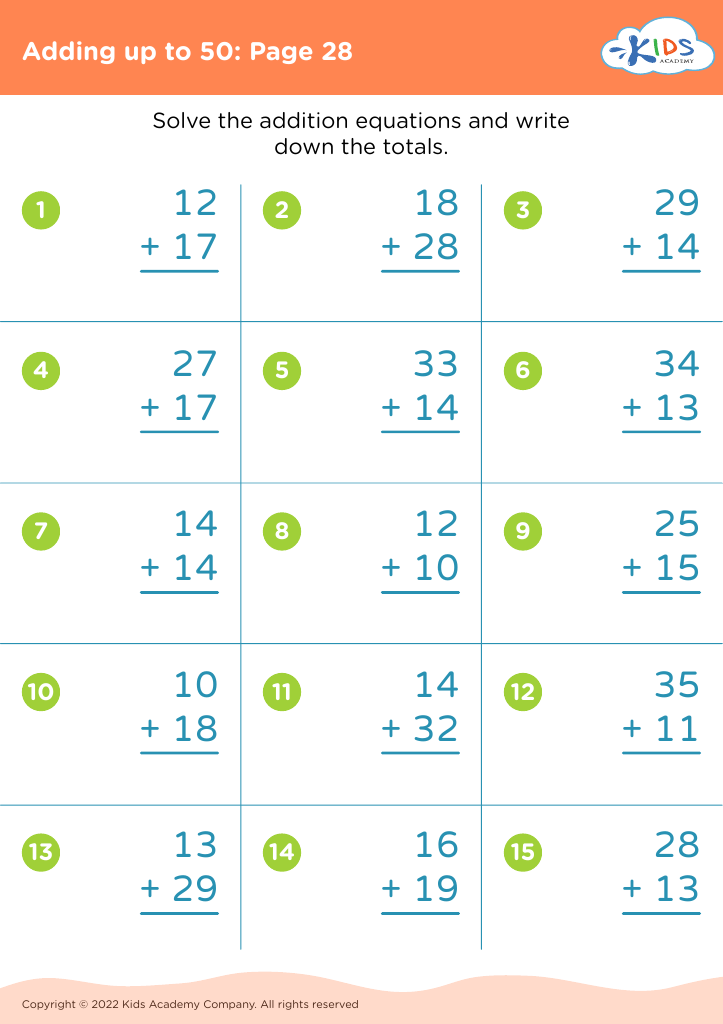
Adding up to 50: Page 28

Adding up to 50: Page 28

Adding up to 50: Page 28
Worksheet
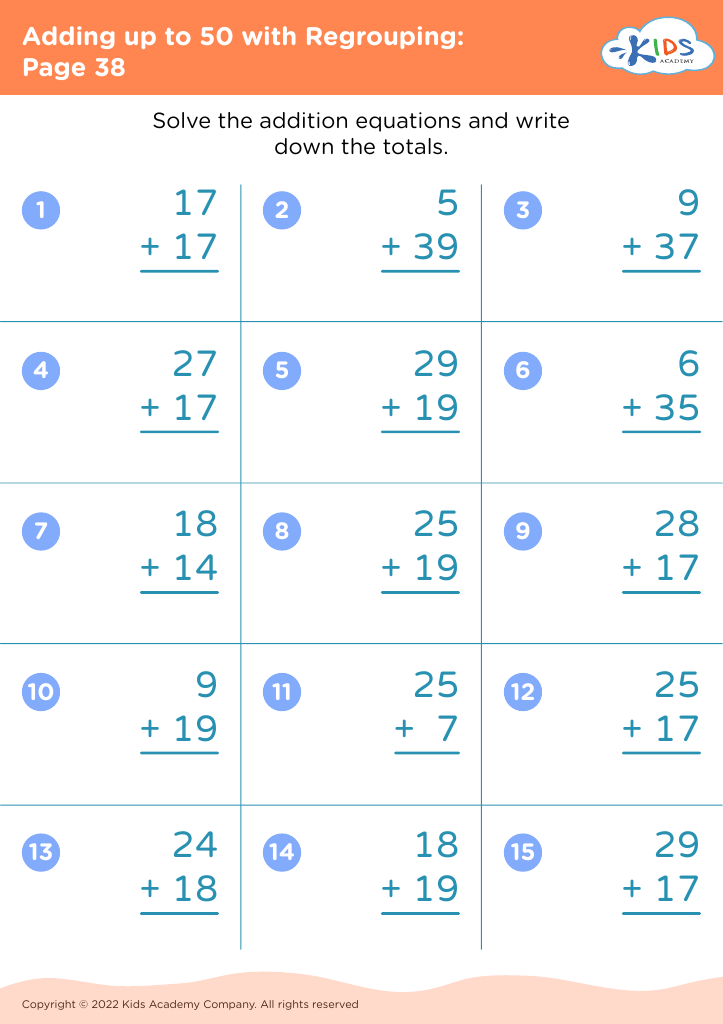
Adding up to 50 with Regrouping: Page 38
Worksheet
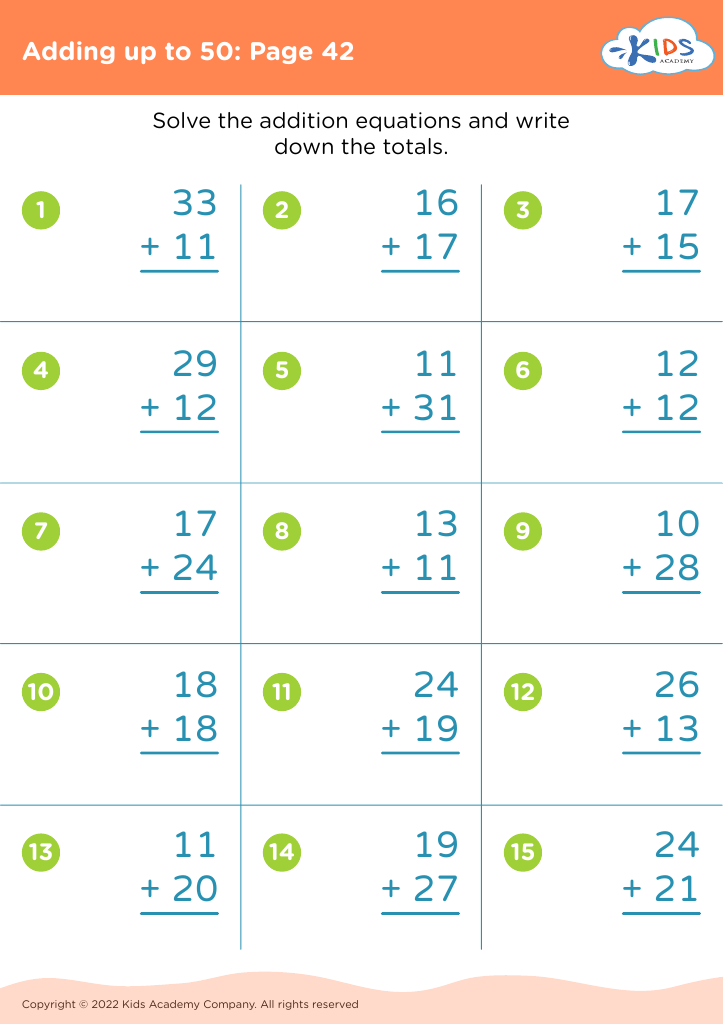
Adding up to 50: Page 42

Adding up to 50: Page 42

Adding up to 50: Page 42
Worksheet
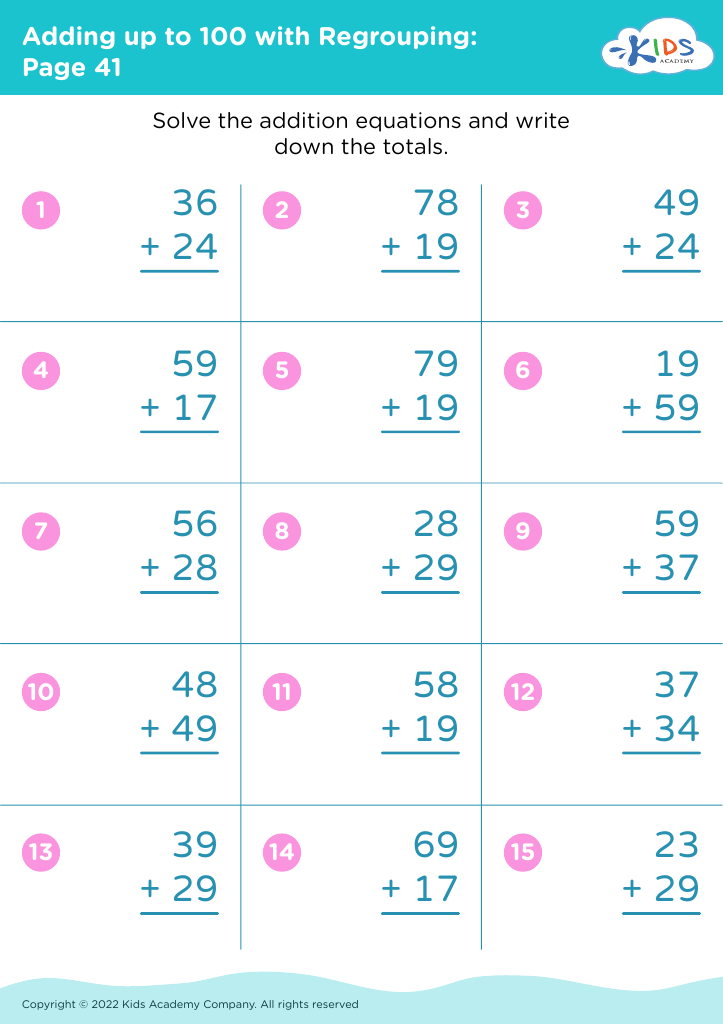
Adding up to 100 with Regrouping: Page 41
Worksheet
Adding up to 1000 Without Regrouping: Page 44
Worksheet
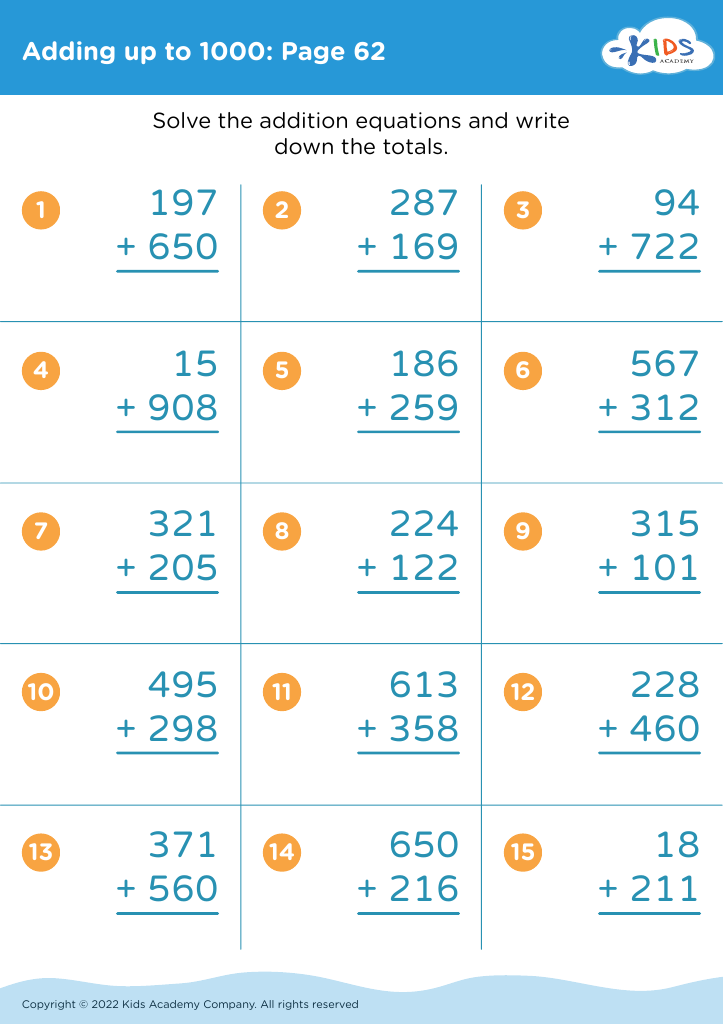
Adding up to 1000: Page 62

Adding up to 1000: Page 62

Adding up to 1000: Page 62
Worksheet
Shapes: Assessment 1 Worksheet
Shapes: Assessment 1 Worksheet
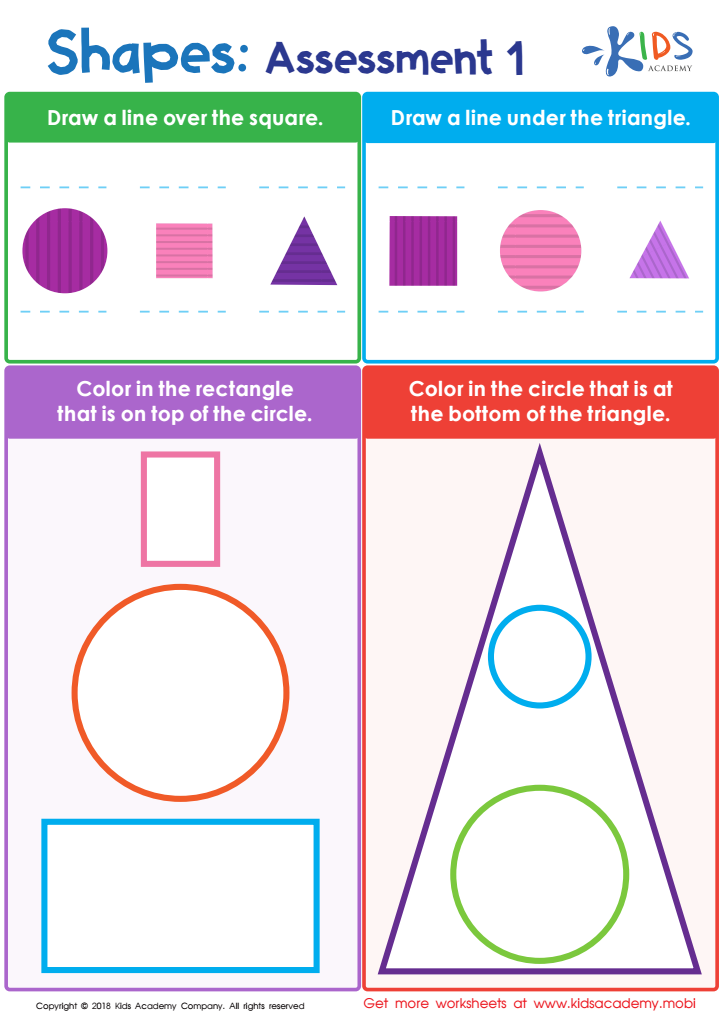
Test your students' understanding of the four basic shapes - circle, square, triangle and rectangle - with this assessment worksheet. Get them to draw a line over or under the shape indicated in the directions to show they can identify it correctly.
Shapes: Assessment 1 Worksheet
Worksheet
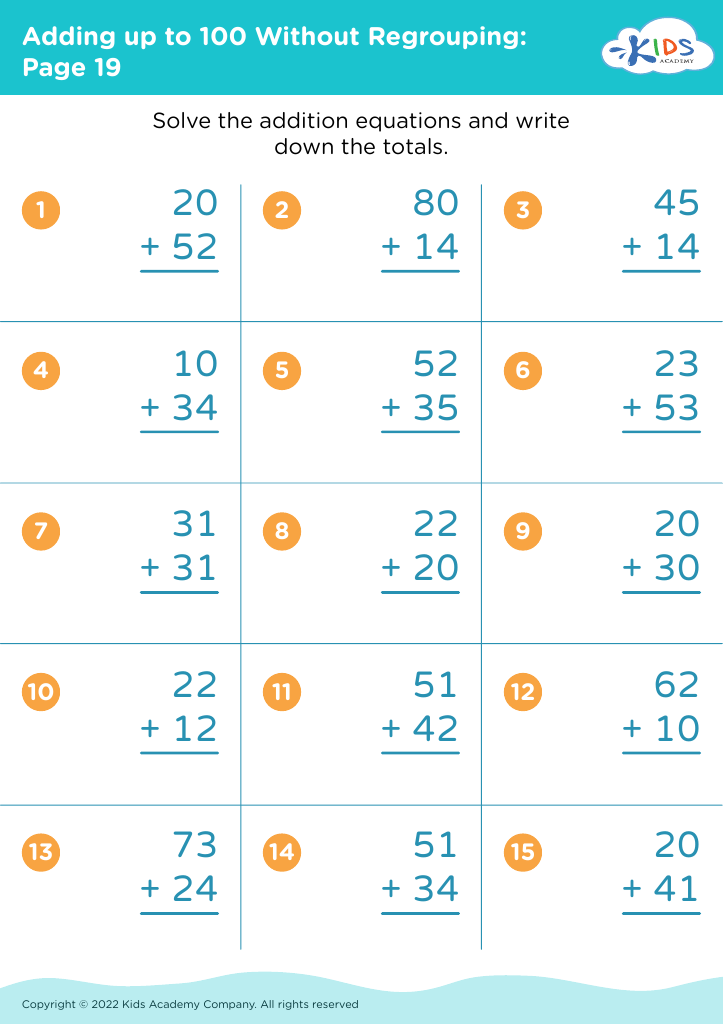
Adding up to 100 Without Regrouping: Page 19
Worksheet
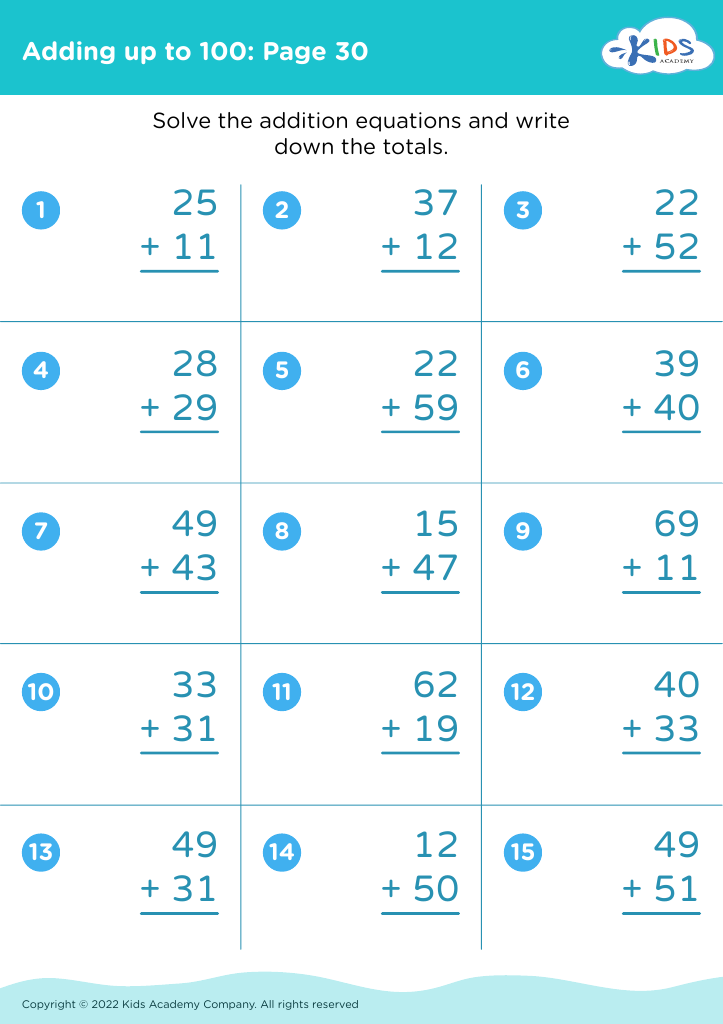
Adding up to 100: Page 30

Adding up to 100: Page 30

Adding up to 100: Page 30
Worksheet
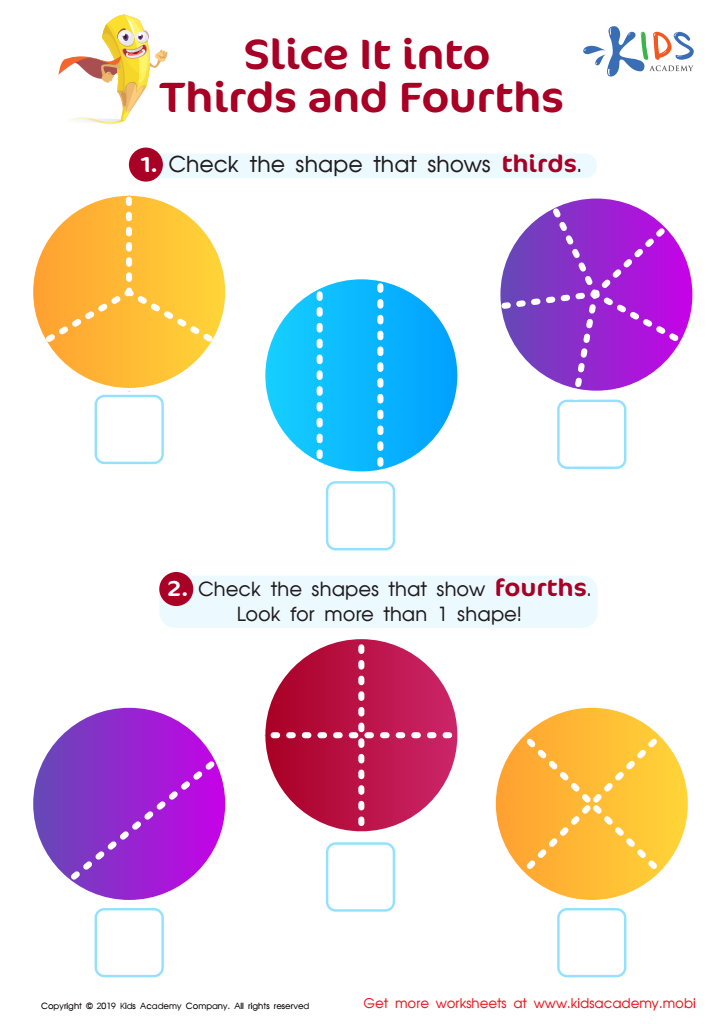
Slice in Thirds Fourths Worksheet
Slice in Thirds Fourths Worksheet
This worksheet helps kids learn fractions visually by dividing circles into thirds and fourths. They will learn that fractions must be equal parts, not just sets, by choosing the right colorful circles. It's an easy way to master fractions and have fun doing it!
Slice in Thirds Fourths Worksheet

Worksheet
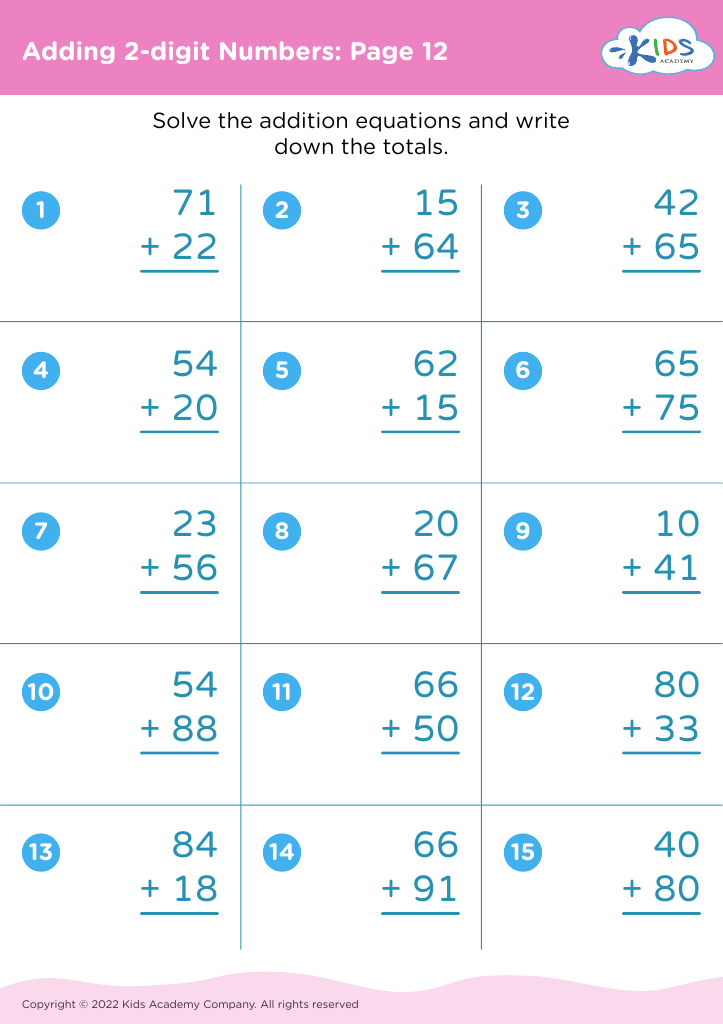
Adding 2-digit Numbers: Page 12

Adding 2-digit Numbers: Page 12

Adding 2-digit Numbers: Page 12
Worksheet
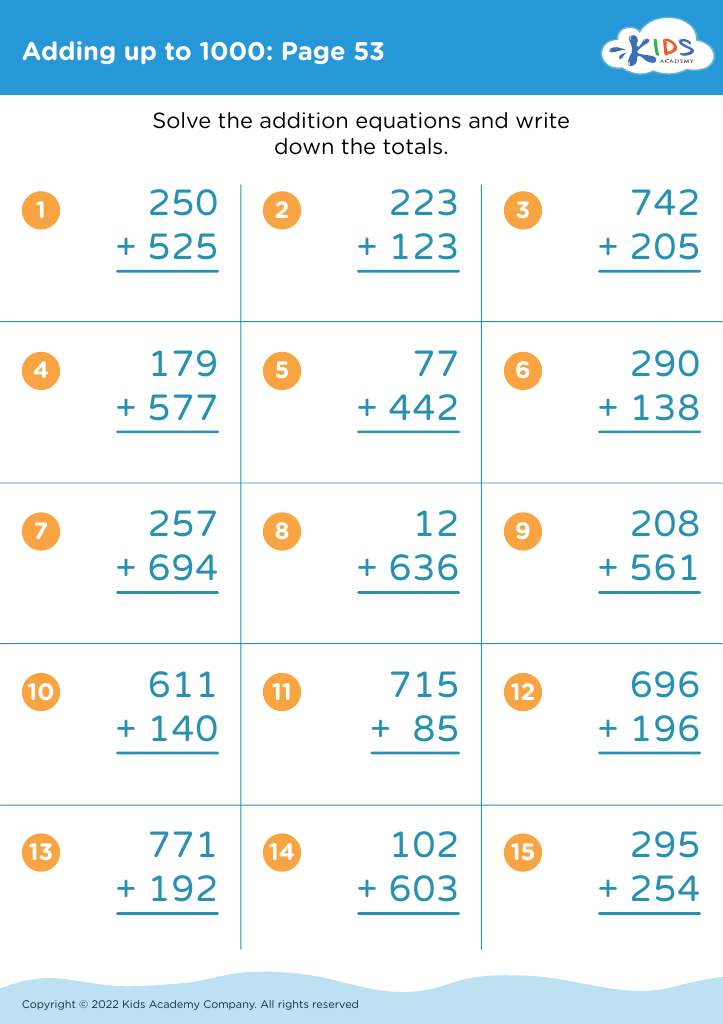
Adding up to 1000: Page 53

Adding up to 1000: Page 53

Adding up to 1000: Page 53
Worksheet
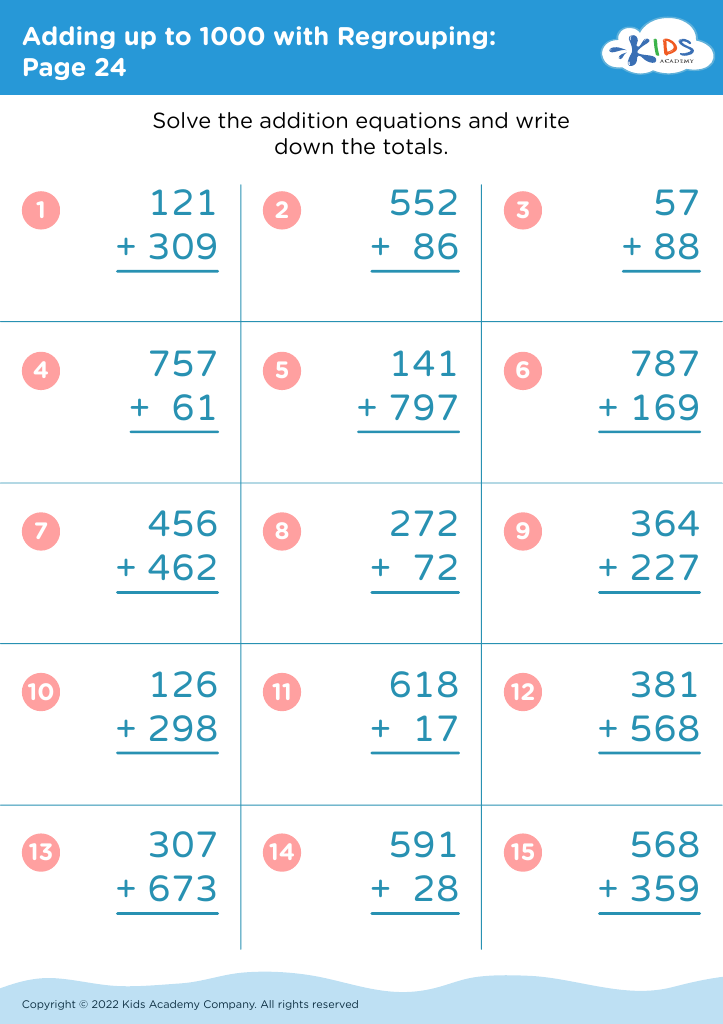
Adding up to 1000 with Regrouping: Page 24
Worksheet


Understanding fraction comparison at an early age is crucial for young children, even though the concept might seem advanced for ages 3-8. This foundational skill sets the stage for future mathematical learning and critical thinking. Here’s why parents and teachers should care about teaching fraction comparison to young kids:

Firstly, fractions are a fundamental part of math education. Grasping how to compare fractions helps children understand the essence of what fractions represent—parts of a whole—which is integral to virtually all higher-level math, including algebra, geometry, and even calculus.

Secondly, learning to compare fractions enhances cognitive development. It involves logical thinking, pattern recognition, and problem-solving skills. These are not only math-related competencies but also essential life skills that drive decision-making and analytical thought processes.

Additionally, mastering fraction comparison can boost a child’s confidence. Math fears often stem from early struggles; by providing a strong foundational understanding, parents and teachers can help prevent these fears, fostering a positive attitude toward math.

Lastly, real-world applications of fractions are everywhere—from cooking and time management to sharing and dividing resources. Early exposure to comparing fractions equips children with practical tools they'll use throughout their lives.

In sum, teaching children ages 3-8 to compare fractions is key to developing mathematical understanding, boosting cognitive skills, instilling confidence, and preparing them for practical real-world scenarios.