Math skills development Math Worksheets for Ages 3-8
6 filtered results
-
From - To
Nurture your child's mathematical abilities with our fun and educational math worksheets designed for ages 3-8. At Kids Academy, we offer a diverse range of activities that cater to key developmental stages, including counting, addition, subtraction, shape recognition, and more. Our expertly crafted worksheets transform learning into a playful adventure, keeping young learners engaged while solidifying important math skills. Perfect for both classroom and home use, these resources help pave the way towards academic success. Explore our collection today and watch your child's confidence in math grow! Access quality printable worksheets at Kids Academy for comprehensive math skills development.
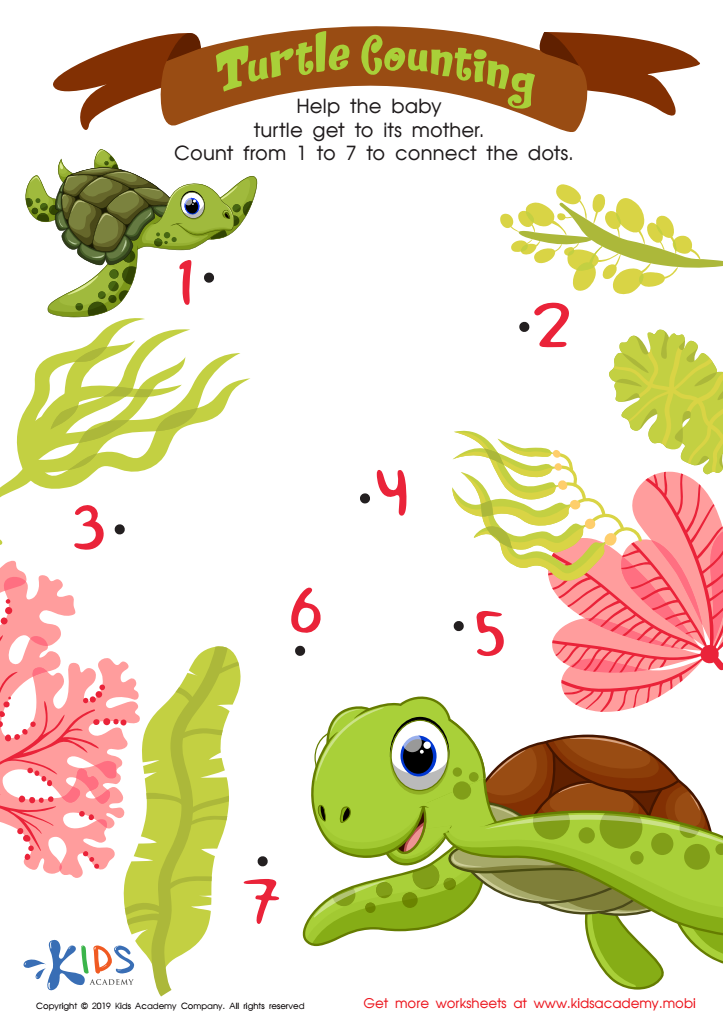
Turtle Counting Worksheet
 Assign to My Students
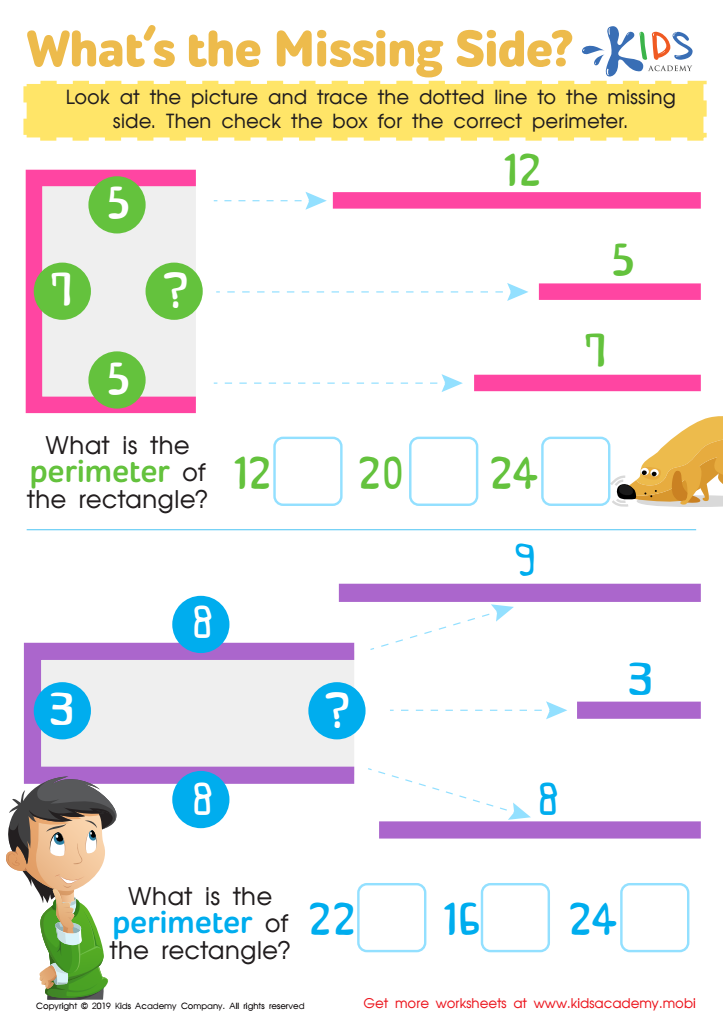
What's the Missing Side Worksheet
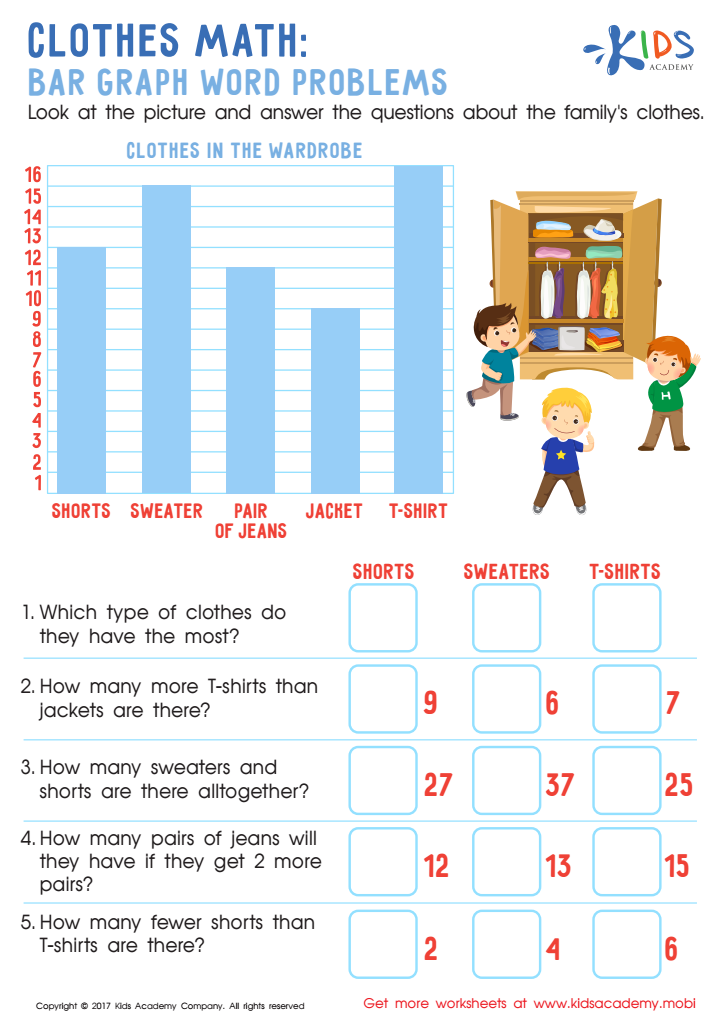
Clothes Math: Bar Graph Word Problems Worksheet
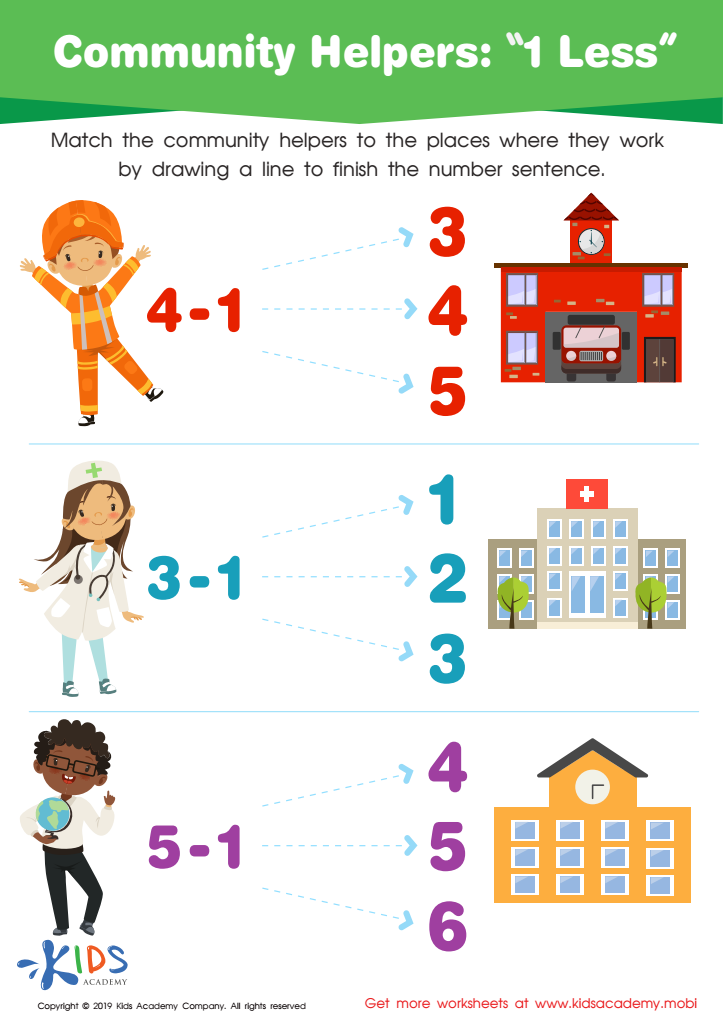
Community Helpers: 1 less Worksheet
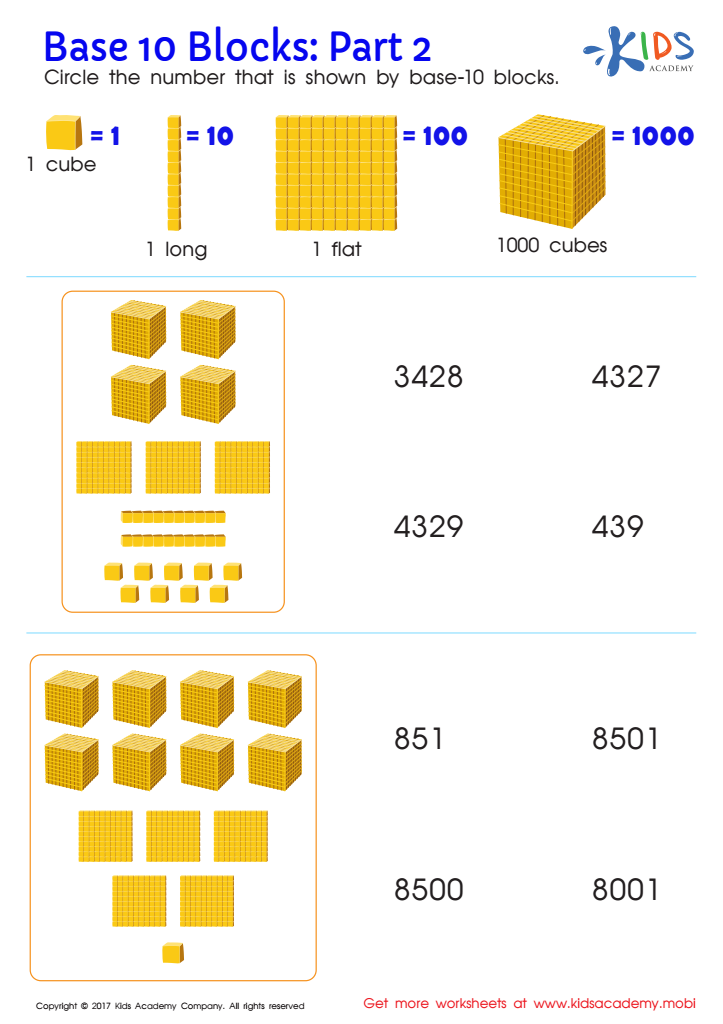
Place Value Worksheet: Thousands
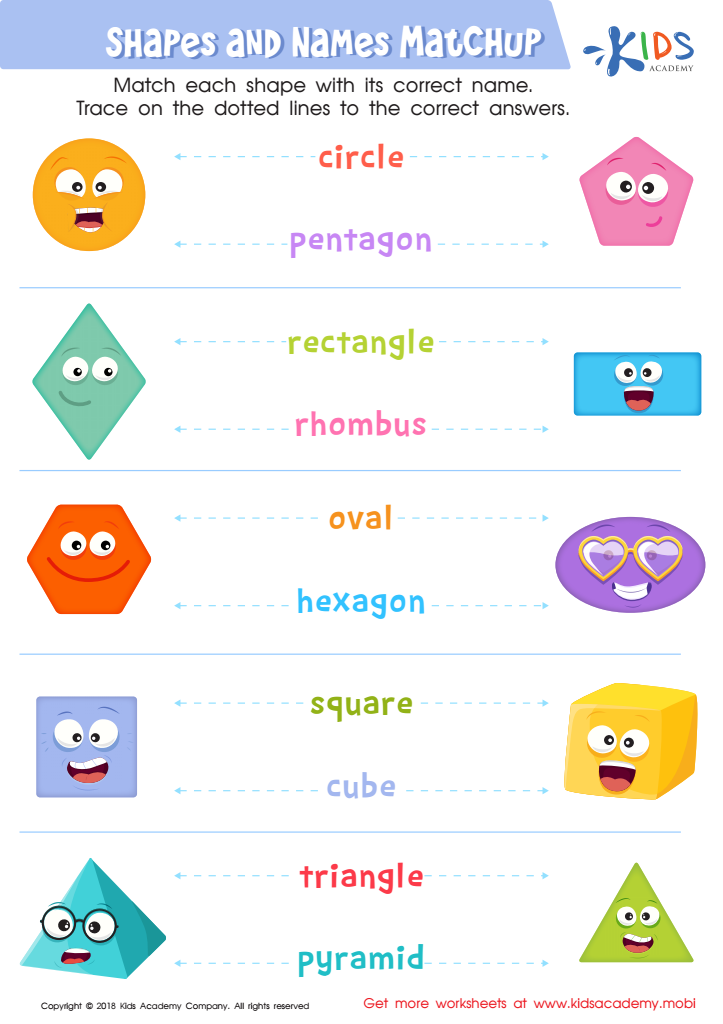
Shapes and Names Matchup Worksheet








Math skills development in children ages 3-8 is crucial for several reasons. During these early years, children's brains are highly adaptable and capable of learning at a rapid pace. Introducing math concepts at this stage lays a solid foundation for more complex mathematical understanding in later years. Early math skills, like counting, recognizing numbers, and understanding shapes and patterns, are predictive of future academic success not only in math but across all subjects.
Moreover, math enhances critical thinking and problem-solving abilities. It teaches children how to approach and solve problems methodically and logically, skills that are valuable both in school and in everyday life. Early math competencies also foster confidence. A child who feels comfortable and competent with numbers is more likely to participate enthusiastically in class and tackle challenges with a positive attitude.
Math skills are integral to navigating the world. Concepts like counting, measuring, and understanding time and money are part of daily life. For instance, understanding fractions is vital for dividing up snacks or comprehending portions.
In summary, focusing on math skills development for young children equips them with essential tools for academic success, nurtures their problem-solving abilities and confidence, and prepares them to handle everyday tasks more effectively. Parents and teachers play a pivotal role in creating an engaging, supportive environment for this crucial aspect of early education.








