Mental math improvement Math Worksheets for Ages 3-8
7 filtered results
-
From - To
Discover our engaging Mental Math Improvement Worksheets designed for children aged 3-8! These interactive resources aim to enhance young learners' arithmetic skills through fun and challenging exercises. Ideal for early education, our worksheets promote critical thinking, problem-solving, and flexibility with numbers, fostering confidence in math readiness. Each worksheet is crafted to captivate young minds while building foundational skills essential for future academic success. Encourage mental agility and numerical fluency with activities that can be easily integrated into home or classroom settings. Perfect for parents and educators looking to support math learning in a playful, meaningful way—download your set today!
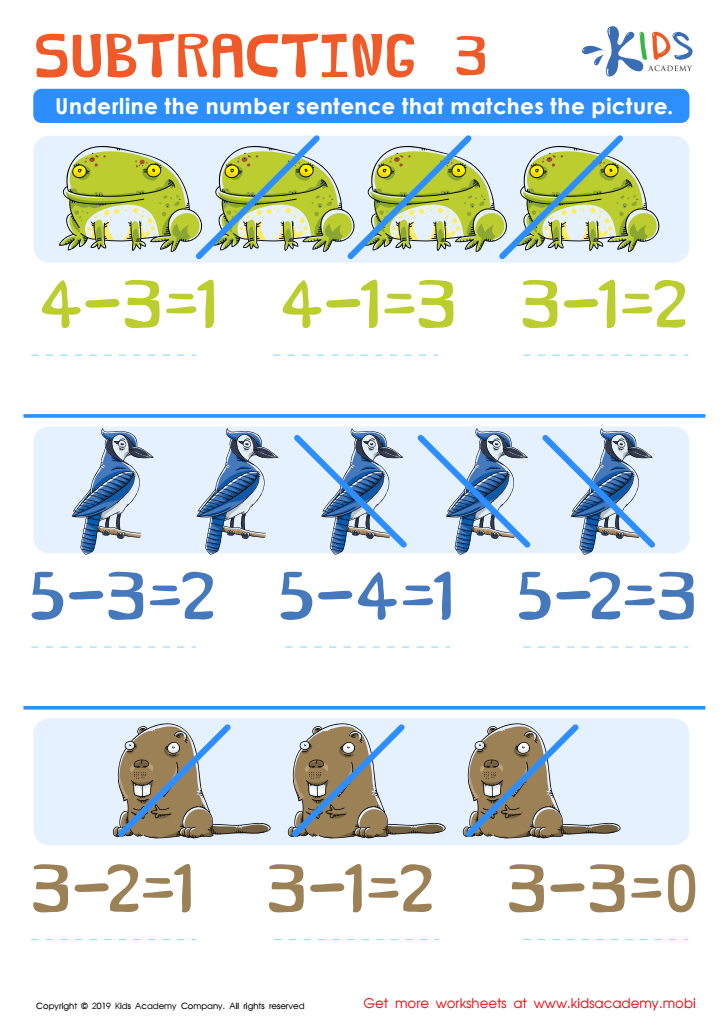
Subtracting 3 Worksheet
 Assign to My Students
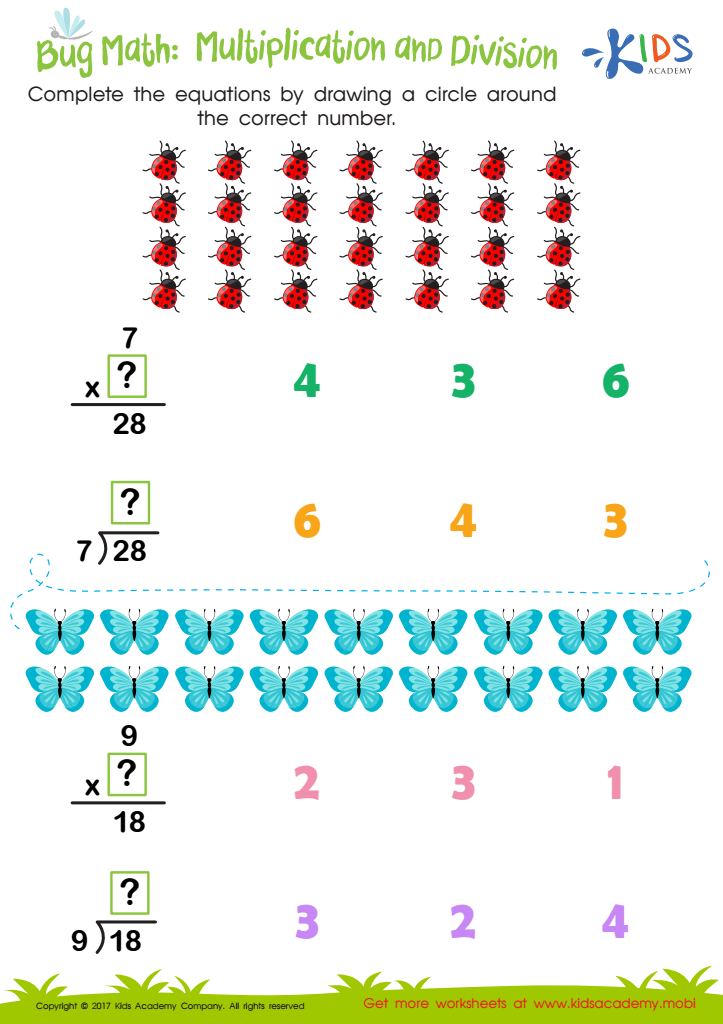
Multiplication and Division Worksheet
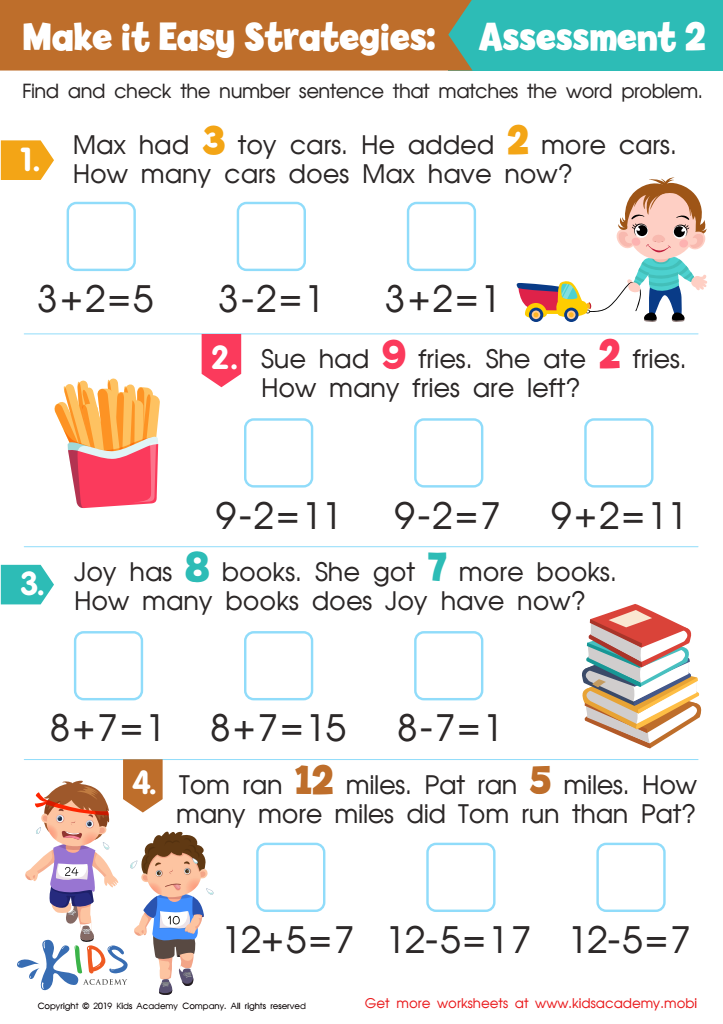
Make it Easy Strategies: Assessment 2 Worksheet
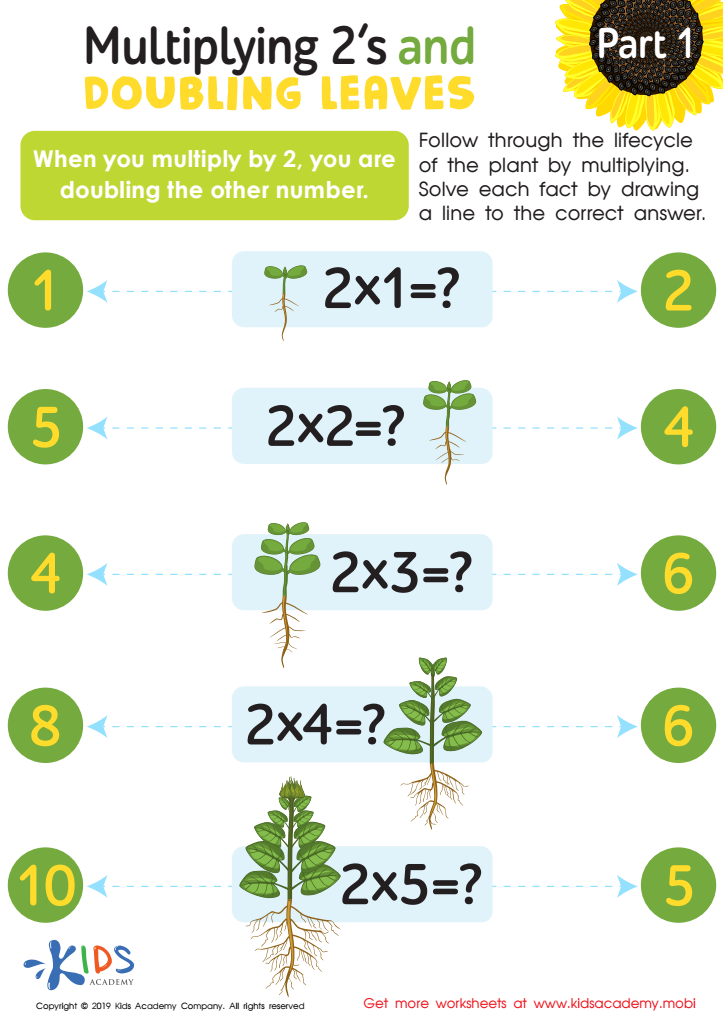
Multiplying 2’s and Doubling Leaves Part 1 Worksheet
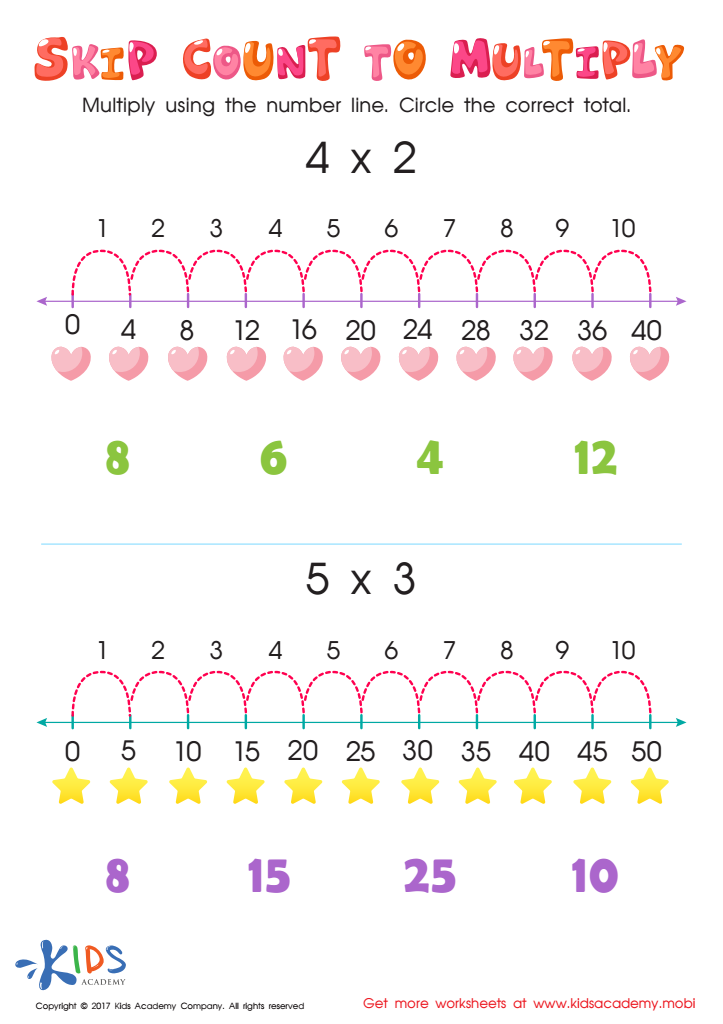
Skip Count Multiplication Worksheet
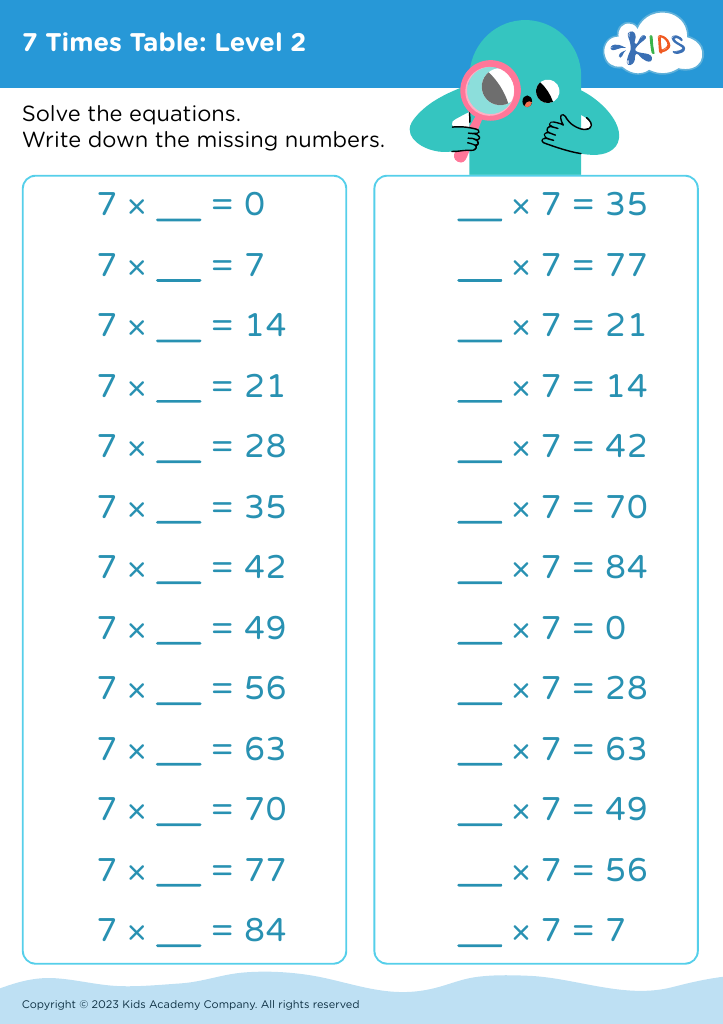
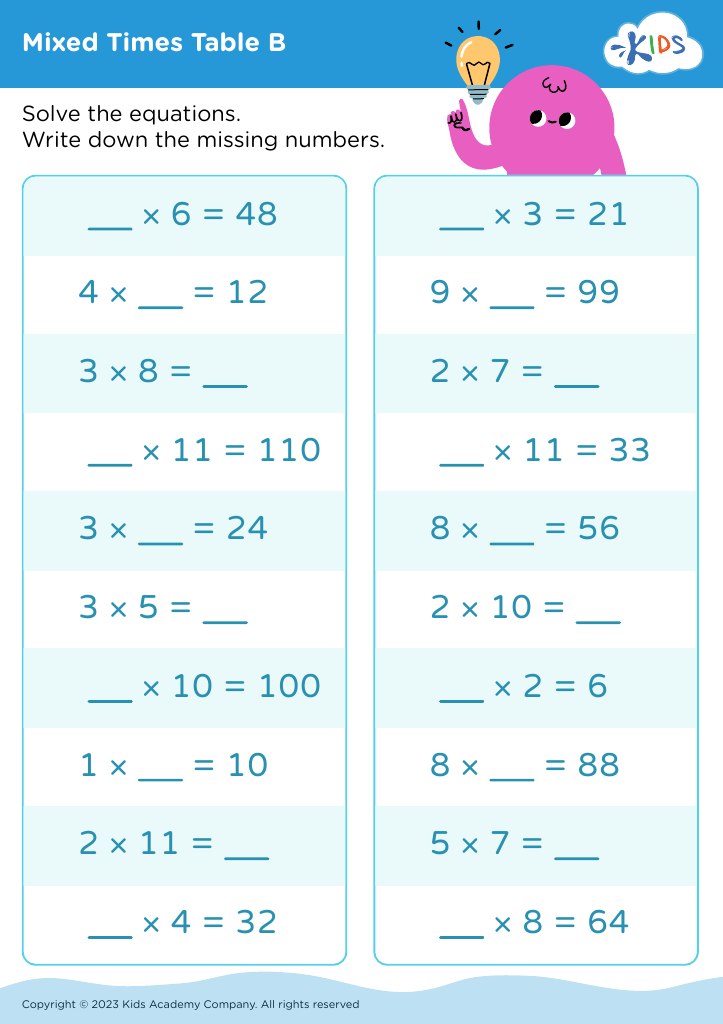








Parents and teachers should prioritize mental math improvement for children aged 3-8 because it lays a strong foundation for lifelong mathematical understanding. At this critical developmental stage, young children are naturally curious and can grasp concepts quickly. Developing mental math skills enhances their ability to perform calculations without relying on paper and pencil, boosting their confidence and engagement in learning.
Improving mental math promotes essential cognitive skills, such as memory, attention, and problem-solving abilities. By practicing mental math, children learn to recognize patterns and make connections between numbers, which fosters a deep understanding of mathematical concepts rather than mere memorization. This foundational skill is crucial as it supports more complex math operations encountered in later years.
Additionally, mental math encourages flexibility in thinking, allowing students to explore multiple strategies for solving problems, which is instrumental in building resilience and perseverance. Such skills are not only mathematically beneficial but also translate into real-life situations, equipping children with tools necessary for everyday decision-making and critical thinking.
Ultimately, supporting mental math improvement nurtures a positive attitude toward learning, prepares children for advanced mathematics, and maximizes their potential in academic and social settings.








