Vocabulary Building Matching Worksheets for Ages 3-8
6 filtered results
-
From - To
Unlock your child’s language potential with our Vocabulary Building Matching Worksheets for ages 3-8. Designed to foster early language skills, these engaging worksheets help children enhance their vocabulary through fun and interactive matching exercises. Perfect for preschool to early elementary students, our worksheets cover a variety of themes such as animals, foods, and everyday objects. Encourage your little learners to match words with pictures, synonyms, and definitions, reinforcing their understanding and boosting their word bank. Ideal for homeschooling or classroom use, our expertly crafted resources make learning new words enjoyable and effective. Start building strong language foundations today!
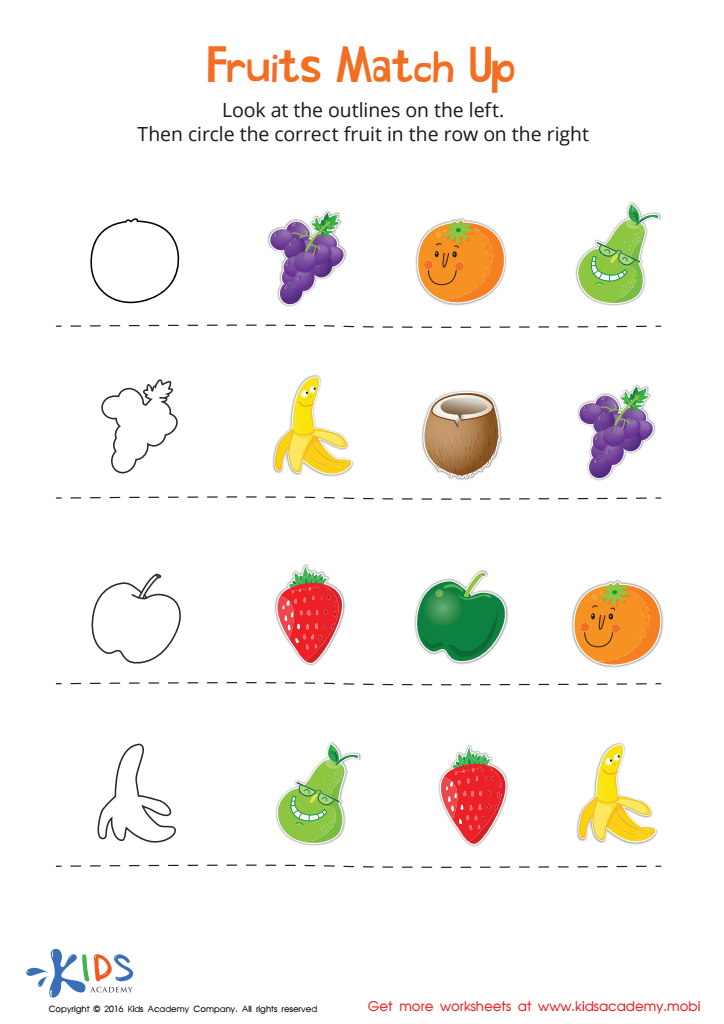
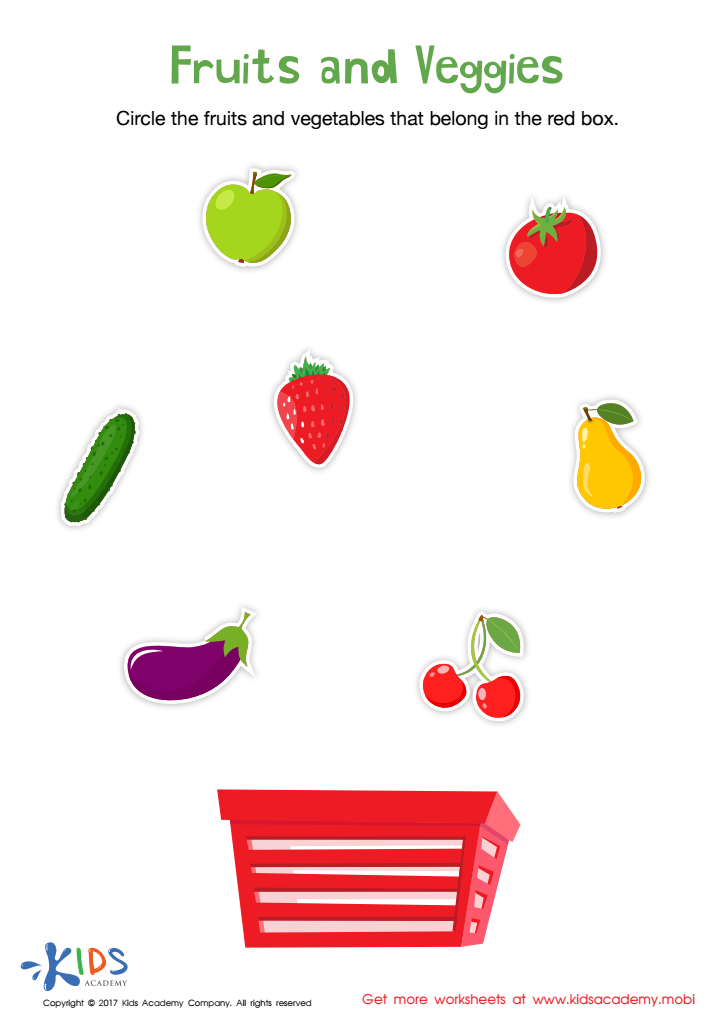
Fruits Match Up Worksheet
 Assign to My Students
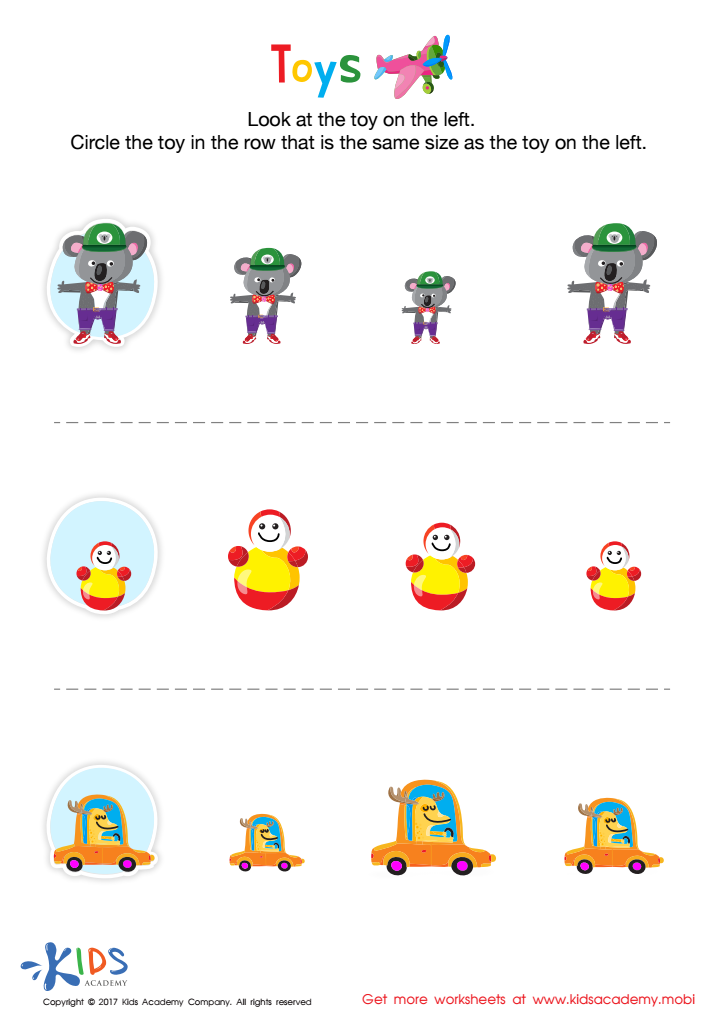
Matching: Classifying Toys by Size Worksheet
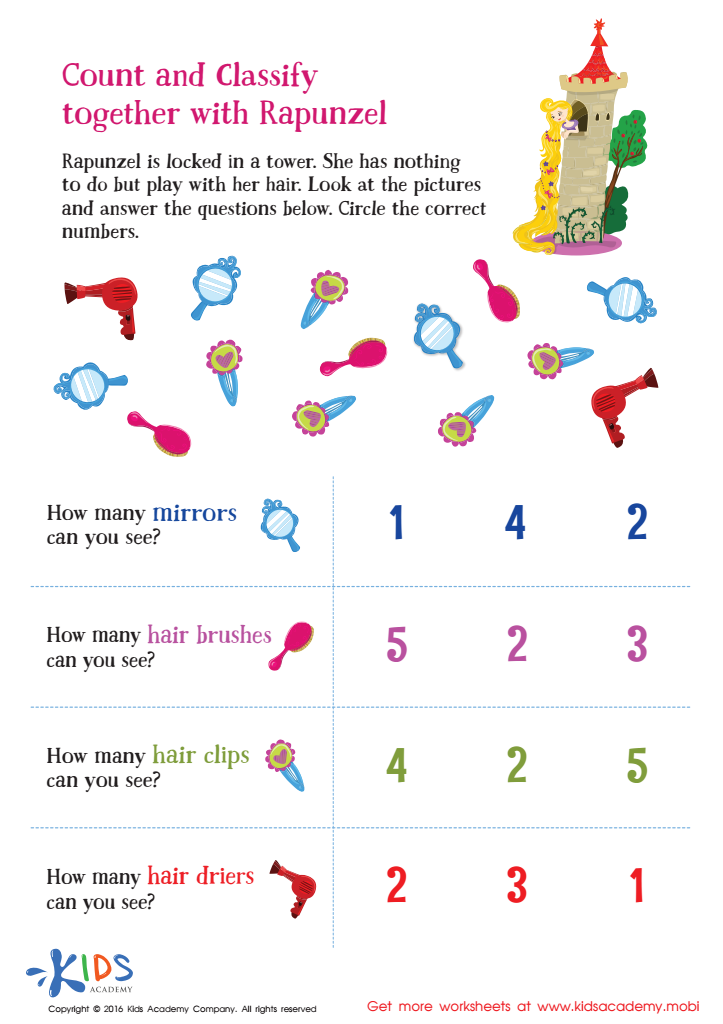
Fairy Tale Worksheet: Count and Classify with Rapunzel
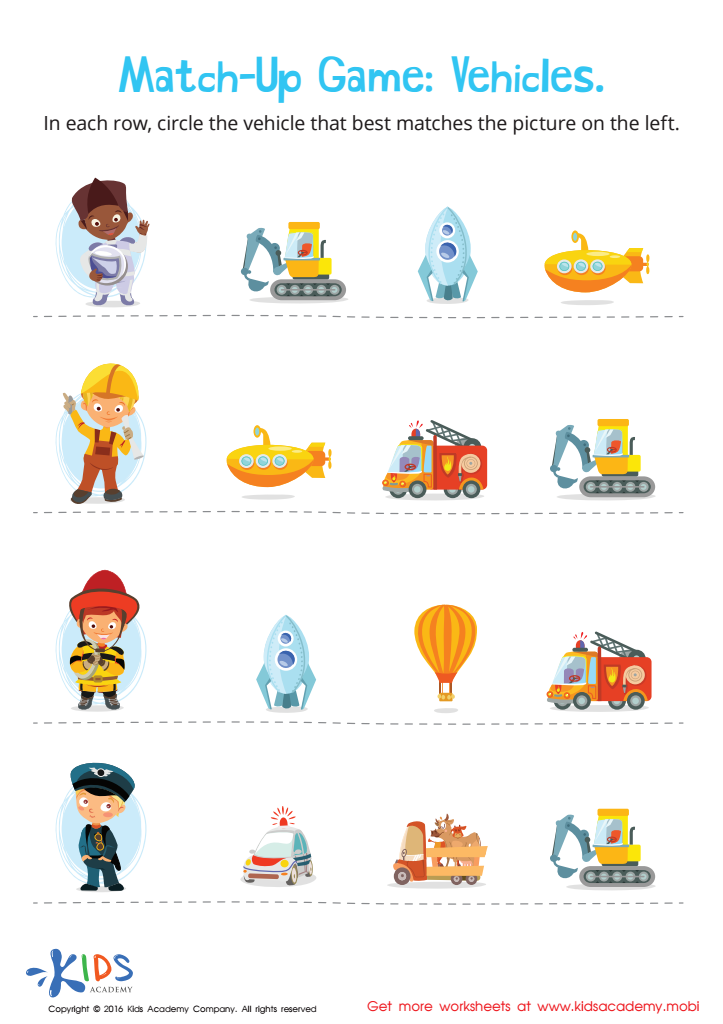
Vehicles Worksheet
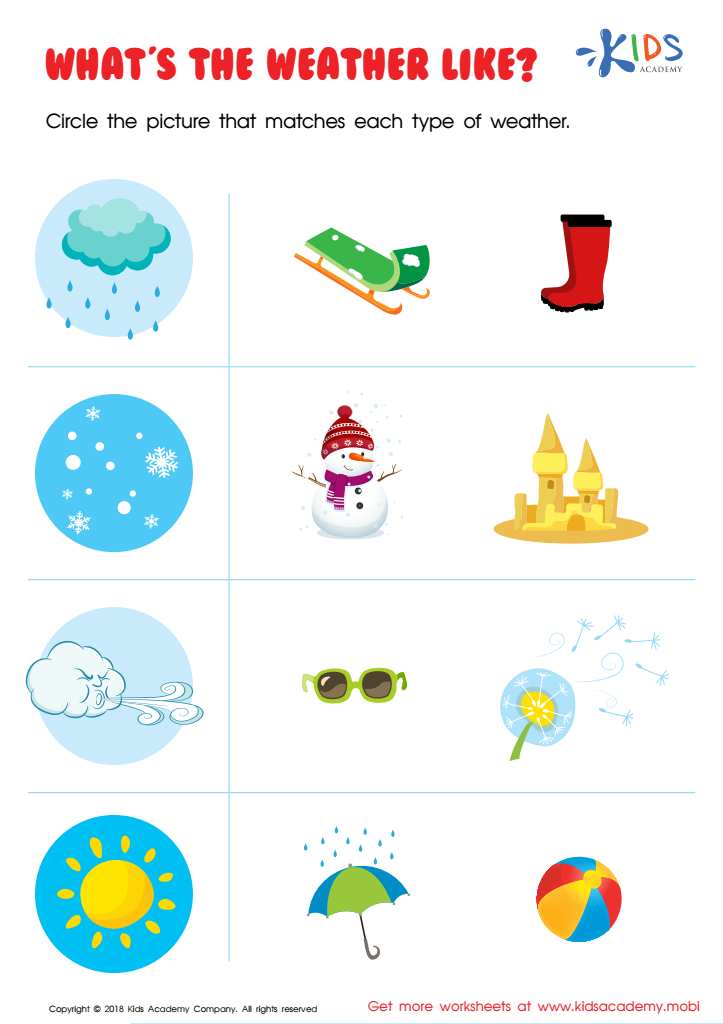
What's the Weather Like? Worksheet








Vocabulary building is critical for children aged 3-8, as it's foundational for both their academic success and overall language development. During these early years, children are like sponges, rapidly absorbing new words and concepts. Parents and teachers who emphasize vocabulary building equip kids with the tools needed for reading comprehension, effective communication, and cognitive development.
Vocabulary-building matching activities make learning enjoyable and interactive. By matching words with pictures or definitions, children kinesthetically connect new vocabulary to real-world objects and ideas. This method aids retention and understanding, making it easier for young minds to recall and use new words accurately in daily conversations and academic settings. As children build a richer vocabulary, they better understand instructions, follow along with stories, and engage more fully in classroom discussions. This deepens their comprehension of other subjects, such as math, science, and social studies, where complex terminology often appears.
Moreover, a strong vocabulary enhances children's social interactions. It enables them to express their thoughts, emotions, and needs more clearly, leading to more meaningful relationships. When parents and teachers invest time in vocabulary-building activities, they are essentially laying down the stepping stones for a child's future success in both personal and academic realms.








