Number Sequencing Numbers up to 100 Worksheets for Ages 3-8
6 filtered results
-
From - To
Looking to boost your child's number sequencing skills? Our "Number Sequencing Numbers up to 100 Worksheets" are perfect for ages 3-8! These engaging and interactive worksheets help young learners identify, arrange, and practice numbers in sequence. Designed to stimulate cognitive development and enhance math skills, our resources make learning fun and effective. With a variety of colorful activities that capture children's attention, your little ones will enjoy mastering number placement and order. Whether at home or school, these worksheets are an essential tool for any early education setting. Start your child’s journey to mathematical confidence today!
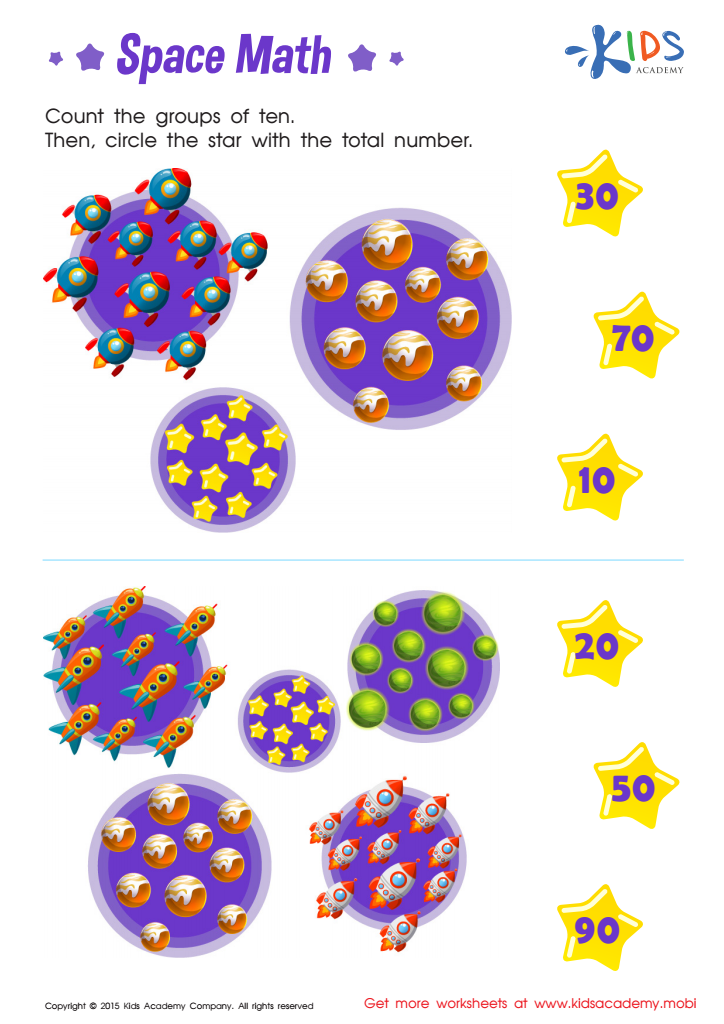
Learn dozens: Space math Worksheet
 Assign to My Students
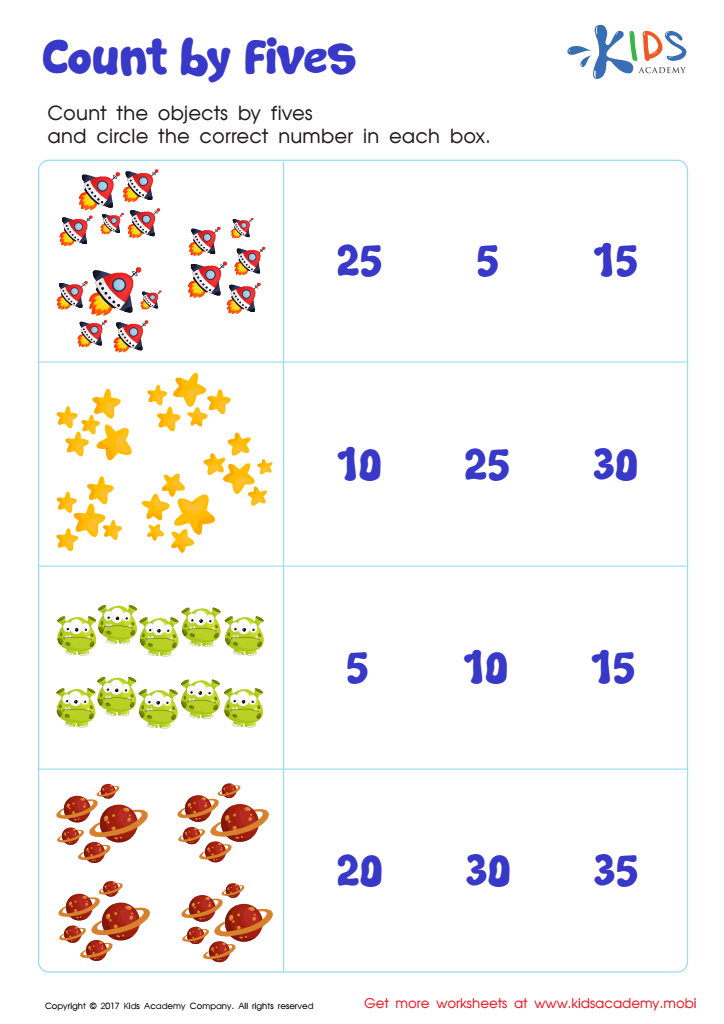
Skip Counting by 5s: Space Math Printable
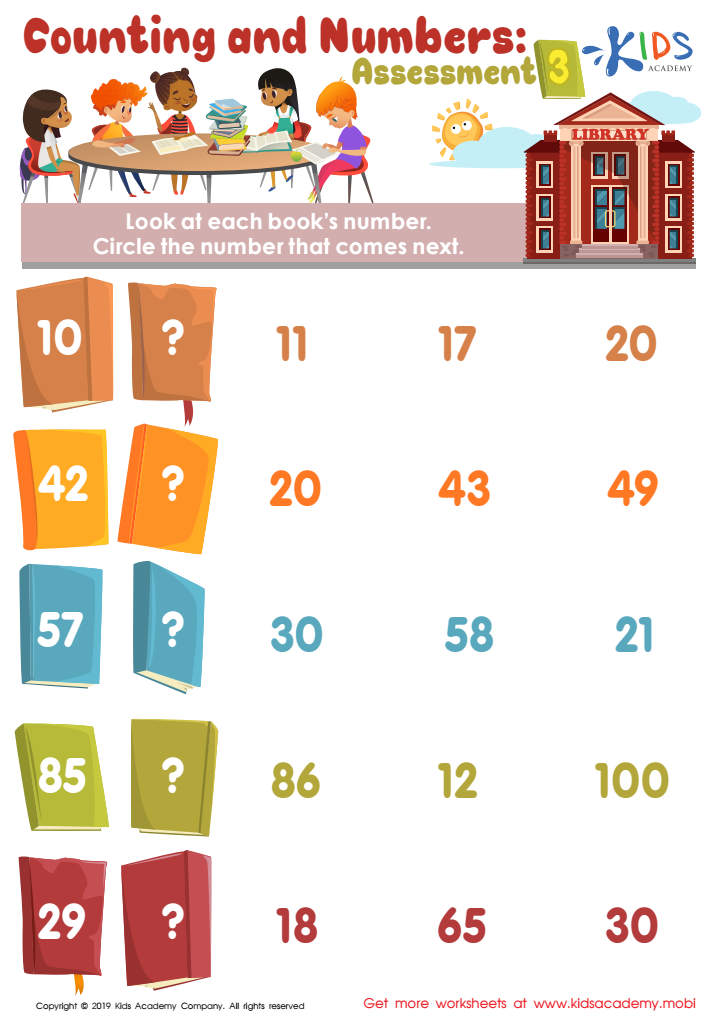
Counting and Numbers: Assessment Worksheet
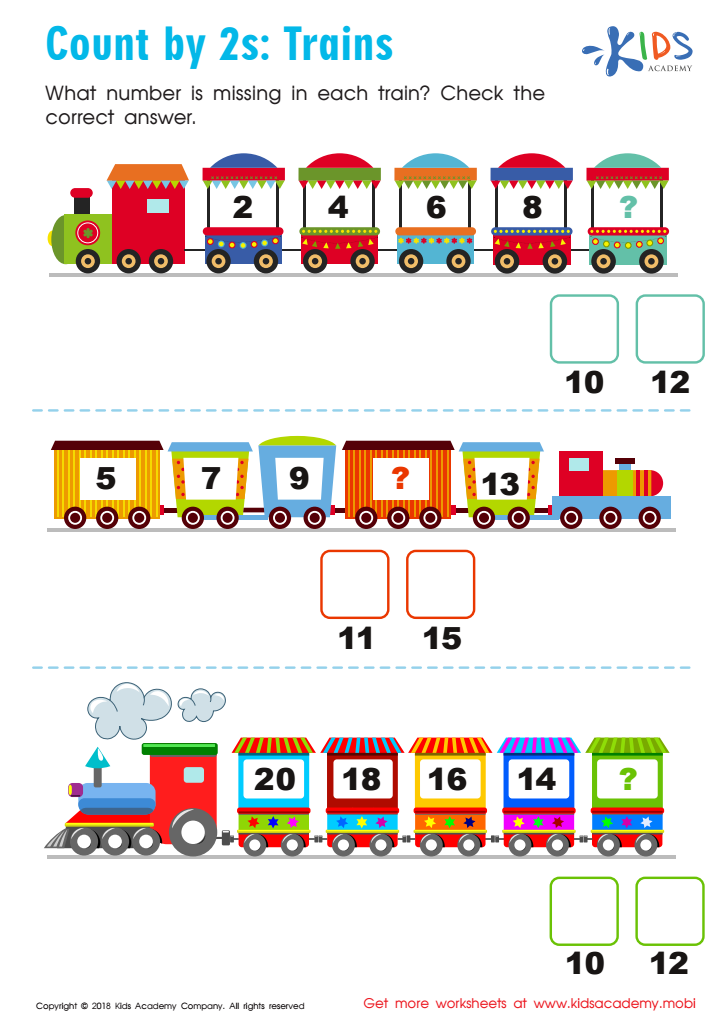
Count by 2's: Trains Worksheet
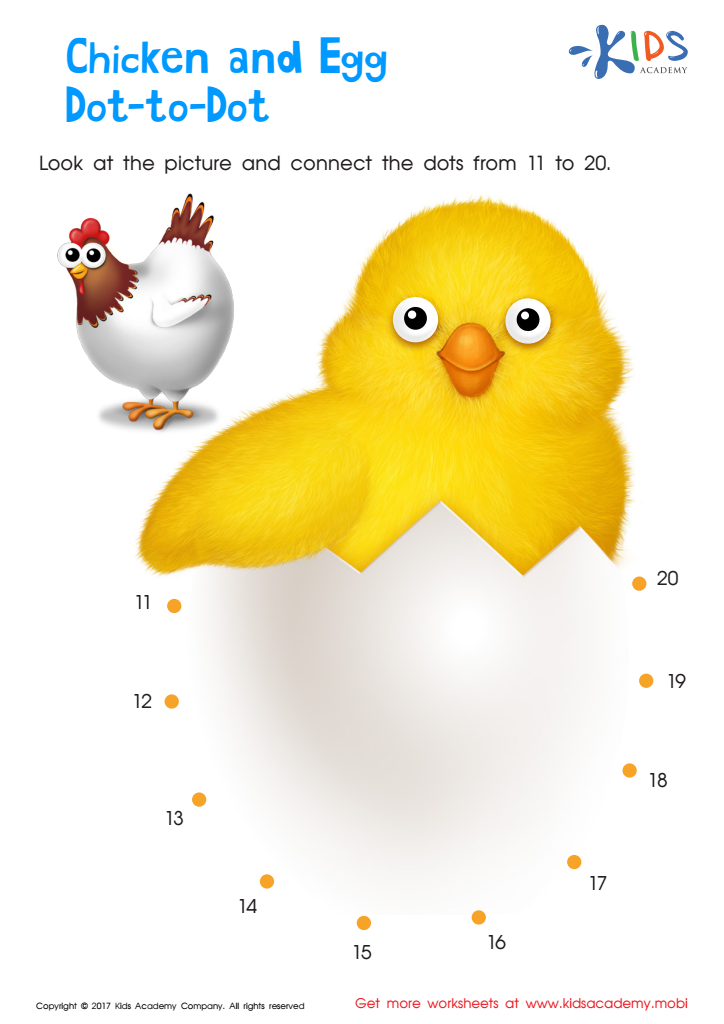
Ordering 11–20: Chicken & Egg Dot–to–dot Worksheet



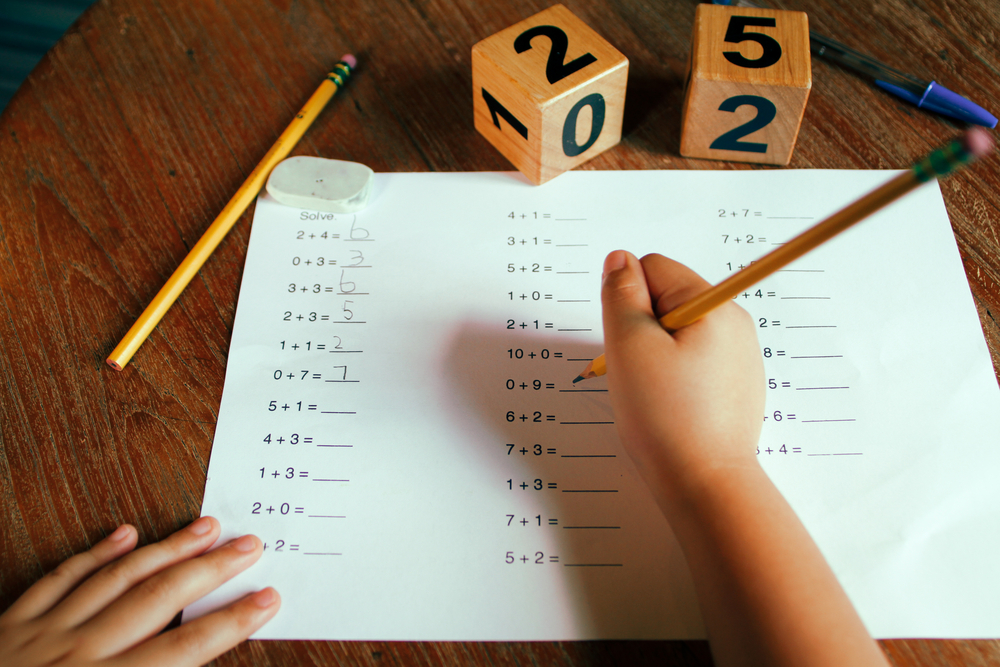




Number sequencing, particularly with numbers up to 100, is foundational for young learners aged 3 to 8. Understanding sequences lays the groundwork for various critical mathematical concepts, such as addition, subtraction, and problem-solving. Parents and teachers should prioritize this skill because it enhances children’s number sense, enabling them to recognize patterns and relationships between numbers. This understanding fosters confidence in math, reducing anxiety as they advance in their education.
Moreover, mastering number sequencing enriches cognitive development. As children learn to count and arrange numbers, they improve their memory and organizational skills. It also supports language development as they learn to articulate numbers and mathematical concepts, fostering better communication skills.
Encouraging children to engage in number sequences through playful activities—like counting objects, reciting rhymes, or using visual aids—can make learning enjoyable and effective. The skills they develop through sequencing not only apply to mathematics but also relate to daily life, such as organizing tasks or understanding time.
In essence, focusing on number sequencing helps establish a secure mathematical foundation, encouraging lifelong learning and a positive attitude towards numbers. Whether at home or school, nurturing this skill offers invaluable benefits for children's overall academic success and critical thinking abilities.