Sorting Worksheets for Ages 3-8 - Page 2
27 filtered results
-
From - To
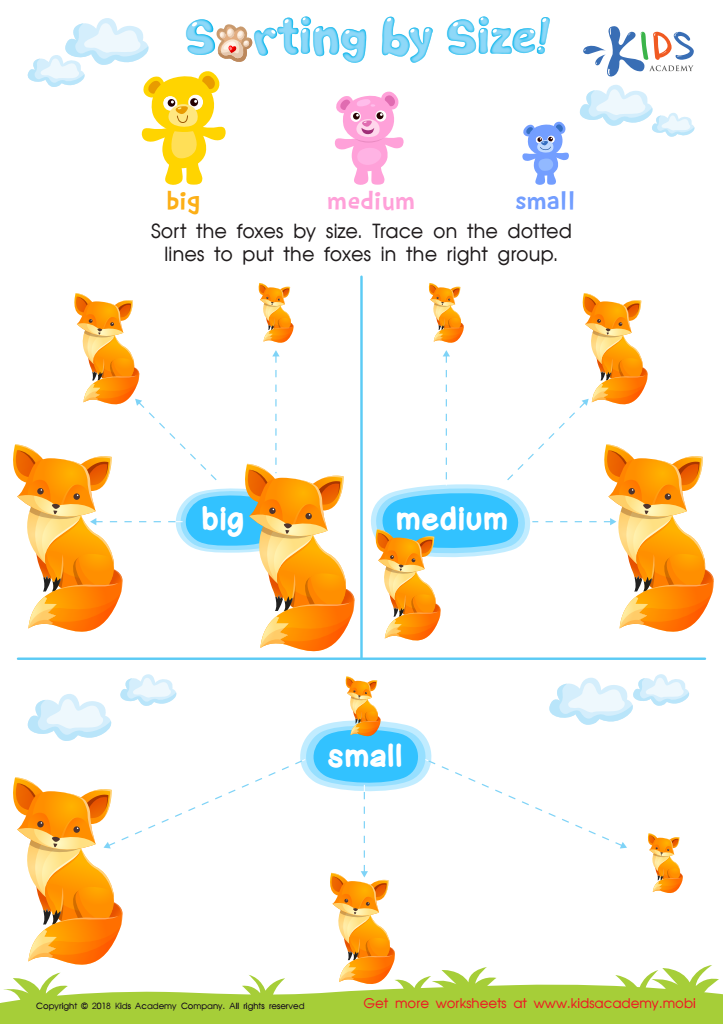
Sorting by Size Worksheet
 Assign to My Students
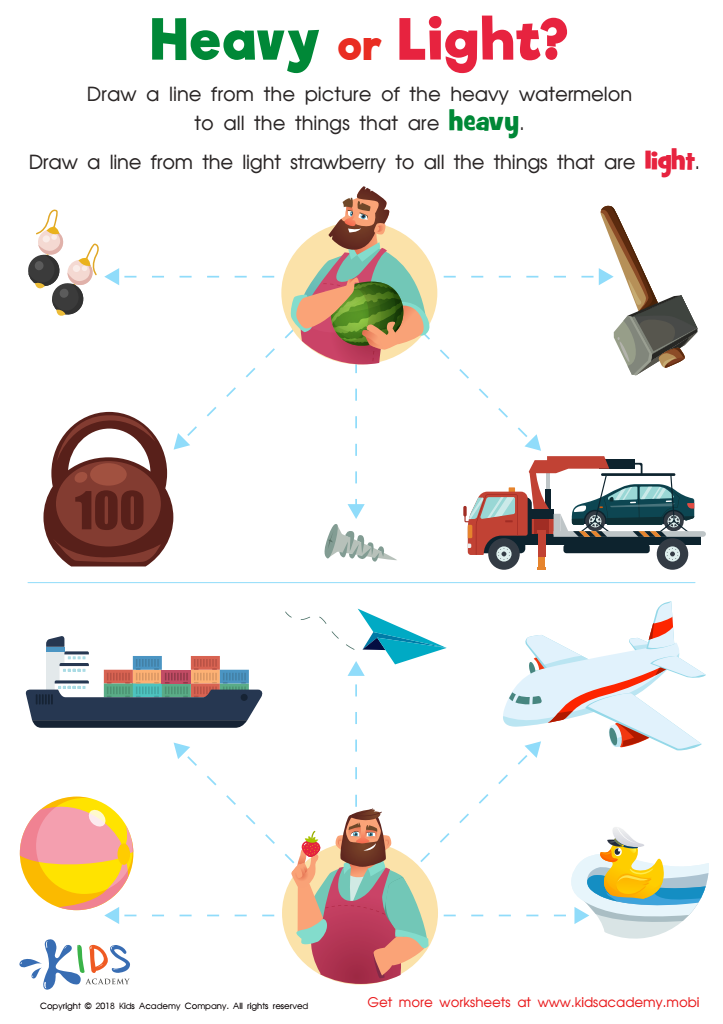
Heavy or Light? Worksheet
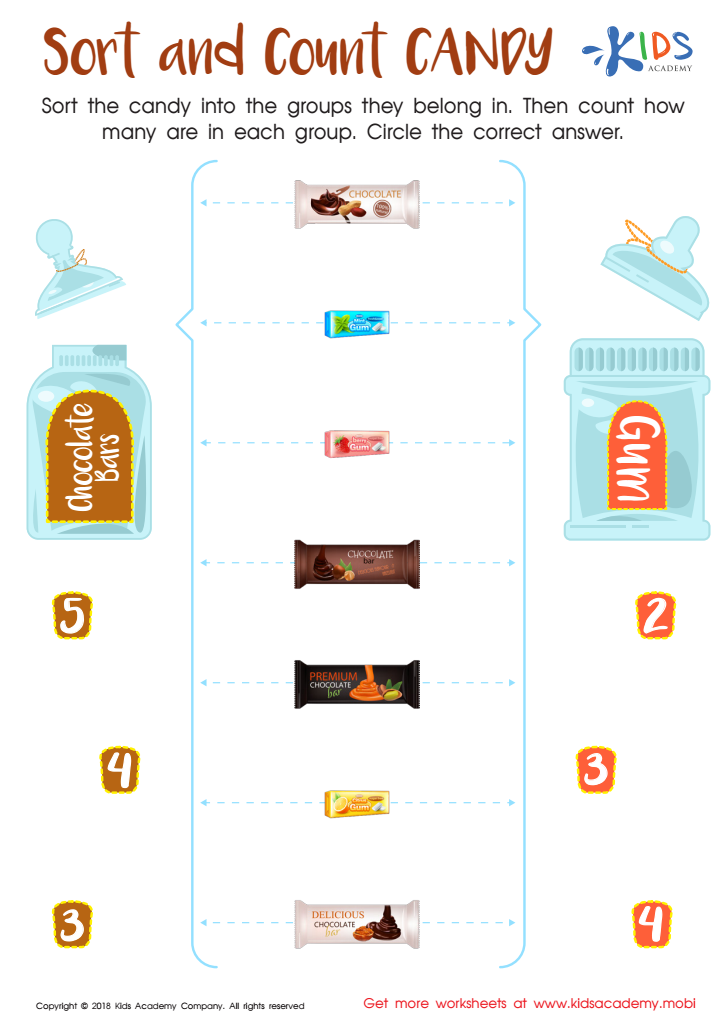
Sort and Count Candy Worksheet








Sorting is a fundamental skill that plays a vital role in a young child's cognitive development, making it essential for parents and teachers of children aged 3-8 to prioritize its practice. Firstly, sorting helps children learn to categorize and organize information, which contributes to their critical thinking skills. By classifying objects based on attributes like color, shape, or size, children begin to understand relationships, differences, and similarities, laying the groundwork for more complex problem-solving abilities.
Moreover, sorting activities enhance fine motor skills as children manipulate objects, boosting their hand-eye coordination and dexterity. This hands-on experience is crucial for engaging young learners and making abstract concepts more tangible.
Additionally, sorting introduces foundational math concepts, such as grouping and patterns, which are vital for future math understanding. Engaging children in sorting games fosters language development, as they learn to articulate why certain items belong together.
Finally, sorting cultivates decision-making skills, as kids must evaluate options and make choices. By integrating sorting into their daily activities, parents and teachers can create enriching environments that promote exploration, creativity, and a love for learning, ultimately helping children thrive intellectually and emotionally during these formative years.








