Problem-Solving Skills Tracing Shapes Worksheets for Ages 3-8
4 filtered results
-
From - To
Enhance your child's problem-solving skills with our engaging Tracing Shapes Worksheets, designed for ages 3-8. These interactive worksheets provide a fun and educational way for young learners to improve their shape recognition while developing critical thinking abilities. Each worksheet encourages children to trace various shapes, fostering fine motor skills, hand-eye coordination, and logical reasoning. Perfect for home or classroom use, these worksheets make learning enjoyable and accessible. Printable and easy to use, they are an excellent resource for teachers and parents seeking to nurture early mathematical understanding and problem-solving skills in young minds. Start tracing, exploring, and problem-solving today!
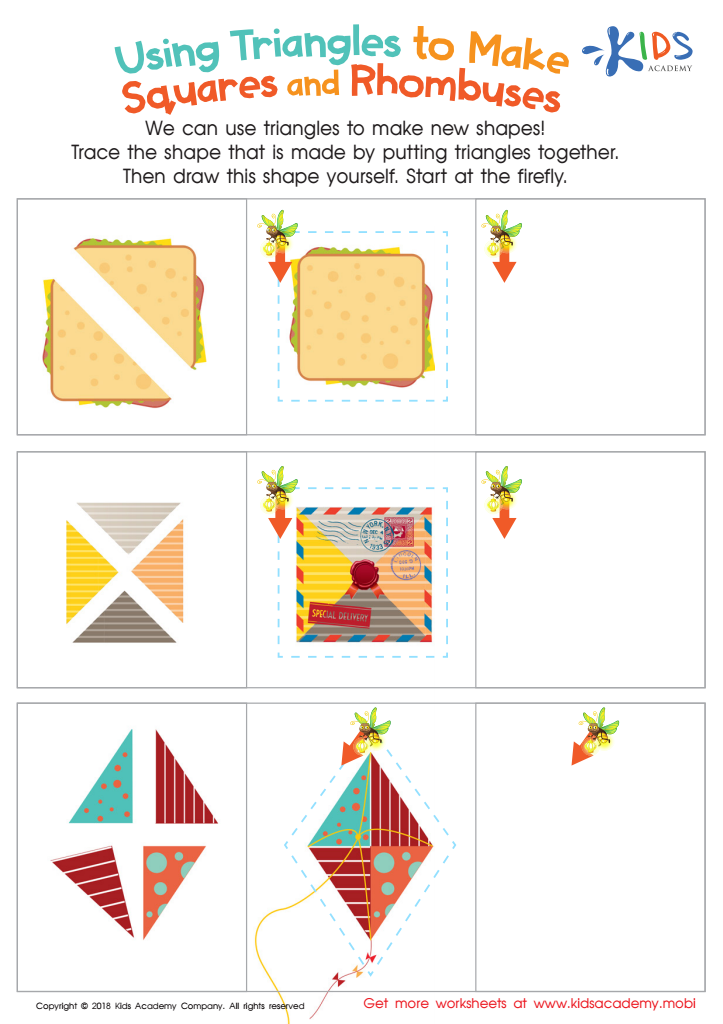
Using Triangles to Make Squares and Rhombuses Worksheet
 Assign to My Students
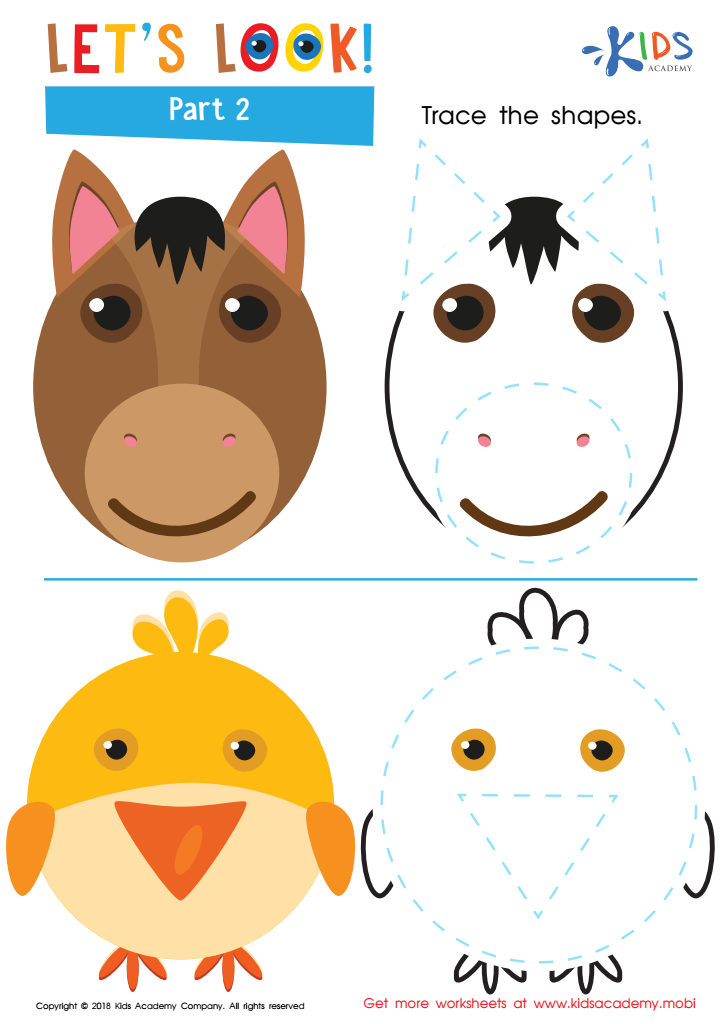
Let's Look! Part 2 Worksheet
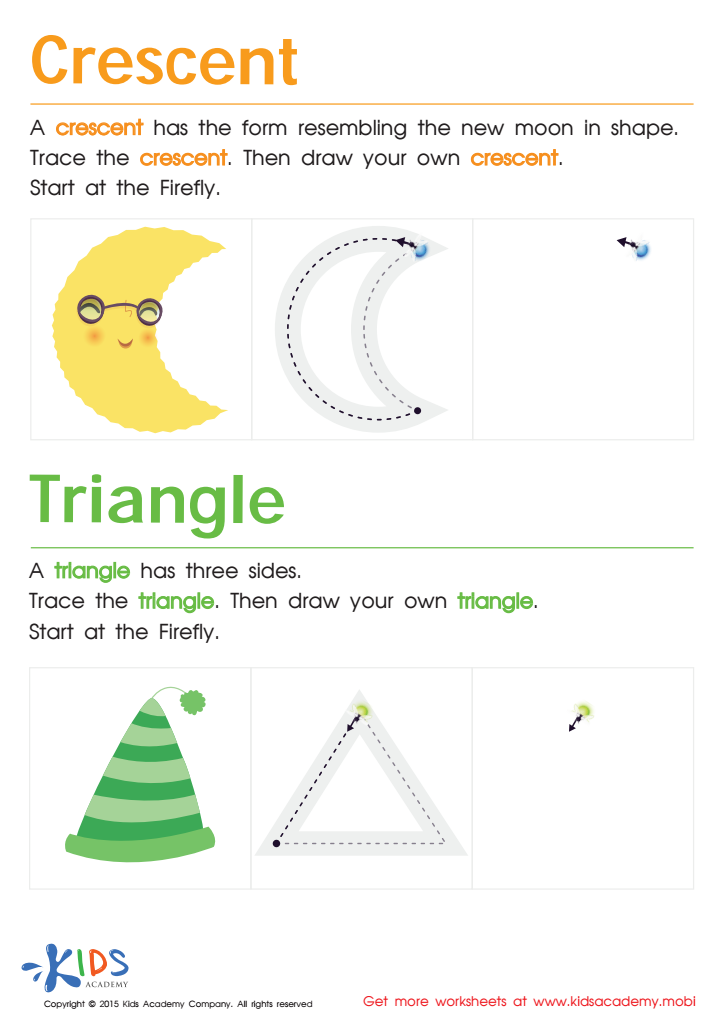
Learning to Draw Crescents And Triangles Worksheet
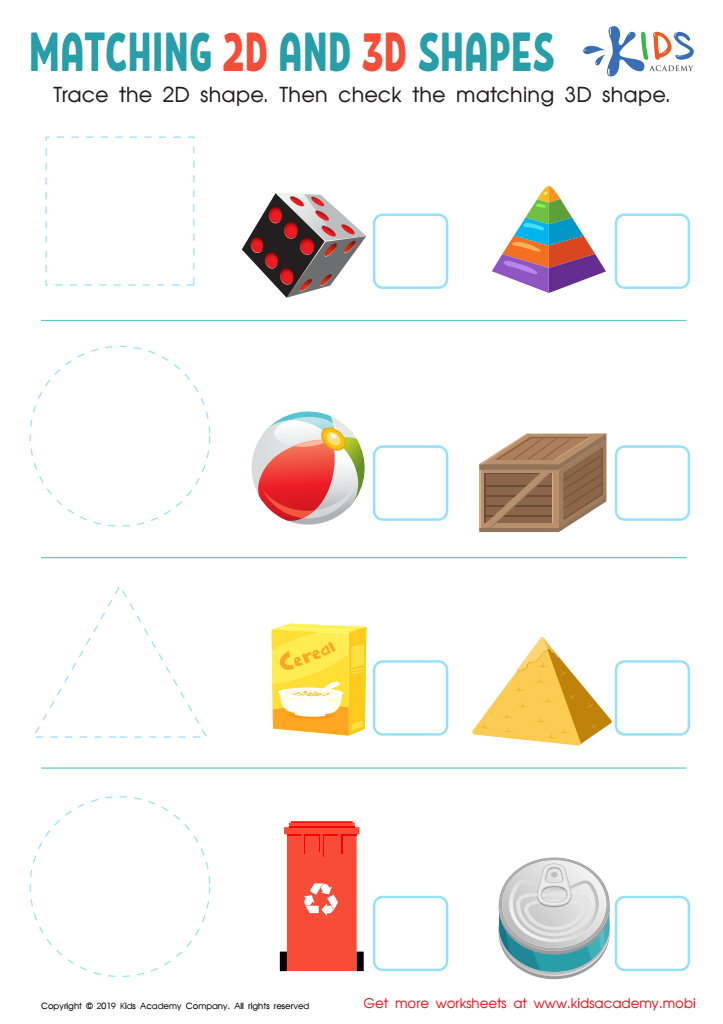
Matching 2D and 3D Shapes Worksheet








Problem-solving skills are essential for young learners, particularly in the context of tracing shapes for ages 3-8. At this developmental stage, children are honing their cognitive abilities, and engaging in activities that involve shape tracing significantly contributes to their problem-solving capabilities.
Tracing shapes helps children understand spatial relationships, developing their visual-motor coordination and fine motor skills. As they manipulate crayons or pencils to follow lines, they are not just learning about shapes, but also developing focus, patience, and the ability to approach tasks methodically.
Moreover, tracing activities encourage critical thinking. Children learn to differentiate between various shapes and understand concepts like symmetry, angles, and dimensions. This process invites trial-and-error exploration, enabling them to devise strategies to overcome challenges—key components of problem-solving.
Parents and teachers should promote these activities because a solid foundation in problem-solving will aid children in more complex mathematical concepts later on and improves overall academic performance across subjects. Additionally, fostering creativity and imagination during these formative years significantly enhances a child's confidence, facilitating better social interaction and communication skills. Ultimately, nurturing problem-solving skills early sets the stage for a lifelong love of learning.