Character analysis Reading Worksheets for Ages 3-8
6 filtered results
-
From - To
Nurture your child's reading comprehension with our engaging Character Analysis Reading Worksheets for Ages 3-8. These meticulously designed worksheets help young readers identify and understand the traits, emotions, and motivations of characters in stories. By diving deeper into characters' lives and actions, children can sharpen their critical thinking and develop empathy. Ideal for both classroom and at-home learning, these worksheets offer fun, age-appropriate activities that captivate and educate young minds. Boost your child's literary skills and their love for reading with our proven resources, supporting thoughtful and meaningful learning experiences. Perfect for kids’ growth and teachers’ tools!
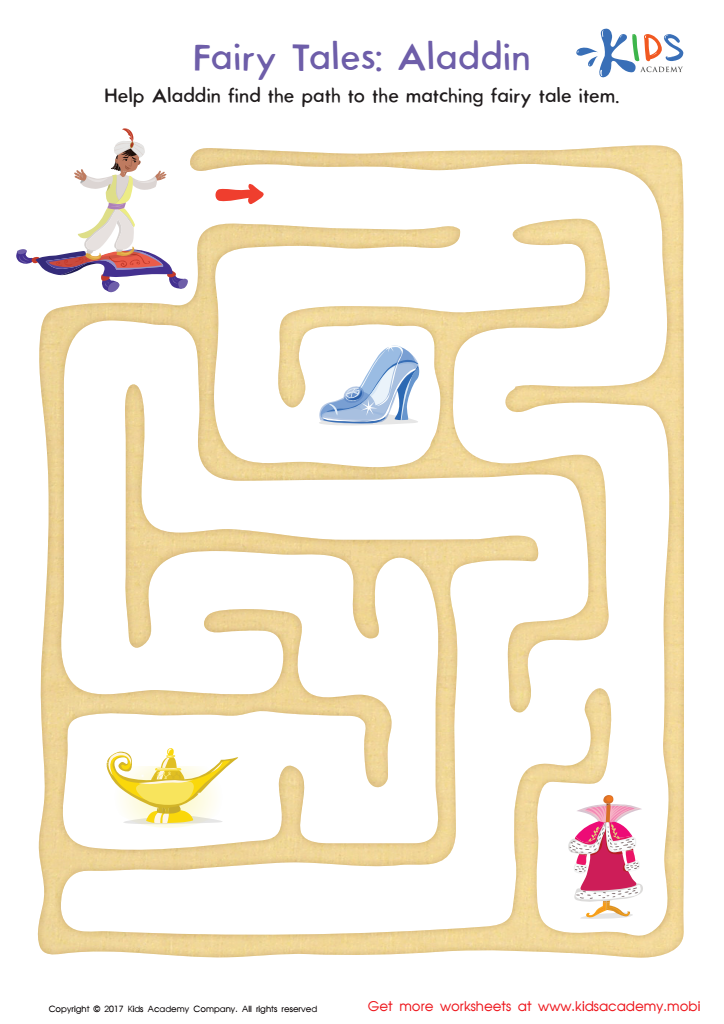
Fairy Tales Aladdin Printable
 Assign to My Students
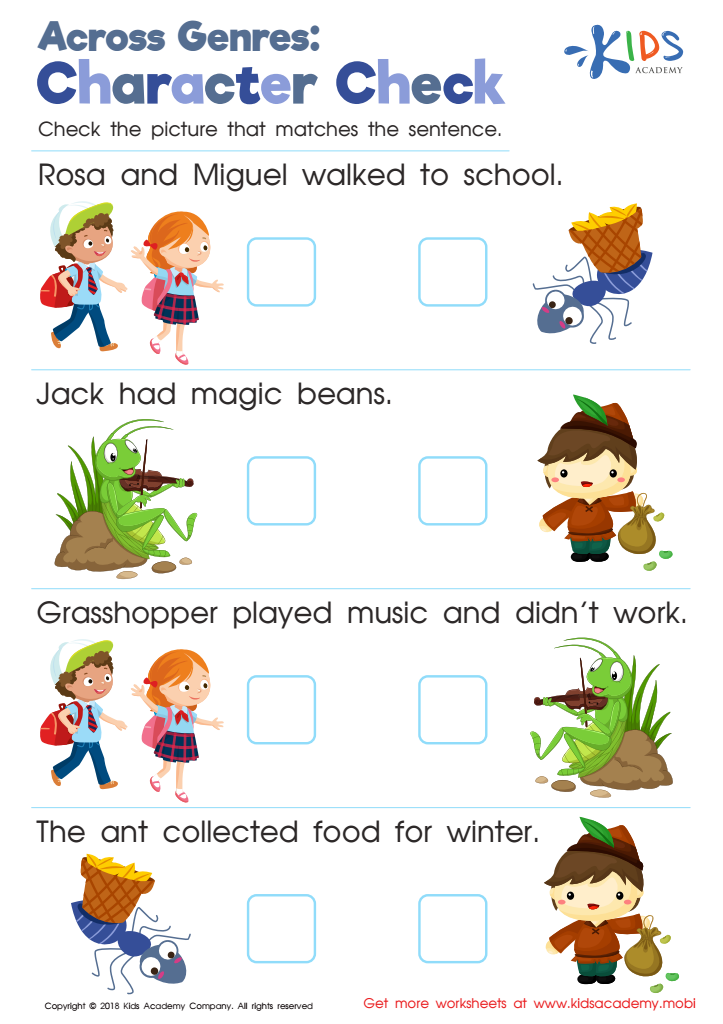
Across Genres: Character Check Worksheet
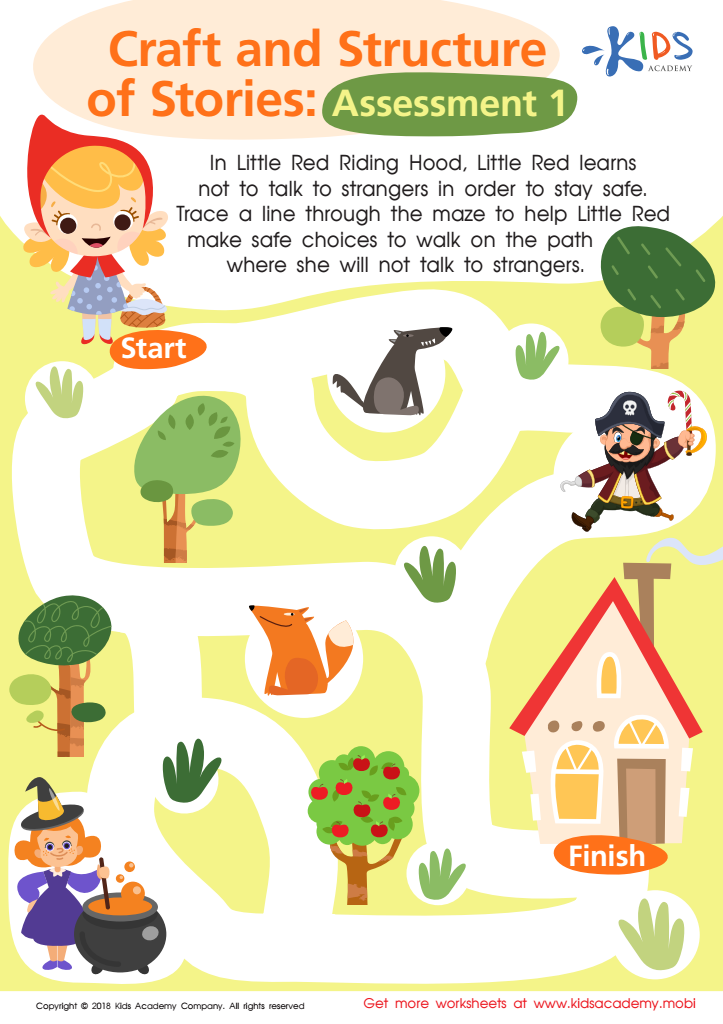
Craft and Structure of Stories: Assessment 1 Worksheet
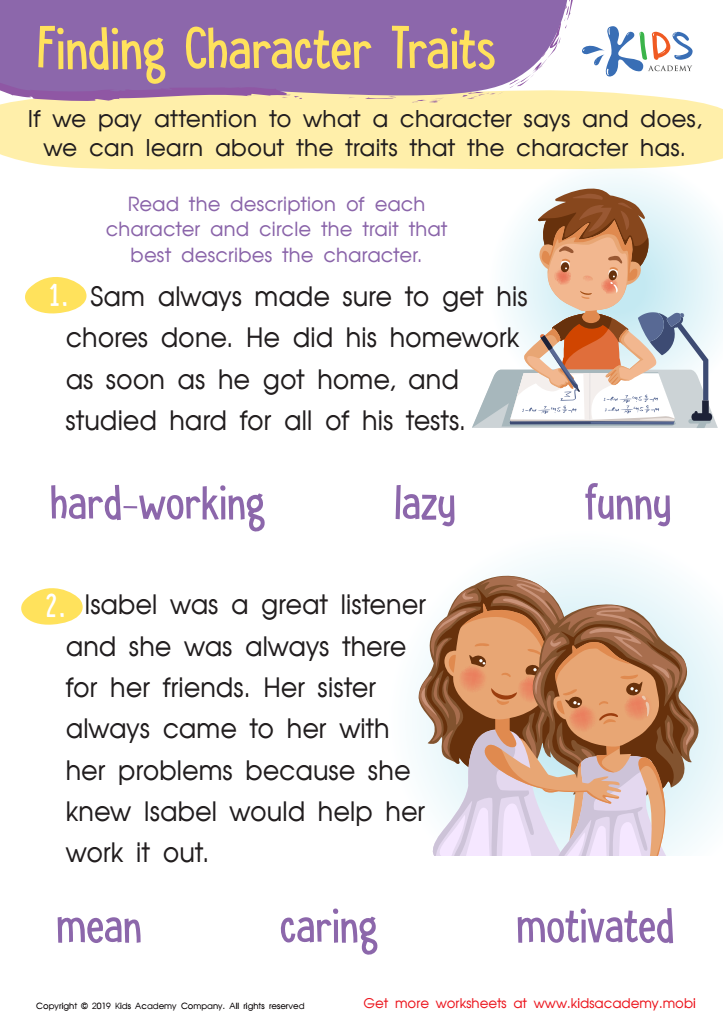
Finding Character Traits Worksheet
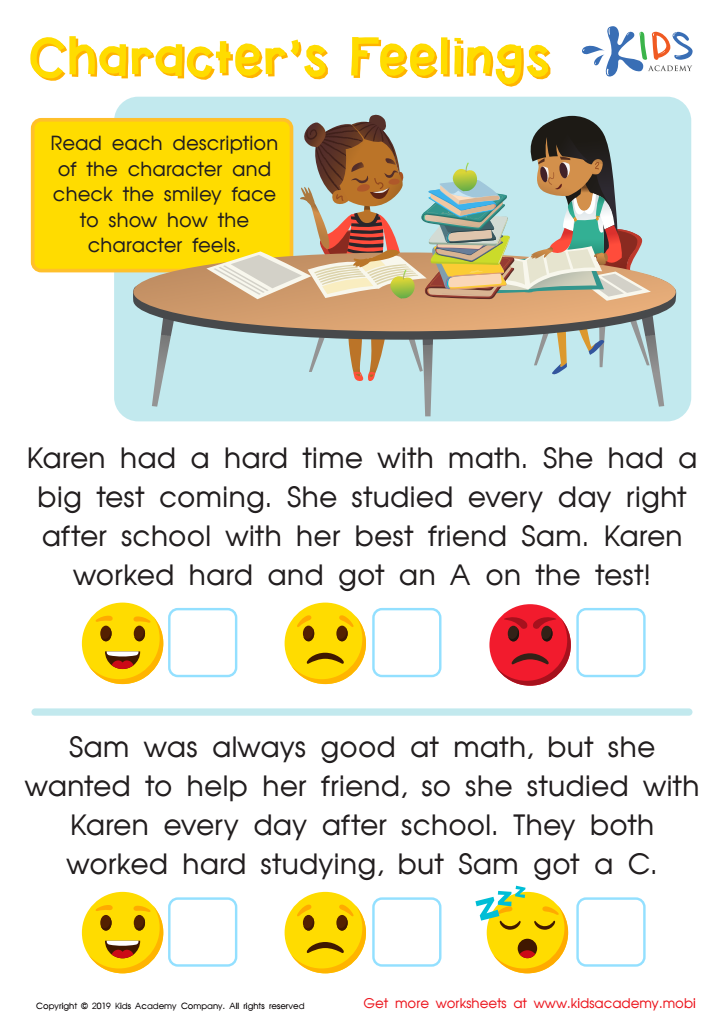
Character’s Feelings Worksheet



.jpg)




Character analysis is an essential aspect of reading that parents and teachers should emphasize for children ages 3-8. At this formative stage, young minds are highly impressionable and moldable, making it an ideal time to develop critical thinking and empathy through literature.
Firstly, character analysis helps children understand and relate to differing perspectives. By analyzing the motives, feelings, and actions of characters, children learn to recognize emotions and comprehend complex human behaviors. This practice nurtures empathy as they gain insight into how others think and feel, fostering a sense of kindness and compassion.
Involved character analysis also sharpens cognitive and analytical skills. Young children learn to ask questions, make predictions, and draw inferences about characters' traits and arcs. These skills are foundational for developing logical reasoning and problem-solving abilities, valuable not just in academics but also in making everyday decisions.
Furthermore, character analysis inspires moral development. Stories often encapsulate life lessons and ethical dilemmas that mirror real-world situations. By discussing characters' choices and consequences, parents and teachers can guide children toward distinguishing right from wrong, instilling core values and ethical principles.
In summary, prioritizing character analysis in early reading helps develop emotional intelligence, critical thinking, and moral reasoning, providing a strong foundation for children’s future personal and academic success.








