
Understanding directions Reading Worksheets for Ages 3-8
3 filtered results
Difficulty Level
Grade
Age
-
From - To
Subject
Activity
Standards
Our "Understanding Directions Reading Worksheets for Ages 3-8" are specially designed to help young learners develop essential skills in following instructions. These engaging, printable worksheets use fun activities to teach children how to carefully listen, comprehend, and execute directions accurately. Perfect for preschool and early elementary students, each worksheet simplifies the process of developing crucial listening and reading comprehension skills. By practicing with these resources, kids can improve their ability to follow both oral and written instructions, boosting their confidence and preparing them for success in school and beyond. Explore our collection today to enhance your child's learning journey!
Favorites
With answer key
Interactive
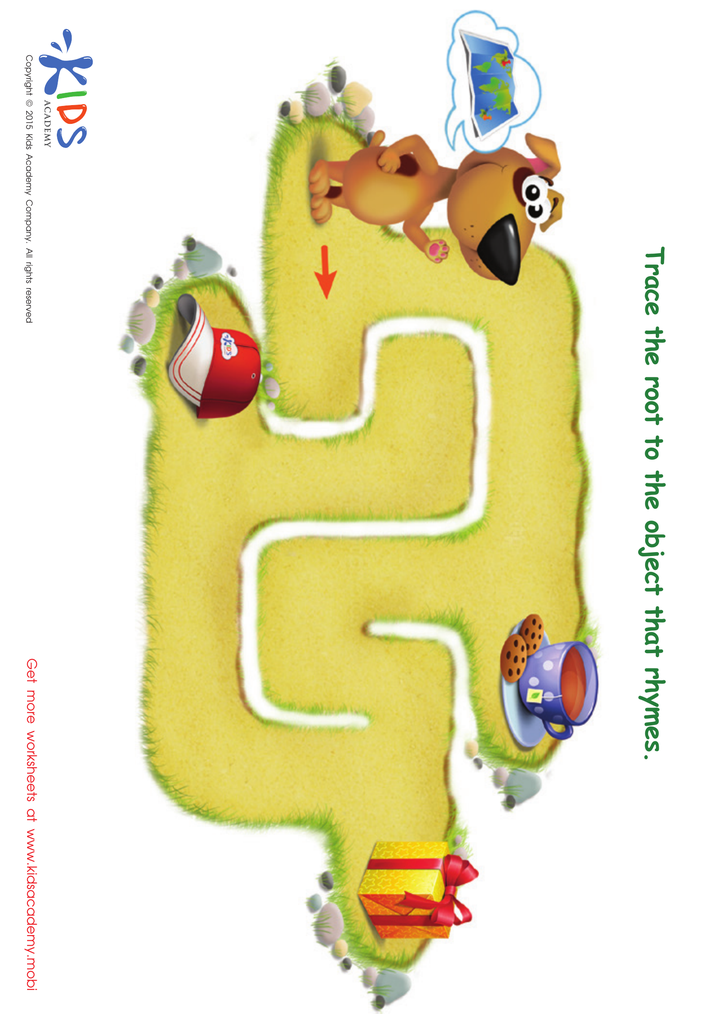
Map Rhyming Words Worksheet
Get them now and practice your skills while having fun playing. Find words that rhyme, trace the roots and enjoy the journey!
Map Rhyming Words Worksheet
Worksheet
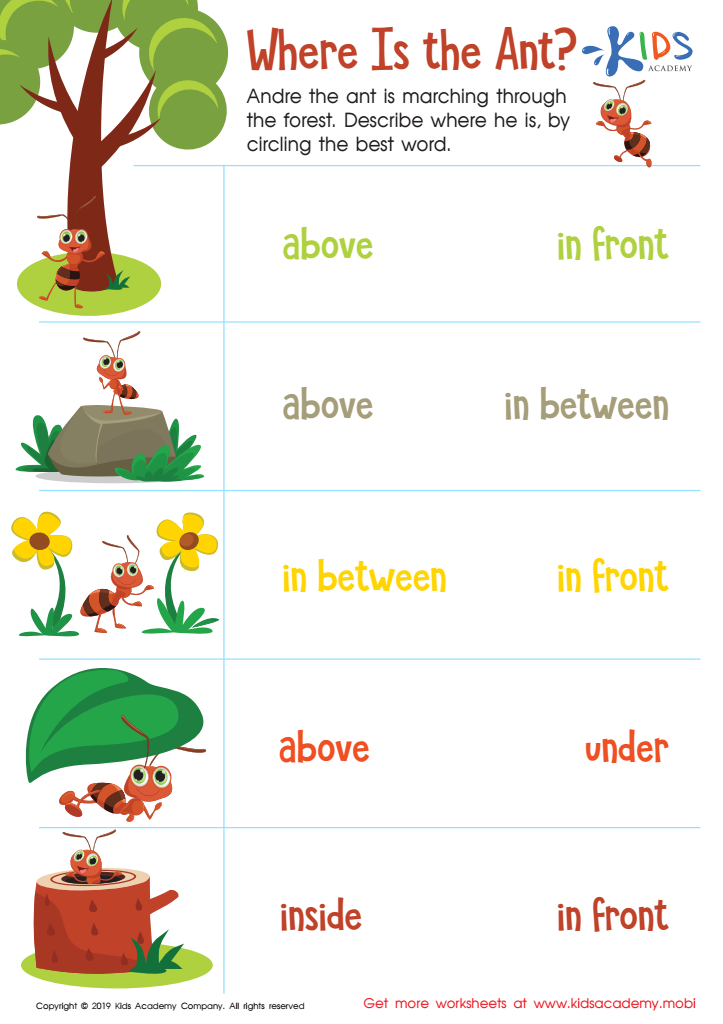
Where Is the Ant? Worksheet
Kids are captivated by ants. Andre is a busy ant, marching through the forest. Help your child circle the best word that best describes what he's doing in each picture. This colorful printout will show them the way.
 Assign to My Students
Where Is the Ant? Worksheet
Worksheet
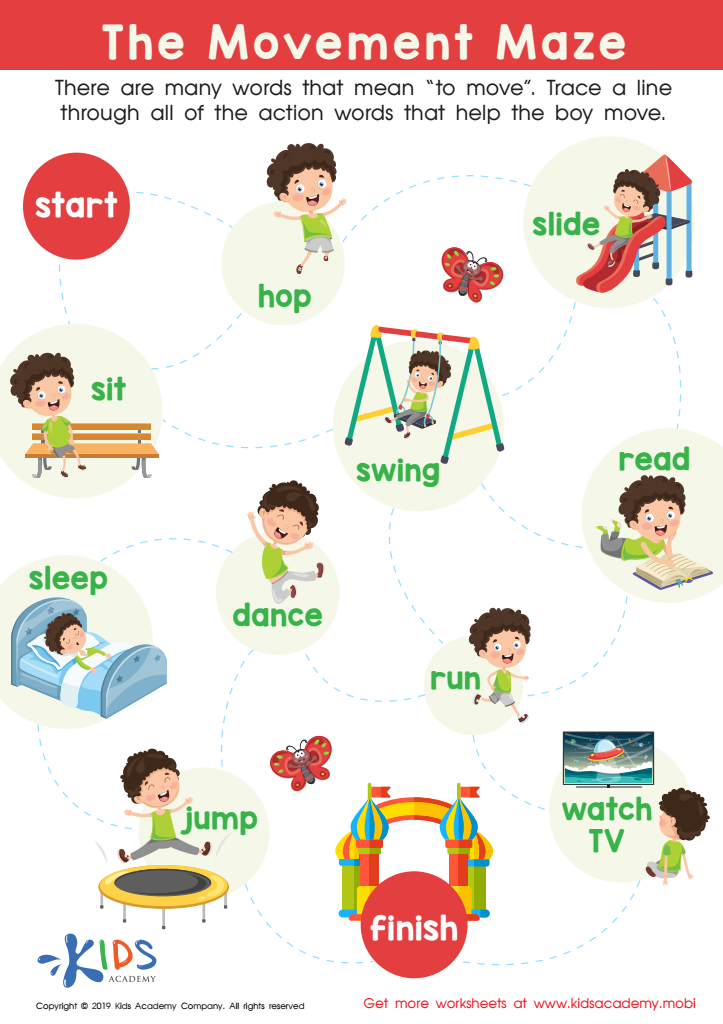
The Movement Maze Worksheet
Let your child have fun with this interactive PDF download. Kids will learn movement words with cute pictures, plus practice fine motor skills as they trace. A fun way to reinforce vocabulary. Jump, hop and sit – it's all here!
The Movement Maze Worksheet
Worksheet
Join Kids Academy for Free
Who is primarily going to use this learning content?








Understanding directions is a fundamental skill for young children, ages 3-8, which significantly impacts their learning and daily life activities. For parents and teachers, emphasizing this skill is crucial for several reasons. Firstly, it promotes cognitive development as children learn to process and follow multi-step instructions, improving their memory and attention span. Comprehending directions also facilitates better performance in academic tasks as everything from simple classroom activities to standardized tests requires the ability to understand and follow instructions accurately.
Additionally, mastering this skill early aids in social development. By understanding and adhering to directions, children learn essential social norms such as taking turns and cooperating with peers, which are vital for forming healthy relationships. At home, this ability ensures that children can help with chores, follow safety rules, and engage constructively in conversations and play.
Moreover, when children follow directions effectively, it reduces stress and frustration for both children and caregivers. It creates a smoother daily routine and fosters an environment where children feel more secure and confident. Therefore, parents and teachers play a crucial role in nurturing this skill through consistent practice, positive reinforcement, and patient guidance, building a strong foundation for future learning and personal development.








