Critical thinking skills Reading Comprehension Worksheets for Ages 3-8
6 filtered results
-
From - To
Enhance your child's reading comprehension with our engaging Critical Thinking Skills Worksheets designed for ages 3-8! These worksheets encourage young learners to think deeply and thoughtfully about what they read, building essential analytical skills. Through fun activities, children will learn to make connections, draw conclusions, and ask questions about various texts. Our resources cater to diverse learning styles, ensuring an interactive and effective learning experience. Perfect for homeschooling or classroom activities, these worksheets will foster a love for reading while developing critical thinking capabilities. Empower your child’s literacy journey with our thoughtfully crafted materials today!
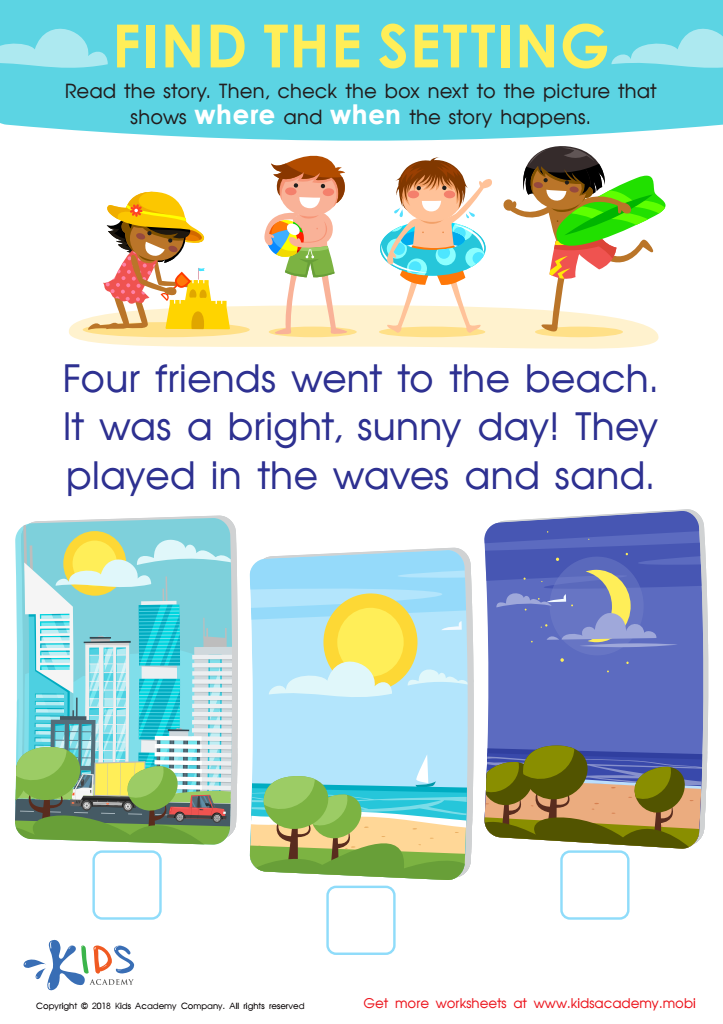
Find the Setting Worksheet
 Assign to My Students
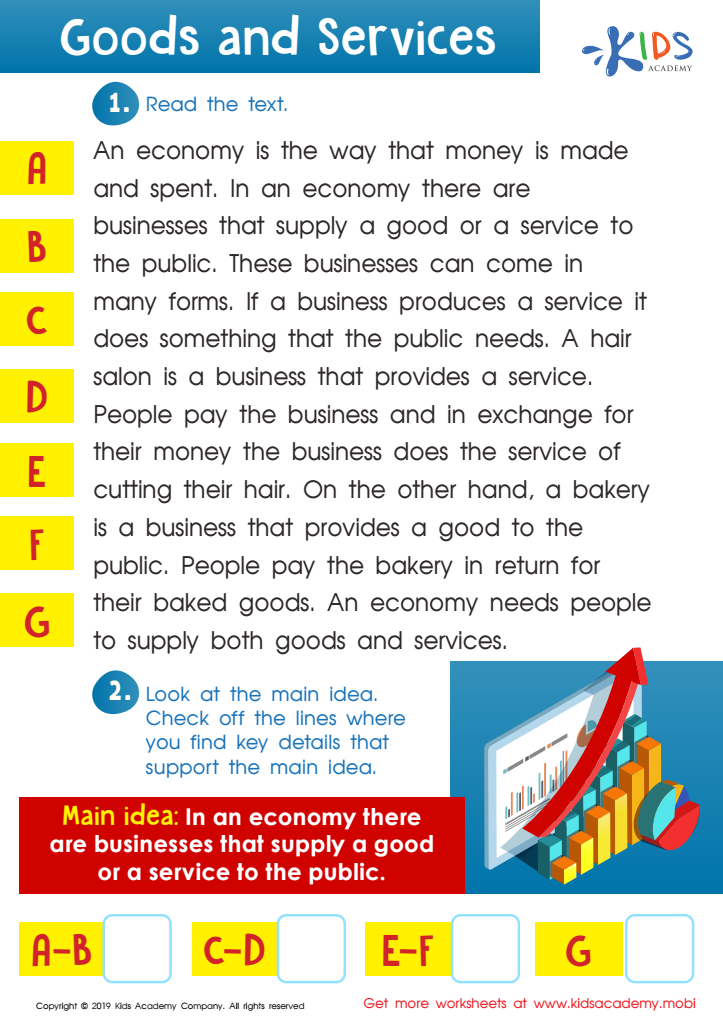
Goods and Services Worksheet
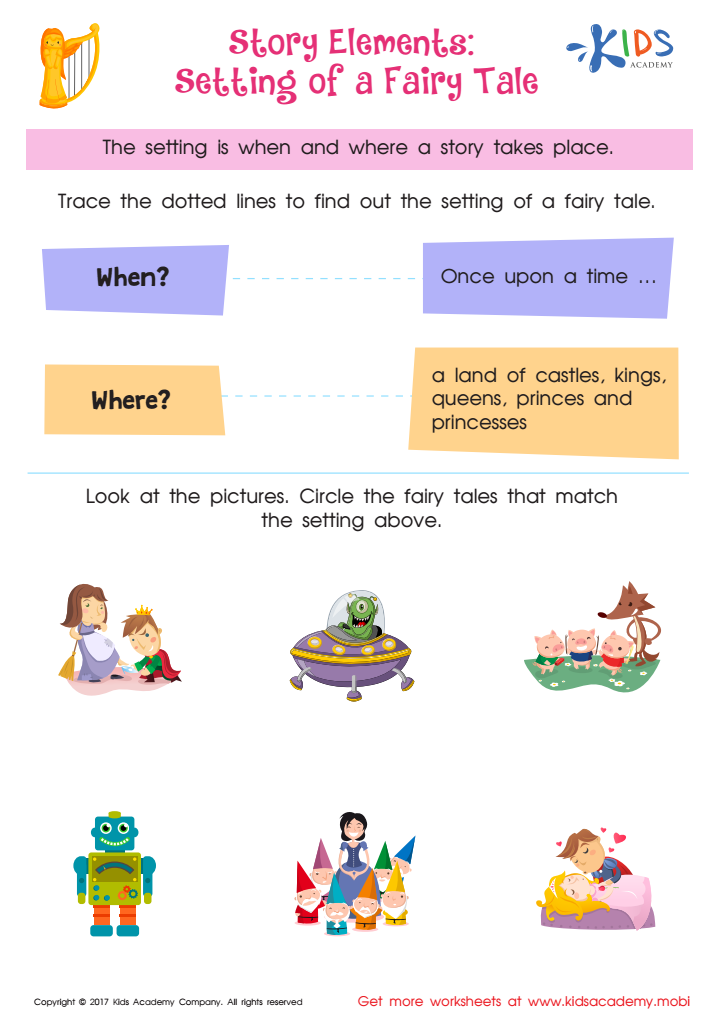
Story Elements: Setting of a Fairy Tale Printable
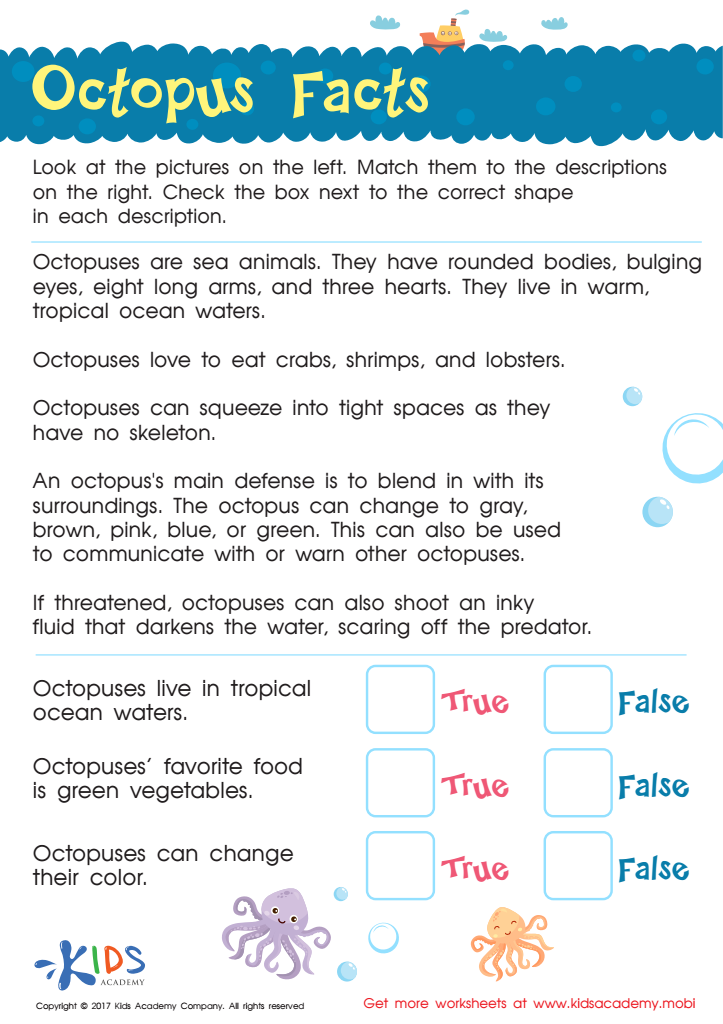
Octopus Facts Worksheet For Kids
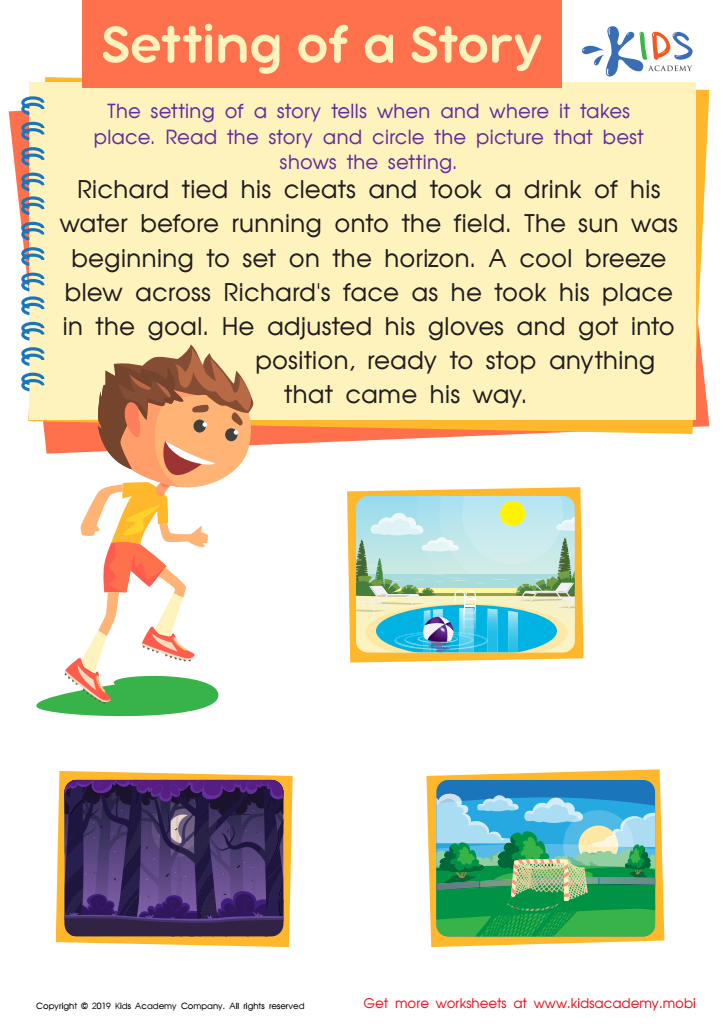
Setting of a Story Worksheet
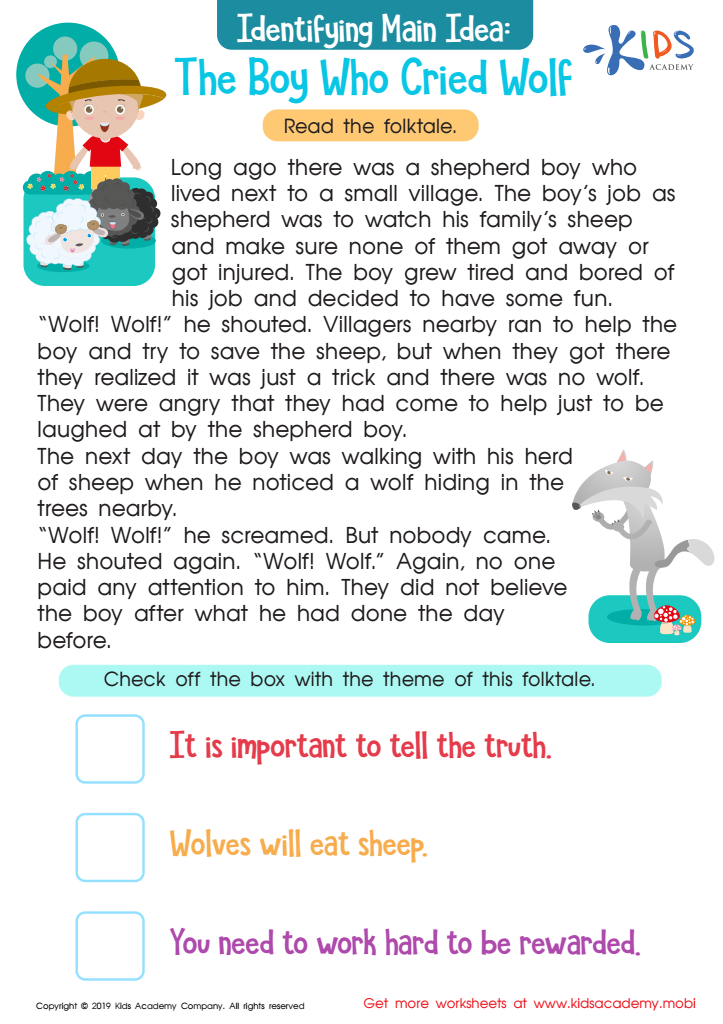
The Boy Who Cried Wolf Part 2 Worksheet








Parents and teachers should prioritize critical thinking skills in reading comprehension for children ages 3-8 because these skills form the foundation for lifelong learning. At this developmental stage, children are naturally curious, making it an ideal time to foster analytical thinking. Encouraging them to ask questions, make predictions, and evaluate information enhances their engagement with texts, which deepens understanding and retention.
Critical thinking in reading helps children to go beyond mere recall of facts. They learn to infer meaning, draw conclusions, and relate stories to their own experiences. This ability not only improves reading comprehension but also supports problem-solving skills in various aspects of life.
Additionally, strong reading comprehension tied to critical thinking can boost a child’s confidence. As they navigate texts and articulate their thoughts, they build a sense of competence and enthusiasm for learning. In today’s information-rich world, discerning valuable from unreliable knowledge is crucial. By focusing on these crucial skills from a young age, parents and teachers directly contribute to children's academic success, preparing them for future challenges. In essence, nurturing critical thinking skills in early readers sets the stage for well-rounded individuals capable of independent thought and lifelong inquiry.








