Rhyming Words Worksheets for Ages 3-8 - Page 2
28 filtered results
-
From - To
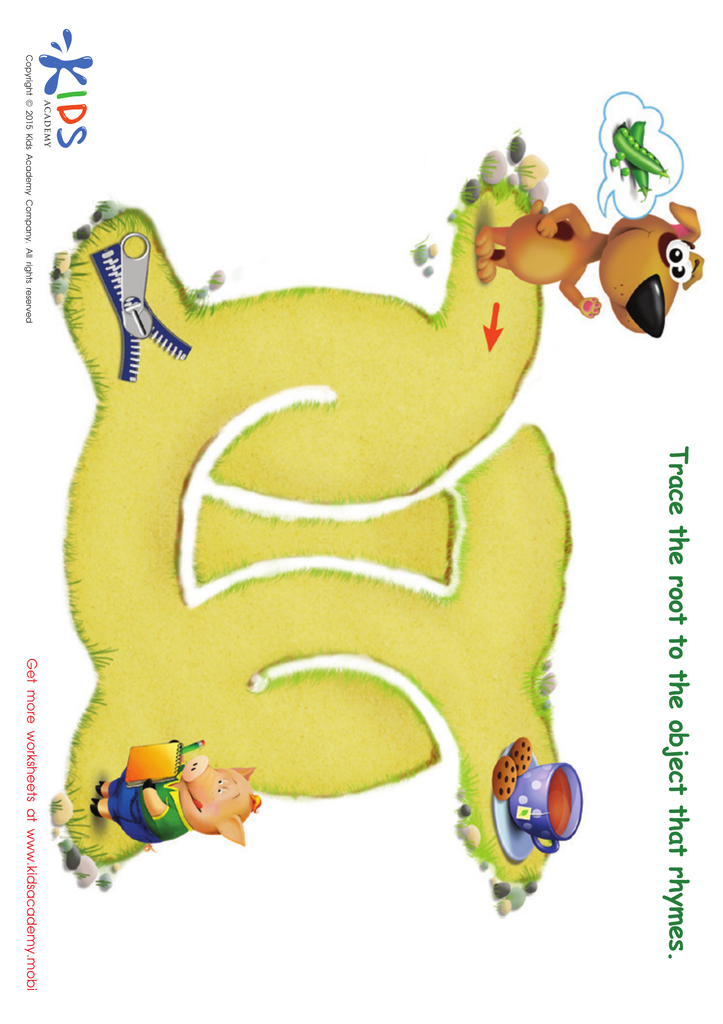
Pea Rhyming Words Worksheet
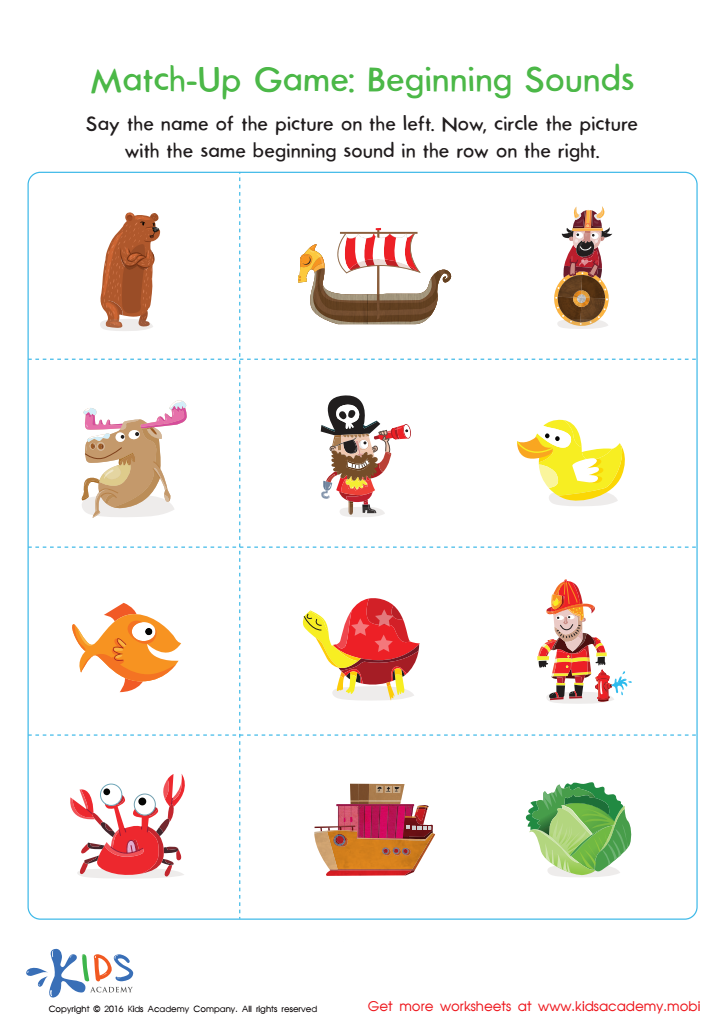
Match–Up Game: Beginning Sounds Worksheet
 Assign to My Students
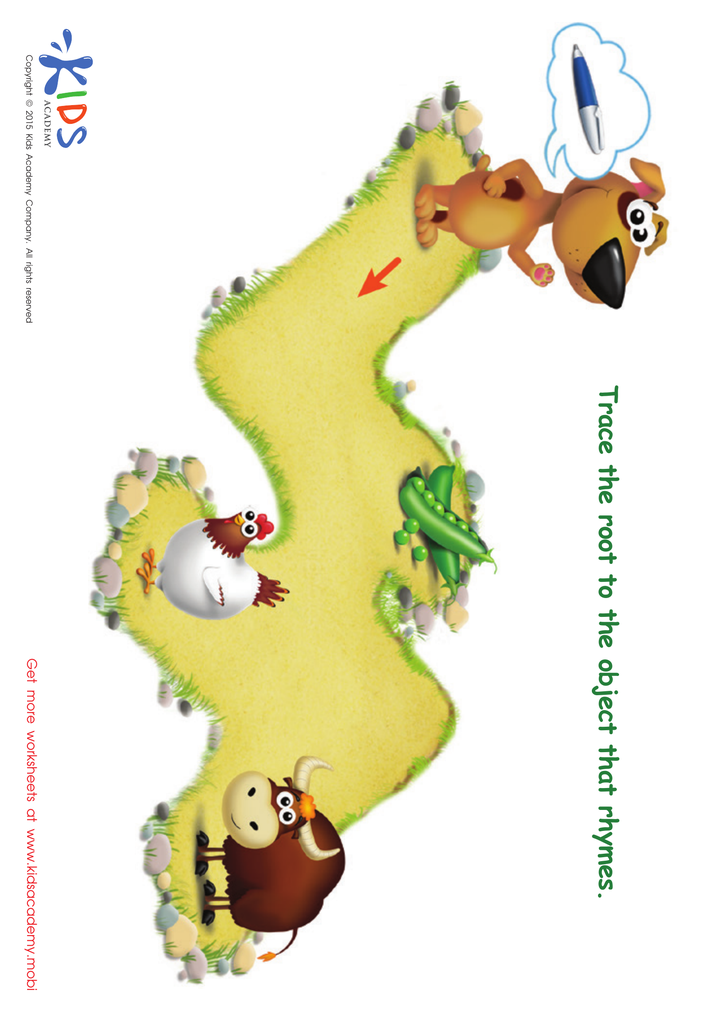
Pen Rhyming Words Worksheet
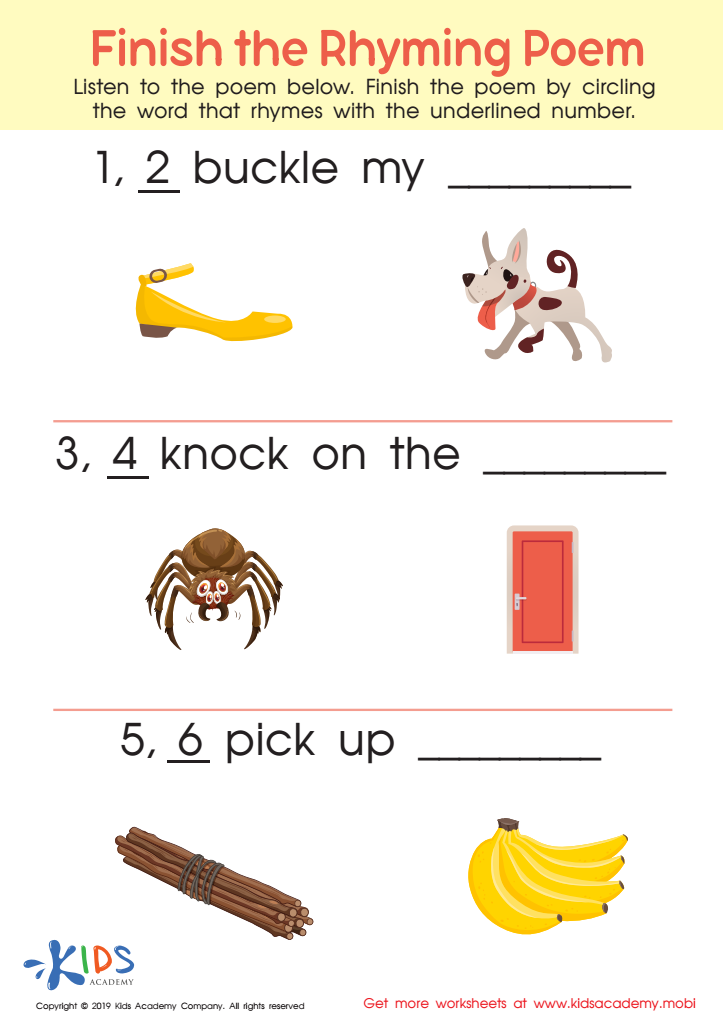
Finish Rhyming Poem Worksheet



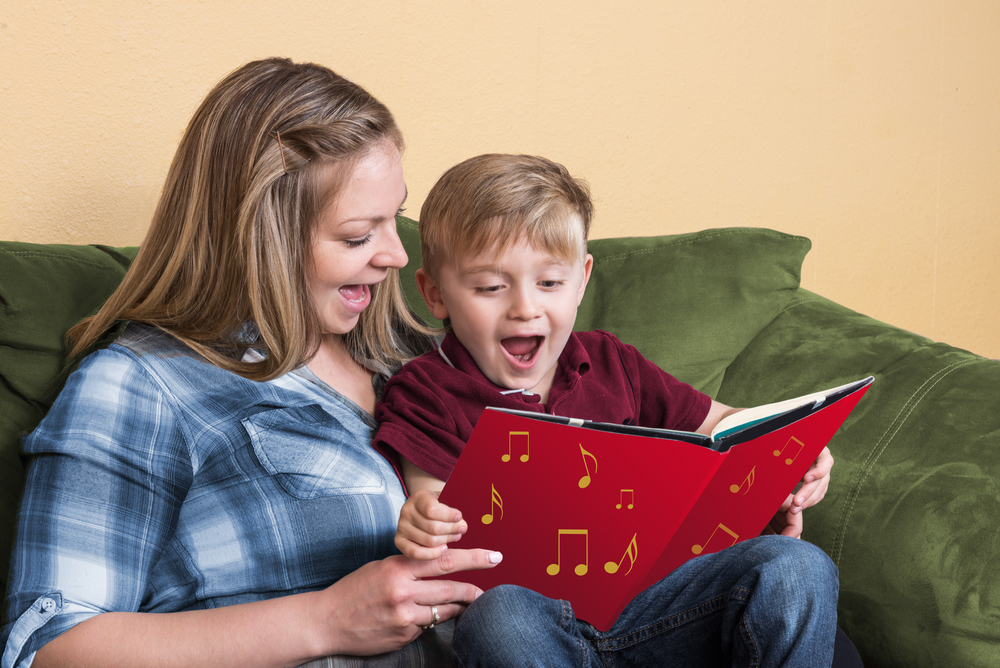




Rhyming words are foundational to young children's language development and literacy skills. For children aged 3-8, engaging with rhymes promotes phonemic awareness, which is essential for reading success. When children hear and produce rhyming words, they begin to notice sounds and patterns in language, enhancing their ability to decode new words and develop vocabulary.
Additionally, rhyming aids memory and recall. The rhythmic and melodic nature of rhymes makes it easier for children to remember stories, poems, and songs. This not only builds their listening skills but also nurtures a love for language, as children become excited about the sounds and patterns they encounter.
Moreover, exposure to rhymes supports cognitive development. It encourages critical thinking as children play with sounds, anticipate endings, and identify relationships between words. Parents and teachers can harness this natural enthusiasm by incorporating rhyme into daily activities through storytelling, singing, and playing games.
Ultimately, caring about rhyming words is crucial for fostering a strong foundation in literacy. By supporting rhyming skills, parents and teachers help set the stage for academic success and instill a lifelong love of reading and language in young learners.








