Division practice Science Worksheets for Ages 3-8
5 filtered results
-
From - To
Introducing our Division Practice Science Worksheets for Ages 3-8, specially designed to merge mathematical skills with fun scientific concepts. These engaging printable worksheets from Kids Academy help young learners grasp division while exploring age-appropriate science topics. By combining visual aids, hands-on activities, and interactive exercises, our carefully crafted materials cater to various learning styles, fostering curiosity and critical thinking. Whether used in the classroom or at home, these worksheets offer an enjoyable way to reinforce math and science skills, setting a strong foundation for future academic success. Download now for a fun and educational journey into the world of division and science!
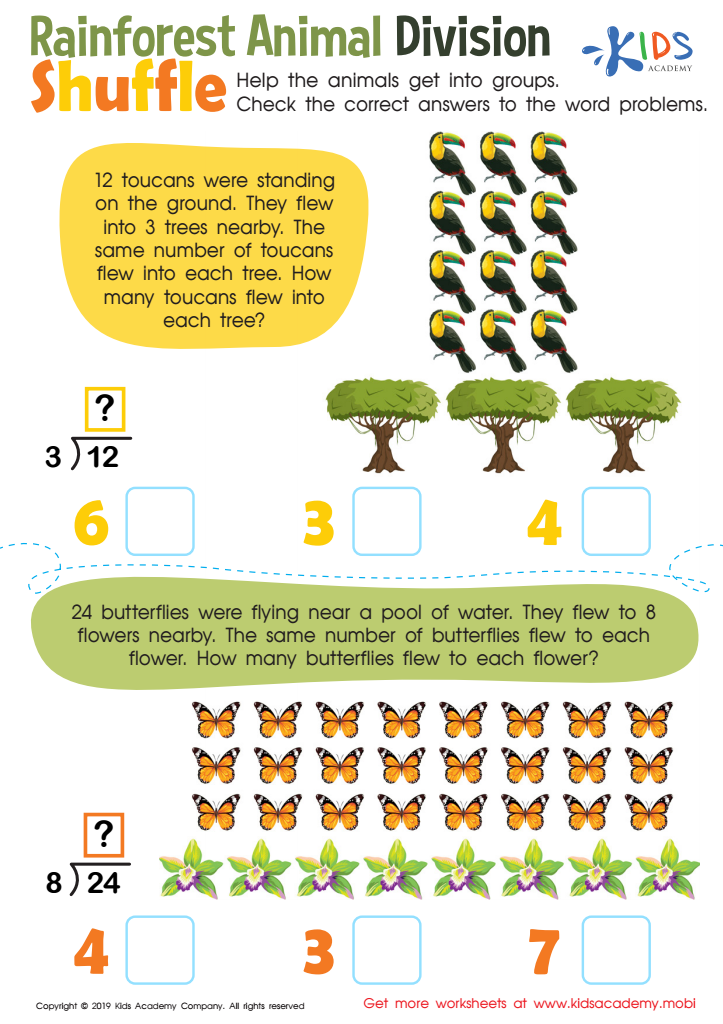
Rainforest Animal Division Worksheet
 Assign to My Students
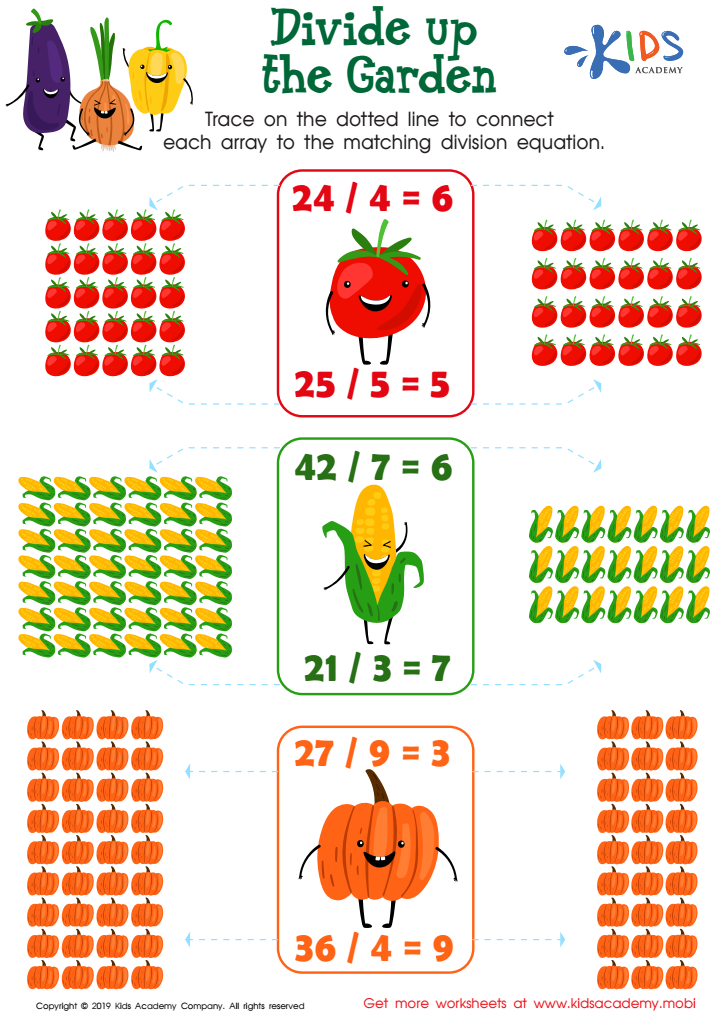
Divide up the Garden Worksheet
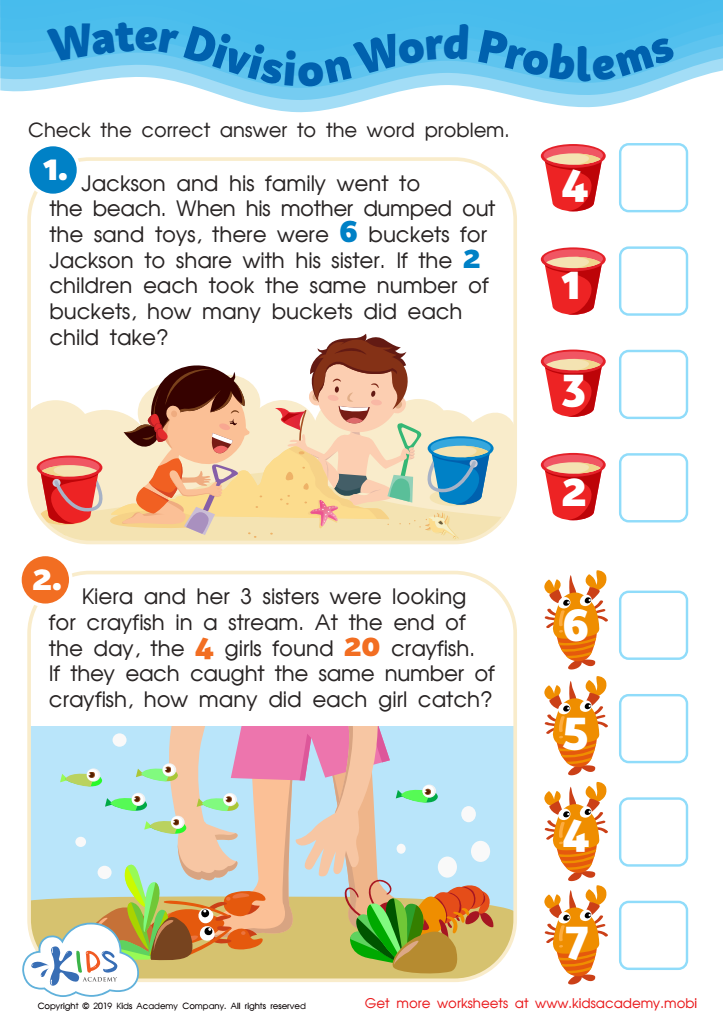
Water Division Word Problems Worksheet
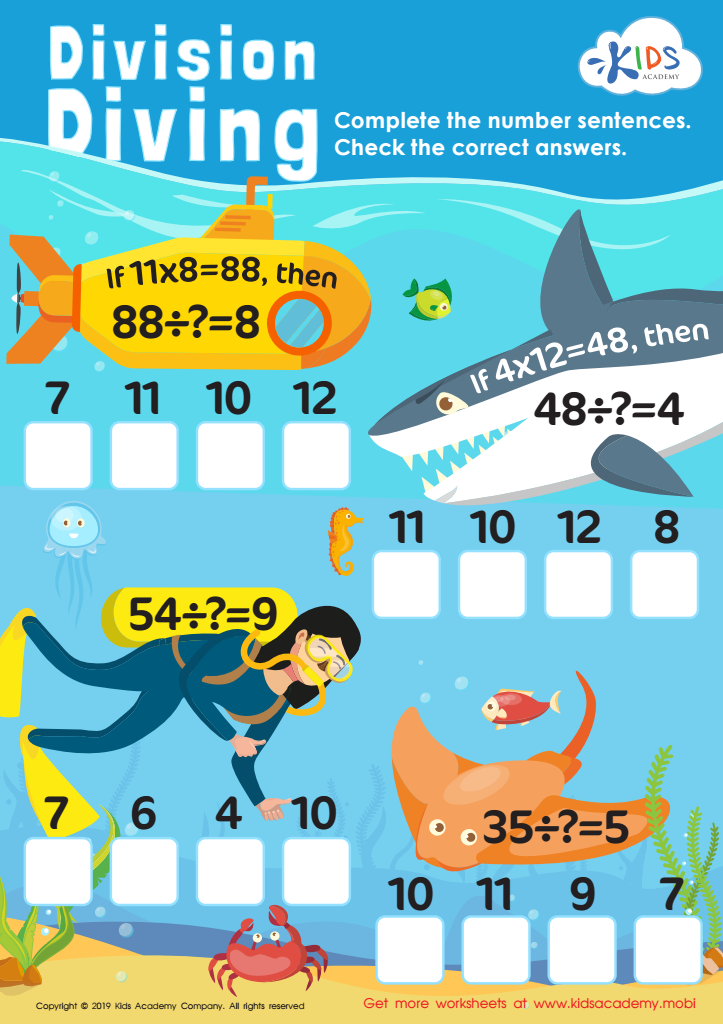
Division Diving Worksheet
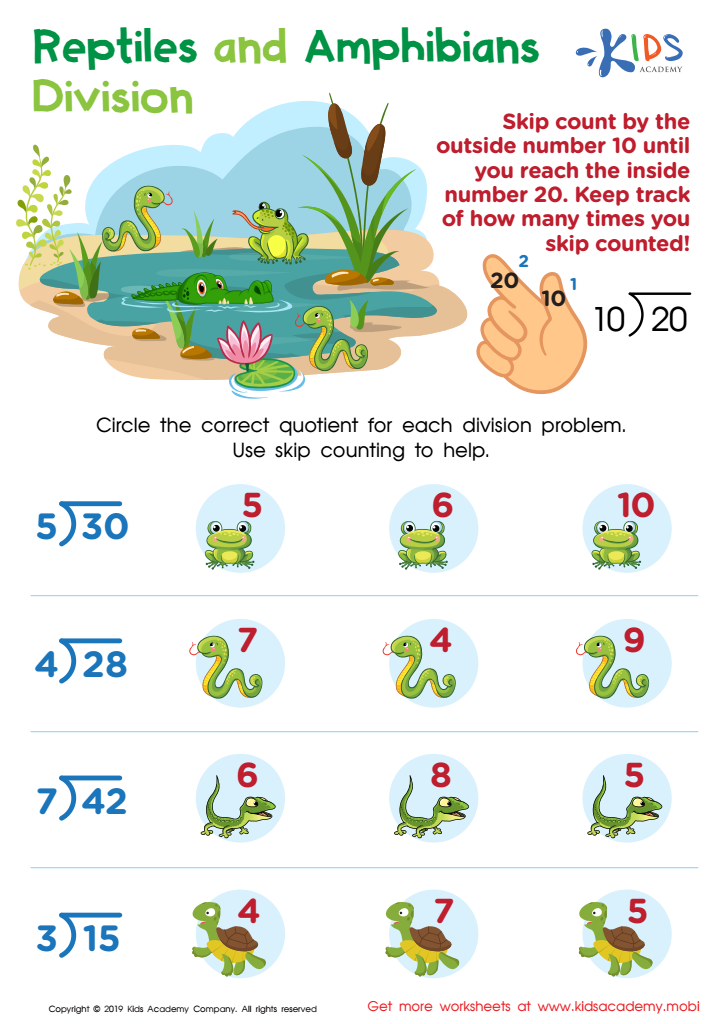
Reptile and Amphibians Division Worksheet






Introducing division and science concepts to children aged 3-8 is pivotal for their cognitive and academic development. First, early exposure to division helps youngsters grasp fundamental mathematical principles, setting a strong foundation for future learning in more complex math and science topics. Understanding basic division encourages logical thinking and problem-solving skills, critical for academic success across subjects.
Science education at an early age fosters curiosity and a love for learning. It helps children explore the world around them, promoting practical knowledge and inquiry-based learning. Engaging with scientific ideas nurtures creativity and critical thinking and encourages questions and investigations, imperative skills for intellectual growth.
Moreover, both math and science activities enhance fine motor skills through hands-on experiments and the manipulation of objects. Activities can be fun and collaborative, strengthening social skills and teamwork. They also cater to various learning styles, whether visual, auditory, or kinesthetic, accommodating each child's unique mode of understanding.
Early education professionals and parents should prioritize these subjects to provide children with a robust early education foundation. This not only supports academic advancement but also instills a lifelong enthusiasm for learning. Therefore, both teachers and parents need to engage with and motivate children through age-appropriate division and science activities.







