
Improving comprehension skills Science Worksheets for Ages 3-8
3 filtered results
Difficulty Level
Grade
Age
-
From - To
Subject
Activity
Standards
Boost young minds with our innovative Science Worksheets designed for ages 3-8! Our carefully crafted worksheets foster essential comprehension skills through engaging, age-appropriate activities. From fun matching games to simple experiments, these resources make understanding science concepts accessible and enjoyable for early learners. Each worksheet is structured to enhance critical thinking, vocabulary, and the ability to follow instructions. Perfect for classroom or home use, our printables support educators and parents in laying a solid foundation for future scientific learning. Explore our collection today and watch your little scientists thrive!
Favorites
With answer key
Interactive
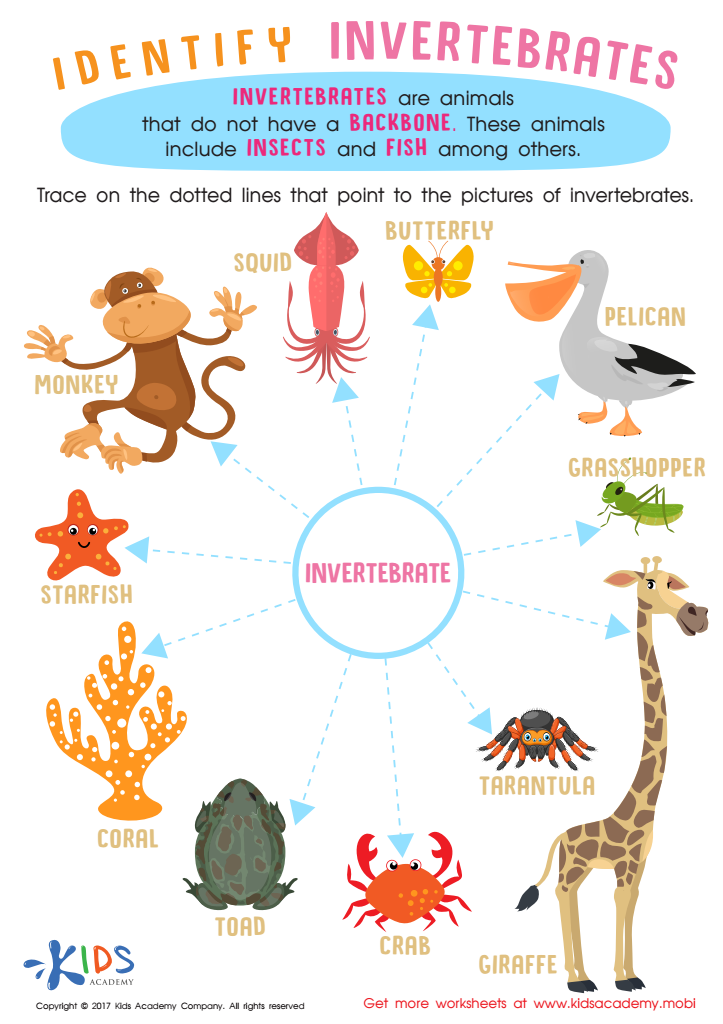
Invertebrates Worksheet for Grade 3
Kids explore the world of invertebrates with this worksheet for grade 3. Invertebrates are animals without a backbone, such as fish and insects. Kids must identify and select them from a group of animals. This activity is sure to stimulate their curiosity and help them discover more about these remarkable creatures.
 Assign to My Students
Invertebrates Worksheet for Grade 3
Worksheet
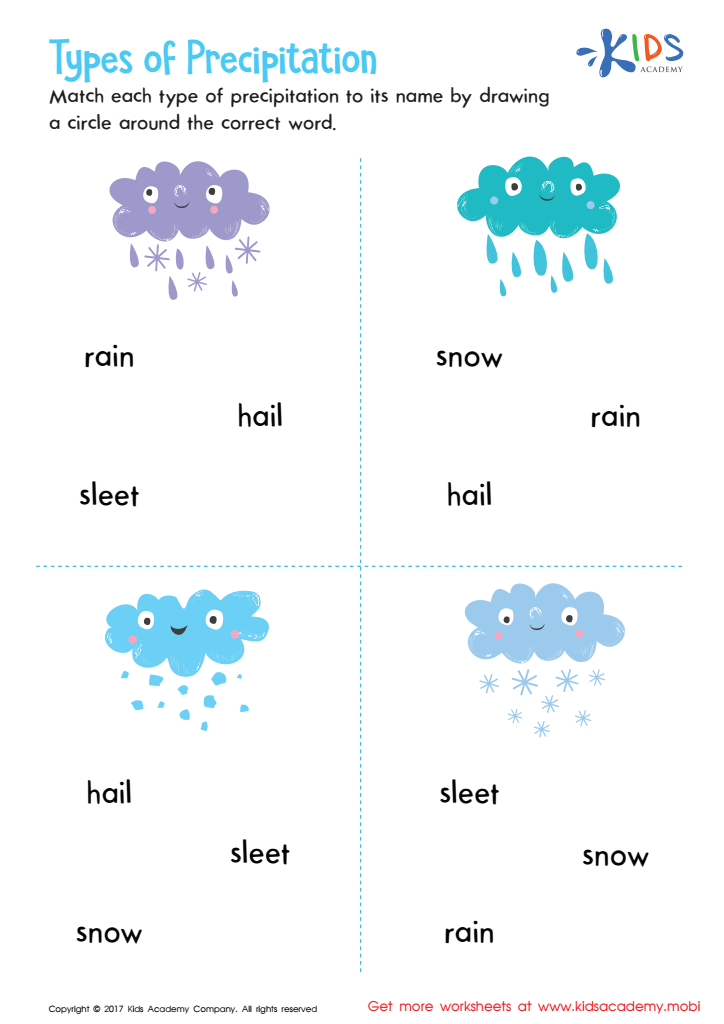
Types of Precipitation Printable
Science has a big impact on our world, and teaching kids about weather helps them understand how their learning applies to their lives. Our worksheet reviews different types of weather, so kids can look out the window and know what's happening. It covers familiar types of precipitation and more challenging ones like sleet or hail. Kids can use this to build a mental library of scientific knowledge for the future, even from places that don't get much snow.
Types of Precipitation Printable
Worksheet
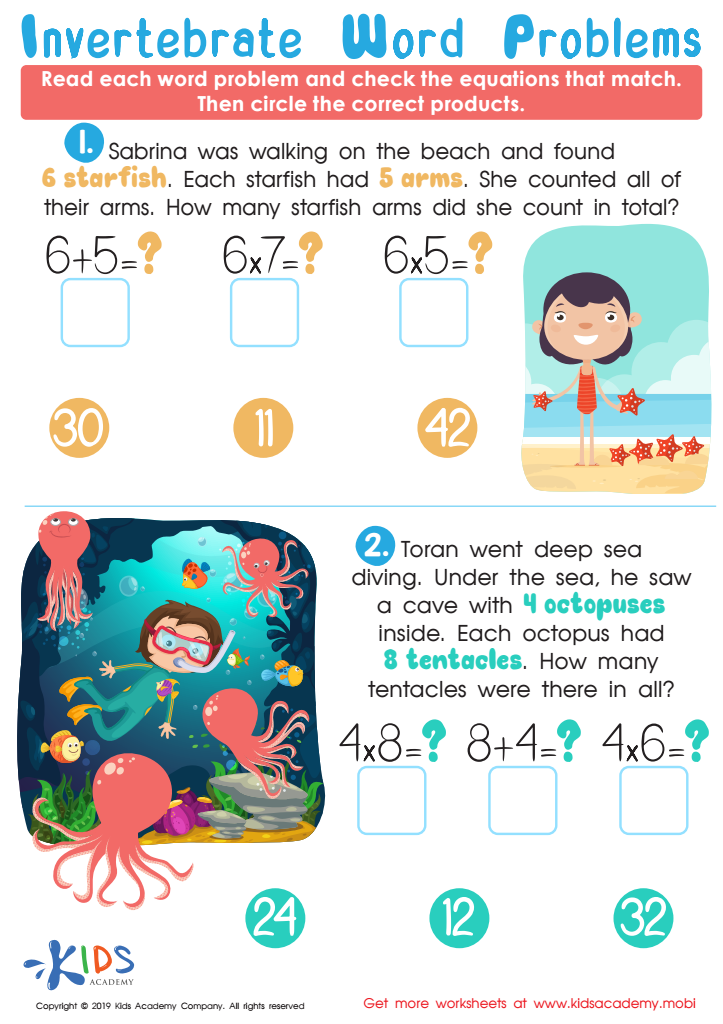
Invertebrate Problems Worksheet
Mix math and science with fun word problems to explore invertebrates under the sea. Animals like starfish and octopus that don't have a backbone are invertebrates. Read word problems with your kids and use multiplication to work out the answer and see how many arms or tentacles they spotted!
Invertebrate Problems Worksheet
Worksheet
Join Kids Academy for Free
Who is primarily going to use this learning content?






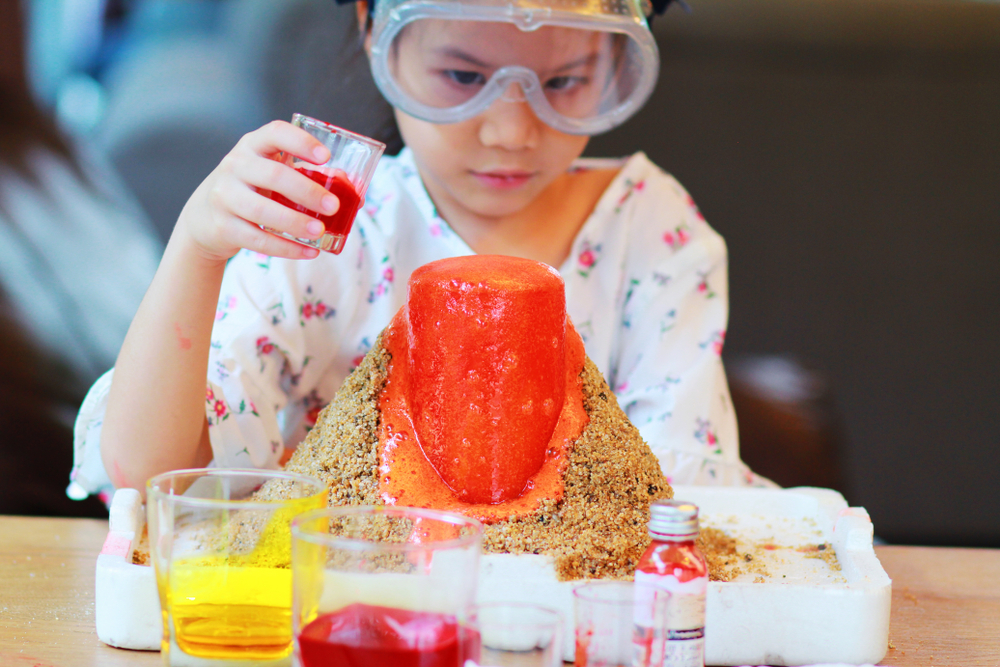
Investing in improving science comprehension skills for young children aged 3-8 is crucial for several reasons. Firstly, early exposure sparks curiosity and fosters a lifelong love for learning. This age is a critical window for cognitive development, and engaging with scientific concepts helps build problem-solving skills, critical thinking, and a foundational understanding of the natural world.
Moreover, early comprehension of science enhances language and literacy skills. When children learn to observe, ask questions, and describe their experiments, they expand their vocabulary and enhance communication abilities. This integration enriches overall academic performance, enabling better understanding in subjects like math and reading.
Teachers and parents play a pivotal role in guiding and nurturing discovery. Collaborative, hands-on projects encourage teamwork, patience, and resilience – essential skills beyond the classroom. Activities like observing plants grow or mixing baking soda with vinegar make abstract scientific ideas tangible and exciting.
Furthermore, fostering a robust scientific understanding from an early age promotes informed decision-making and empowers the future generations to tackle global challenges such as climate change, health issues, and technological advancements. Therefore, by prioritizing science comprehension for young learners, parents and teachers help create a curious, knowledgeable, and capable future workforce equipped to take on the world's complexities.







