Sequencing Skills Science Worksheets for Ages 3-8
4 filtered results
-
From - To
Discover our engaging Sequencing Skills Science Worksheets designed for children ages 3-8! These interactive resources help young learners develop critical sequencing skills, essential for understanding scientific concepts and fostering logical thinking. Each worksheet features colorful illustrations and age-appropriate activities that guide children through various processes, from life cycles to scientific experiments. By practicing sequencing, kids enhance their comprehension and problem-solving abilities while having fun! Ideal for classroom use or at-home learning, our worksheets encourage curiosity and exploration. Dive into science with our stimulating worksheets that make learning exciting and effective for every young scientist! Perfect for early education environments!
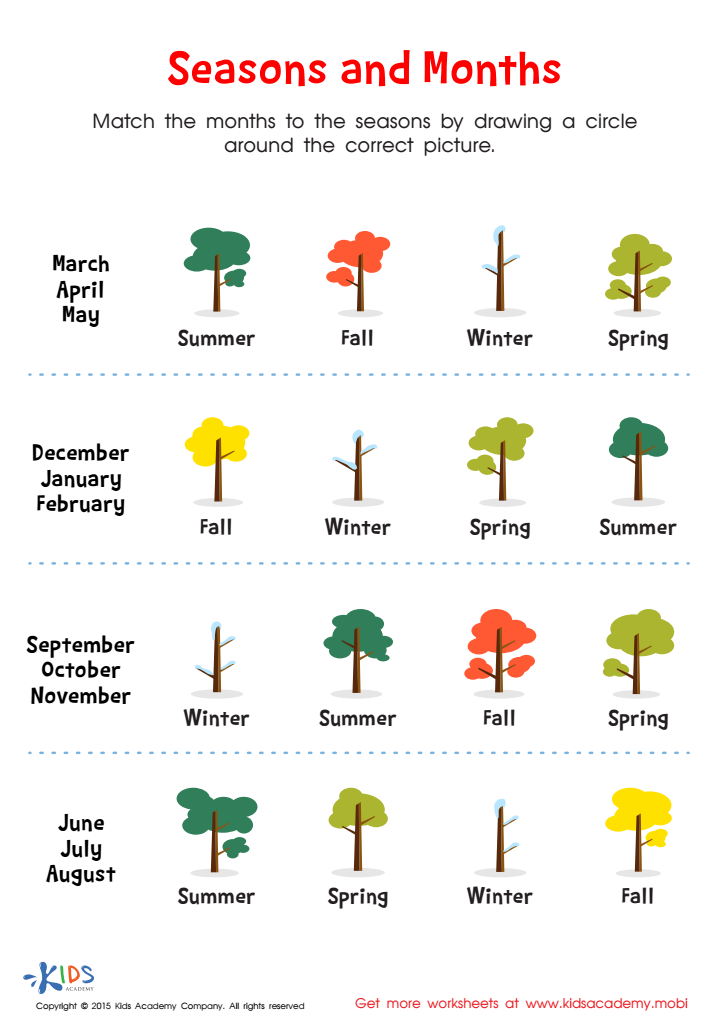
Seasons and Months Worksheet
 Assign to My Students
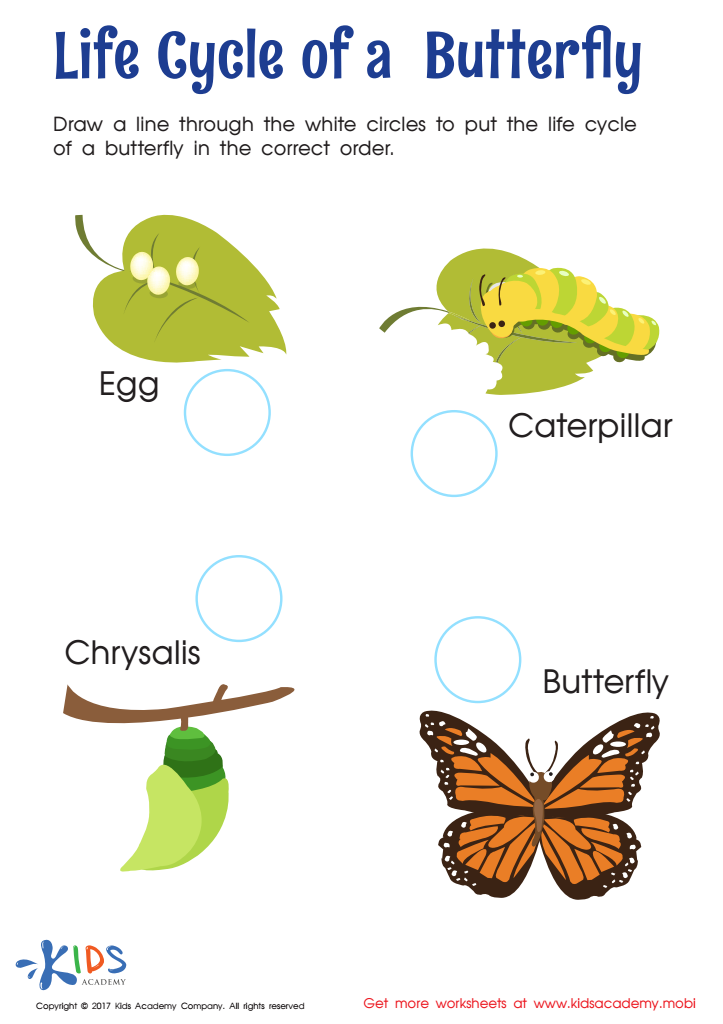
Life Cycle of Butterfly Worksheet
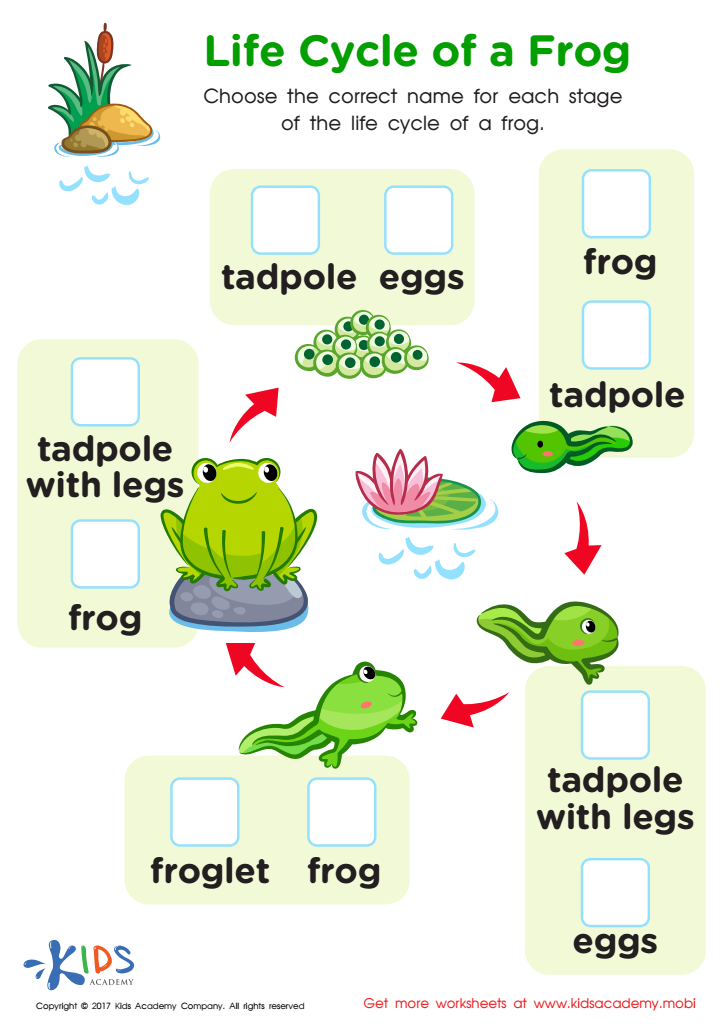
Life Cycle Frog Printable
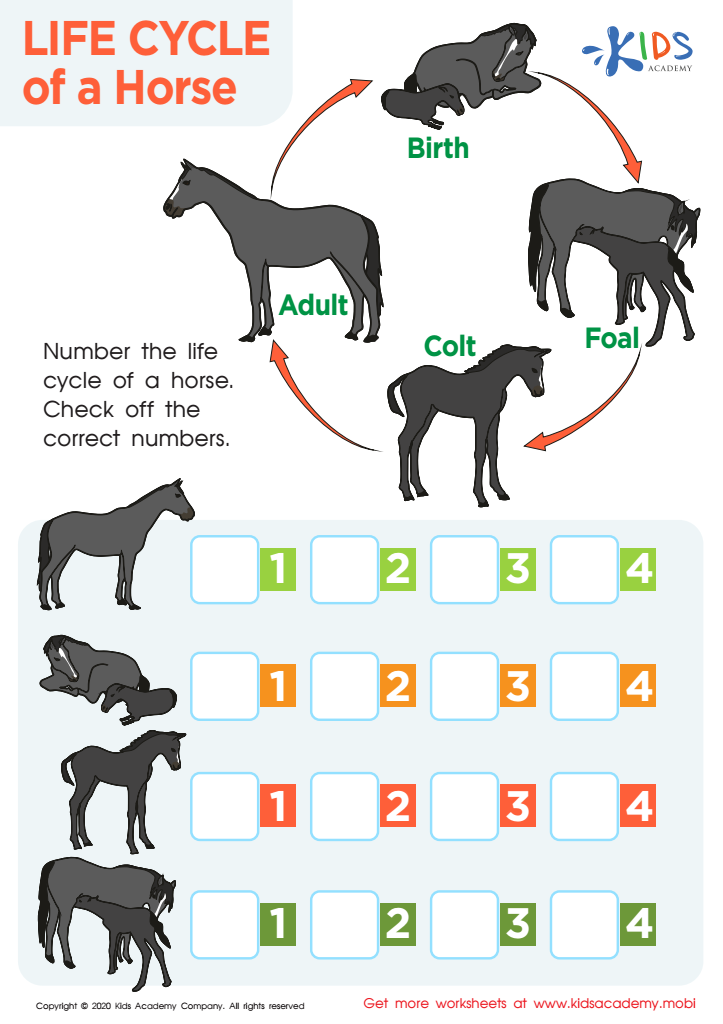
Life Cycle of a Horse Worksheet








Sequencing skills are foundational for early childhood development, particularly in science education for children ages 3-8. These skills enable young learners to organize events or information in a logical order, which is essential for understanding scientific concepts and the world around them. When children learn to sequence correctly, they improve their ability to analyze processes, predict outcomes, and comprehend cause-and-effect relationships.
Parents and teachers should care about developing sequencing skills because they underpin critical thinking, problem-solving, and comprehension abilities. For instance, when conducting simple experiments, children who can sequence steps are more likely to grasp experimental procedures and the reasoning behind them. This fosters curiosity and encourages a hands-on approach to learning.
Moreover, staging lessons in a structured manner allows children to articulate their understanding clearly. As they progress, these skills will support them not only in science but across all subjects, including reading comprehension and mathematics. By emphasizing sequencing skills early on, educators and caregivers equip children with the tools necessary for academic success and lifelong learning. In essence, nurturing these skills in young learners lays the groundwork for their analytical prowess and inspires a lifelong passion for inquiry and exploration.







