Understanding constellations Science Worksheets for Ages 3-8
3 filtered results
-
From - To
Discover the wonders of the night sky with our "Understanding Constellations" science worksheets designed specifically for children aged 3-8. These engaging, colorful printables introduce young learners to the concept of constellations through fun activities that stimulate curiosity and imagination. From tracing constellations to matching stars with their names, each worksheet encourages creativity while helping kids develop critical thinking skills. Perfect for classroom use or at-home learning, our resources make exploring astronomy both educational and entertaining. Inspire a love for science and the mysteries of the universe in your little ones today! Dive into the cosmos with our delightful worksheets!
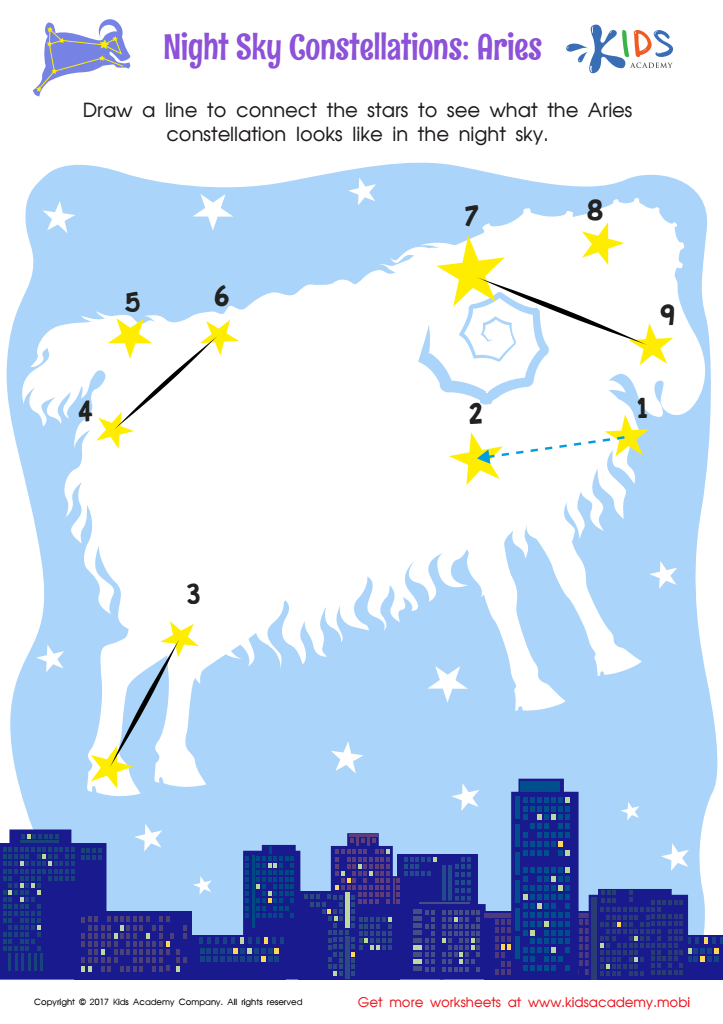
Night Sky Constellations: Aries Worksheet
 Assign to My Students
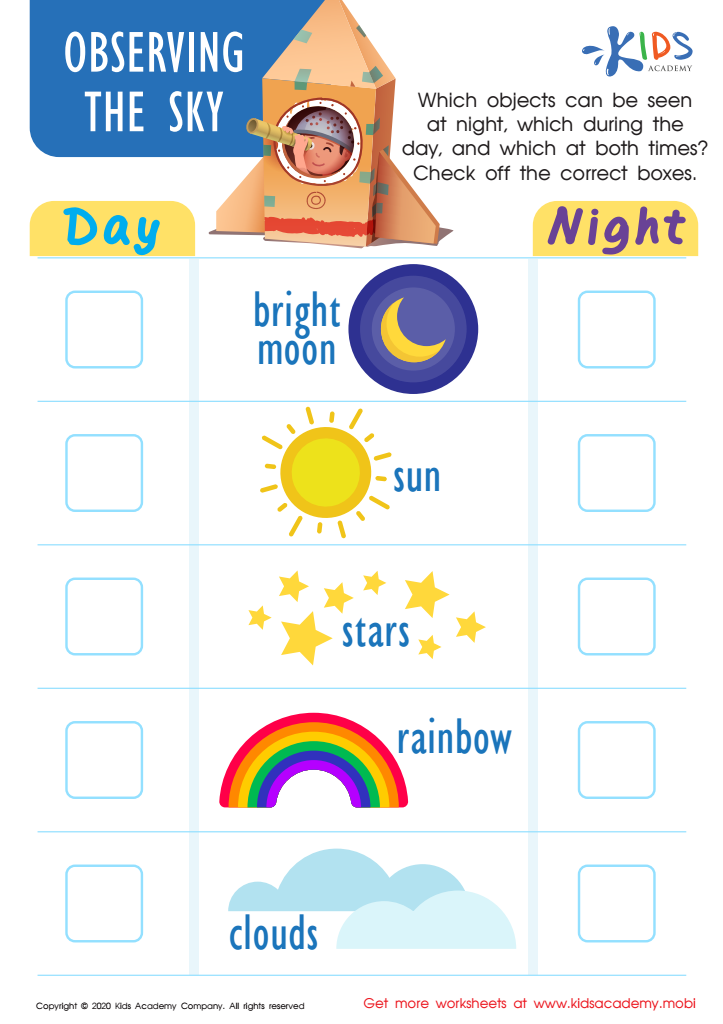
Observing the Sky Worksheet
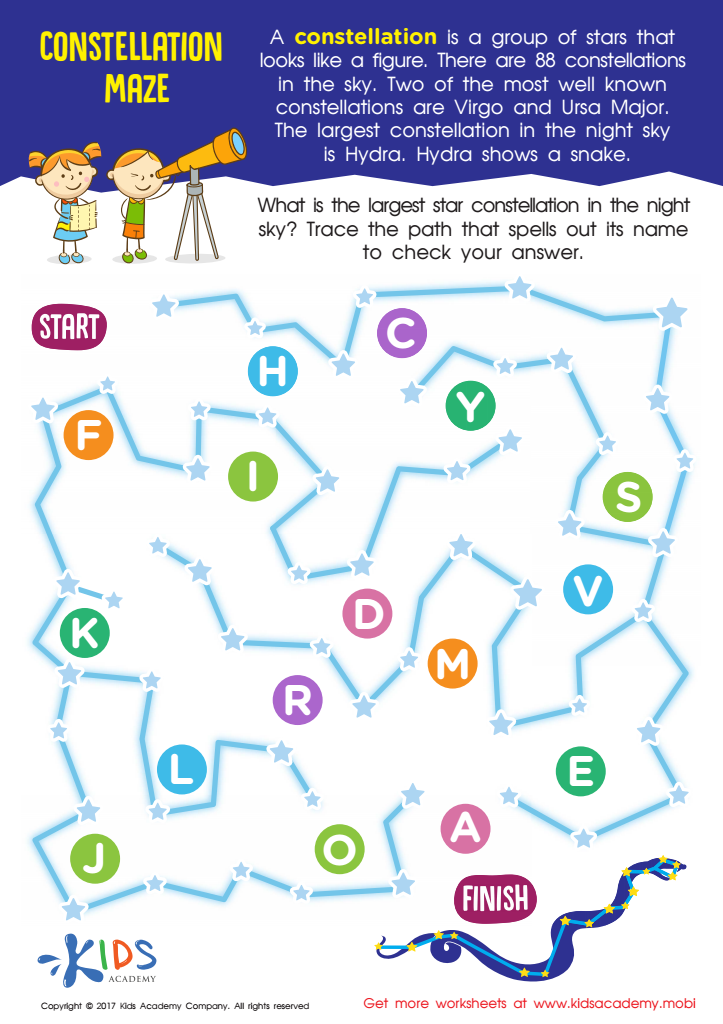
Constellations Worksheet







Understanding constellations is vital for young children aged 3-8, as it enriches their cognitive and emotional development. Firstly, exploring constellations fosters a sense of wonder and curiosity about the universe, encouraging children to ask questions and expand their critical thinking skills. This engagement with science nurtures early STEM (science, technology, engineering, and mathematics) learning, laying a solid foundation for future studies.
Moreover, identifying constellations cultivates observational skills and helps children learn about patterns—essential skills in problem-solving and mathematics. For parents and teachers, astronomy provides an excellent backdrop for interdisciplinary learning, integrating subjects such as storytelling, art, and history. Children can relate stories and myths associated with different constellations, enhancing their literacy and cultural awareness.
Additionally, witnessing the night sky fosters a connection to nature, instilling a sense of stewardship and care for the environment. It also offers opportunities for family bonding or classroom collaboration, as families or groups can engage in star-gazing activities together. Ultimately, by cultivating an interest in constellations in young children, we inspire future scientists, promote curiosity, and encourage lifelong learning about the universe.







