Understanding life cycles Science Worksheets for Ages 3-8
8 filtered results
-
From - To
Explore the fascinating world of life cycles with our engaging Science Worksheets designed for ages 3-8. These educational resources provide young learners with hands-on activities to understand the stages of life for various plants and animals. Our worksheets promote critical thinking, nurture curiosity, and enhance the understanding of nature's processes through colorful illustrations and interactive tasks. Perfect for home or classroom use, these worksheets make learning about life cycles fun and accessible. Help your child connect with the natural world and develop foundational science skills today! Visit our site to access the full range of worksheets tailored for young explorers.
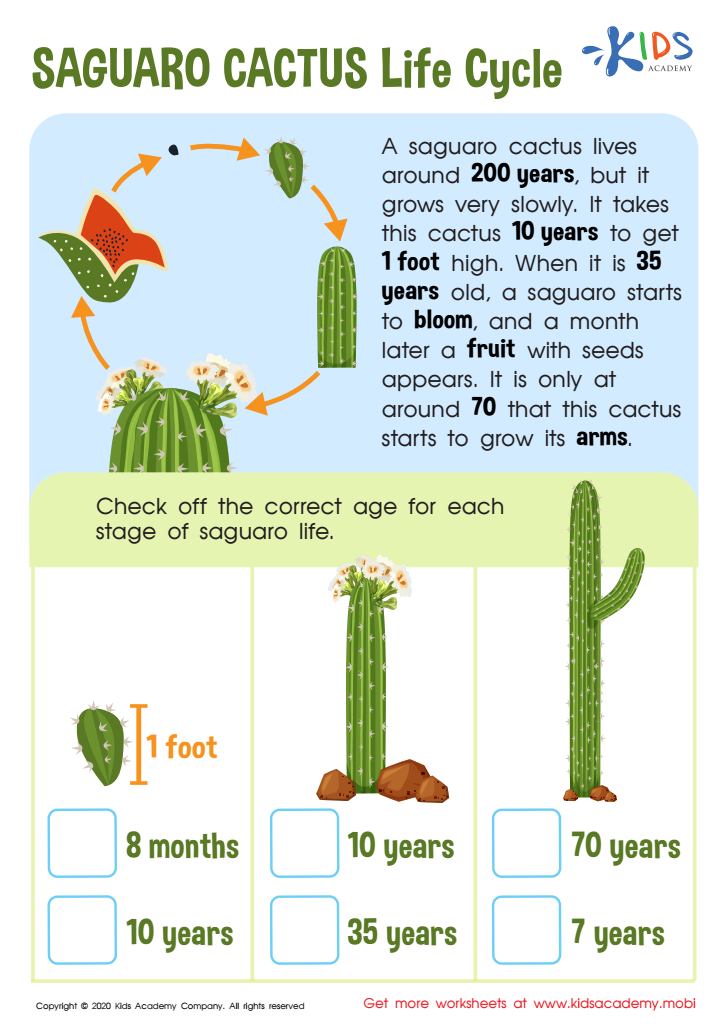
Saguaro Cactus Life Cycle Worksheet
 Assign to My Students
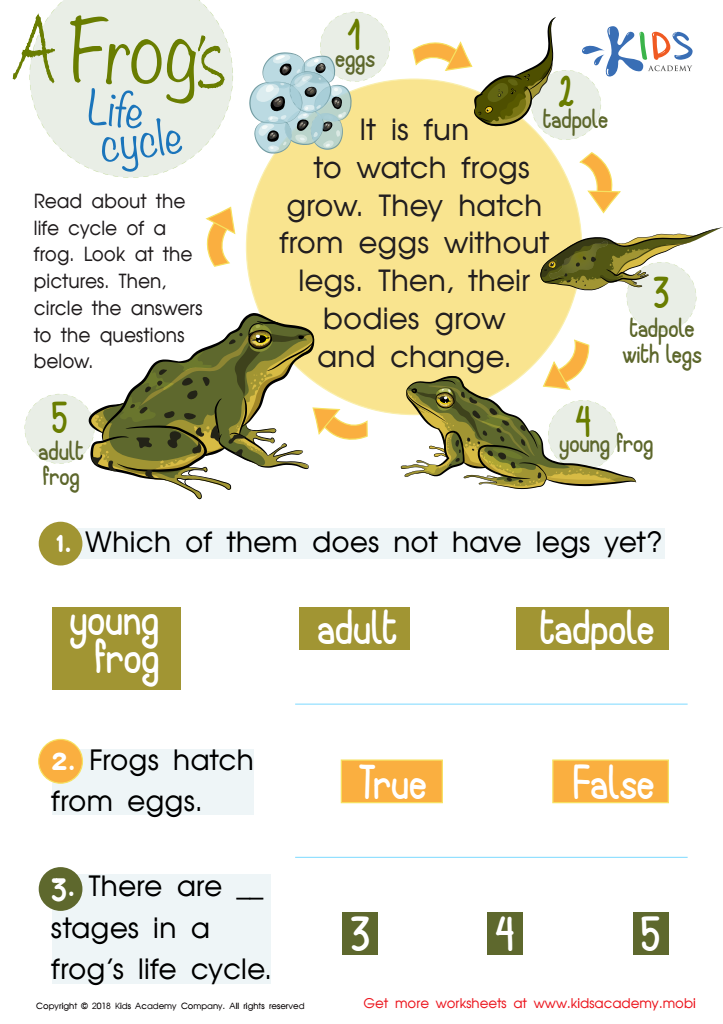
A Frog’s Life Cycle Worksheet
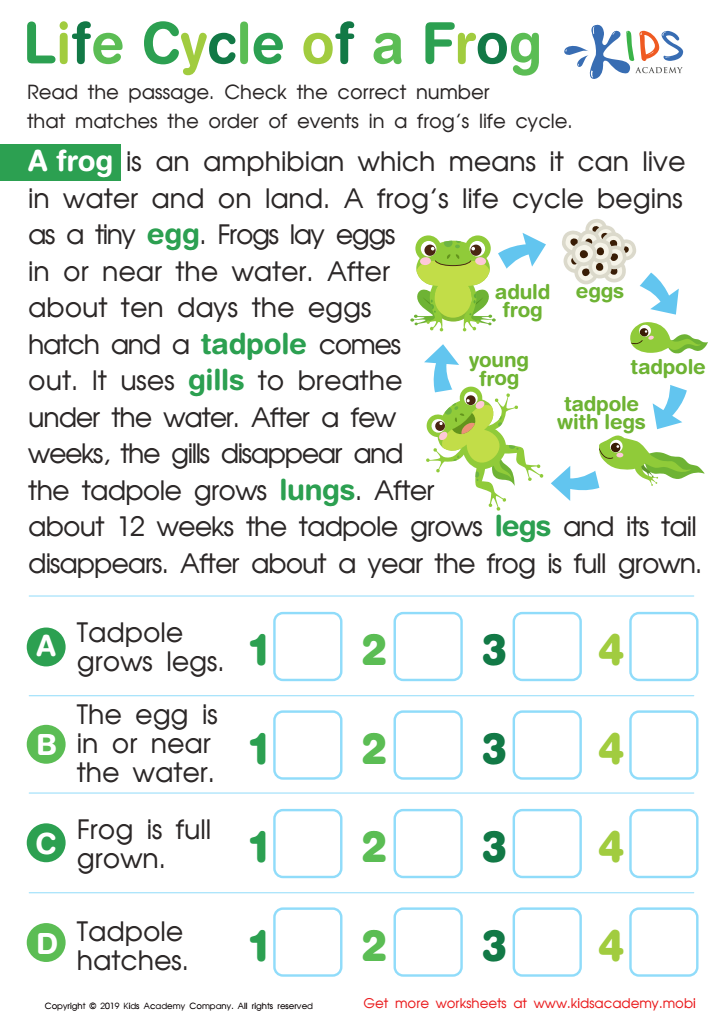
Life Cycle of a Frog Worksheet
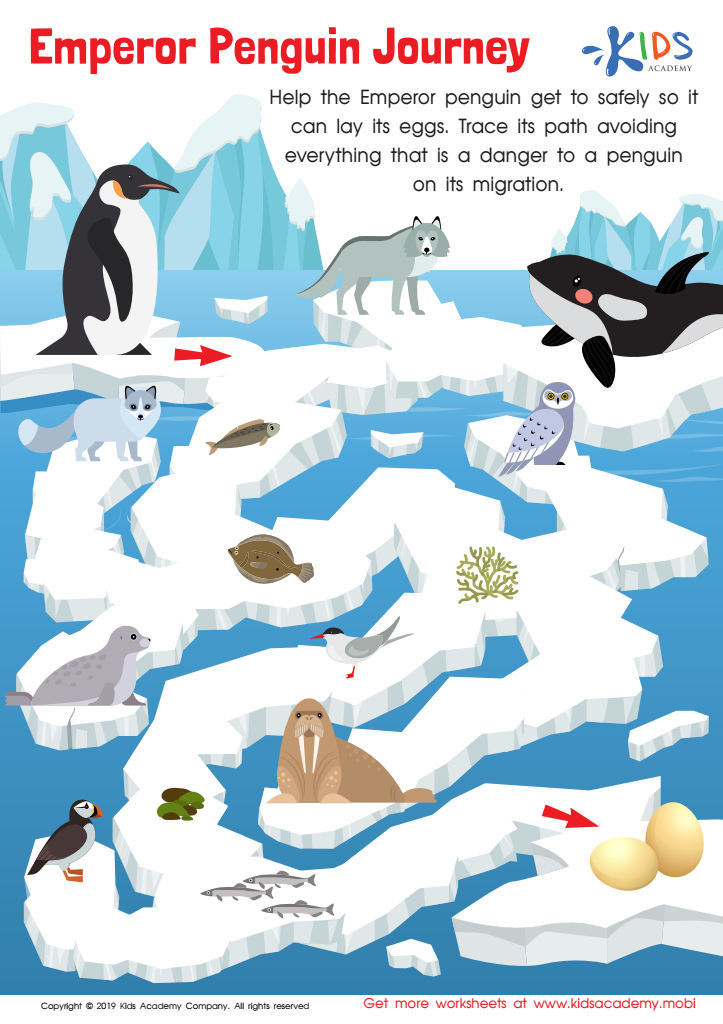
Emperor Penguin Journey Worksheet
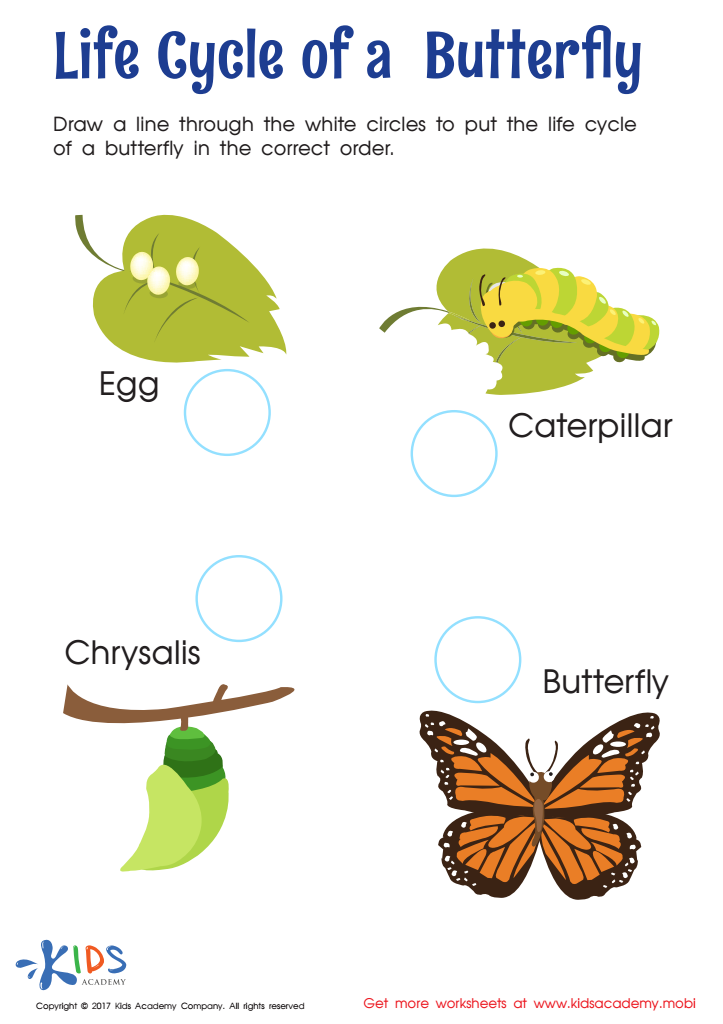
Life Cycle of Butterfly Worksheet
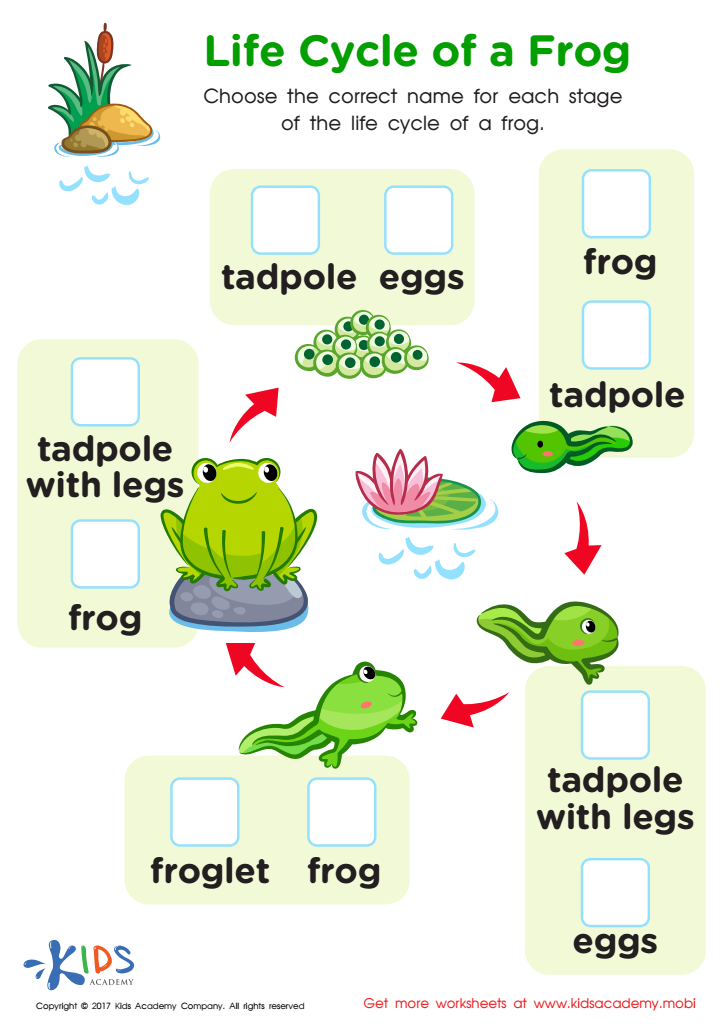
Life Cycle Frog Printable
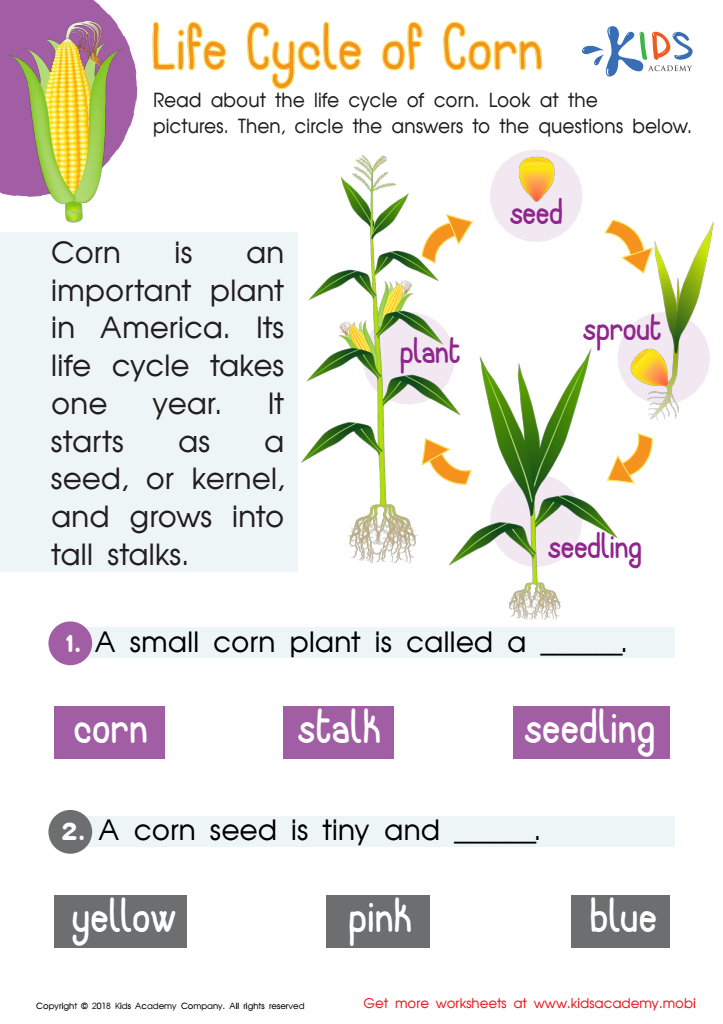
Life Cycle of Corn Worksheet
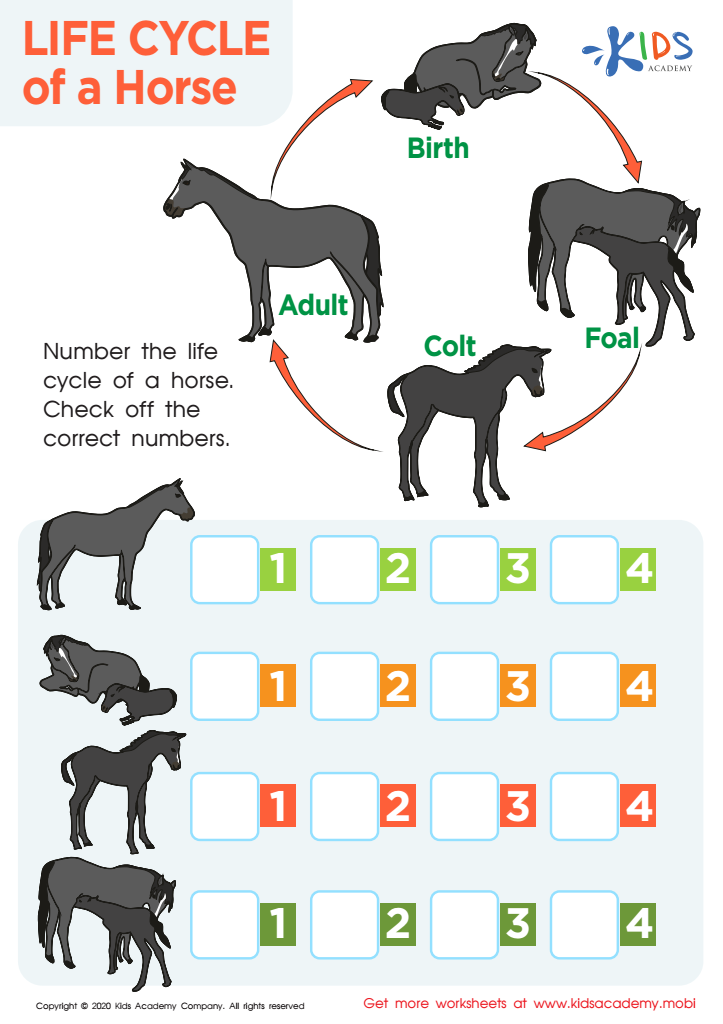
Life Cycle of a Horse Worksheet





Understanding life cycles is essential for children aged 3-8 as it introduces them to fundamental biological concepts and fosters a sense of curiosity about the natural world. Engaging with life cycles helps children learn about growth, change, and the interdependence of different organisms. This knowledge lays the groundwork for scientific literacy, as young learners become familiar with observation, pattern recognition, and critical thinking.
For parents and teachers, embracing life cycle education promotes hands-on, experiential learning that can make science relatable and exciting. Activities such as growing plants, raising caterpillars, or observing the changes in a seed can captivate a child's imagination, enhancing their understanding through direct experience. Furthermore, these lessons instill values like empathy and respect for living things, encouraging children to consider the impact of their actions on the environment.
Additionally, learning about life cycles can spark discussions about sustainability and conservation, fostering responsible habits in young learners. In a society increasingly dominated by technology, integrating nature-focused curricula nurtures creativity and emotional well-being. Ultimately, prioritizing life cycle education enriches a child's learning experience, providing critical building blocks for future scientific understanding and lifelong appreciation for the planet’s wonders.







