Understanding symmetry Science Worksheets for Ages 3-8
3 filtered results
-
From - To
Unlock the world of symmetry with our engaging science worksheets for ages 3-8! At Kids Academy, we provide visually captivating and interactive activities that make understanding symmetry fun and easy for young learners. Our carefully curated worksheets help kids identify symmetrical shapes, patterns, and objects in their environment, enhancing their observational and critical thinking skills in a playful manner. With a variety of exercises designed for different skill levels, your child will build a strong foundation in this important mathematical concept while enjoying hands-on practice. Start exploring symmetry with our expertly designed resources and watch your child's confidence grow!
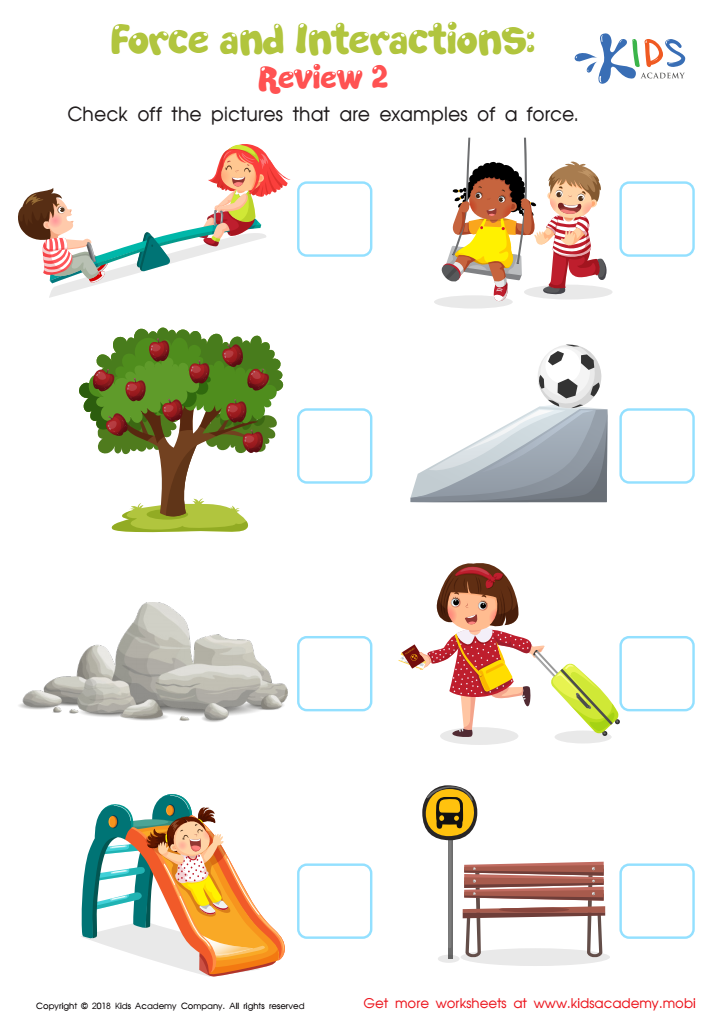
Force and Interactions: Review 2 Worksheet
 Assign to My Students
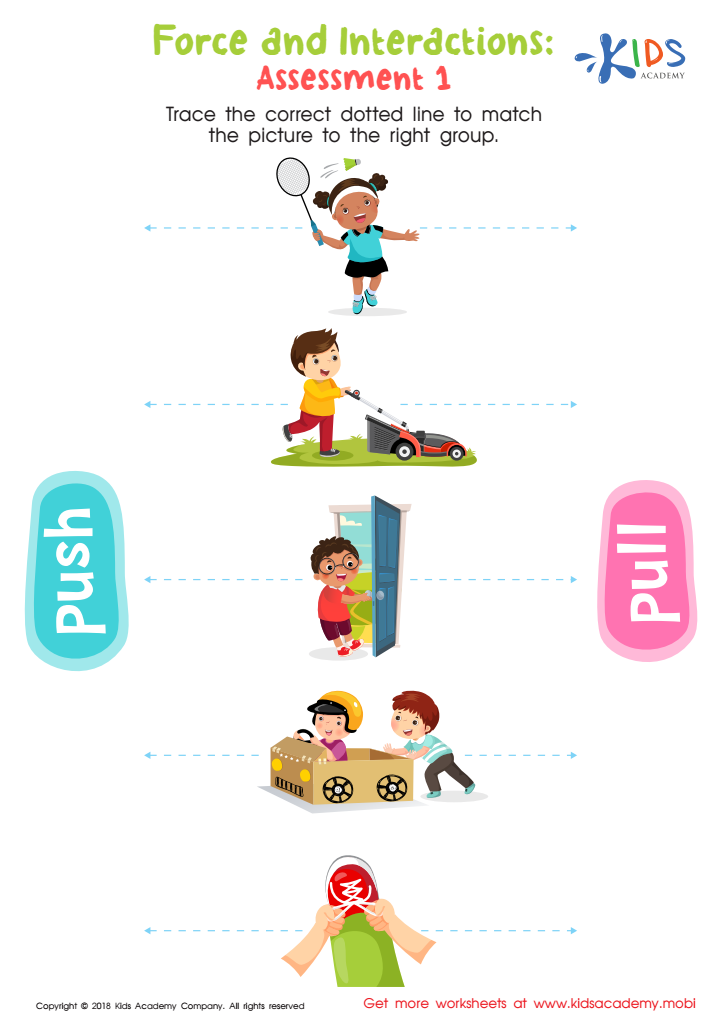
Force and Interactions: Assessment 2 Worksheet
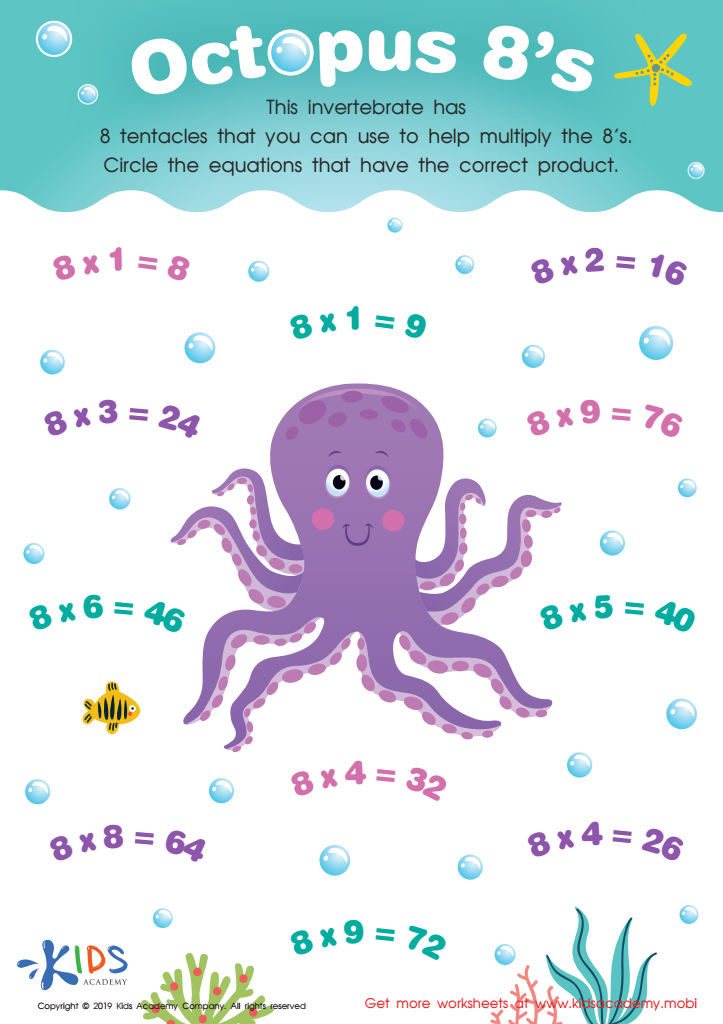
Octopus 8’s Worksheet






Understanding symmetry in science for children aged 3-8 is crucial as it lays the foundation for essential cognitive and perceptual skills that are not only important for math and science but also relevant across various aspects of life. Symmetry helps young children develop spatial awareness and geometric reasoning, allowing them to recognize patterns and categorize objects—skills fundamental to more advanced mathematical concepts they will encounter later on.
Moreover, symmetry appears naturally in the world around us, from the shapes of leaves and flowers to the human body and animal forms. Exposure to these concepts taps into children's innate curiosity about nature, thereby enhancing their observational skills. This robust engagement can lead to a deeper appreciation of biology, art, and even physics from an early age.
For parents and teachers, fostering an understanding of symmetry can also be an enjoyable way to promote problem-solving abilities and critical thinking in children. Activities designed around symmetry—such as crafting, drawing, and exploring nature—combine learning with play, making education an interactive and joyous process. Inculcating these skills early not only primes children for future academic success but also nurtures a lifelong interest in the patterns and structures that compose our world.







