Understanding life cycles Life Science Worksheets for Ages 3-8
3 filtered results
-
From - To
Explore the fascinating world of life cycles with our Life Science Worksheets tailored for ages 3-8! Designed to captivate young minds, these engaging learning resources will take children on a journey through the incredible stages of life for various plants and animals. Through fun, interactive activities and colorful illustrations, kids will develop a solid understanding of biology basics and the amazing processes of growth and transformation. From seedlings to blossoming plants and butterflies emerging from cocoons, our worksheets not only educate but also spark curiosity and wonder in every budding scientist. Perfect for both classroom and at-home learning!
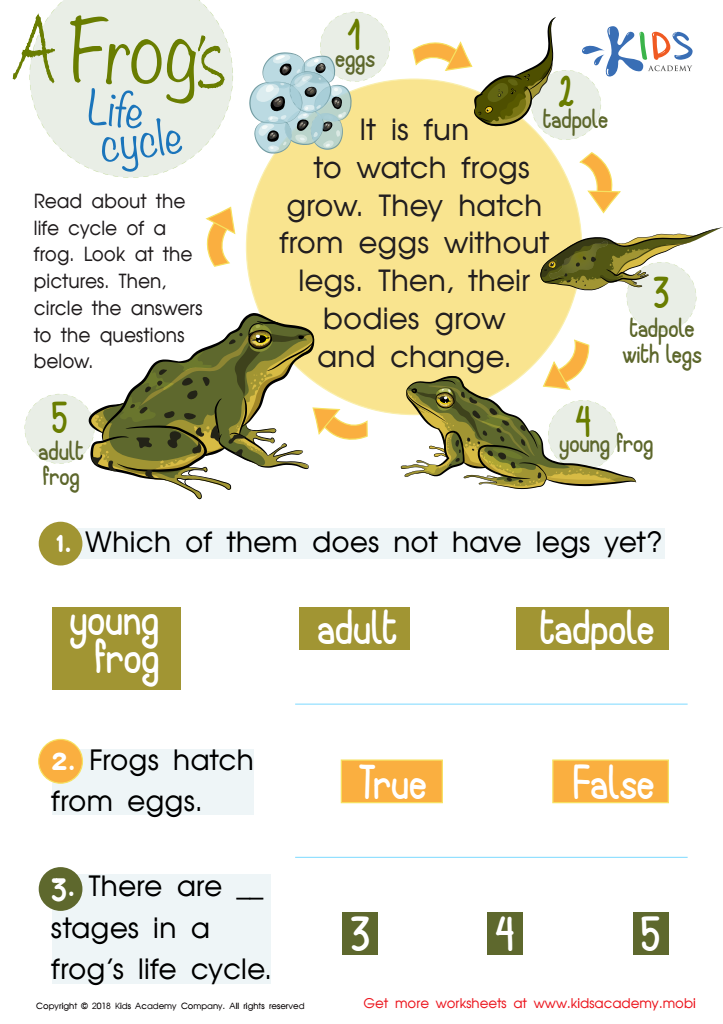
A Frog’s Life Cycle Worksheet
 Assign to My Students
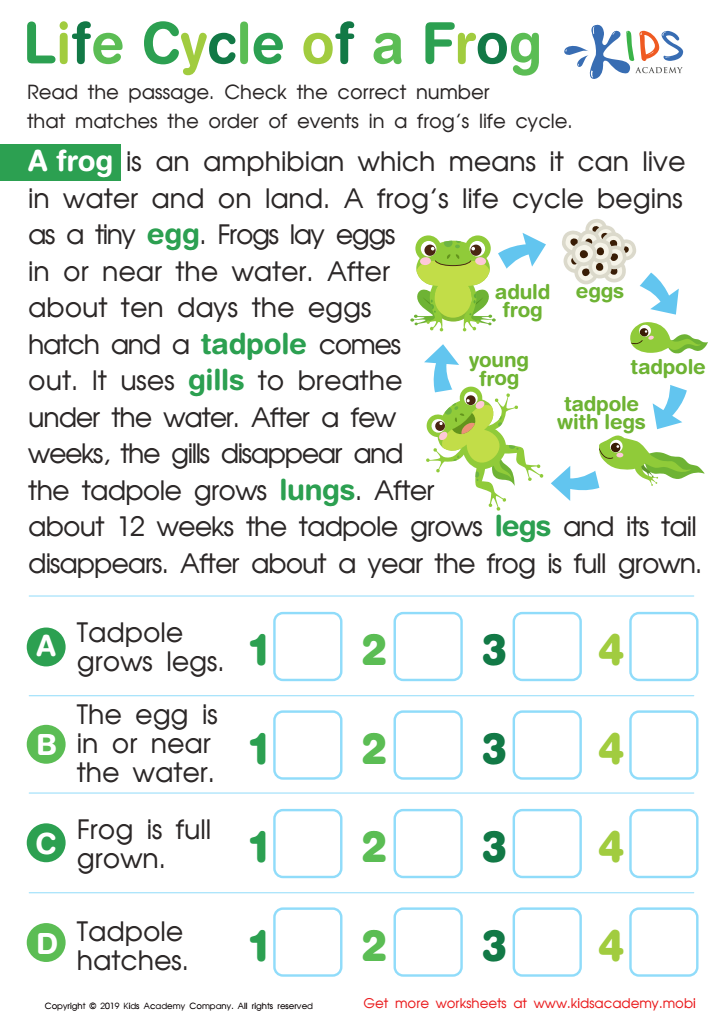
Life Cycle of a Frog Worksheet
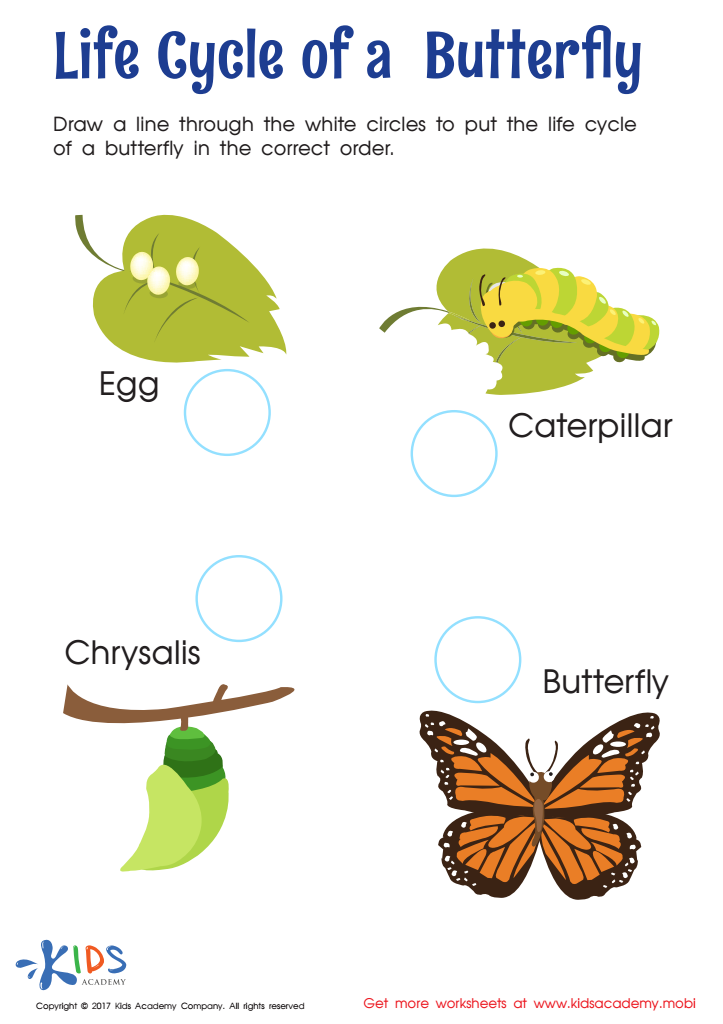
Life Cycle of Butterfly Worksheet







Understanding life cycles is incredibly important for young children, and both parents and teachers should prioritize this aspect of early science education. At ages 3-8, children are naturally curious about the world around them, and learning about life cycles satisfies their quest for knowledge while laying a solid educational foundation.
First, learning about life cycles helps children grasp essential biological concepts, such as growth, change, and reproduction. This foundational knowledge can spark an early interest in science, promoting curiosity and critical thinking. For instance, observing a caterpillar transform into a butterfly can captivate a child's imagination and introduce them to the wonders of nature.
Additionally, understanding life cycles aids in developing observational and recording skills. Children learn to observe processes carefully, note changes, and draw conclusions based on evidence, enhancing their cognitive and analytical abilities. These are vital skills that benefit them in all academic areas.
Moreover, recognizing that all living things undergo similar stages of life fosters empathy and responsible behavior toward the environment. Children learn to appreciate the interconnectedness of life and may develop a sense of stewardship for living organisms and their habitats.
In essence, grasping life cycles seeds fundamental scientific literacy, encourages analytical skills, and nurtures a respectful connection with nature, making it a crucial topic for young learners.