Understanding ecosystems Our Planet and Environment Worksheets for Ages 3-8
4 filtered results
-
From - To
Discover engaging and educational "Understanding Ecosystems: Our Planet and Environment Worksheets" for ages 3-8 at Kids Academy. These worksheets introduce young learners to the basics of ecosystems, helping them understand the interconnectedness of living and nonliving things. Through fun activities and colorful illustrations, children explore various habitats, learn about different animals and plants, and grasp essential environmental concepts. These resources aim to foster a love for nature and instill early environmental awareness, providing foundational skills for future scientific exploration. Perfect for enhancing early science education at home or in the classroom!
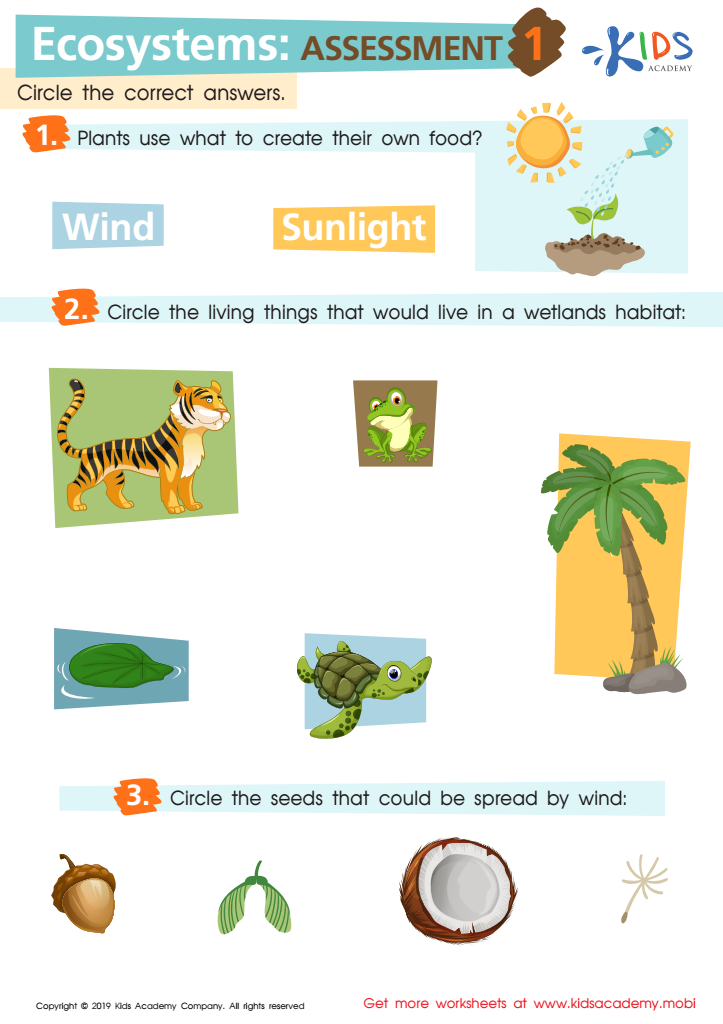
Ecosystems: Assessment 1 Worksheet
 Assign to My Students
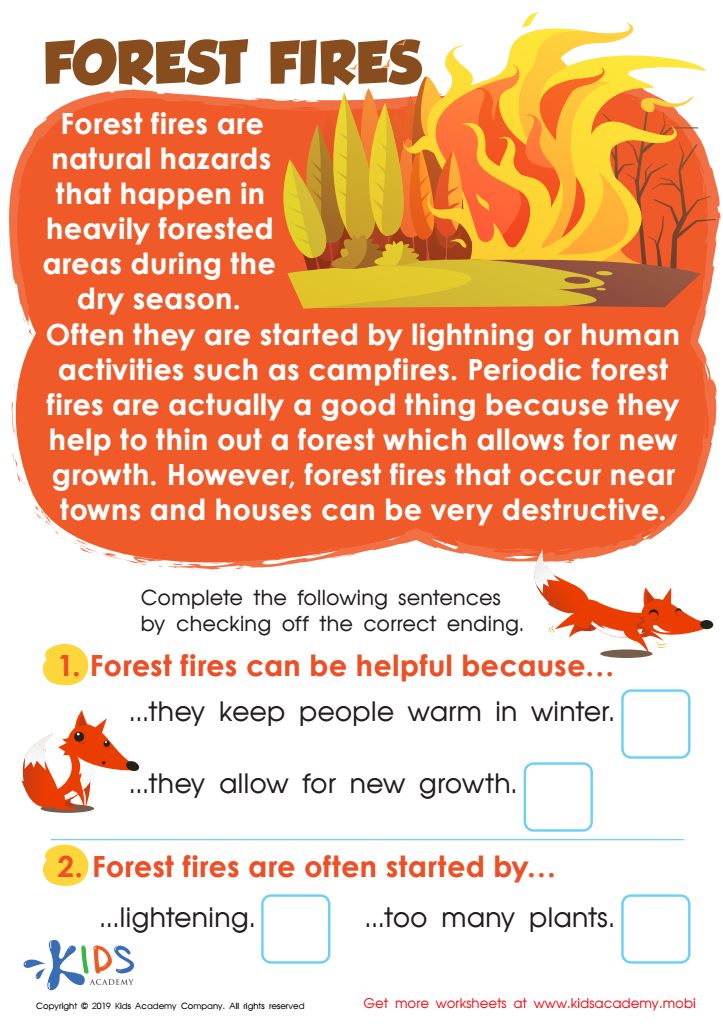
Forest Fires Worksheet
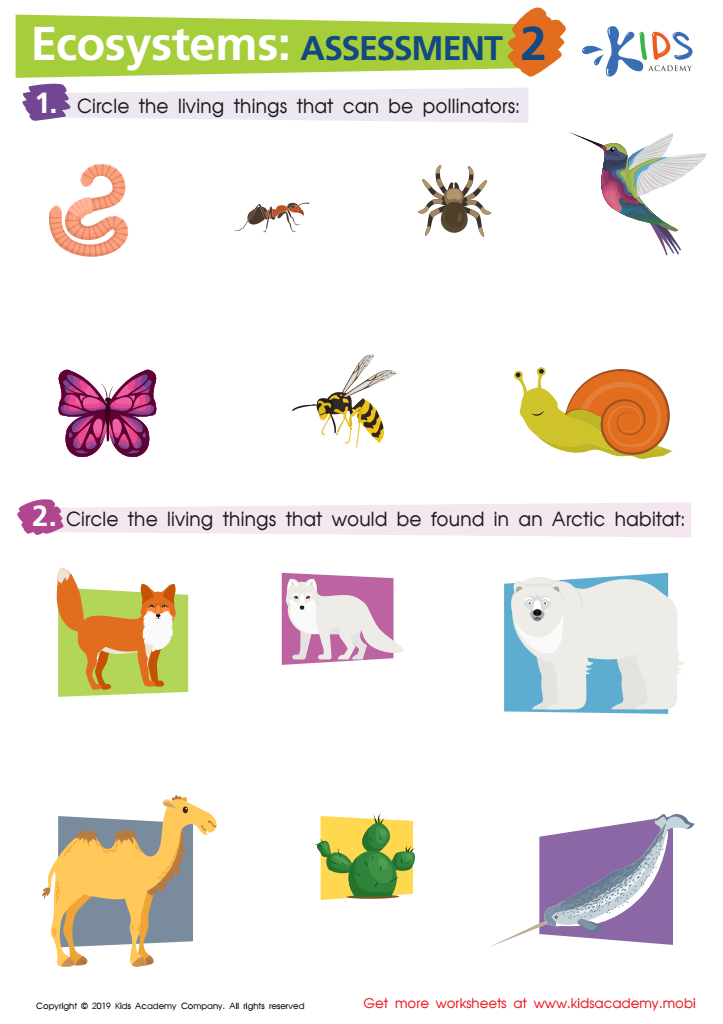
Ecosystems: Assessment 2 Worksheet
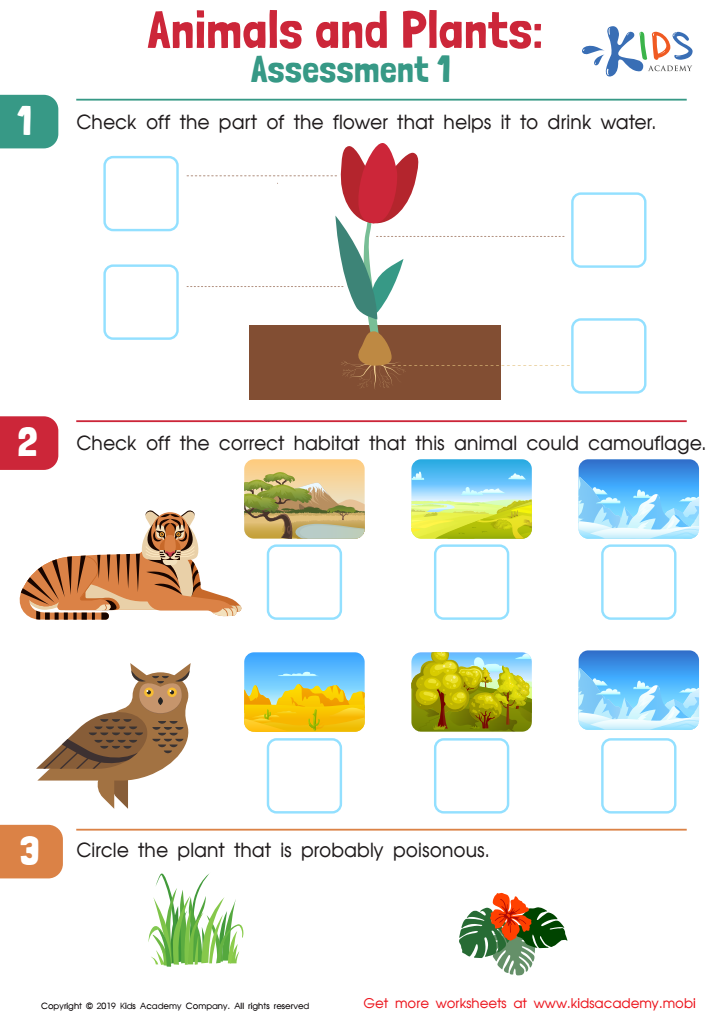
Animals and Plants: Assessment 1 Worksheet




Understanding ecosystems, our planet, and the environment is crucial for young children ages 3-8 as it lays the foundation for lifelong environmental stewardship. At this formative age, children are naturally curious and more receptive to new ideas, making it an ideal time to nurture an appreciation for the natural world.
By teaching about ecosystems, children learn about the delicate balance of nature and the interdependence of all living things. This understanding helps build empathy and respect for other forms of life, fostering a sense of responsibility towards preserving natural habitats.
Introducing children to environmental concepts early on can also promote critical thinking and problem-solving skills. When kids learn about issues like pollution, climate change, and conservation, they start to understand the impact of human activities on the environment. This knowledge can empower them to make more sustainable choices in their daily lives, even from a young age.
Moreover, being informed about the environment connects children to global themes and diverse cultures. They realize that actions taken locally can have global repercussions, encouraging a sense of global citizenship.
In conclusion, educating young children about ecosystems, their planet, and the environment instills essential values and skills. This foundational knowledge inspires them to become thoughtful, conscientious adults who can contribute positively to sustainable living and environmental conservation.







