Observational skills Physical Science Worksheets for Ages 3-8
4 filtered results
-
From - To
Enhance your child's observational skills with our engaging Physical Science worksheets, designed for ages 3-8! Our fun and interactive resources encourage young learners to explore their surroundings, stimulating curiosity and critical thinking. Each worksheet is packed with exciting activities that promote careful observation and connections to the physical world, making learning enjoyable and impactful. Ideal for teachers and parents alike, these worksheets support early science education by fostering important skills like identifying, comparing, and classifying. Give your child the foundation to become an insightful explorer with our thoughtfully crafted observational skills worksheets! Start nurturing their scientific curiosity today!
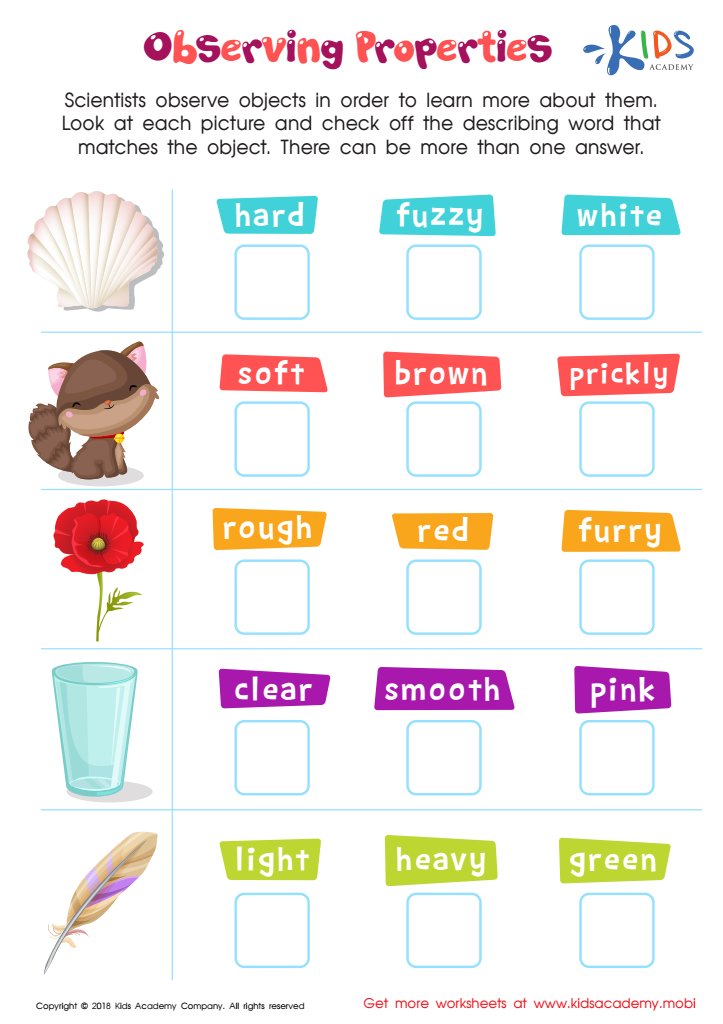
Observing Properties Worksheet
 Assign to My Students
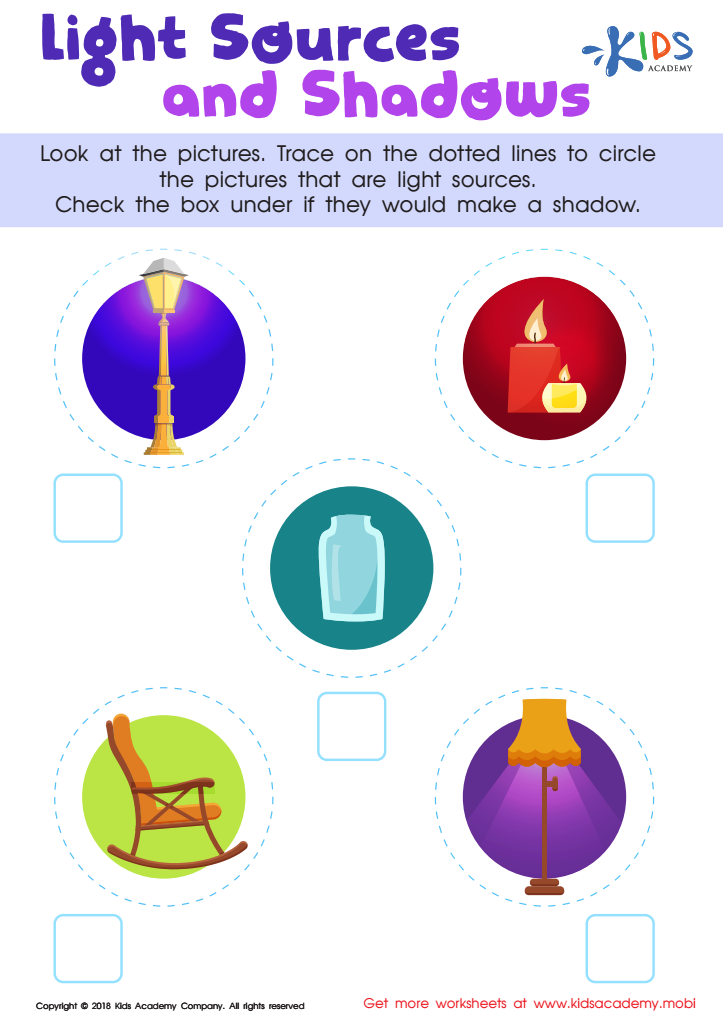
Light Sources and Shadows Worksheet
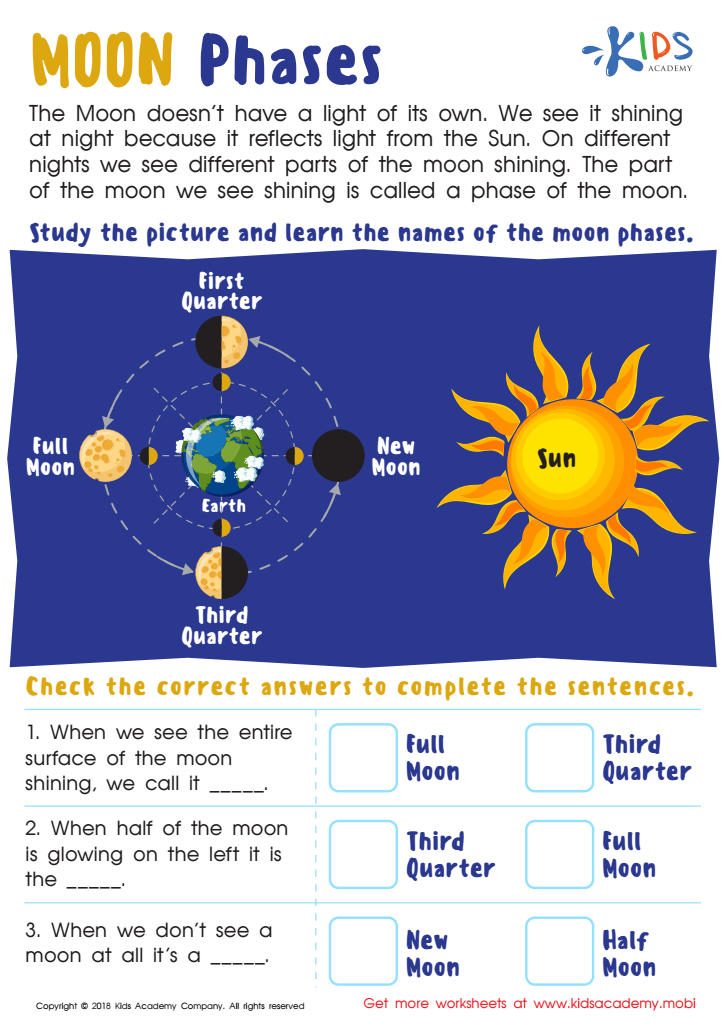
Moon Phases Worksheet
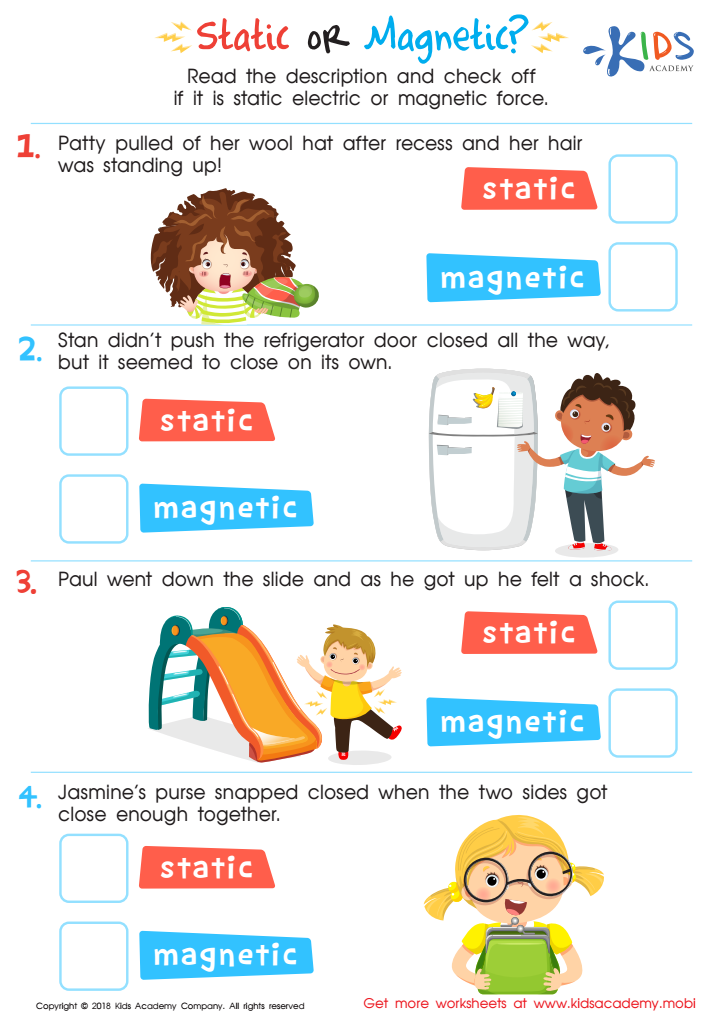
Static or Magnetic Printable Worksheet






Observational skills in physical science are crucial for children aged 3-8 as they lay the foundation for critical thinking and problem-solving abilities. At this early stage, effective observation fosters curiosity and encourages children to explore their environment, allowing them to ask questions and seek answers through experimentation. This exploration promotes a deeper understanding of basic scientific concepts such as matter, energy, and natural phenomena.
Additionally, developing observational skills helps children learn to notice patterns and changes in their surroundings, enhancing their cognitive development. It also teaches them to collect and analyze information, skills which are vital not only in science but across all subjects. As children observe the world around them, they are also improving their language skills through the articulation of their findings and experiences.
Moreover, engaging young learners with hands-on activities encourages collaborative learning. It allows for dynamic interaction among students, fostering social skills and teamwork. Parents and teachers play a crucial role in nurturing these skills through structured play, guided activities, and positive reinforcement. In turn, this investment in observational skills can lead to a lifelong love for learning and a greater appreciation for the sciences as children grow.







