Categorization skills Plants and Animals Worksheets for Ages 3-8
5 filtered results
-
From - To
Help children soar in their understanding of nature with our "Categorization Skills: Plants and Animals Worksheets" tailored for ages 3 to 8. These engaging, printable activities are designed to enhance kids' abilities to distinguish between plants and animals while boosting critical thinking and observational skills. Featuring colorful images, fun puzzles, and interactive tasks, our worksheets make learning both fun and educational. Perfect for early learners, these resources offer the foundation needed for future science education. Build essential categorization skills today with Kids Academy and spark a lifelong curiosity about the natural world in your young explorers.
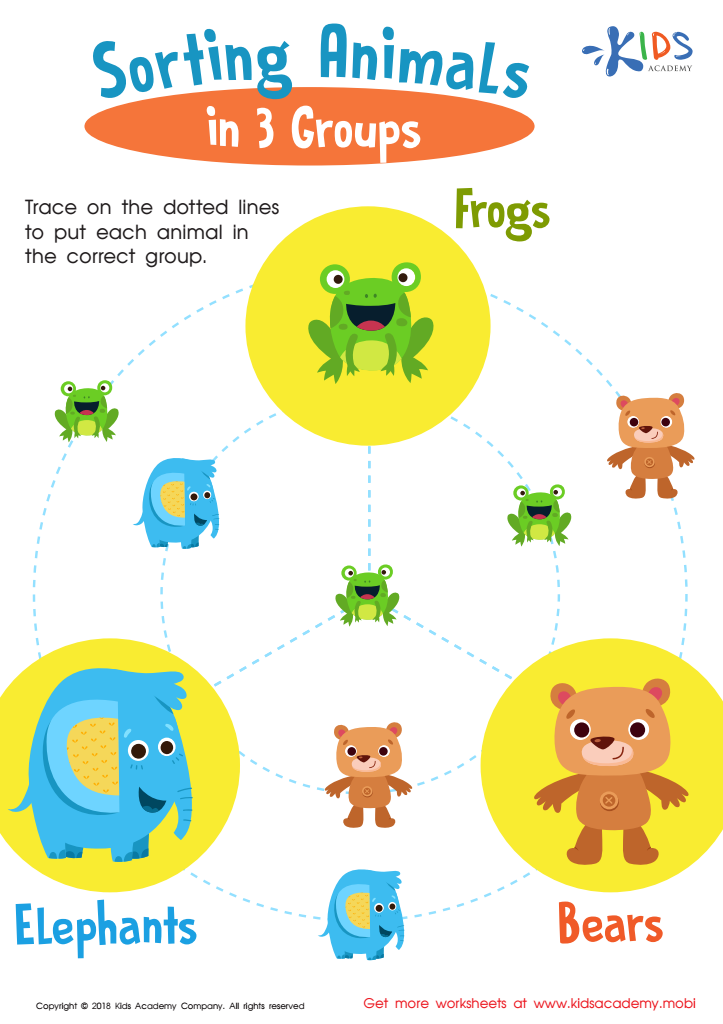
Sorting Animals in 3 Groups Worksheet
 Assign to My Students

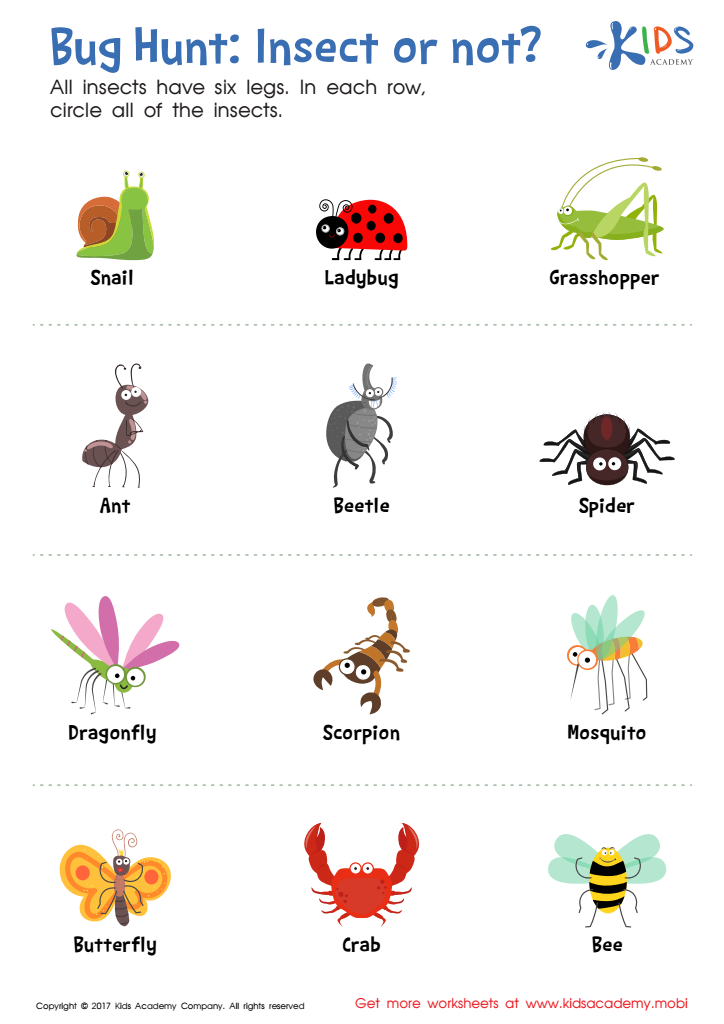
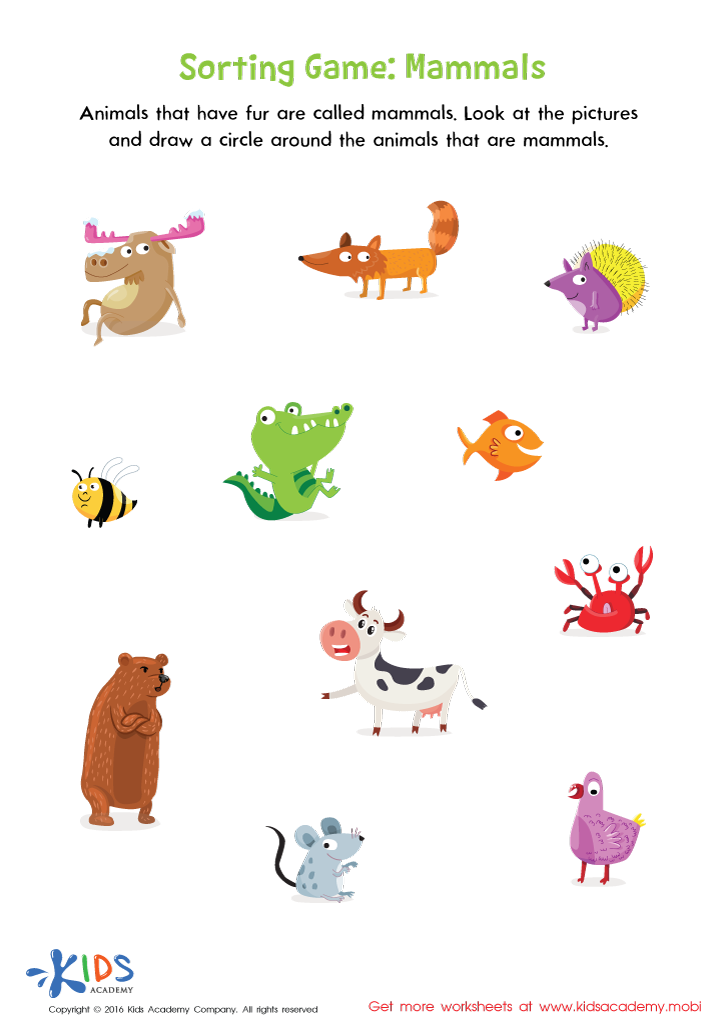
Mammals Sorting Worksheet
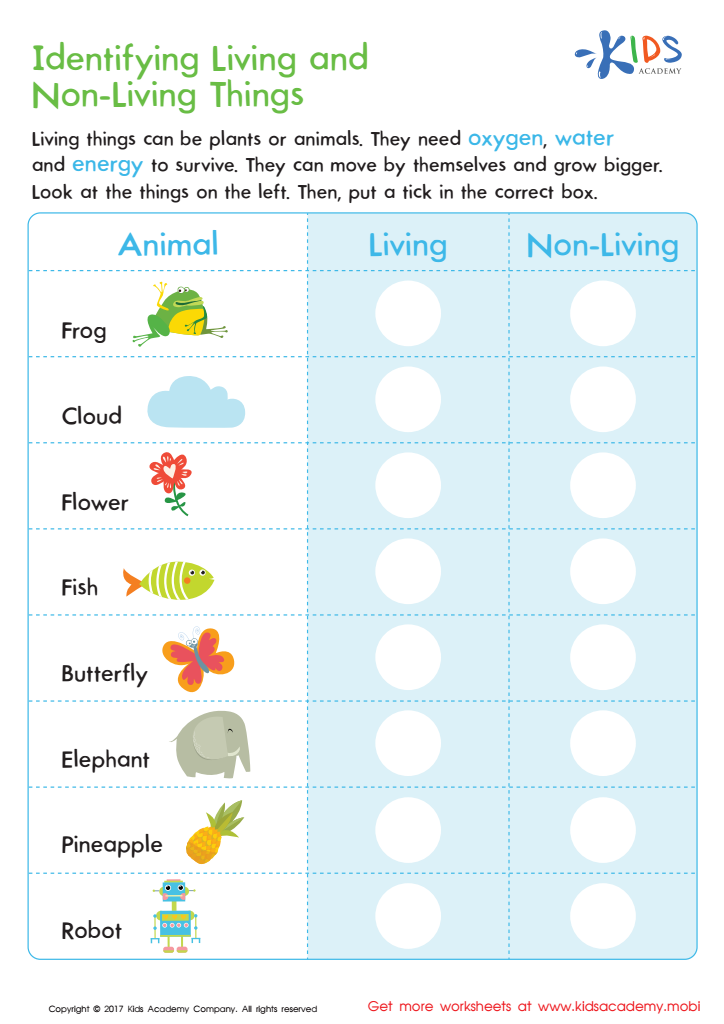
Identifying Living or Non–living Worksheet
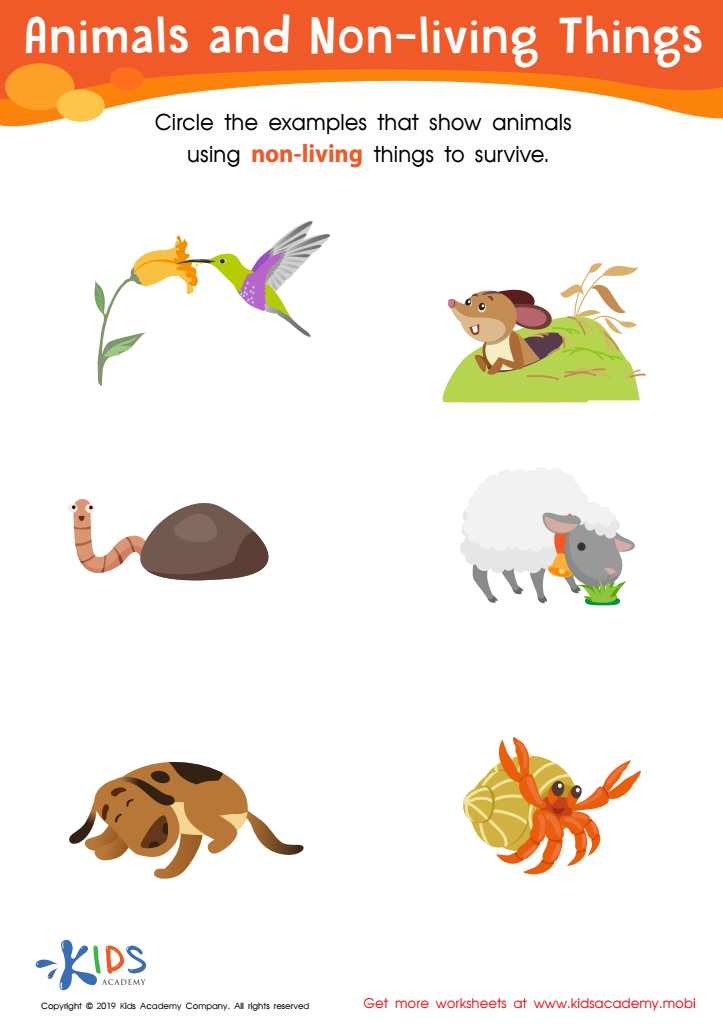
Animals and Non-Living Things Worksheet








Categorization skills are foundational cognitive abilities that enable children to organize and make sense of the diverse world around them. For ages 3 to 8, honing these skills, particularly with plants and animals, is crucial for several reasons.
First, categorizing plants and animals fosters logical thinking and critical reasoning. By observing similarities and differences, children learn to group objects and understand relationships, which are fundamental aspects of scientific inquiry and problem-solving. This early exposure to classification helps in building a framework for future learning in subjects like biology and environmental science.
Second, exploring plants and animals nurtures curiosity and a love for nature. When children learn to categorize different species, they engage more deeply with their surroundings, which can instill a lifelong appreciation and respect for the environment. This experiential learning often sparks questions and exploration that extend beyond the classroom.
Additionally, such categorization activities support language development. Children expand their vocabulary as they learn new names and terms related to various species, enhancing their linguistic and communication skills. Discussions and storytelling about different creatures and plants also stimulate imagination and creative thinking.
Overall, developing categorization skills through the study of plants and animals lays a comprehensive groundwork for intellectual and emotional growth, creativity, and a meaningful connection to the natural world.