Critical Thinking Community Worksheets for Ages 3-8
6 filtered results
-
From - To
Introducing our Critical Thinking Community Worksheets, expertly designed for young learners ages 3-8. These engaging activities help children develop essential critical thinking skills through interactive scenarios that explore their community. By tackling problems and discovering solutions, kids enhance their cognitive abilities while learning about social dynamics and their environment. Perfect for fostering curiosity and building a strong cognitive foundation, our worksheets blend fun with educational rigor. Parents and educators alike will find these resources invaluable tools to support the growth of thoughtful, reflective, and capable young minds, preparing them for more complex problem-solving in the future. Discover the potential within every child with our enriching worksheets!
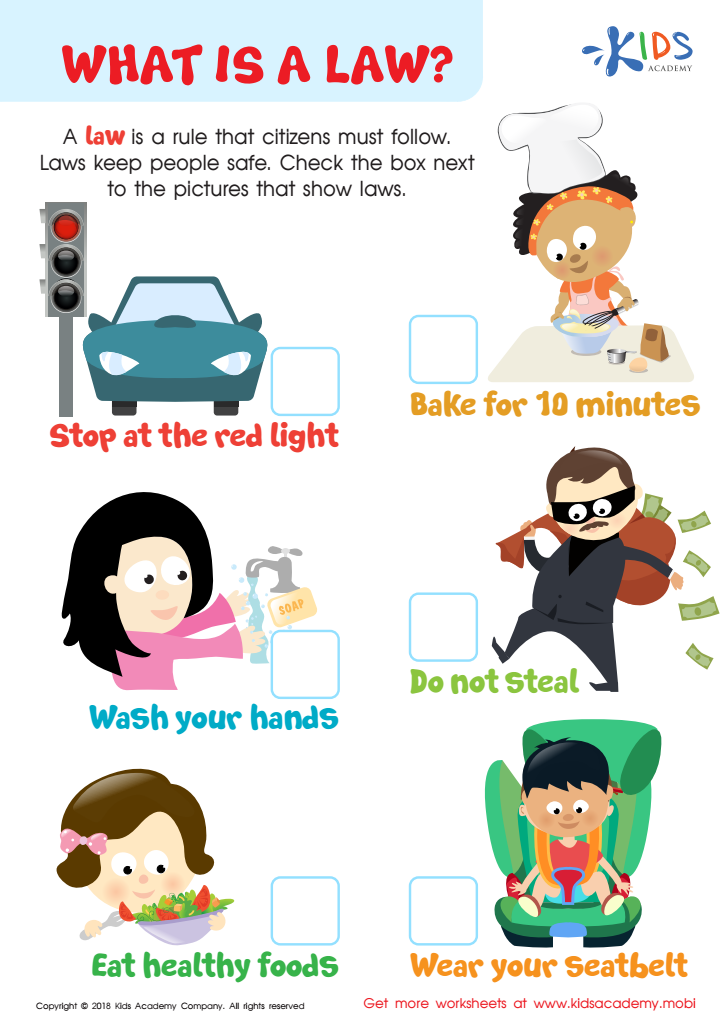
What is a Law? Worksheet
 Assign to My Students
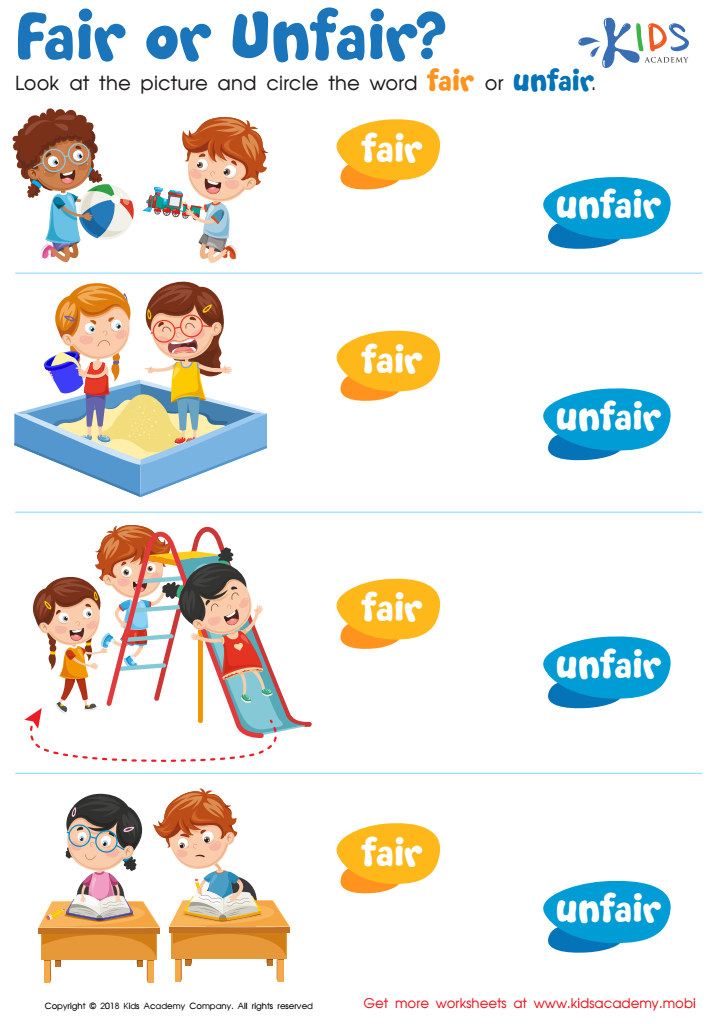
Fair or Unfair Worksheet

What Do Teachers Need Worksheet

Traditional Music Worksheet
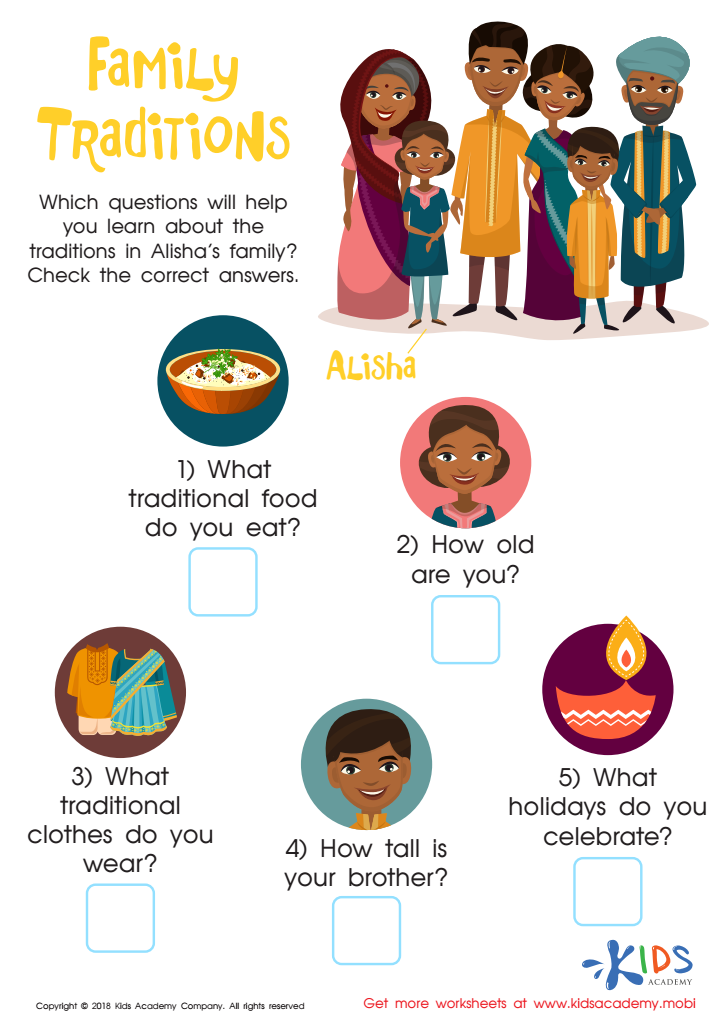
Family Traditions Worksheet
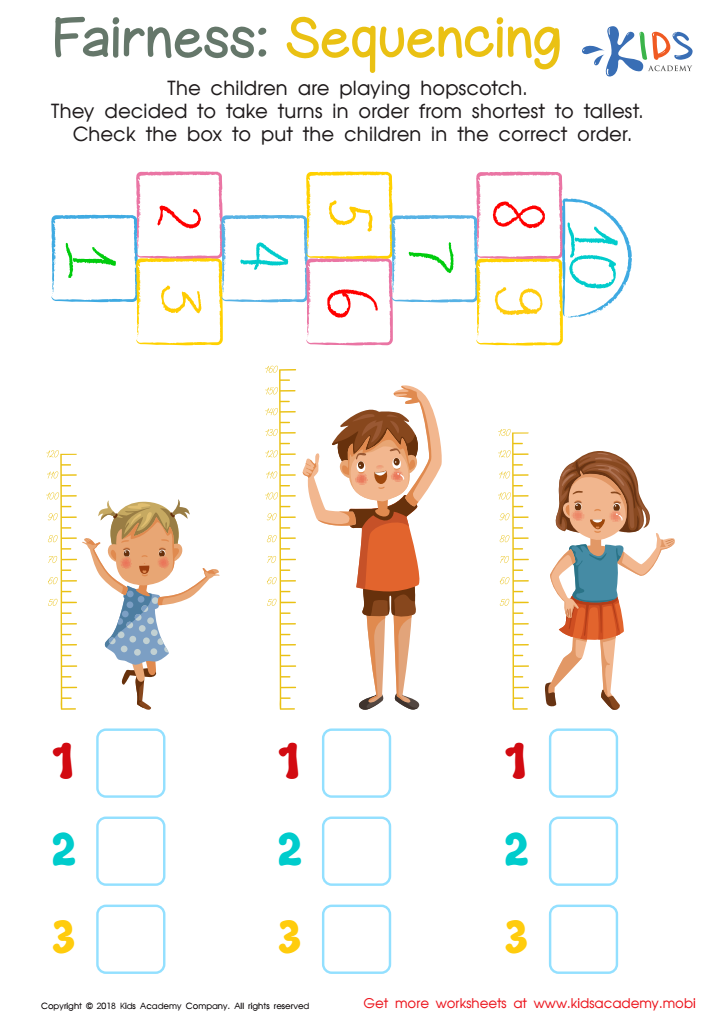
Fairness: Sequencing Worksheet








In today's fast-paced and information-rich world, fostering critical thinking skills from a young age is essential, which is why a Critical Thinking Community for ages 3-8 is so valuable. Parents and teachers should care about this initiative as it lays a strong foundation for lifelong learning and problem-solving abilities.
For young children, critical thinking involves skills such as observation, listening, questioning, and reasoning. These are fundamental not only for academic success but also for everyday decision-making and social interactions. Engaging children in a critical thinking community encourages curiosity and active engagement with their environment. When children learn to ask questions, identify patterns, and think creatively, they become better equipped to understand the world around them.
Moreover, fostering these skills early on supports emotional and social development. Kids learn to see things from different perspectives, enhancing empathy and cooperation. A structured environment where children can practice thinking critically also prepares them for more complex and abstract thinking required in later stages of education.
In essence, by prioritizing critical thinking from ages 3-8, parents and teachers empower children with essential tools for academic growth, personal development, and societal contribution. Investing time and resources in such a community is investing in a brighter, more mindful future for our children.