Shape Recognition Community Worksheets for Ages 3-8
4 filtered results
-
From - To
Our Shape Recognition Community Worksheets are designed for children aged 3-8, blending early learning with fun and engaging activities. Perfect for young minds, these printables enhance shape identification skills amid familiar community scenes. Children will enjoy recognizing and coloring various shapes, fostering critical thinking and fine motor development. Crafted by education experts, each worksheet supports foundational math and geometry concepts, making learning enjoyable. Ideal for parents, teachers, and caregivers, our resources promote interactive learning and help children connect shapes to the world around them. Explore our worksheets to give your child a head start in shape recognition!
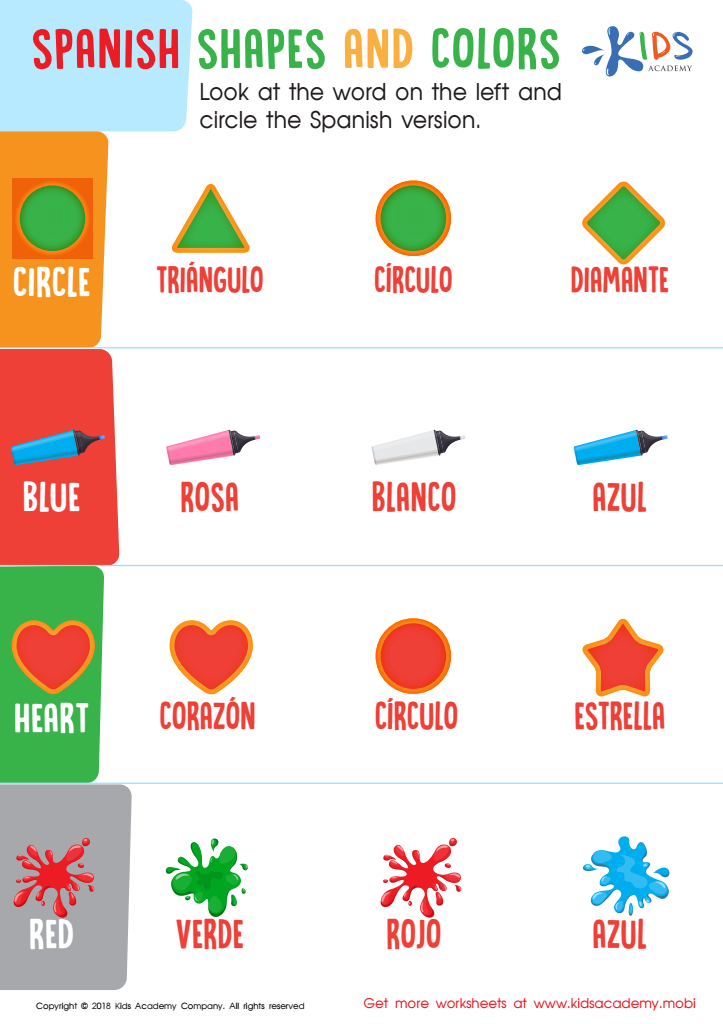
Spanish Shapes and Colors Worksheet
 Assign to My Students
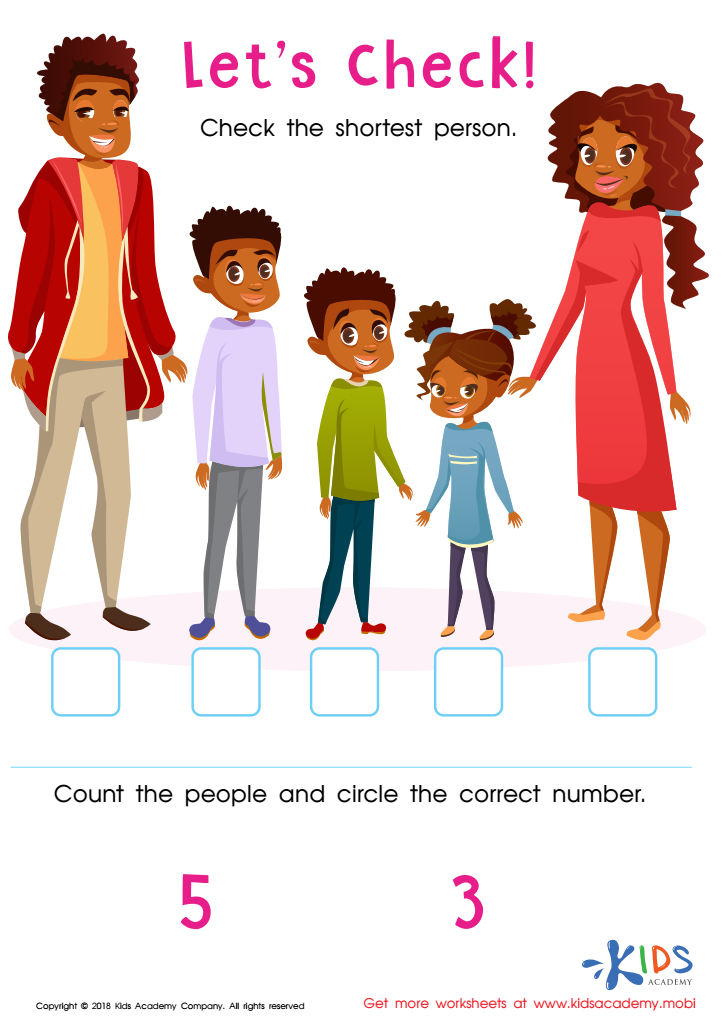
Let's Check! Assessment Worksheet
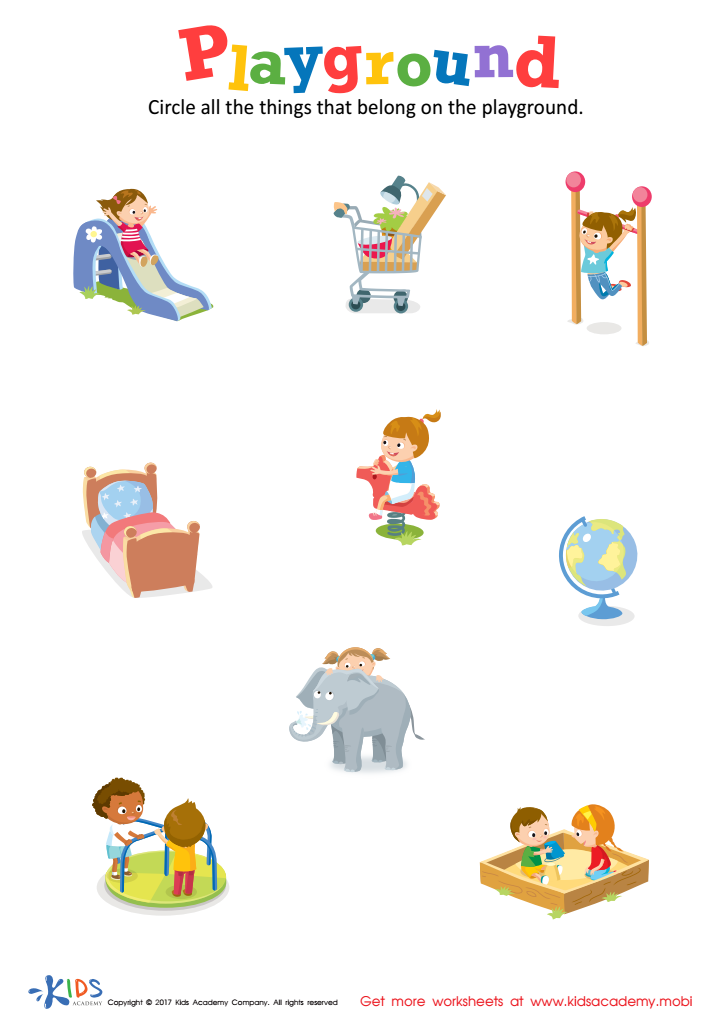
Playground Worksheet
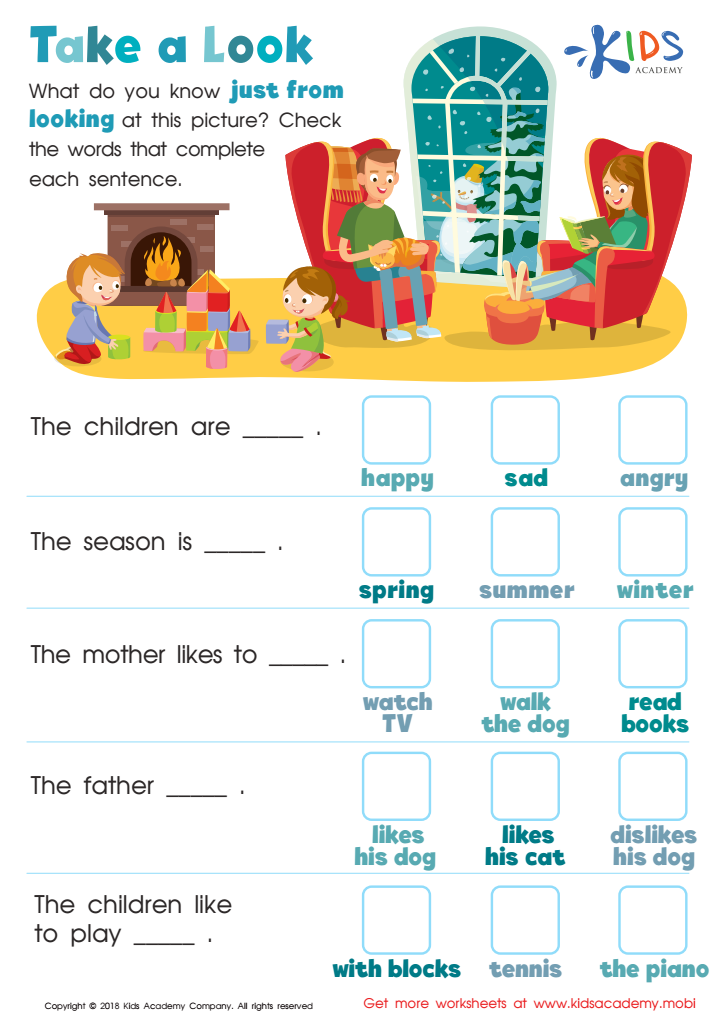
Take a Look - Part 1 Worksheet








Parents and teachers should prioritize participation in a Shape Recognition Community for children ages 3-8 because it fosters essential cognitive development and critical early learning skills. Shape recognition is a foundational aspect of early mathematics and literacy, paving the way for understanding more complex concepts. By engaging in activities within a supportive community, children learn to identify, categorize, and differentiate shapes, which enhances their spatial reasoning and problem-solving abilities.
Additionally, interacting within a community setting encourages social development and improves communication skills. Children can share observations, collaborate on problem-solving tasks, and learn from peers, which boosts confidence and nurtures a sense of belonging. For parents and teachers, involvement in such a community provides valuable insights into developmental milestones, ensuring that each child receives tailored guidance that meets their unique needs.
Educational resources and activities featured within the community often blend learning with play, ensuring that children remain engaged and motivated. These activities help develop fine motor skills through hands-on manipulation of shapes, crucial for tasks like writing. Overall, active participation enhances the learning experience and builds a strong educational foundation that benefits children as they progress in school and beyond.








