Event sequencing Social Studies Worksheets for Ages 3-8
3 filtered results
-
From - To
Discover our engaging Event Sequencing Social Studies Worksheets, specially designed for children aged 3-8. These interactive resources help young learners develop essential skills in understanding the order of events, improving logical reasoning, and enhancing vocabulary. From daily routines to historical narratives, our worksheets provide colorful visuals and relatable scenarios that captivate children's attention. With easy-to-follow instructions and fun activities, these worksheets support classroom learning while encouraging independent exploration at home. Perfect for educators and parents alike, our event sequencing worksheets foster critical thinking and help lay a strong foundation in social studies concepts. Start your child's learning journey today!
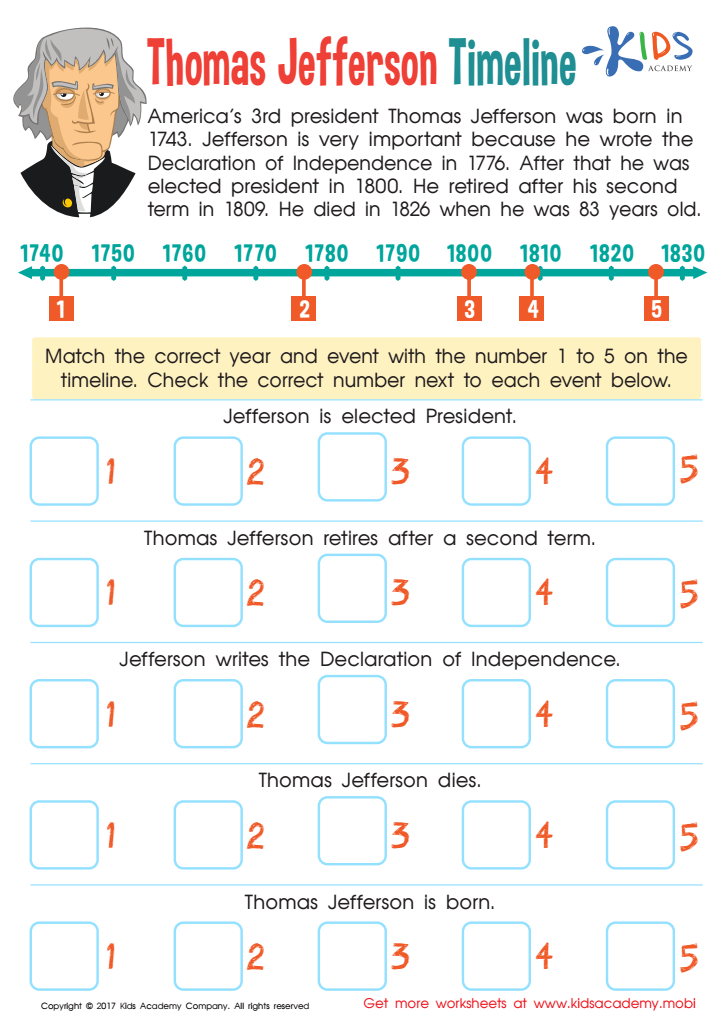
Thomas Jefferson Timeline Worksheet
 Assign to My Students
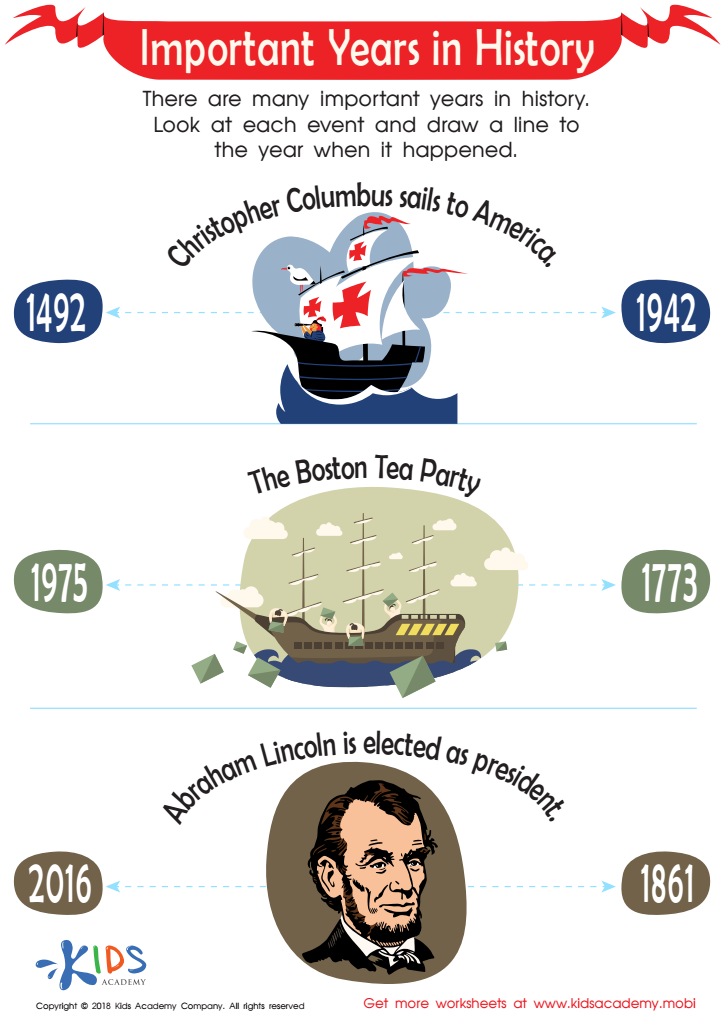
Important Years in History Worksheet
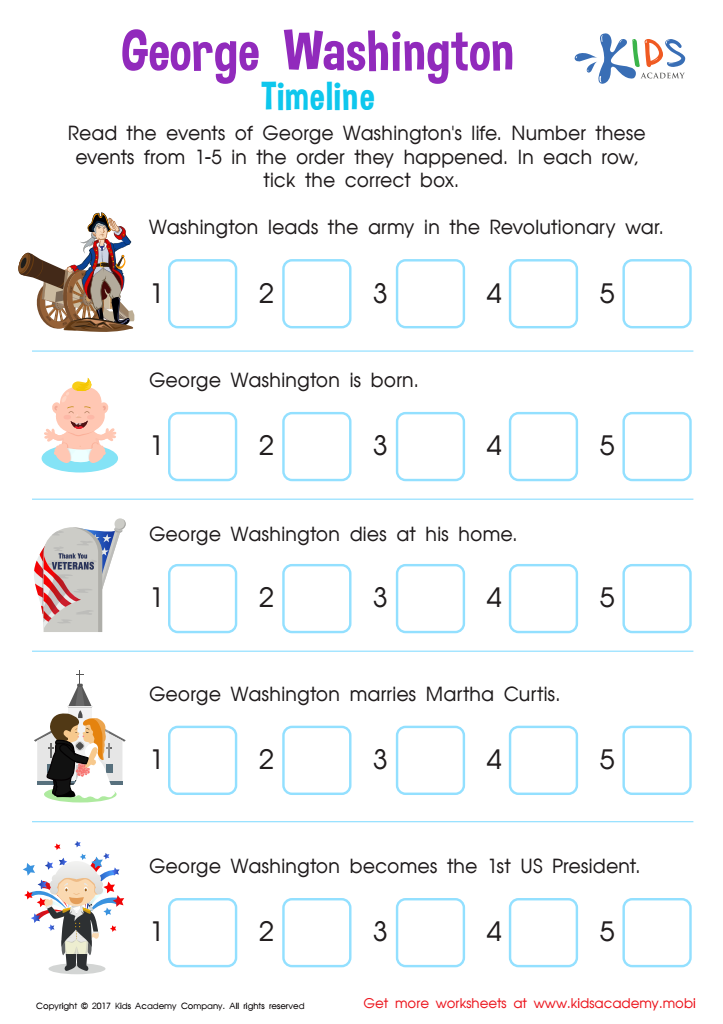
George Washington Timeline Worksheet







Event sequencing is a crucial cognitive skill that young children, aged 3-8, develop during the early years, significantly influencing their ability to understand social studies concepts. Parents and teachers should emphasize this skill as it helps children comprehend the chronological order of events and foster critical thinking. Understanding sequences enables children to engage with historical narratives and cultural stories meaningfully, laying the groundwork for character development, empathy, and perspective-taking.
When children can accurately sequence events, they enhance their comprehension and retention of social studies content. This ability aids in grasping cause-and-effect relationships, making connections to their own lives, and better understanding civic responsibilities. Additionally, strong sequencing skills support literacy development, as recognizing patterns aids in reading comprehension and storytelling.
Incorporating event sequencing into social studies lessons fosters interactive and engaging learning environments, where children can participate in discussions, group projects, and multimedia activities. Such practices empower students to question, analyze, and synthesize information, preparing them as informed citizens in an increasingly interconnected world. By recognizing the importance of event sequencing in social studies education, parents and educators can cultivate a solid foundation for children’s lifelong learning and understanding of their roles in their communities and the wider society.








