Historical Knowledge Social Studies Worksheets for Ages 3-8 - Page 2
26 filtered results
-
From - To
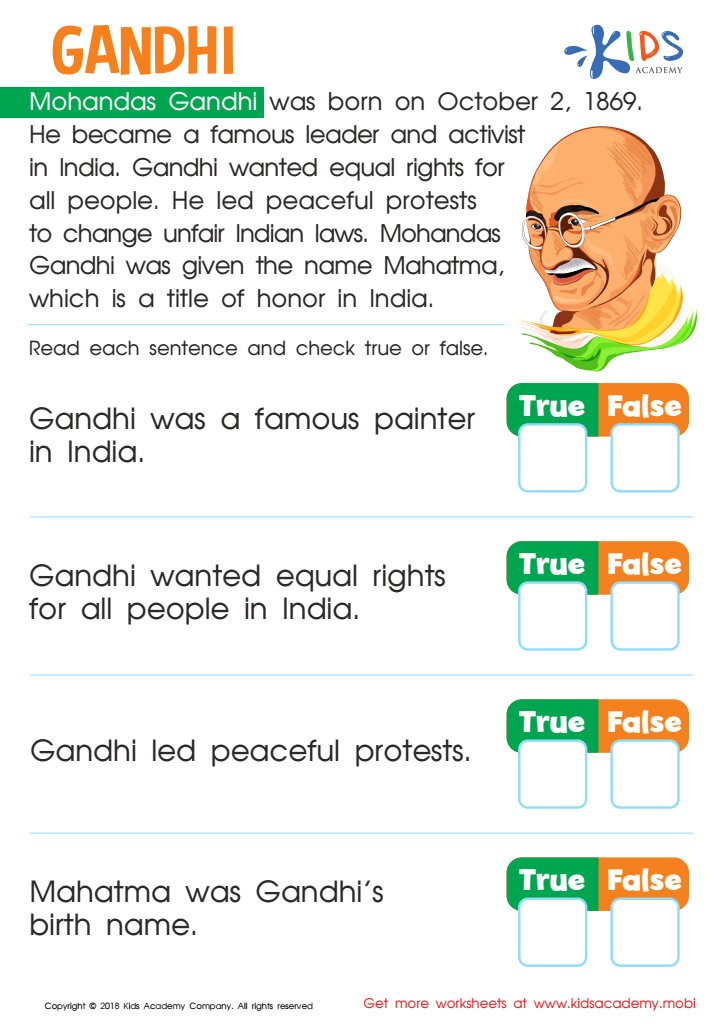
Gandhi Worksheet
 Assign to My Students
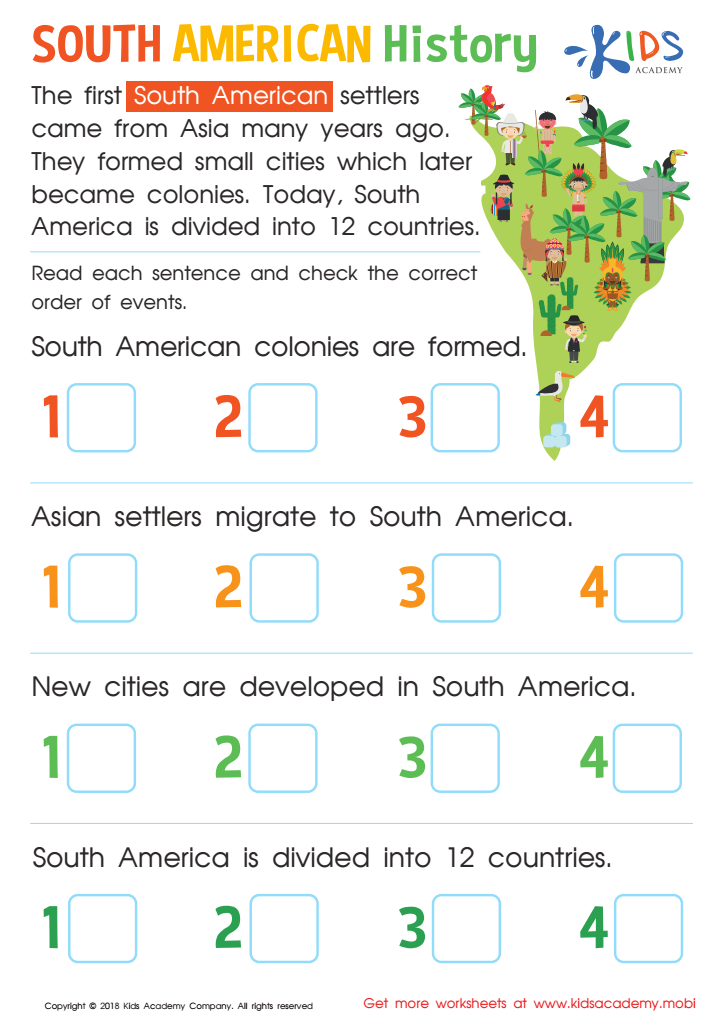
South American History Worksheet








Understanding historical knowledge and social studies from an early age sets a strong foundation for children ages 3 to 8. Firstly, it fosters a sense of identity and belonging. Learning about history and culture helps young children understand where they come from and develop pride in their heritage.
Secondly, it enhances critical thinking skills. Social studies involve investigating past events, understanding different viewpoints, and recognizing cause-and-effect relationships. These skills are important in helping children develop reasoning abilities that are essential in everyday decision-making.
Moreover, it builds empathy. As children learn about diverse cultures and histories, they learn to appreciate differences and develop empathy towards others. This fosters a more inclusive mindset that is crucial in our globalized world.
Additionally, historical knowledge stimulates curiosity and a love for learning. Engaging stories about the past captivate young minds and encourage them to ask questions, fostering a lifelong thirst for knowledge.
Finally, an understanding of history and social studies promotes civic awareness. By knowing about key historical events, figures, and principles like democracy and justice, children become informed, responsible citizens who value their role in the community.
In essence, embedding historical knowledge and social studies in early childhood education enriches intellectual, emotional, and social development.