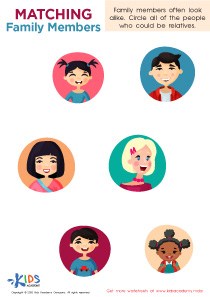
Matching skills Social Studies Worksheets for Ages 3-8
3 filtered results
-
From - To
Discover our engaging "Matching Skills Social Studies Worksheets" tailored for children aged 3-8. These worksheets are designed to enhance early learning by making the study of social studies interactive and fun. Students will develop essential matching skills by pairing images and concepts related to communities, geography, and cultural awareness. With vibrant illustrations and age-appropriate content, these resources support cognitive development while fostering an understanding of the world around them. Ideal for classroom use or at-home learning, our worksheets encourage children to explore social studies through hands-on activities, ensuring a solid foundation for future learning. Promote curiosity and knowledge today!
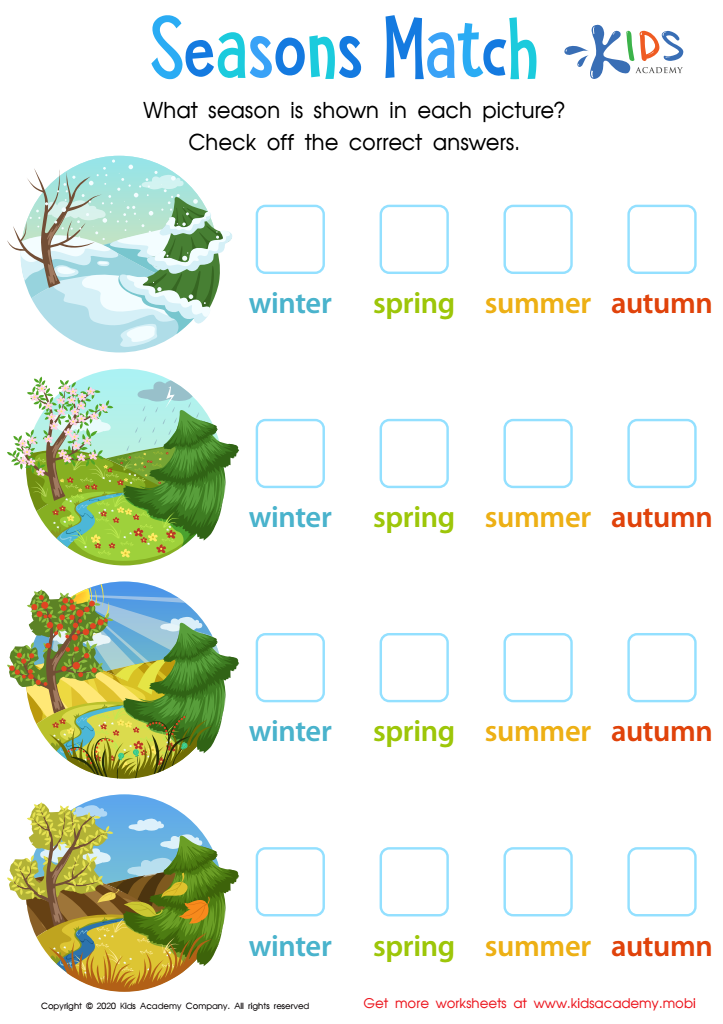
Seasons Match Worksheet
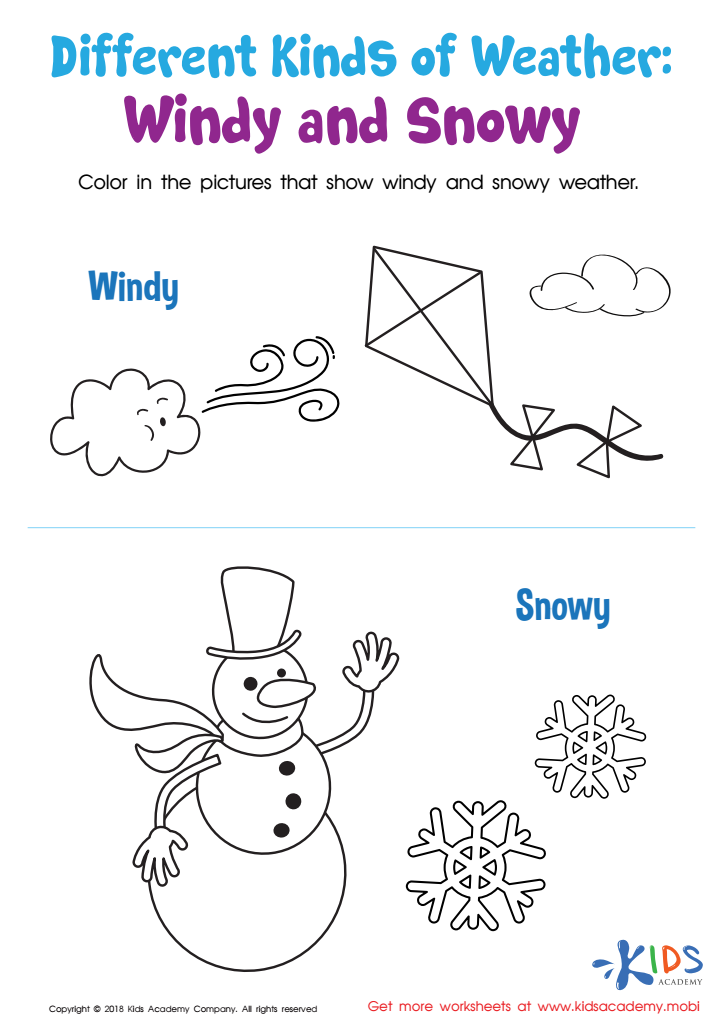
Different Kinds of Weather: Windy and Snowy Worksheet
 Assign to My Students
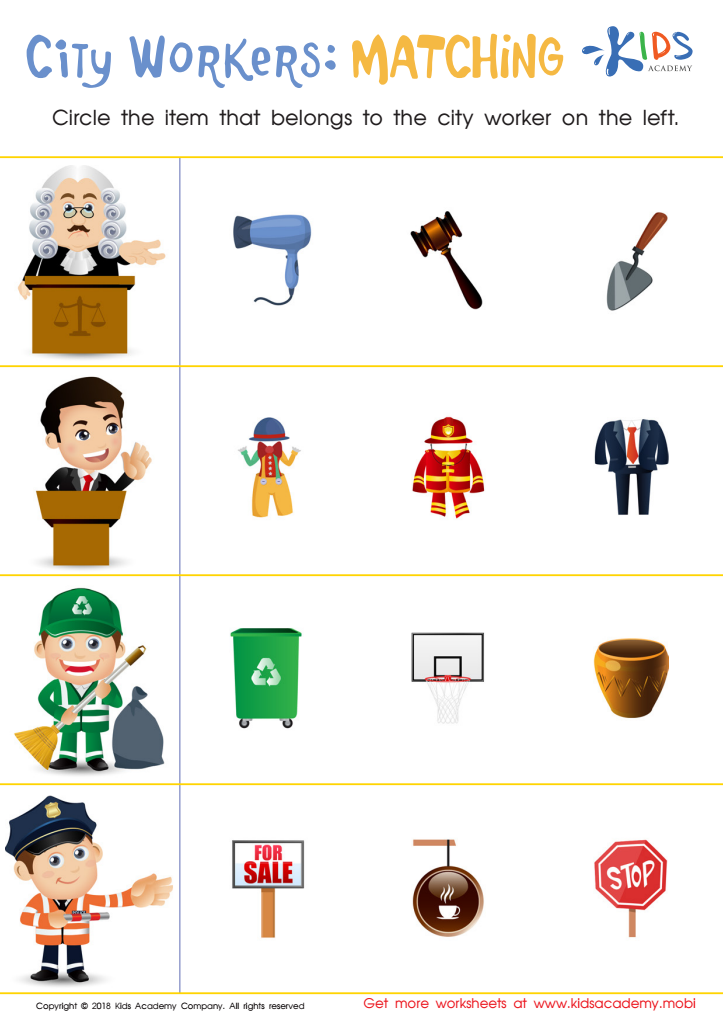
City Workers: Matching Worksheet



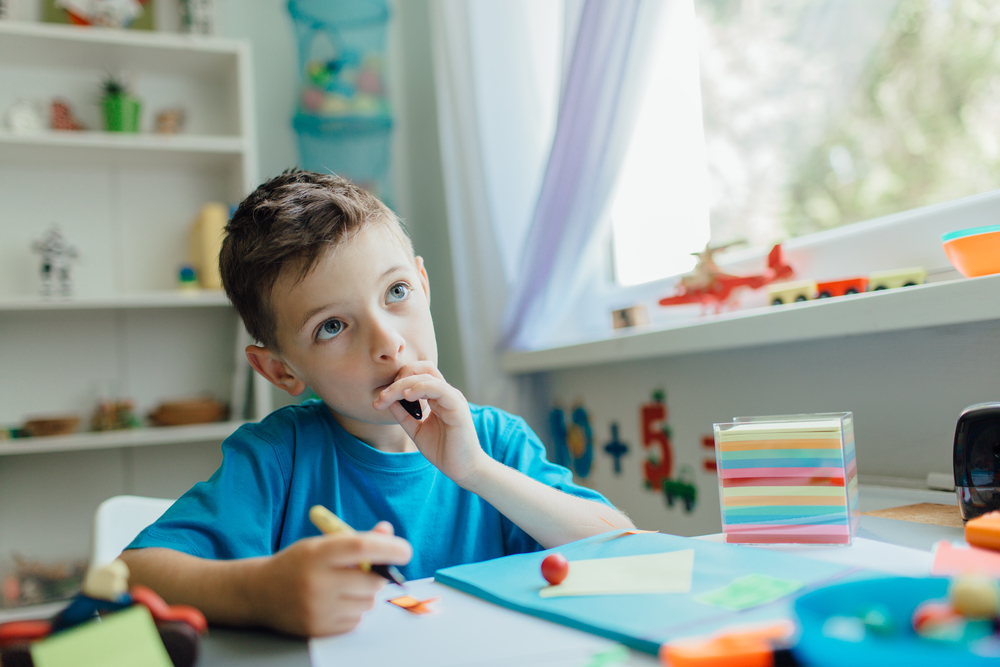




Parents and teachers play a crucial role in fostering the development of matching skills in young children, especially in the context of Social Studies for ages 3-8. Matching skills involve recognizing similarities and differences, which form the foundation for critical thinking and problem-solving later in life. In Social Studies, these skills help children understand the world around them, including concepts such as community, culture, and geography.
Engaging children in matching activities, like pairing pictures with their corresponding meanings or connecting cultural artifacts with their countries, encourages active learning and enhances cognitive development. It promotes curiosity about diverse societies and nurtures empathy, laying the groundwork for global citizenship.
Moreover, teaching matching skills integrates play, which is essential for young learners. Fun matching games can seamlessly blend play with education, making learning naturally engaging.
For parents and teachers, recognizing the significance of this skill is integral to guiding children’s educational journeys. It allows adults to create opportunities for discussion, exploration, and reflection on social concepts, ultimately contributing to more informed, open-minded future adults. By prioritizing matching skills, educators and parents equip children with essential tools to navigate and appreciate the complexities of the world around them.