Understanding citizenship Social Studies Worksheets for Ages 3-8
6 filtered results
-
From - To
Explore our engaging "Understanding Citizenship" Social Studies worksheets designed for children aged 3-8. These printable activities cultivate an early awareness of citizenship, encouraging kids to learn about rights, responsibilities, and community roles. Our thoughtfully crafted worksheets incorporate playful exercises that promote critical thinking, social awareness, and respect for others. Ideal for classroom use or homeschooling, they strengthen foundational skills through interactive lessons about being a responsible citizen. Discover vibrant illustrations, fun challenges, and practical scenarios that stimulate conversations about belonging and participation in society. Empower your child to understand their role in the community with these essential resources for budding learners!
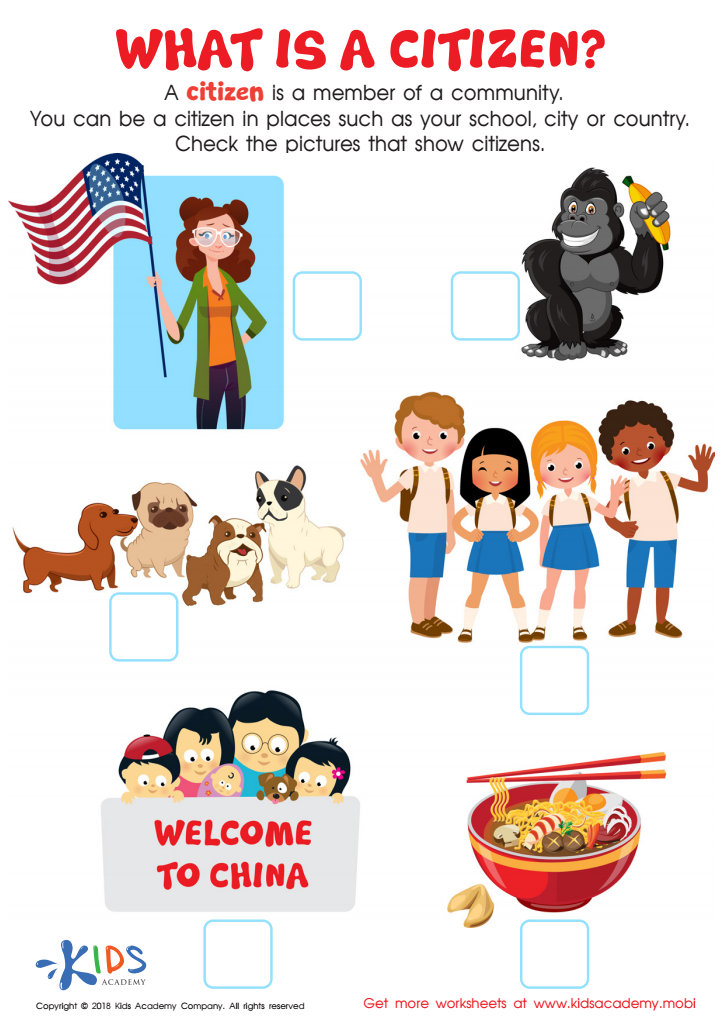
What is a Citizen? Worksheet
 Assign to My Students
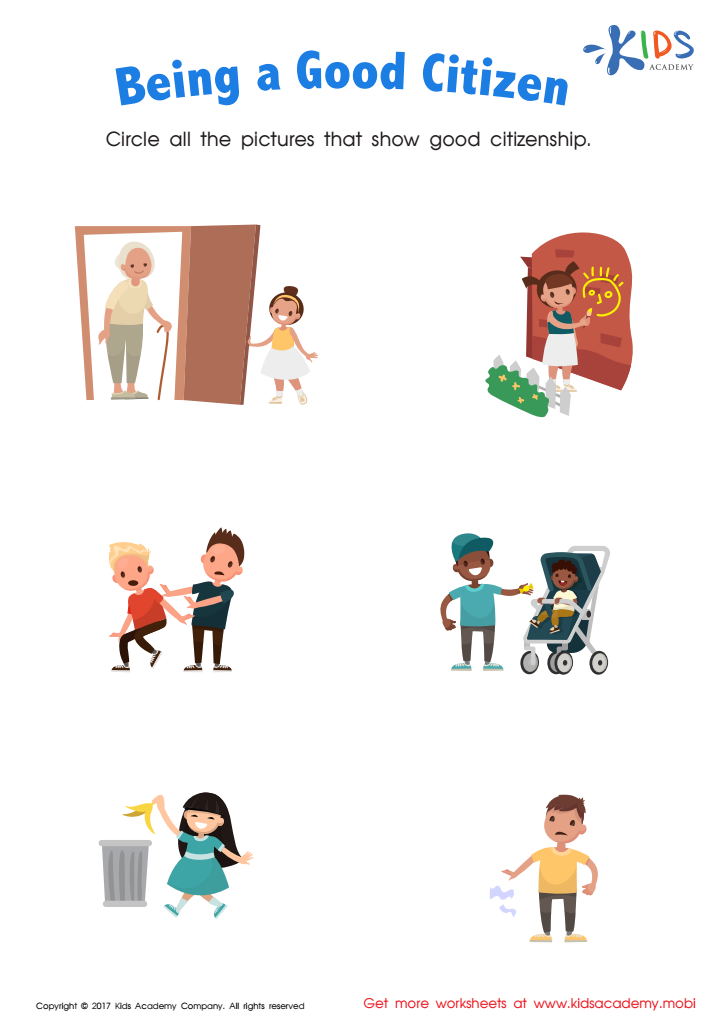
Being a Good Citizen Printable
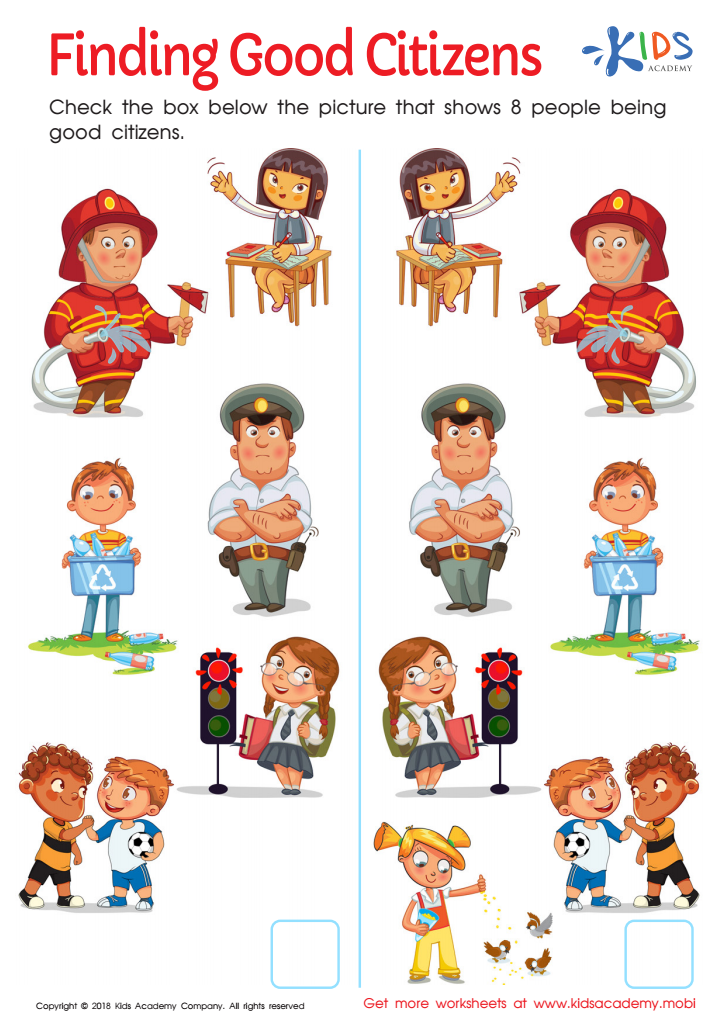
Finding Good Citizens Worksheet
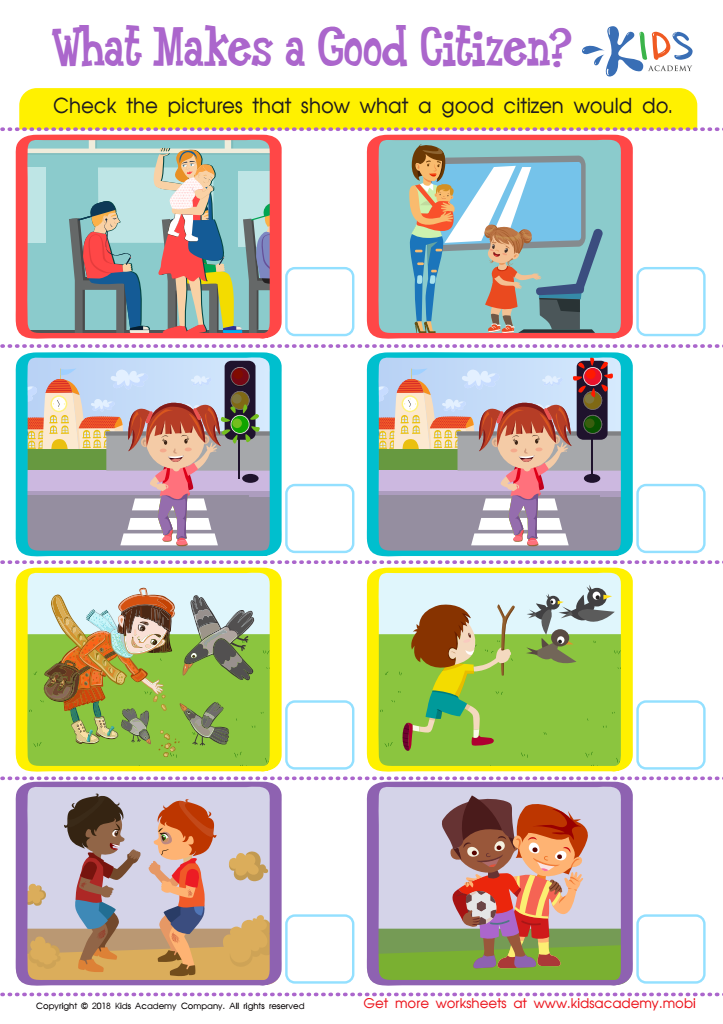
What Makes a Good Citizen? Worksheet
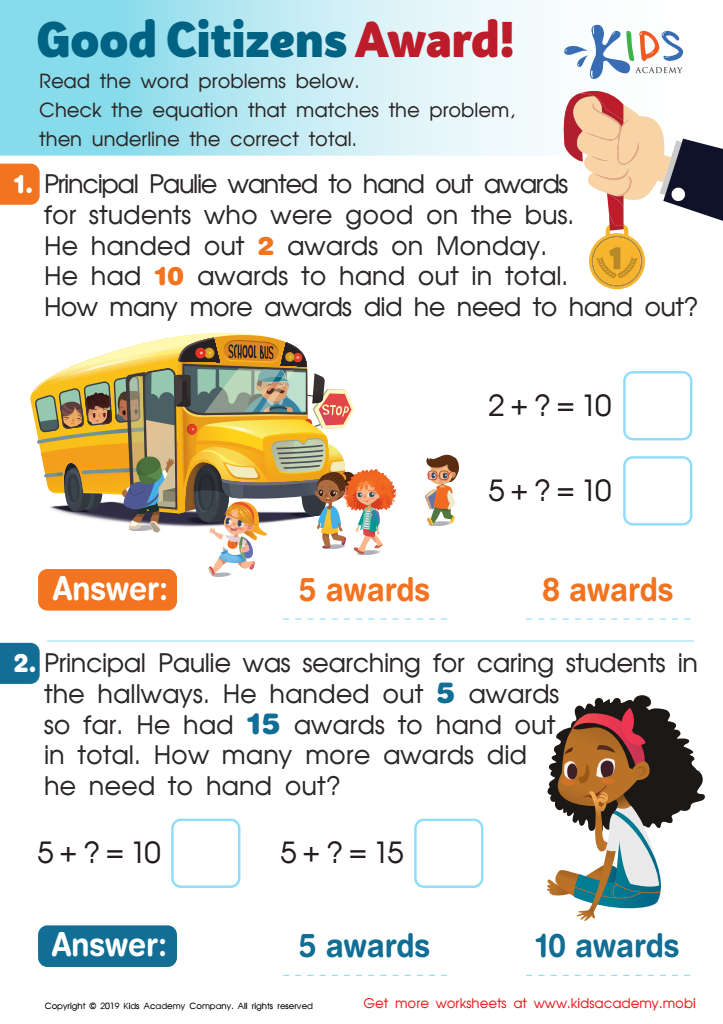
Good Citizens Award! Worksheet
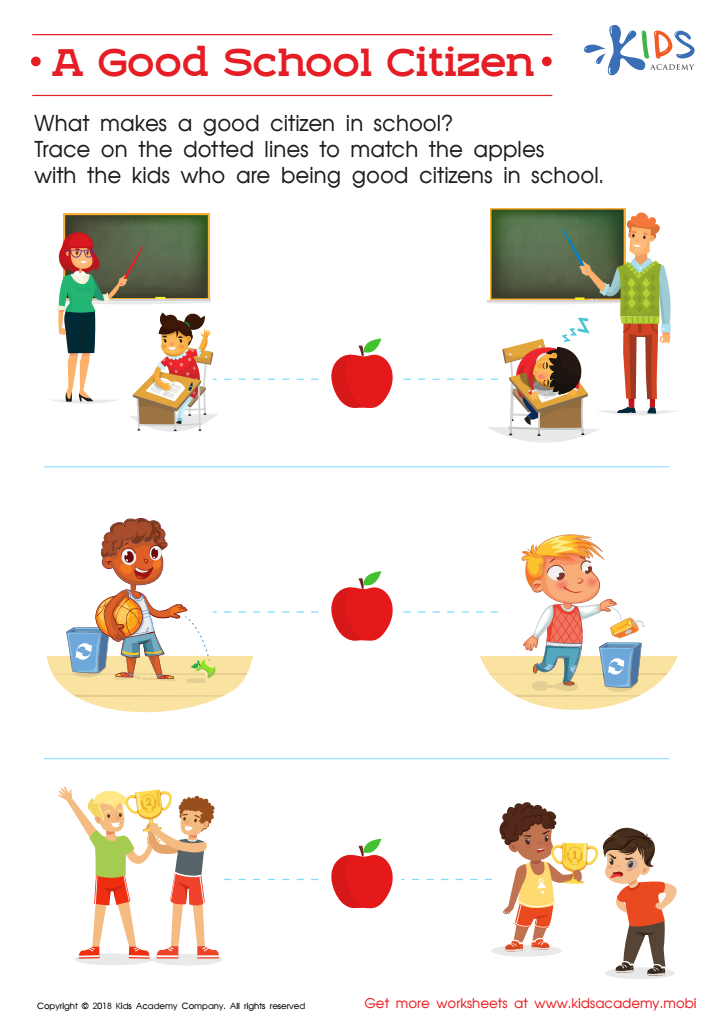
A Good School Citizen Worksheet








Understanding citizenship is crucial for children aged 3-8 as it serves as the foundation for their development as responsible, empathetic, and engaged members of society. At this early stage, children are curious about the world around them, and introducing concepts of citizenship helps them stimulate critical thinking and social skills. By learning about citizenship, children understand their roles, rights, and responsibilities in their communities.
Incorporating social studies into early education fosters a sense of belonging and enables children to appreciate diversity. They begin to recognize and respect differences among people regarding culture, language, and backgrounds, promoting inclusivity. Knowledge of citizenship also cultivates essential skills such as cooperation, problem-solving, and effective communication, which are vital for personal growth and healthy interpersonal relationships.
Moreover, this early exposure lays the groundwork for active participation in civic life as they grow. Educators and parents play a pivotal role in this journey, guiding children through inquiries and activities that ignite their interest in their community, encouraging civic-mindedness from a young age.
By prioritizing citizenship education in the early years, parents and teachers are effectively equipping children with invaluable tools for contributing positively to society throughout their lives.








