Understanding timelines Social Studies Worksheets for Ages 3-8
5 filtered results
-
From - To
Discover our "Understanding Timelines" Social Studies Worksheets, specifically designed for children ages 3 to 8. These engaging resources make it easy for young learners to grasp the concept of timelines, helping them visualize sequences of events and comprehend history in a fun way. With colorful illustrations and interactive activities, children will explore important milestones in their lives and the world around them. Perfect for classroom or home use, our worksheets promote critical thinking and foster a love for learning. Equip your child with essential skills in understanding time and history, paving the way for their future educational success!
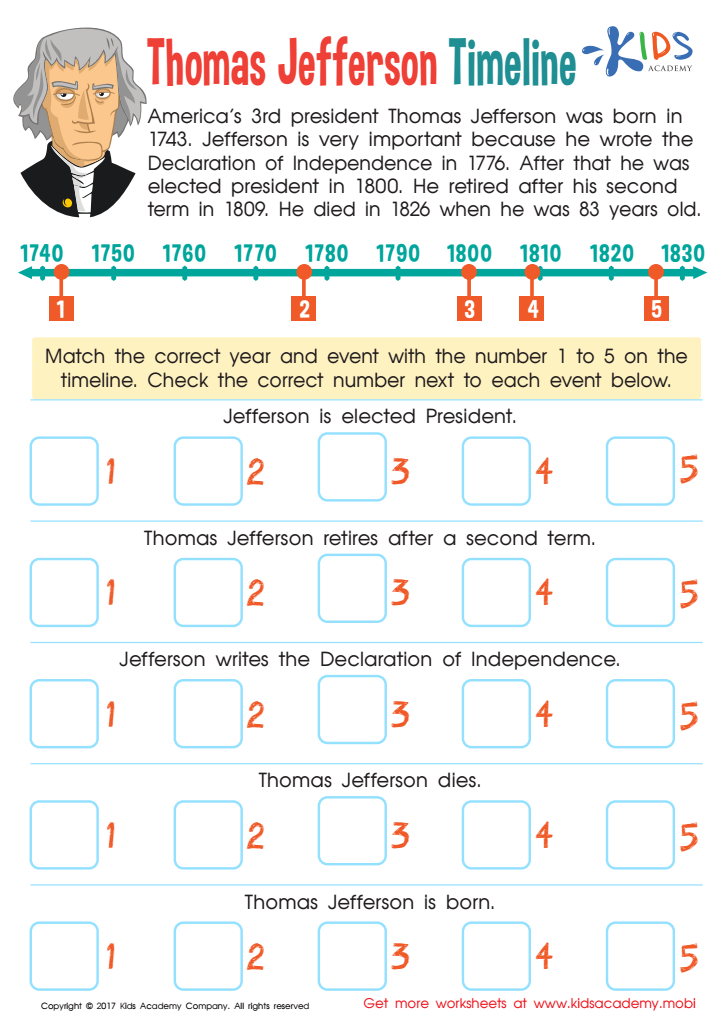
Thomas Jefferson Timeline Worksheet
 Assign to My Students
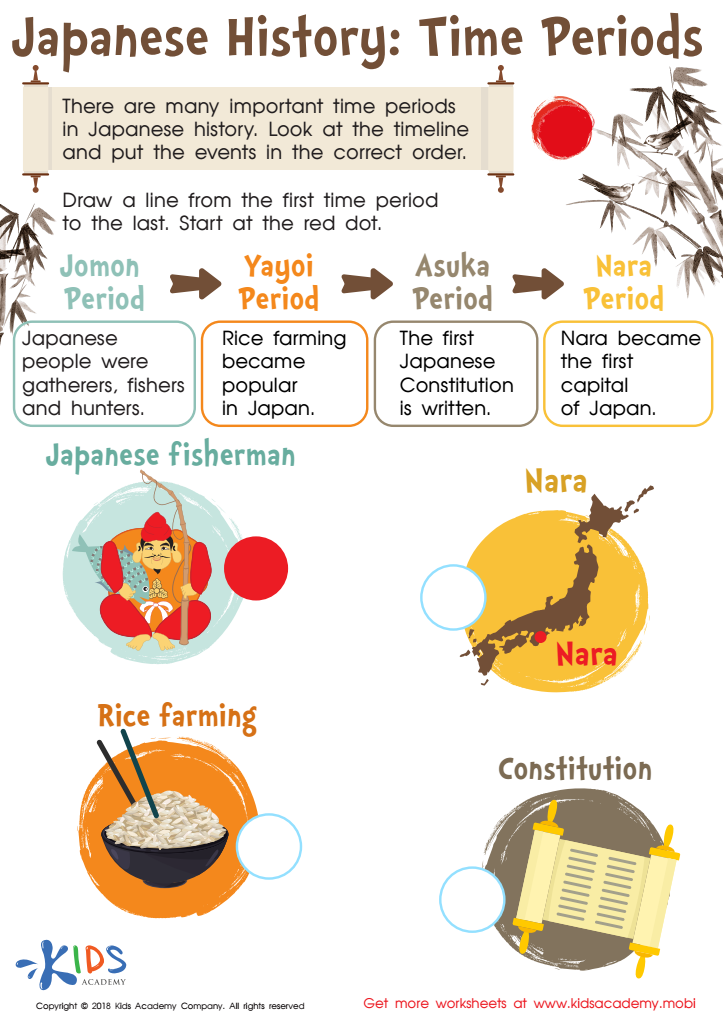
Japanese History: Time Periods Worksheet
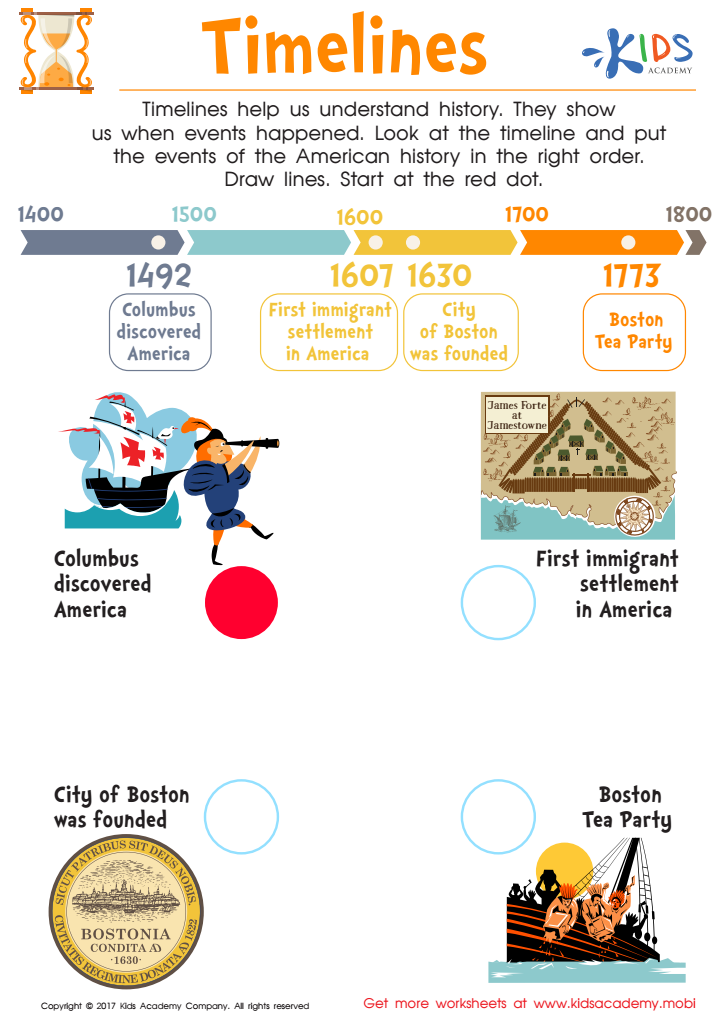
American History Timeline Worksheet
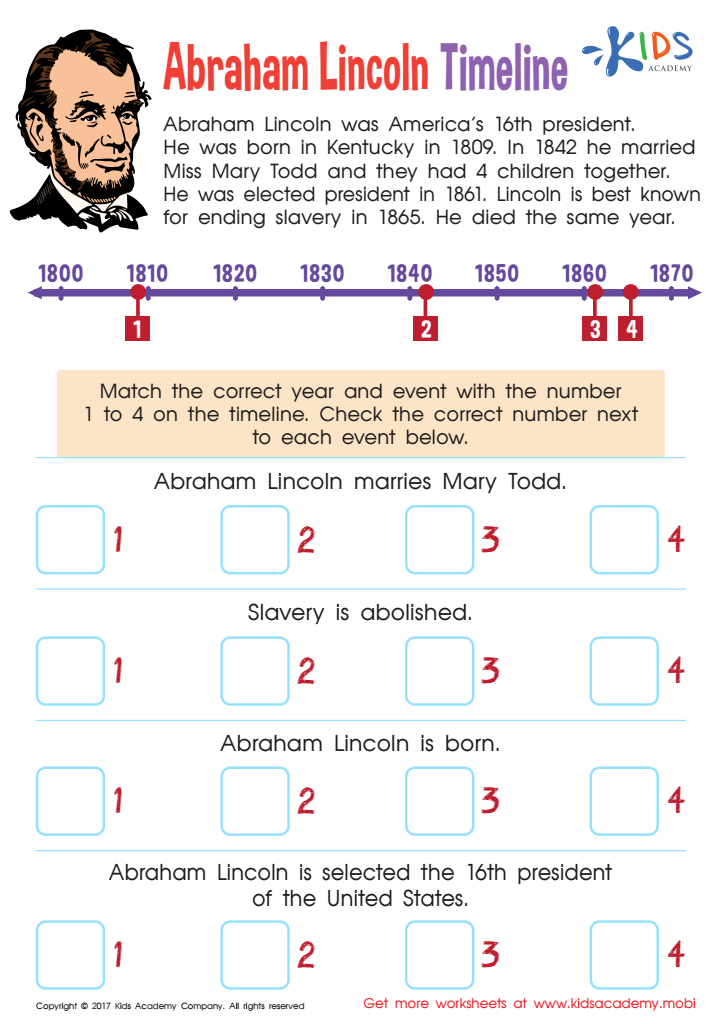
Abraham Lincoln Timeline Worksheet
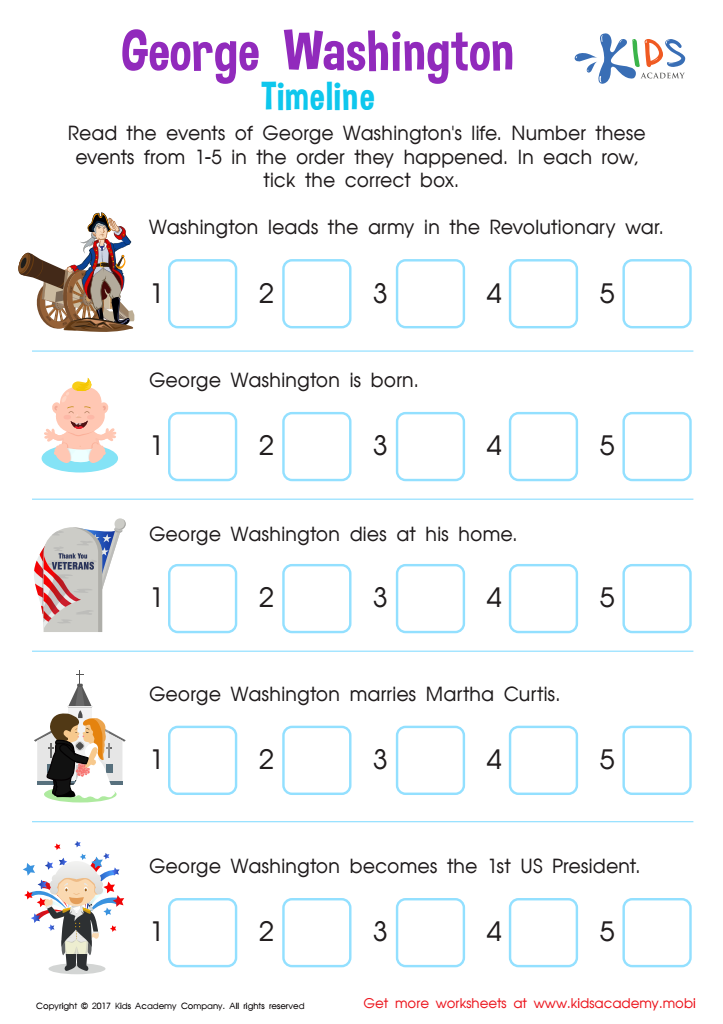
George Washington Timeline Worksheet







Understanding timelines in social studies is crucial for children aged 3-8 as it helps them make sense of the past, present, and future. At this young age, children are naturally curious about the world around them, and introducing them to timelines allows them to grasp the sequence of events and how they relate to their own lives. This foundational skill supports cognitive development, as children learn to organize information chronologically, fostering critical thinking skills.
By understanding timelines, children begin to appreciate history, recognizing that events are linked and impact one another. This comprehension promotes empathy, as they learn about diverse cultures and significant historical figures, contributing to their social and emotional growth.
Moreover, engaging with timelines nurtures literacy skills, as children learn to interpret visuals, symbols, and texts associated with historical events. For parents and teachers, incorporating timelines into lessons can make learning more interactive and relatable, turning abstract concepts into tangible experiences. Ultimately, fostering an understanding of timelines equips children with the tools they need to navigate their world, recognize change over time, and develop a sense of identity within a broader historical context. This foundation will benefit them academically and socially as they grow.