Grammar skills Writing Worksheets for Ages 3-8
5 filtered results
-
From - To
Introducing our Grammar Skills Writing Worksheets for ages 3-8, designed to instill a strong foundation in language and writing. These engaging worksheets make learning fun while helping young learners grasp essential grammar concepts, such as parts of speech, punctuation, and sentence structure. Tailored for early education, our resources are perfect for preschool and early elementary students, promoting interactive learning through colorful illustrations and thoughtful activities. Parents and educators will appreciate how these worksheets enhance vocabulary, critical thinking, and communication skills. Foster a love for writing while developing essential grammar knowledge—visit our website and explore our collection today!
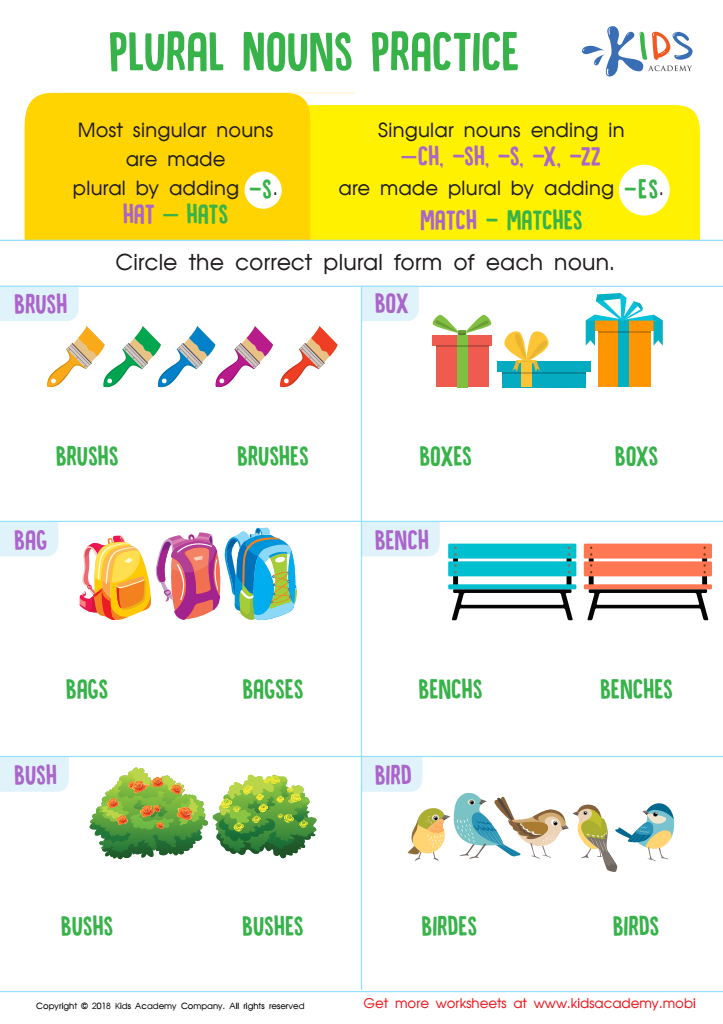
Plural Nouns Practice Worksheet
 Assign to My Students
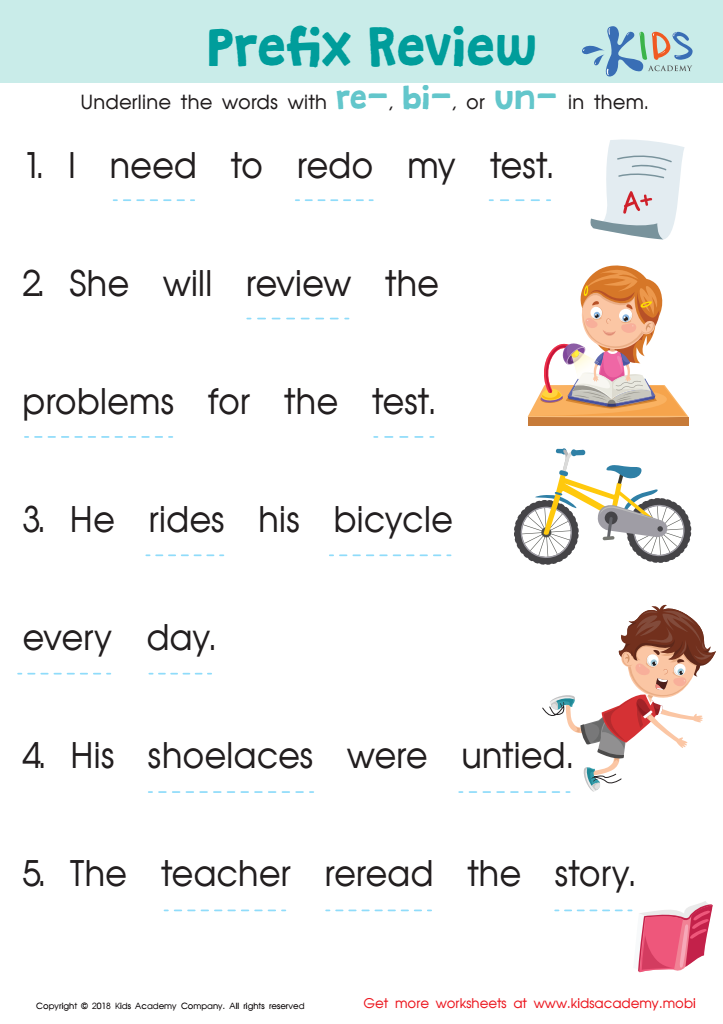
Prefix Review Worksheet
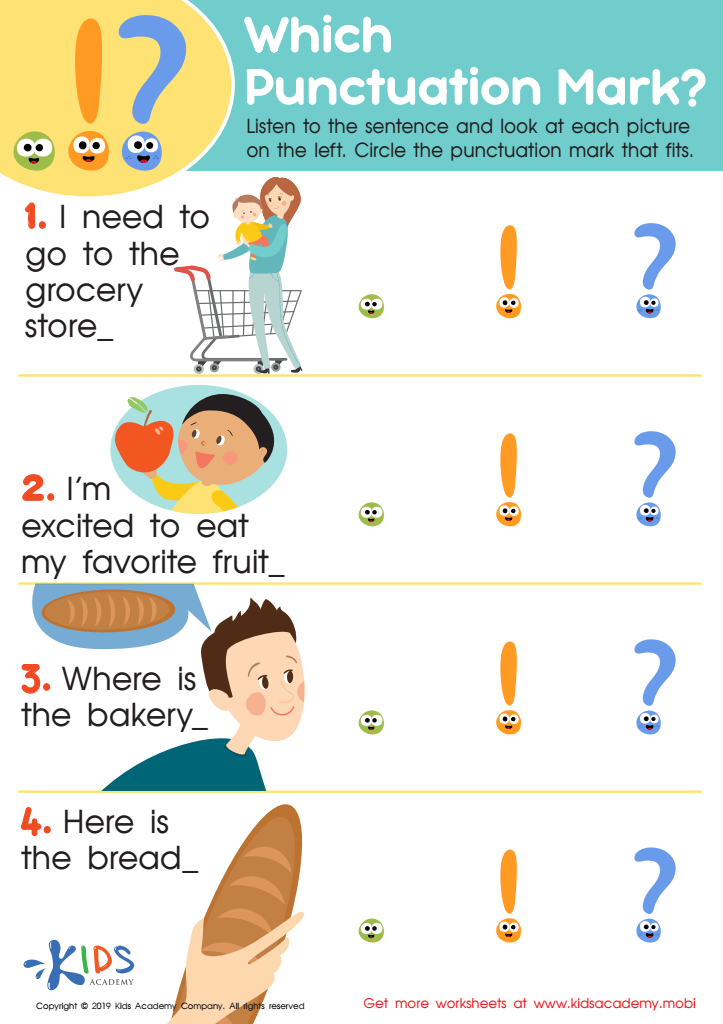
Which Punctuation Mark Worksheet
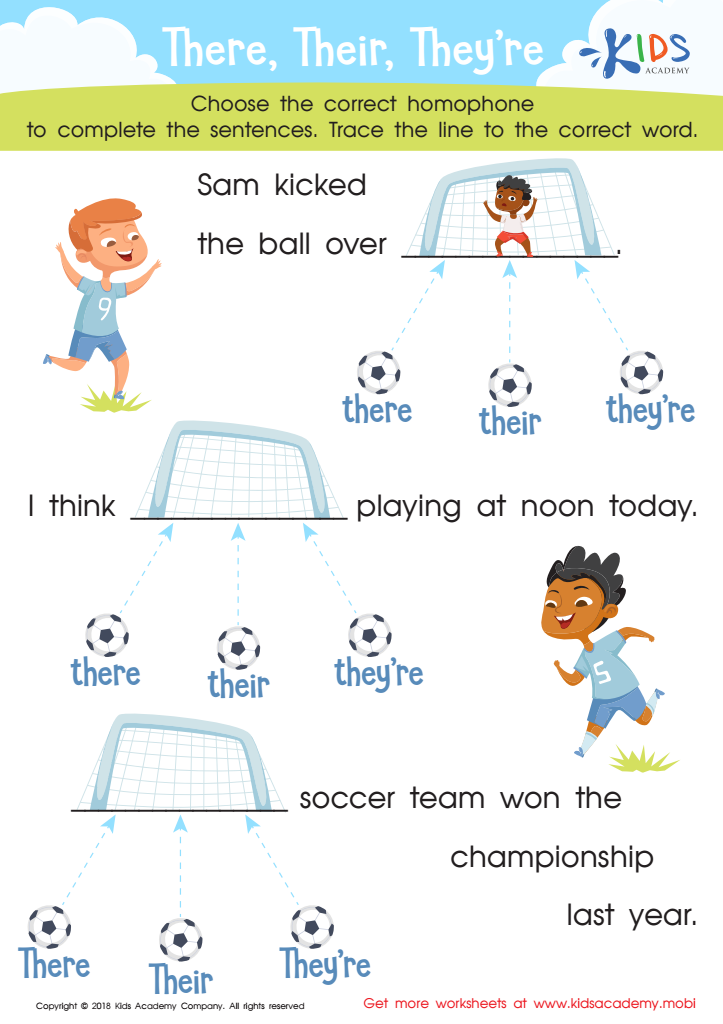
There, Their, They're Worksheet
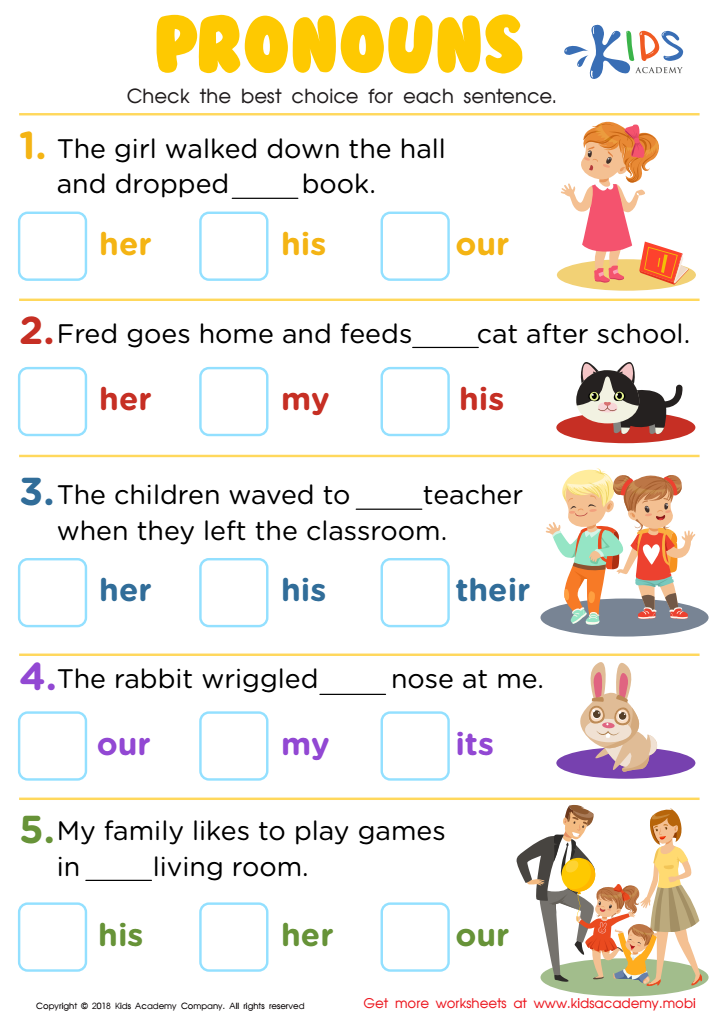
Pronouns Worksheet








Grammar skills in writing are crucial for children aged 3-8 for several reasons, making it essential for parents and teachers to prioritize effective language development. First, strong grammar skills provide a foundation for clear communication. Children learn to express their thoughts coherently, making it easier for them to share ideas and feelings with others, which fosters social interactions and relationships.
Second, mastering grammar enhances reading comprehension. As children understand the structure of sentences, they become better readers, allowing them to prepare for more complex texts in later years. This, in turn, increases their confidence and motivation to read more widely.
Moreover, early grammar skills can significantly impact academic success. Writing is a key component of school assessments, and children who grasp basic grammar concepts are more likely to perform well in school. They are better equipped to follow instructions, craft narratives, and engage with various writing activities, all of which are essential for holistic learning.
Finally, instilling good grammar habits early on encourages lifelong learning. The ability to communicate effectively is a critical skill that extends beyond the classroom and into daily life and future career paths. Therefore, parents and teachers play a vital role in fostering these essential skills from a young age.








