Pronoun identification Writing Worksheets for Ages 3-8
3 filtered results
-
From - To
Help your child master the fundamentals of pronoun identification with our engaging and educational worksheets designed for ages 3-8. These printable worksheets from Kids Academy are perfect for developing writing skills and strengthening grammar knowledge. Featuring vibrant illustrations and fun activities, each worksheet provides hands-on practice in identifying and using pronouns correctly. Whether in the classroom or at home, our expertly crafted resources make learning enjoyable and effective. Boost your child’s language abilities and build a strong grammar foundation with our Pronoun Identification Writing Worksheets today! Download now and watch your child’s confidence soar.
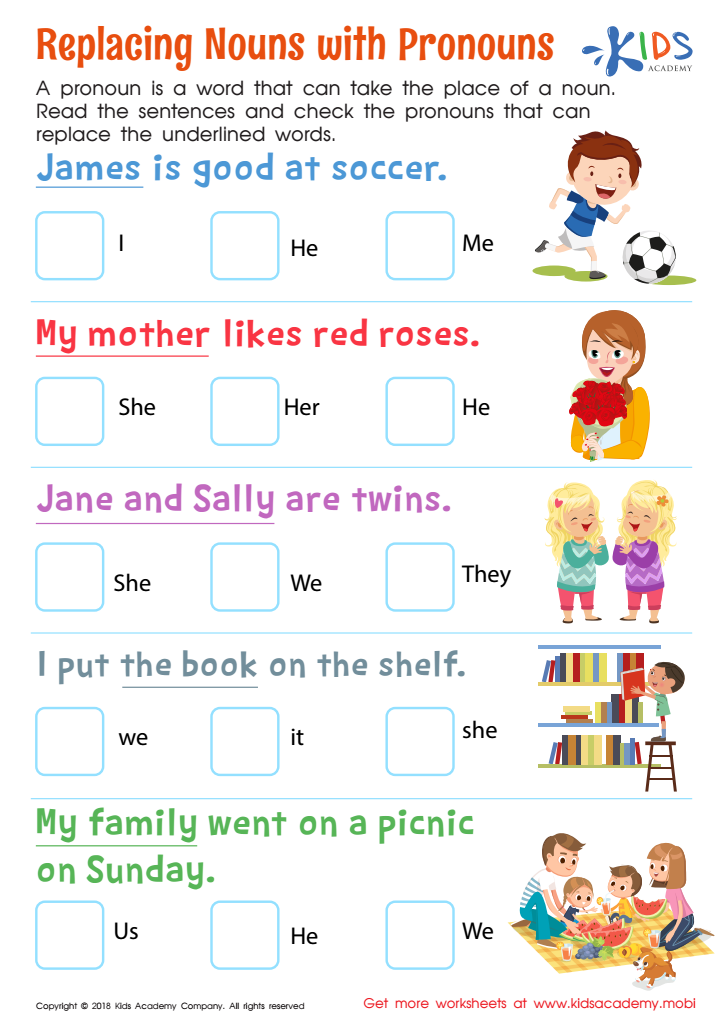
Replacing Nouns with Pronouns Worksheet
 Assign to My Students
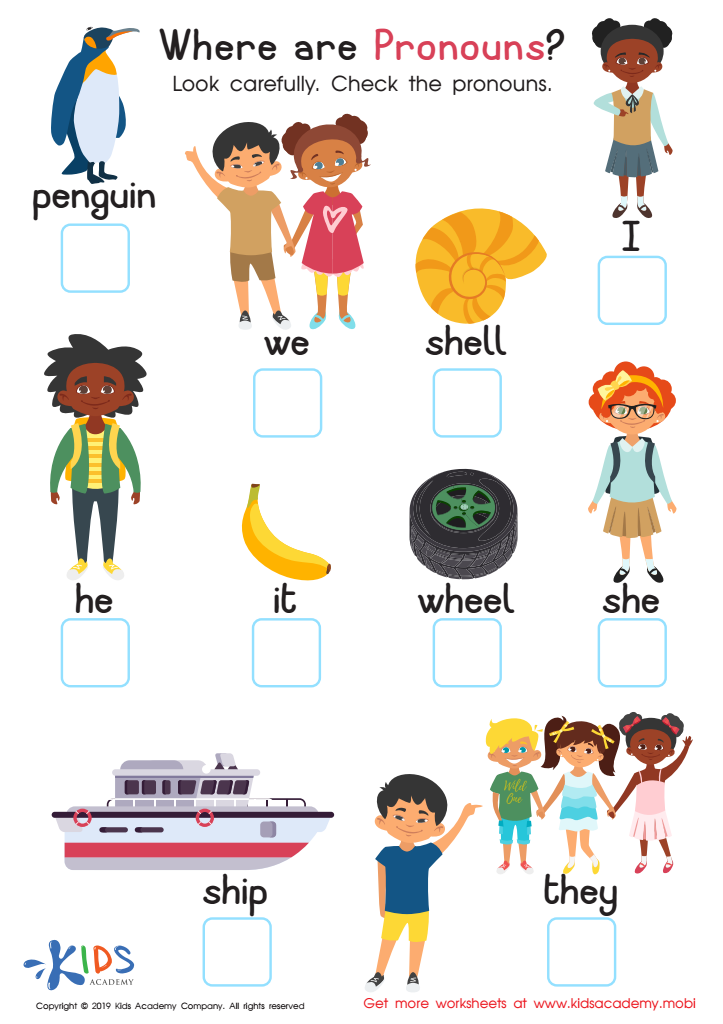
Where Are Pronouns? Worksheet
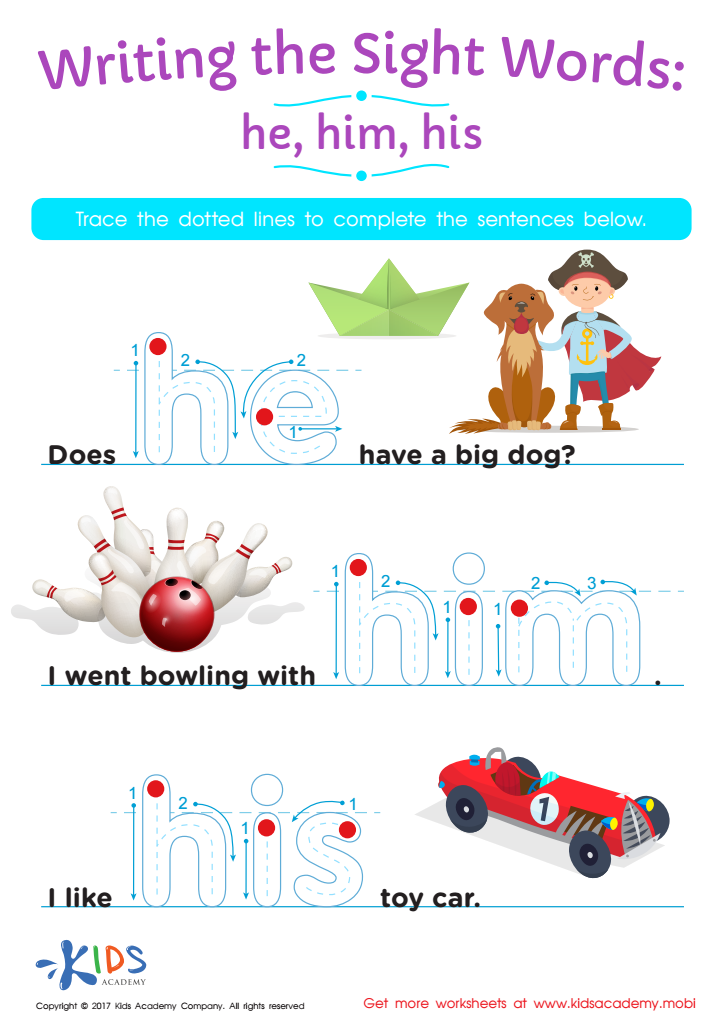
He, Him, His Printable Sight Words Worksheet








Pronoun identification is crucial for young children, ages 3-8, as it lays the foundation for effective communication and language development. Understanding and using pronouns correctly help children avoid repetition and develop more complex sentence structures, which are essential for reading and writing skills. For instance, instead of repeatedly using a character’s name, children learned to replace it with pronouns like "he," "she," or "they," making their storytelling smoother and more engaging.
Beyond grammatical benefits, accurate pronoun use fosters social awareness and empathy. It teaches children to be considerate of others' identities by using the correct pronouns, an important aspect of respect and inclusivity. This can lead to healthier interpersonal relationships and a more harmonious social environment both in the classroom and beyond.
Furthermore, pronoun identification impacts cognitive skills such as memory and attention. It enhances the ability to track information across sentences, aiding in both comprehension and expression. This is particularly crucial when following or giving instructions clearly. For bilingual or multilingual children, understanding pronouns in one language can cross over into their mastery of another, proving the skill’s far-reaching benefits.
In essence, early mastery of pronouns equips children with fundamental language tools, enriches their social interactions, and supports cognitive development, creating a more inclusive and effective learning environment.








