Vocabulary enhancement Writing Worksheets for Ages 3-8 - Page 4
75 filtered results
-
From - To
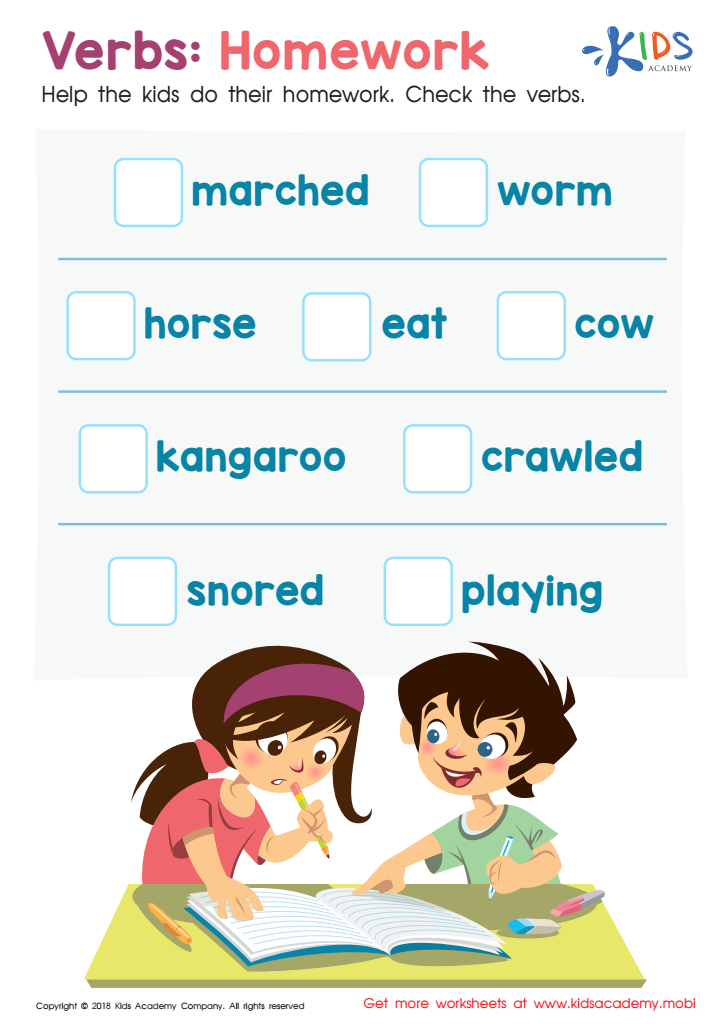
Verbs Homework Worksheet
 Assign to My Students
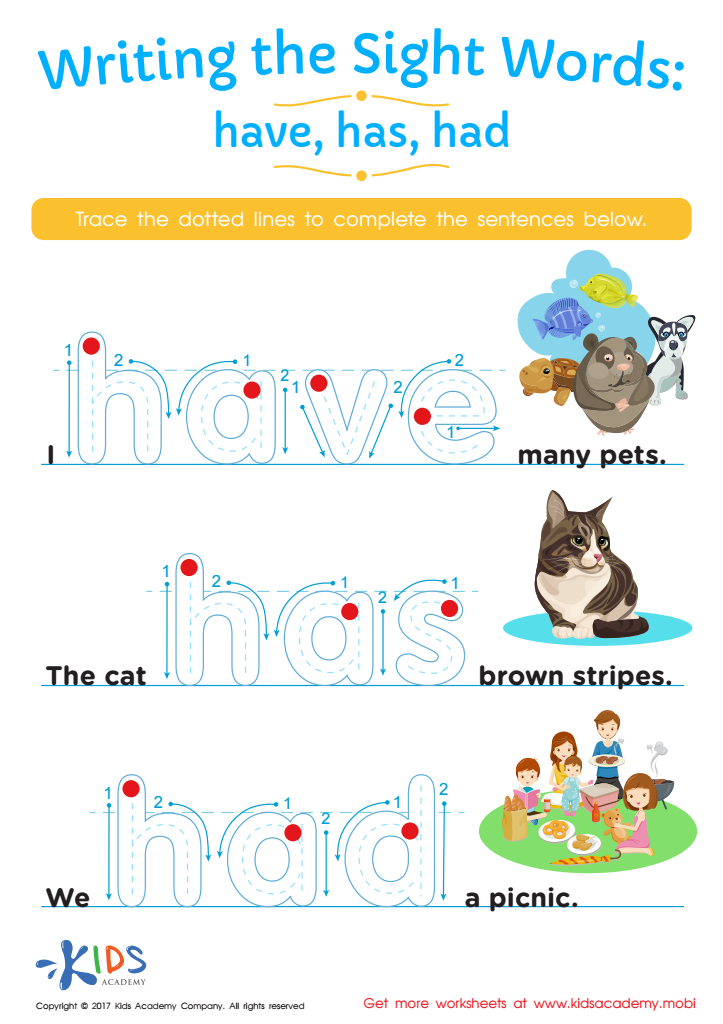
Have, Has, Had Worksheet Sight Words Worksheet
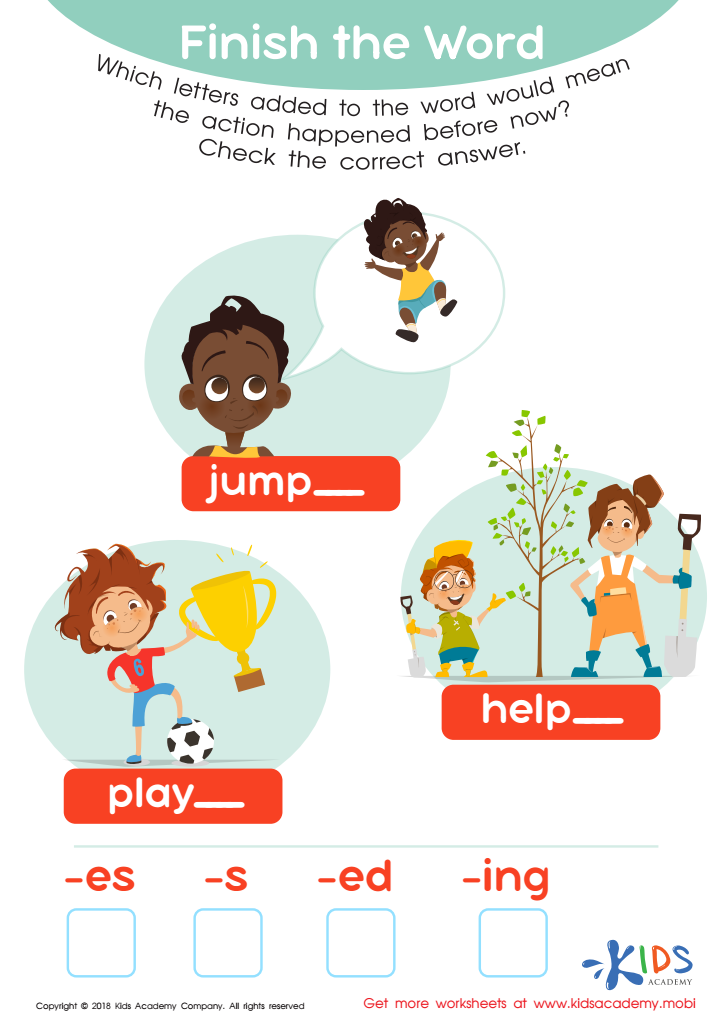
Finish the Word Worksheet







Vocabulary enhancement writing for children ages 3-8 is vital for several reasons. Firstly, a rich vocabulary enhances overall communication skills, allowing children to express themselves more clearly and effectively. Strong language skills also correlate with better reading comprehension, critical for academic success in later years. When parents and teachers prioritize vocabulary development, they lay the foundation for strong literacy skills, making it easier for children to identify words, make connections, and enjoy reading.
Moreover, engaging in vocabulary writing activities nurtures creativity and imagination. By encouraging children to explore new words, they can think outside the box and develop their unique voice in storytelling. This practice not only builds confidence but also fosters a love for learning and literacy.
Additionally, a robust vocabulary enhances social interactions, enabling children to build relationships with peers and adults alike. Children who can articulate their thoughts and feelings often have greater social-emotional awareness, a critical component of holistic development.
Lastly, early vocabulary enhancement can significantly impact future academic and professional opportunities. By fostering a love of words and language early on, parents and teachers can ensure that children are better prepared for the challenges of higher education and the workforce. Investing in vocabulary writing is an investment in a child's future.