Vowel Recognition Writing Worksheets for Ages 3-8
4 filtered results
-
From - To
Enhance your child's phonics journey with our Vowel Recognition Writing Worksheets for ages 3-8. Designed to make learning vowels fun and engaging, these worksheets combine vivid illustrations with interactive activities, helping young learners easily identify and write vowels. With varied exercises including tracing, matching, and fill-in-the-blanks, children will master vowel sounds and their corresponding letters while developing fine motor skills and boosting literacy. Ideal for both classroom and at-home practice, our worksheets offer a comprehensive approach to early reading success. Download now to give your child a head start in mastering essential language skills!
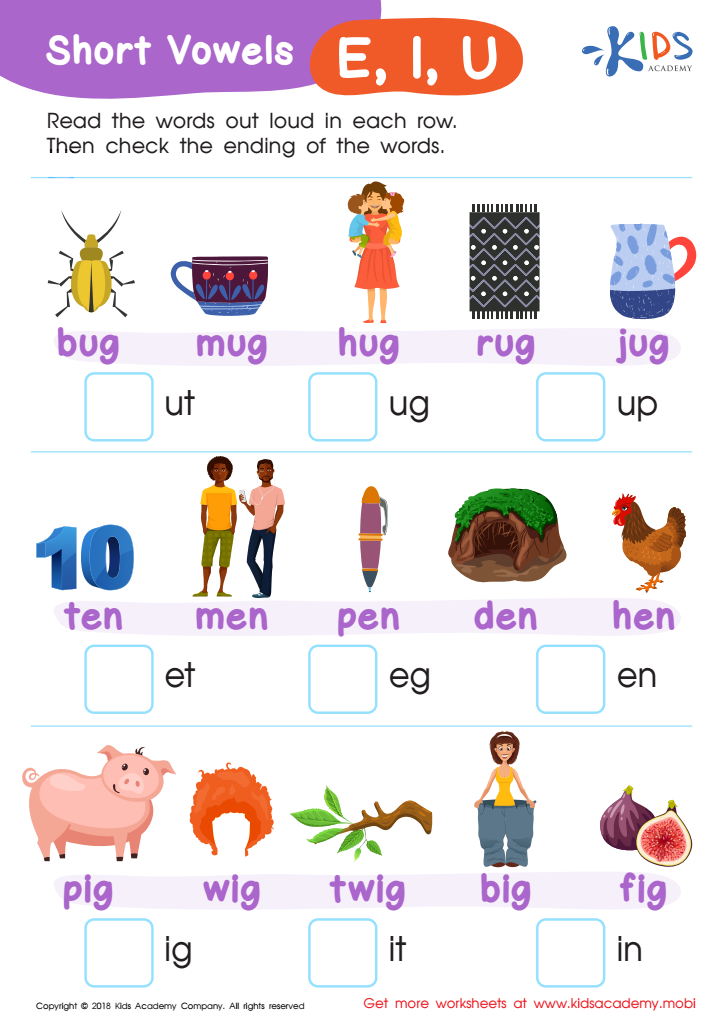
Short Vowels /e/, /i/, and /u/ Worksheet
 Assign to My Students
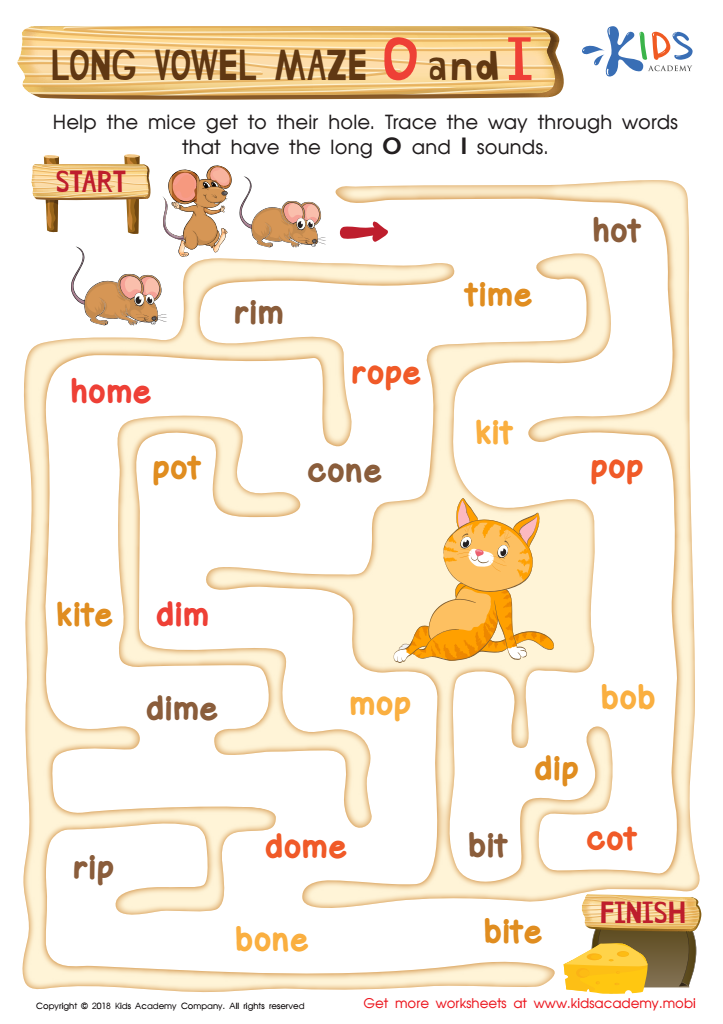
Long Vowel Maze /o/ and /i/ Worksheet
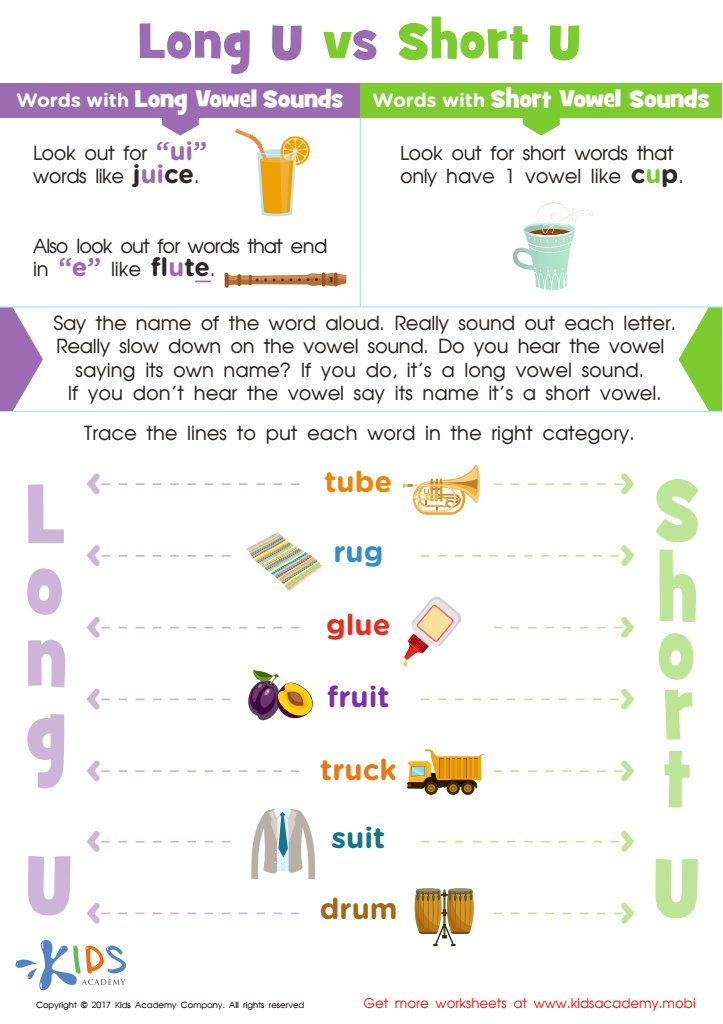
Long and Short Vowel U Spelling Worksheet
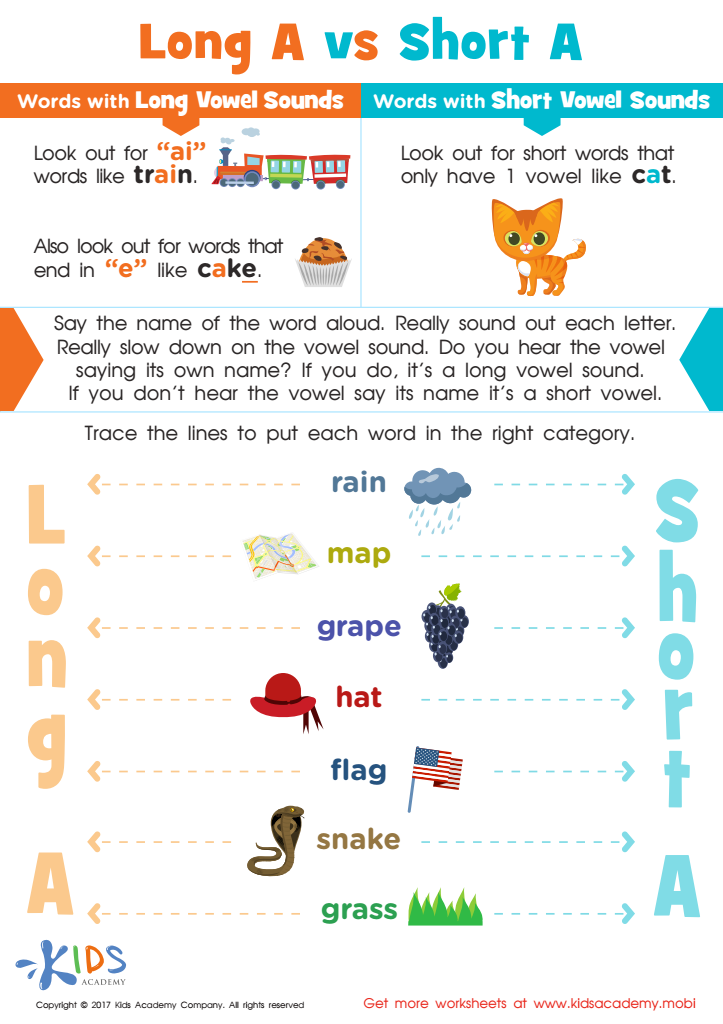
Long and Short Vowel A Spelling Worksheet







Vowel Recognition Writing is vital for children aged 3-8 because it lays the foundation for effective communication and literacy development. During these formative years, recognizing and writing vowels ensures children can decode and spell words correctly, which is crucial for both reading and writing skills. Understanding vowels helps children grasp the basic structure of words, enabling them to construct and articulate words accurately.
Parents and teachers must prioritize vowel recognition because vowels are the building blocks of phonics, the system that connects sounds with letters or groups of letters. Mastery of phonics is essential for reading fluently and with comprehension. Children who struggle with vowel sounds often find reading and writing challenging, which can lead to frustration and a lack of interest in learning.
Furthermore, early success in literacy fosters confidence and a positive attitude toward education. Engaging in vowel recognition activities enhances phonemic awareness, aiding children in recognizing patterns and sounds in words. This nurtures cognitive development, critical thinking, and language skills, all of which are integral to academic success across subjects.
By emphasizing vowel recognition in early education, parents and teachers empower children with the tools they need to become proficient readers and writers, setting a solid foundation for future learning and overall academic achievement.








