Letter tracing skills Alphabet Worksheets for Ages 3-9
6 filtered results
-
From - To
Boost your child's early literacy with our Letter Tracing Skills Alphabet Worksheets designed for ages 3-9! These engaging, interactive printables are perfect for preschoolers, kindergarteners, and early elementary students to practice letter formation, hone fine motor skills, and build a strong foundation in handwriting. Each worksheet features fun, age-appropriate activities that captivate young learners and make the process of learning the alphabet an enjoyable adventure. Support your child's educational journey with these expertly designed resources from Kids Academy, where learning is fun and effective. Download now and watch them thrive!
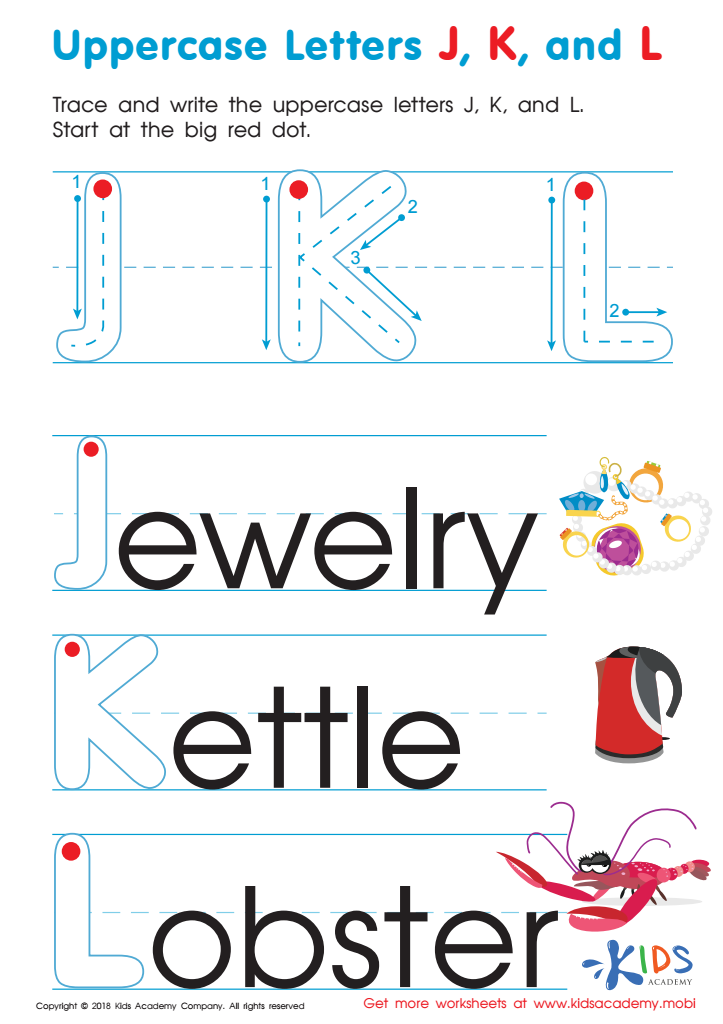
Uppercase Letters J, K, and L Worksheet
Letter T Coloring Sheet
 Assign to My Students

Letter C Tracing Page
Letter W Coloring Sheet
Assign to My Students
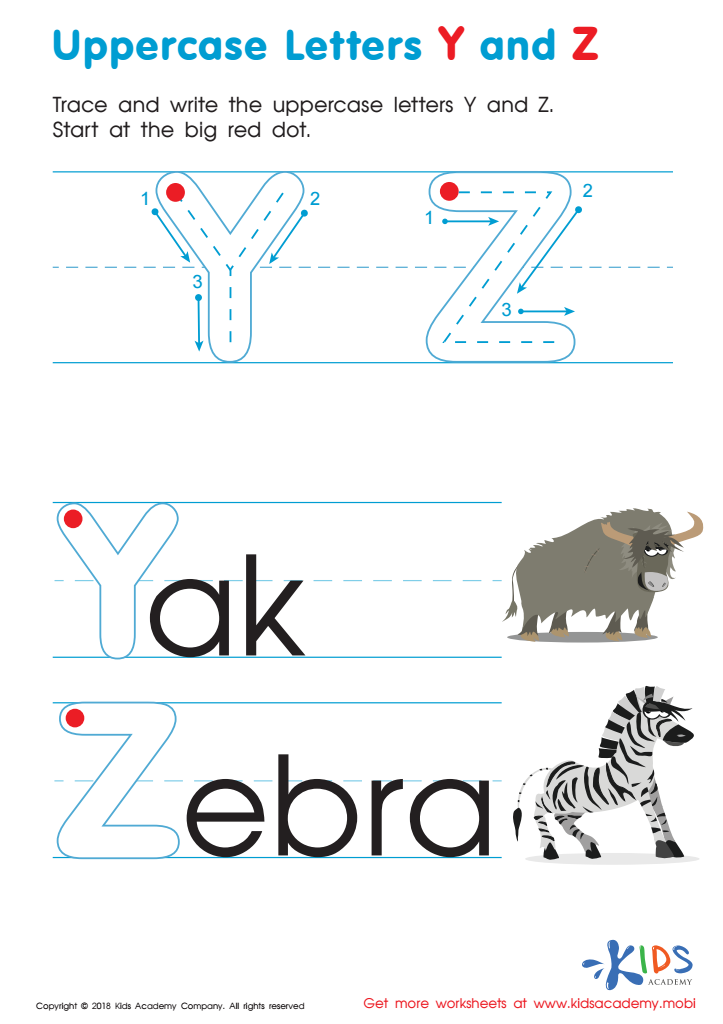
Uppercase Letters Y Z Worksheet
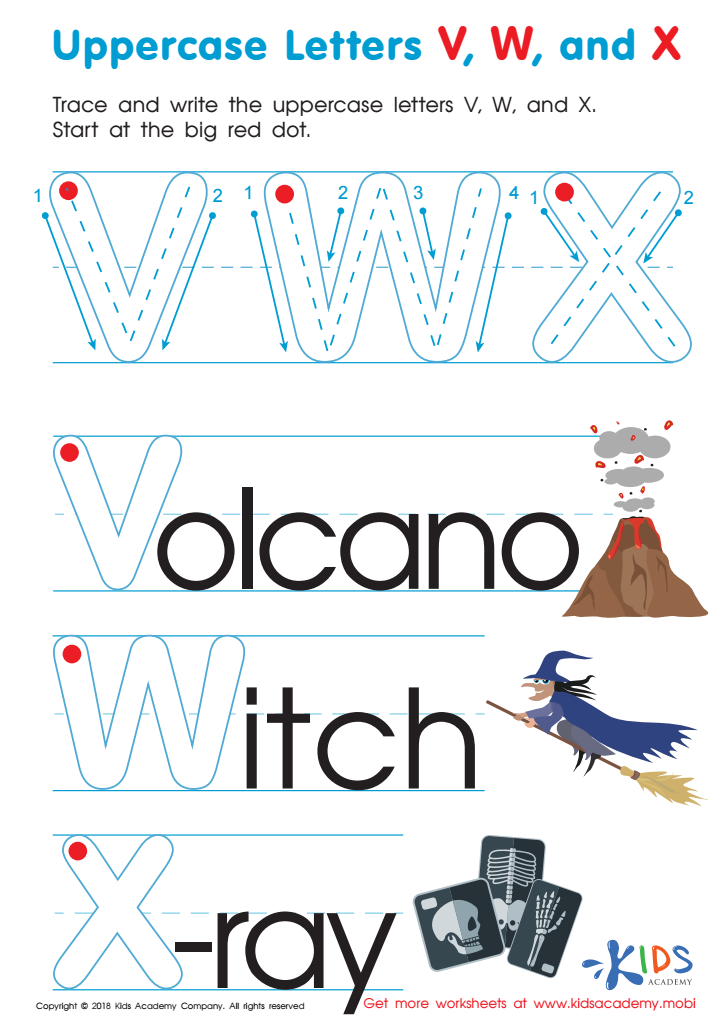
Uppercase Letters V, W, and X Worksheet






.jpg)
Letter tracing skills are fundamental for children aged 3-9 as they develop essential early literacy abilities, which form the cornerstone for future educational success. For both parents and teachers, fostering these skills is crucial because they enhance fine motor development, crucial for writing readiness. By tracing letters, children refine their hand-eye coordination and dexterity, which are vital for fluid and legible handwriting.
Moreover, letter tracing bridges the gap between recognition and production of letters. As children trace, they reinforce their understanding of letter shapes and sounds, which strengthens phonemic awareness—a critical precursor for reading. This practice also aids memory retention, helping children to better recall the letters when spellings and simple words are introduced.
From a cognitive perspective, tracing letters encourages focus, patience, and attention to detail, all of which are essential skills in a classroom setting and beyond. Socially, as children begin to trace letters, they develop a sense of pride and accomplishment, boosting their confidence and motivation to continue learning.
Thus, prioritizing letter tracing during these formative years equips children with the necessary tools for academic achievement and lifelong learning, making it a vital focus for both parents and educators dedicated to fostering holistic child development.







