Filters

32 filtered results

Clear all filters
Favorites
With answer key
Interactive

32 filtered results

Difficulty Level

Grade


Check out this FREE Trial Lesson on Phonics for age 3-9!

Digraphs

Favorites
With answer key
Interactive
  • 3-9
  • Word Recognition
  • Phonics
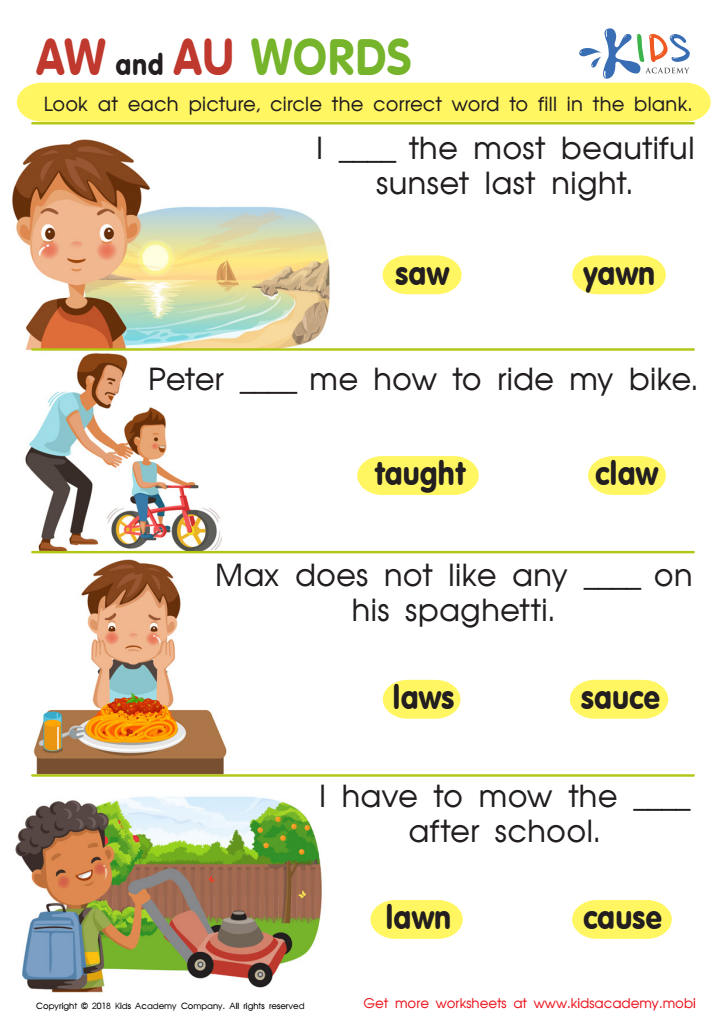
Reading: AW and AU Words Worksheet

Reading: AW and AU Words Worksheet

This worksheet helps kids recognize that /au/ and /aw/ can make the same sound. Students read sentences and pick the correct word with one of the digraphs. Understanding digraphs improves decoding and reading fluency. Perfect for reading and phonics classes.
Reading: AW and AU Words Worksheet
Worksheet
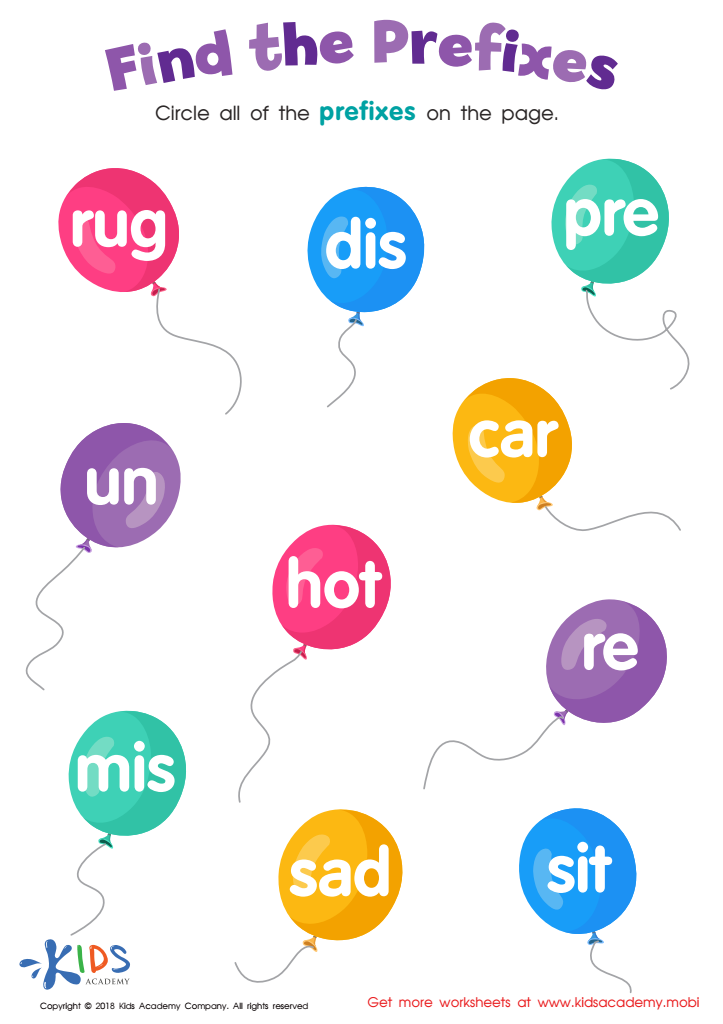
Reading: Find the Prefixes Worksheet

Reading: Find the Prefixes Worksheet

Students are asked to circle all prefixes on this worksheet and brainstorm a list of words that have them. It's a great tool for teaching vocabulary and helps students understand new and unfamiliar words by recognizing how prefixes change meaning.
Reading: Find the Prefixes Worksheet
Worksheet
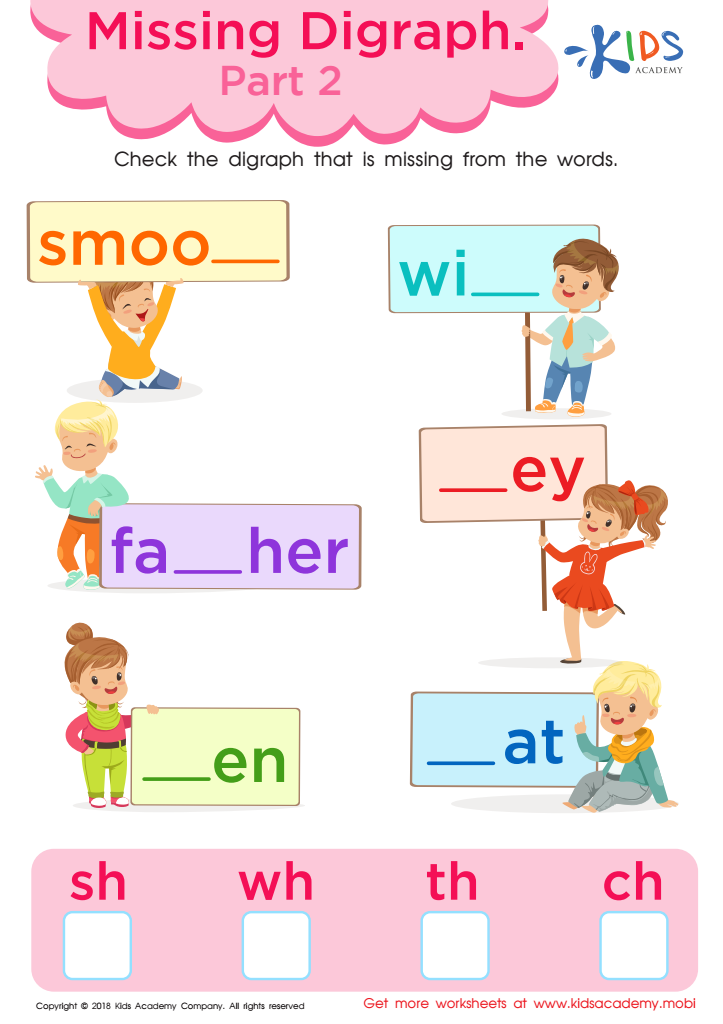
Missing Digraph: Part 2 Worksheet

Missing Digraph: Part 2 Worksheet

Practice the "th" digraph with this fun worksheet from Kids Academy! See how it appears at the beginning, middle, or end of words and help learners fill in the blanks. Check if they got it right by finding the th digraph at the bottom!
Missing Digraph: Part 2 Worksheet
Worksheet
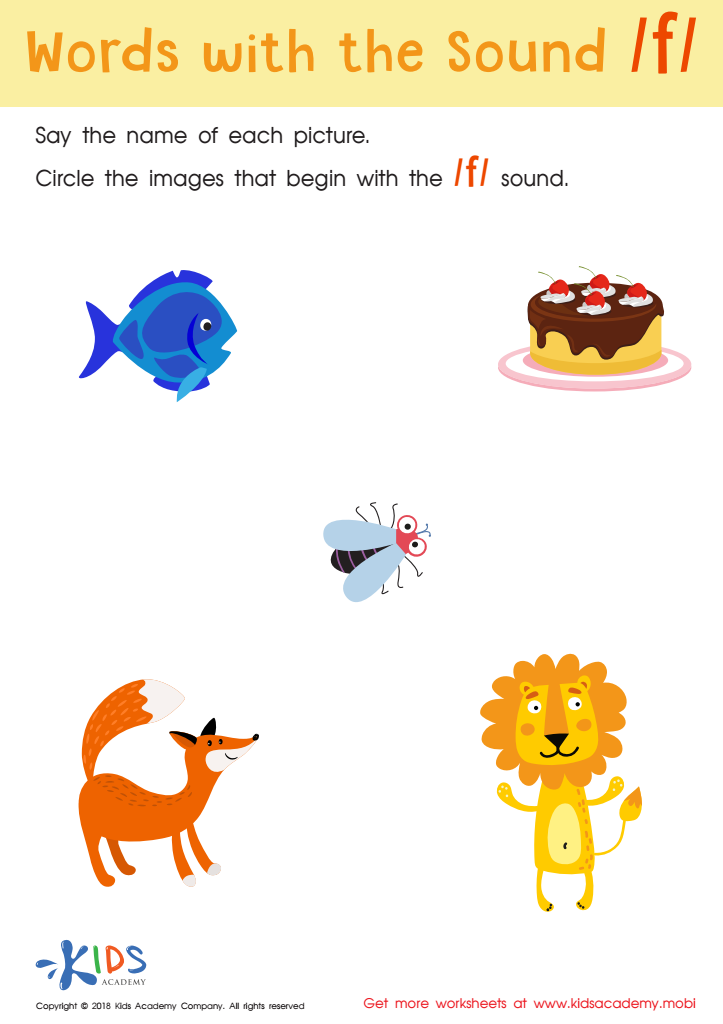
Words with sound f Reading Worksheet

Words with sound f Reading Worksheet

This illustrated phonics worksheet is ideal for preschool or kindergarten. It helps boost learners' literacy skills with a focus on the letter "f". Ask your child to name all the pictures, listening for that sound. Examples are fish, fox, lion, bug. When they can identify which words start with "f", have them circle the images. Congratulate them on a job well done!
Words with sound f Reading Worksheet
Worksheet
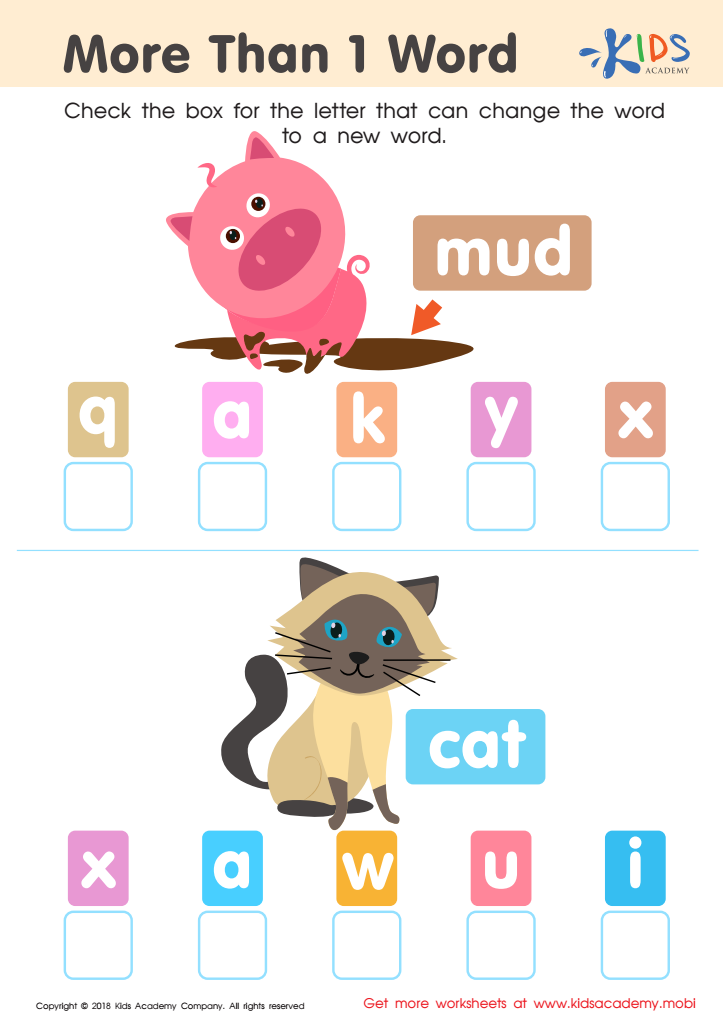
More than 1 word Worksheet

More than 1 word Worksheet

Test your child's reading skills with this fun worksheet! Point out the word in each picture, then switch the middle letter of each word with one from the list and check the box when you find a new word. It's a great way to develop your child's reading skills!
More than 1 word Worksheet
Worksheet
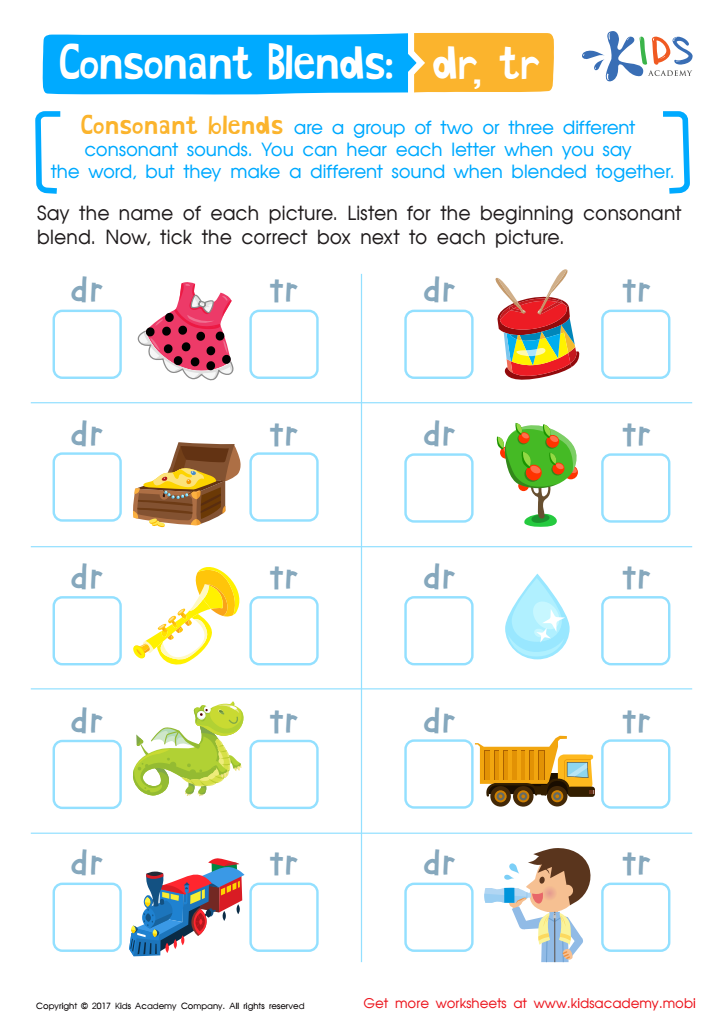
Consonant Blend Dr and Tr Printable Worksheet

Consonant Blends: "Dr" and "Tr" Printable
Pictures of the words provide a visual cue, and sound-outs help with auditory cues.
Consonant Blends: "Dr" and "Tr" Printable
Worksheet
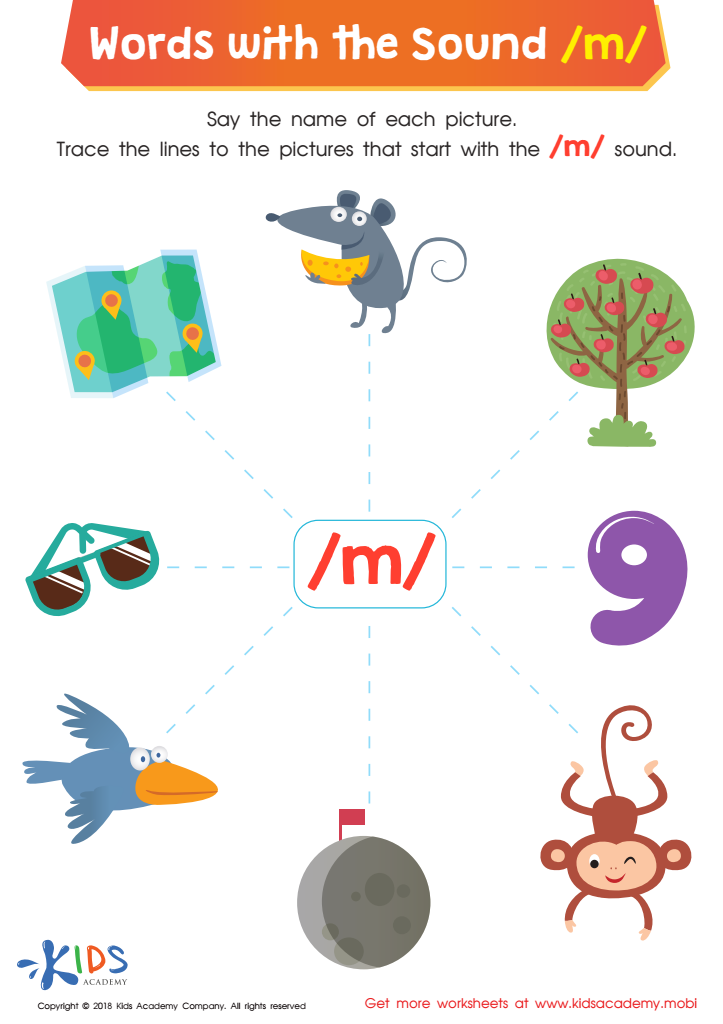
Words with Sound M Reading Worksheet

Words with Sound M Reading Worksheet

Emerging readers will use this traceable worksheet to name and trace pictures with the letter sound «m». Bright, engaging pictures make this fun and build confidence while strengthening fine motor skills. They won't even know they're also working on reading skills!
Words with Sound M Reading Worksheet
Worksheet
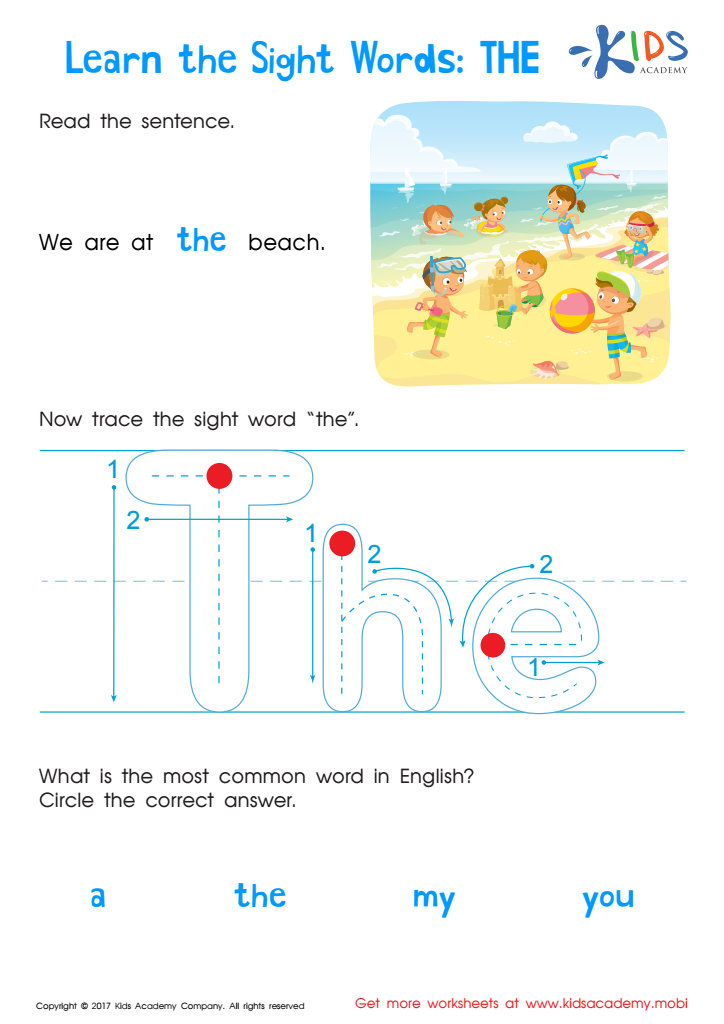
Sight Words Worksheet: The

Sight Words: The Worksheet

Get the worksheet and start now. The word "the" is an essential part of English. Teaching your child to read and write it is easy with this sight words worksheet. They'll practice reading the word, tracing it, and using it in sentences. It's the perfect way to take your child's language skills to the next level! Get the worksheet today.
Sight Words: The Worksheet
Worksheet


Word recognition phonics is essential for early literacy development, particularly for children aged 3-9. This foundational skill enables young learners to decode words and develop paid reading fluency, which is crucial for academic success. When children grasp phonics, they understand the relationship between sounds and letters, allowing them to read independently and confidently. This knowledge boosts their self-esteem, encourages a lifelong love for reading, and enhances their vocabulary acquisition.

Moreover, strong word recognition skills are linked to better comprehension. Children who can effortlessly recognize words are more able to focus on understanding the content, fostering critical thinking and analytical skills. For parents and teachers, investing time in phonics gives kids the tools they need to navigate their educational journeys with greater ease.

Furthermore, learning phonics at a young age promotes a social and emotional foundation. Children become comfortable learners and communicators when they can read, bridging the gap between them, their peers, and learning communities. As parents and educators nurture these skills, they contribute significantly to an individual child’s future opportunities while simultaneously fostering a culture that values literacy and education in the broader community. Recognizing the importance of phonics is vital for shaping the confident readers of tomorrow.