Graph interpretation Worksheets for Ages 3-9
5 filtered results
-
From - To
Our Graph Interpretation Worksheets for Ages 3-9 are designed to make learning fun and engaging for young minds. Perfect for preschoolers and early elementary students, these worksheets help children understand graphs, patterns, and trends through easy-to-follow exercises. Featuring colorful images and simple instructions, kids will learn to read bar graphs, pictographs, and charts while developing critical thinking skills. With our top-quality, printable resources, parents and teachers can support young learners' math and analytical abilities, paving the way for future academic success. Equip your child with the tools to excel in graph interpretation and build a solid foundation for their educational journey.
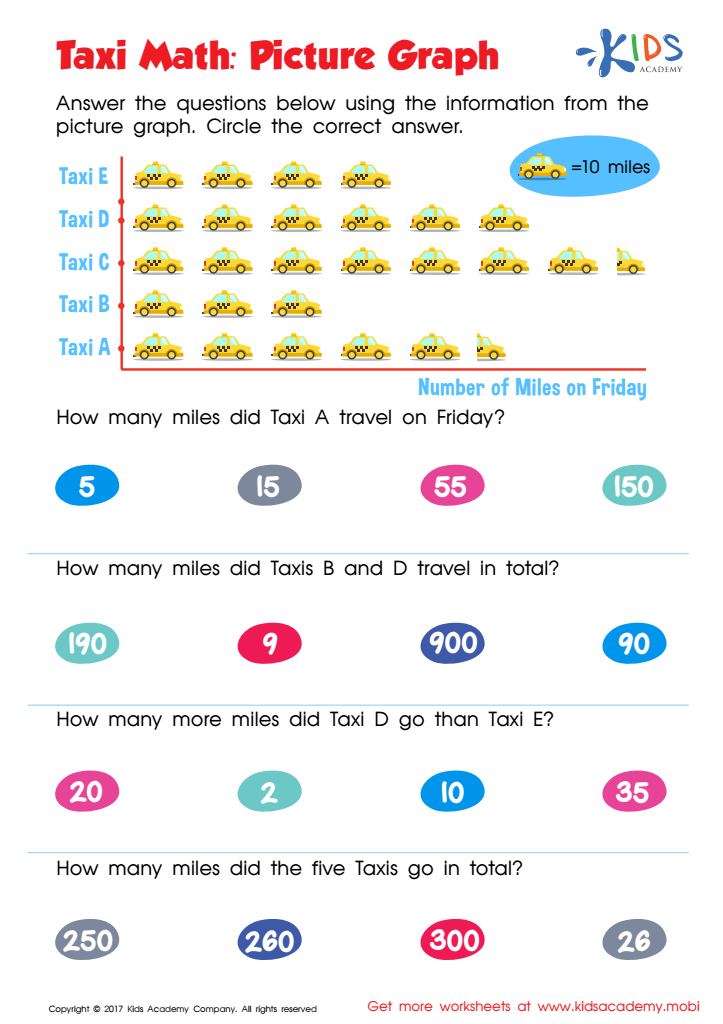
Taxi Math Worksheet
 Assign to My Students
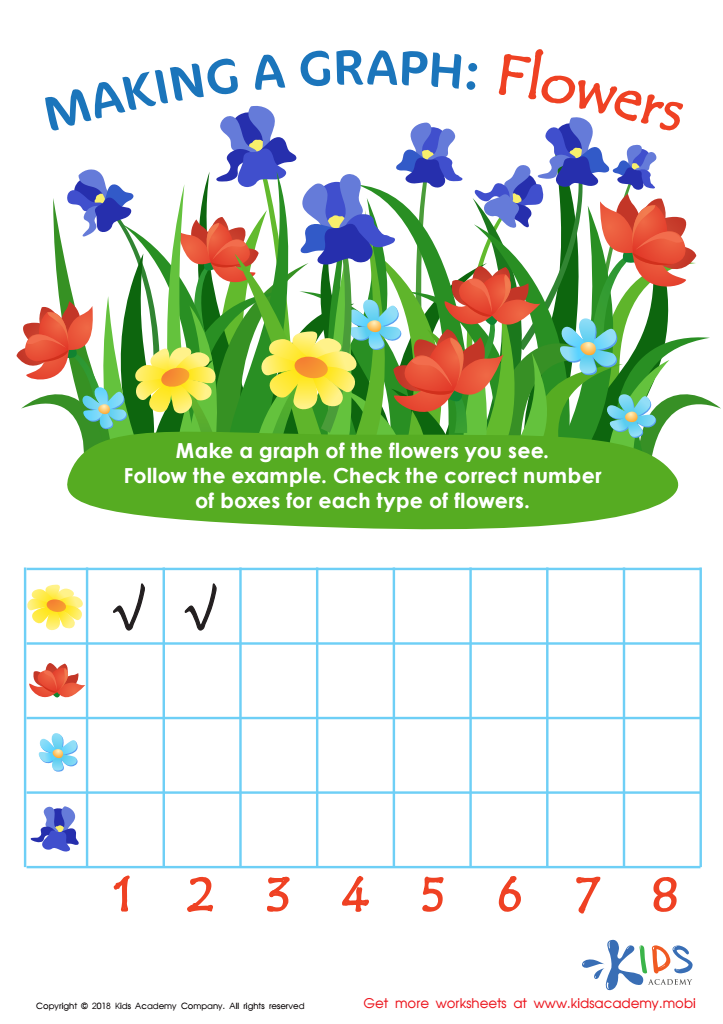
Making a Graph: Flowers Worksheet
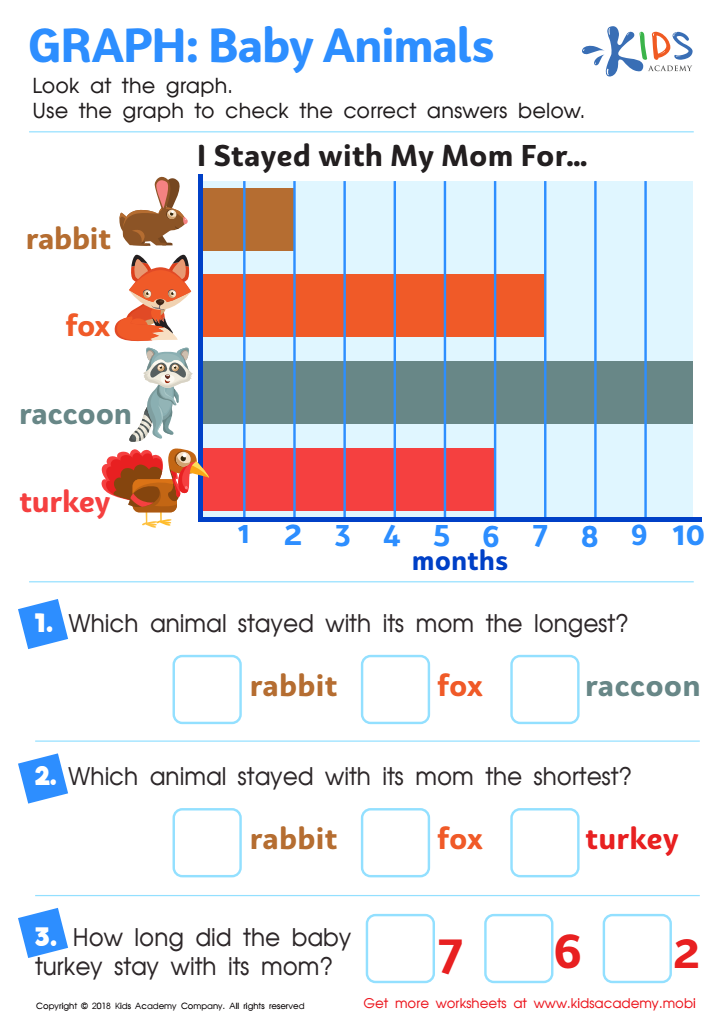
Graph: Baby Animals Worksheet
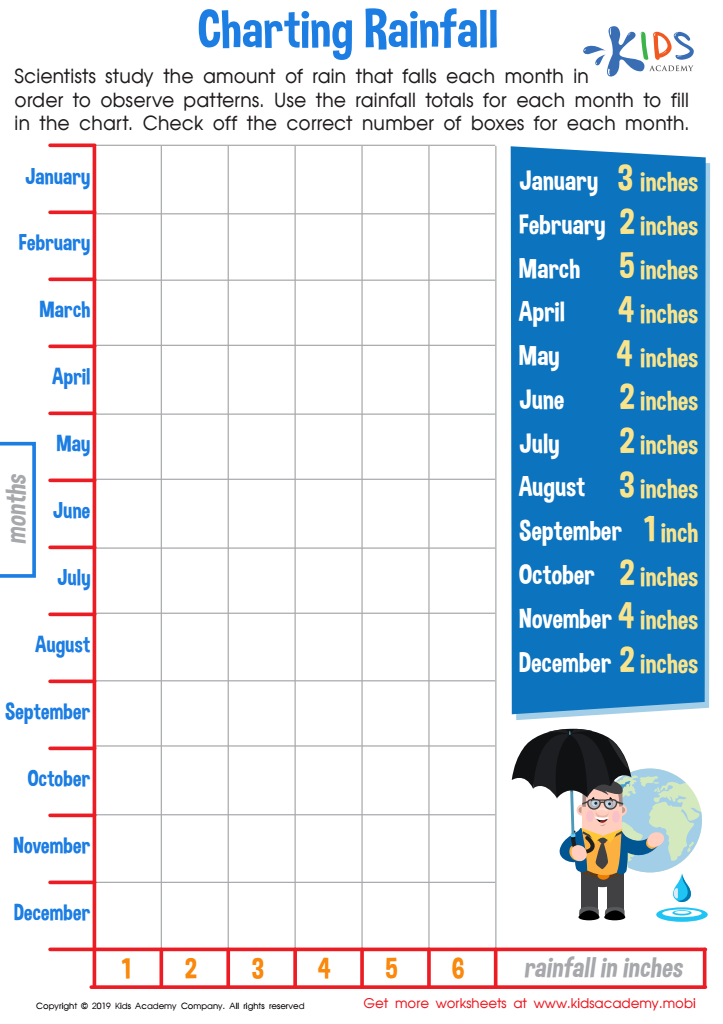
Charting Rainfall Worksheet
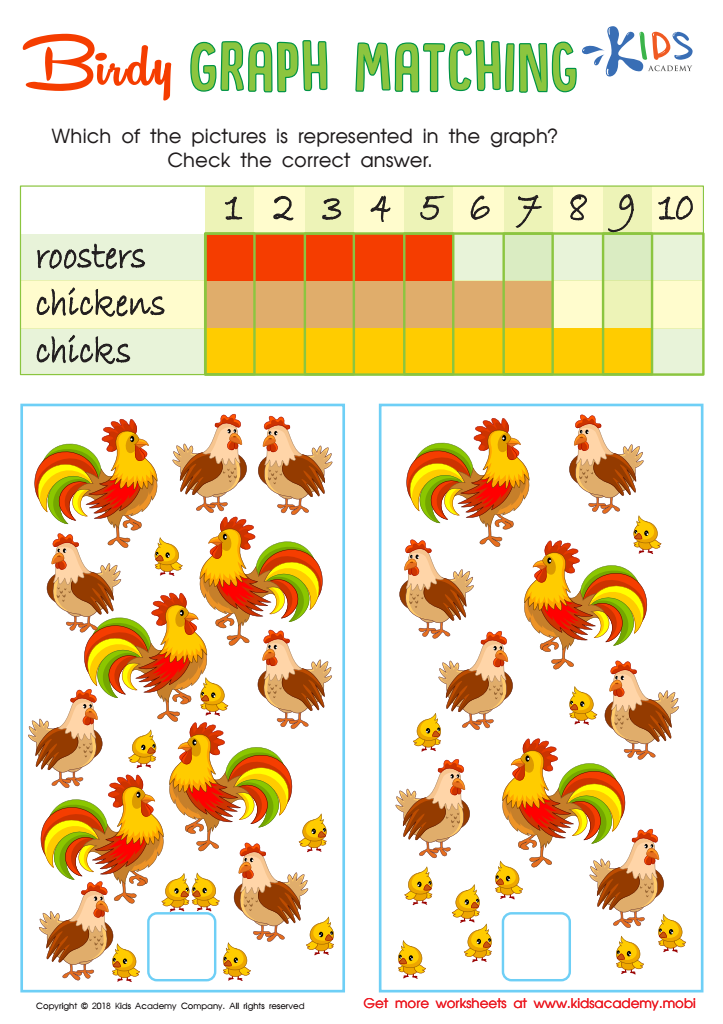
Birdy Graph Matching Worksheet


.jpg)




Understanding and interpreting graphs is a crucial skill that benefits children profoundly, even from ages 3-9. Early exposure to graph interpretation helps young learners develop vital analytical and critical thinking skills. Children naturally enjoy visual stimuli, and graphs serve as a fantastic tool to make abstract ideas more tangible and easier to grasp. For instance, simple bar and pie charts can aid in teaching kids about basic concepts such as quantities, comparisons, and patterns.
Moreover, early familiarity with graphs sets a foundation for future mathematical learning and scientific thinking. As children advance through school, they will often encounter data and must be able to interpret various types of visual information. Mastery of this skill at a young age ensures they are well-equipped to handle more complex tasks later on.
Teachers and parents should also recognize that graph interpretation fosters collaborative learning. Whether creating a class bar graph of favorite fruits or understanding growth over time using simple line graphs, these activities encourage discussion and teamwork. Learning to read and construct graphs boosts children's confidence in mathematics and sciences, while also nurturing other essential skills such as communication and problem-solving.
Hence, integrating graph interpretation in early education not only enhances academic performance but also prepares children for a data-driven world.








