
Improves number recognition Worksheets for Ages 3-9
4 filtered results
Difficulty Level
Grade
Age
-
From - To
Subject
Activity
Standards
Enhance your child's number recognition skills with our engaging worksheets designed for ages 3-9! Our activities are crafted to spark curiosity and promote learning through fun exercises that cater to various age groups. From identifying numbers to counting and number writing practice, these worksheets make learning enjoyable while building foundational math skills. Each worksheet encourages independent thinking, fine motor skills, and a love for numbers. Perfect for home or classroom use, our resources provide endless opportunities for young learners to explore and master number recognition. Download our worksheets today and turn number learning into an exciting adventure!
Favorites
With answer key
Interactive
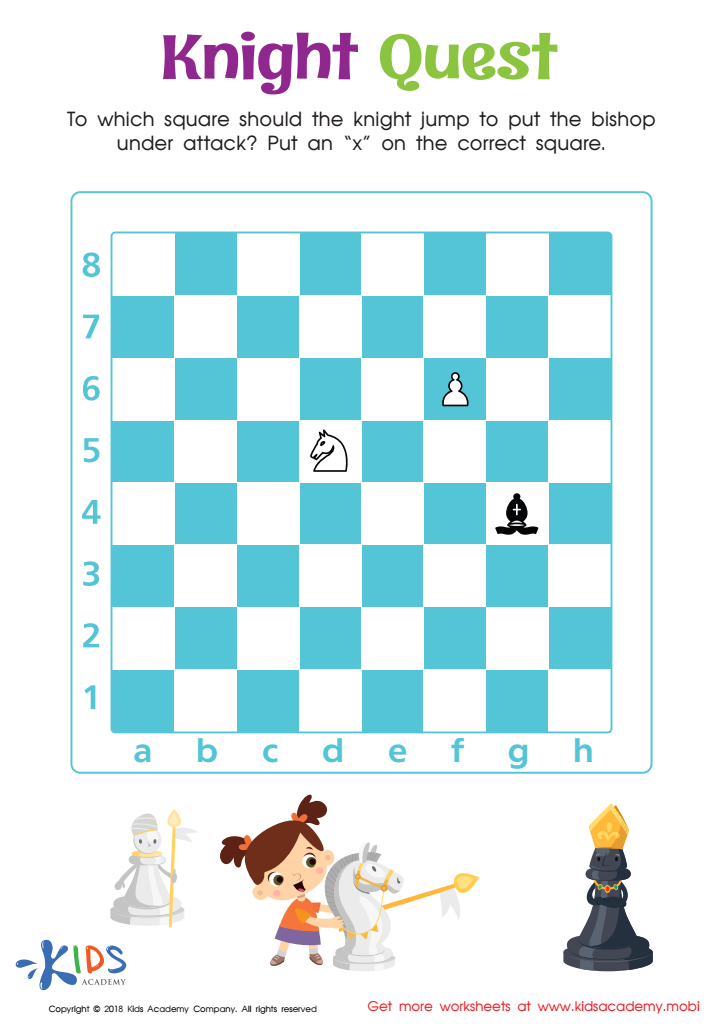
Knight Quest Worksheet
Testing your child's strategic planning and chess skills? Give them this worksheet: Ask them to mark an 'x' on the square where the knight should jump to attack the enemy bishop. See how well they plan for a win! (80 words)
 Assign to My Students
Knight Quest Worksheet
Worksheet
Learning Skills
Enhances counting skills
Improves number recognition
Encourages attention to details
Develops fine motor skills
Promotes problem-solving abilities
Enhances focus and concentration
Encourages logical thinking
Improves fine motor skills (writing)
Develops problem-solving abilities
Promotes addition learning
Join Kids Academy for Free
Who is primarily going to use this learning content?








Number recognition is a fundamental skill crucial for young children aged 3-9, as it lays the groundwork for future math concepts and overall cognitive development. For parents and teachers, fostering number recognition is vital for several reasons.
Firstly, it builds a child's confidence. Recognizing numbers empowers children to participate in mathematical tasks, engage in everyday activities such as counting objects, and understand the world around them, which enriches their curiosity and learning experiences.
Secondly, early number recognition provides a strong basis for arithmetic skills—critical for later success in math. Children who struggle with basic number recognition may face challenges in more advanced concepts like addition or subtraction, leading to math anxiety or learning gaps in their academic journey.
Additionally, encouraging number recognition promotes strong neural connections in the brain, aiding overall cognitive development. Engaging activities that emphasize number recognition can foster cooperation and communication skills in a learning environment, enhancing social interactions among peers.
Ultimately, prioritizing number recognition ensures children are equipped with the necessary tools to thrive in their academic paths and make logical, quantitative decisions in their everyday lives, benefitting them far beyond their formative years.








