Spatial understanding Worksheets for Ages 3-9
5 filtered results
-
From - To
Enhance your child's spatial understanding with our engaging worksheets designed for ages 3-9! Our collection features a variety of fun and interactive activities that help children develop essential mapping, positioning, and orientation skills. Each worksheet is carefully crafted to spark creativity while reinforcing key concepts in an entertaining way. Kids will enjoy exploring shapes, directions, and spatial relationships through puzzles, drawings, and guided challenges. Perfect for both home learning and classroom activities, these worksheets promote critical thinking and problem-solving abilities. Download our spatial understanding worksheets today and watch your young learners thrive as they embark on an exciting educational journey!
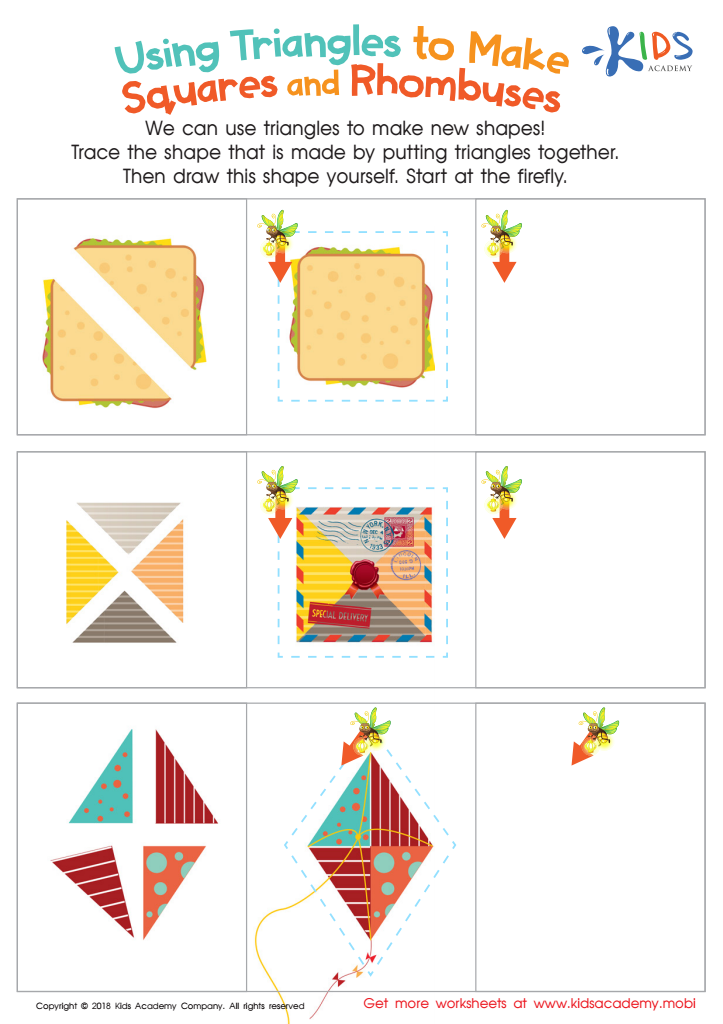
Using Triangles to Make Squares and Rhombuses Worksheet
 Assign to My Students
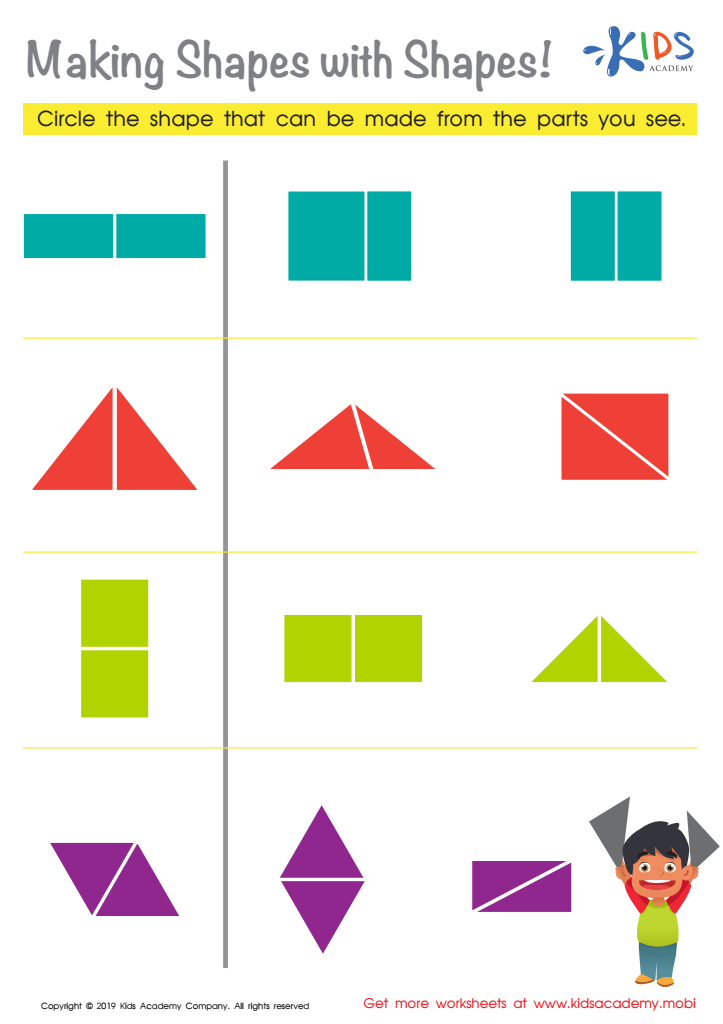
Making Shapes with Shapes Worksheet
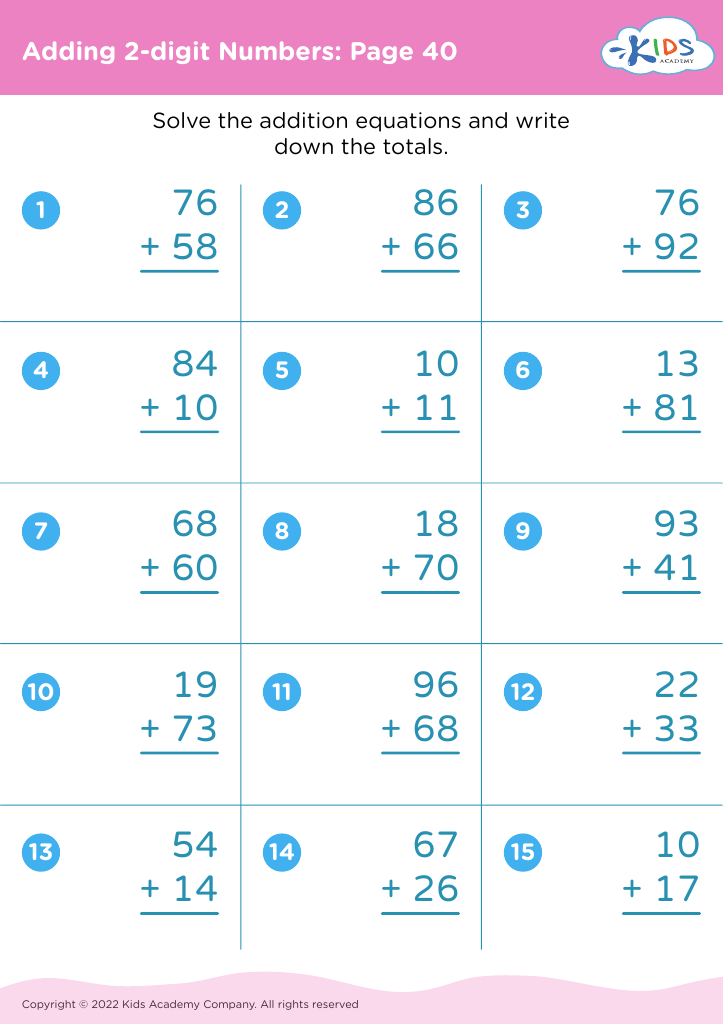
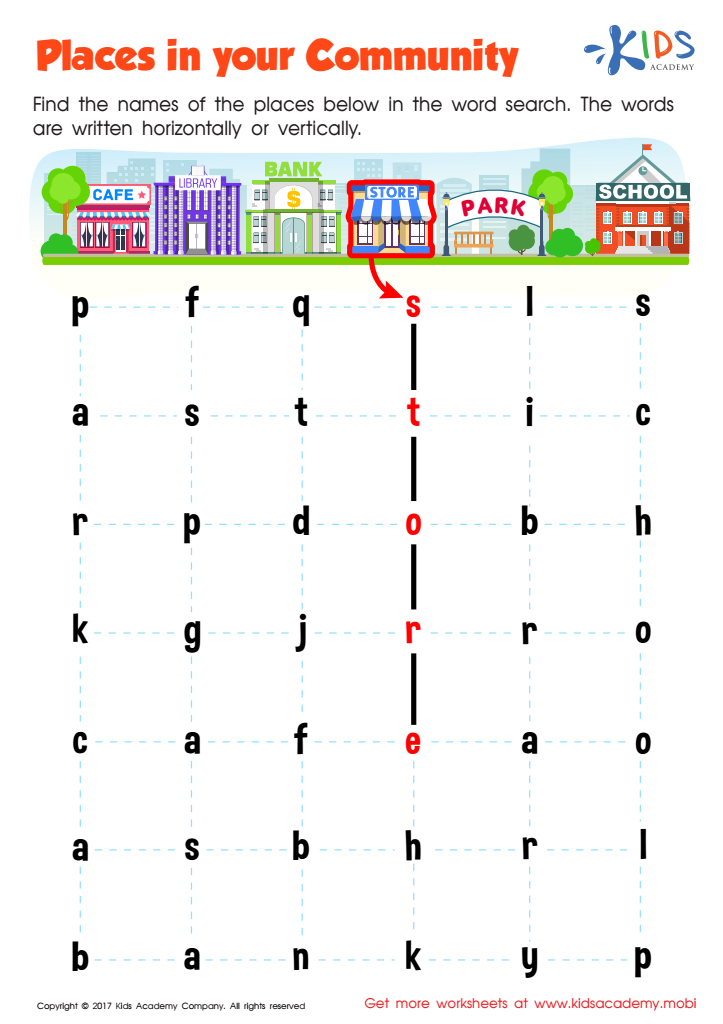
Places in Your Community Worksheet
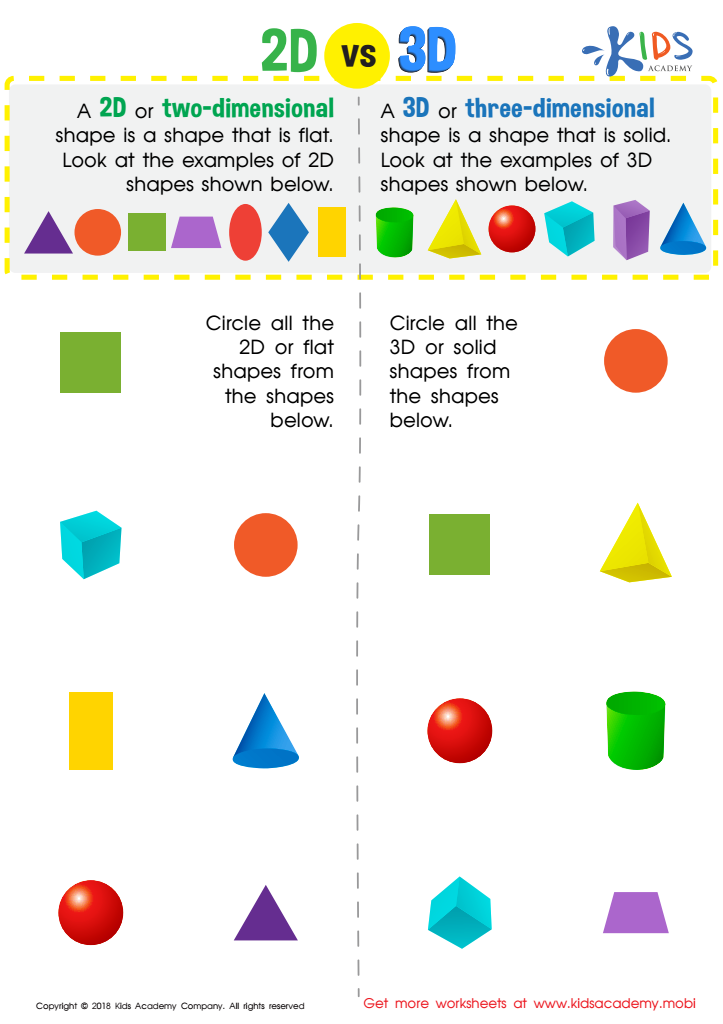
2D vs 3D Shapes Worksheet




.jpg)
.jpg)

Spatial understanding, or spatial literacy, is crucial for children aged 3-9 as it forms the foundation for various cognitive skills and real-world applications. This developmental stage is critical, as children's brains are rapidly growing, making them highly receptive to learning spatial concepts. Young children who enhance their spatial reasoning skills can better understand shapes, sizes, directions, and relationships between objects. This knowledge is not only vital in early math and reading, but it also plays a pivotal role in science and engineering topics later on.
Moreover, spatial understanding directly impacts problem-solving abilities. Children with strong spatial skills are more adept at visualizing and manipulating objects mentally, leading to breakthroughs in logic and reasoning, integral for critical thinking and creativity. Furthermore, in an increasingly technology-driven world, spatial awareness supports skills in areas like coding, computer graphics, and design.
Parents and teachers can nurture spatial understanding through play, art, and construction activities—helping children build a foundation for future learning and innovation. Recognizing and fostering these skills will prepare young learners for academic success and empower them to navigate their environment confidently. Thus, prioritizing spatial understanding contributes significantly to holistic child development.








